

Skip to content

All sessions full

Machoire&Co × Physio Learning

Maxillofacial rehabilitation

With Quentin , Machoire&Co and Physio Learning

On-siteDPCFIFPLEnrolment is open2 days · 14hOn-site course
  • 6.5k+ healthcare professionals trained at Physio Learning
  • 100 trained on this course
  • 4,87/5 · 15 reviews

Why this course?

A practical, person-centred and evidence-based approach to practising maxillofacial rehabilitation

Supports et pratique en rééducation maxillo-faciale

A practical, person-centred and evidence-based approach.

Do you want to understand how to put exercise and an active approach at the heart of managing jaw, neck and head pain?

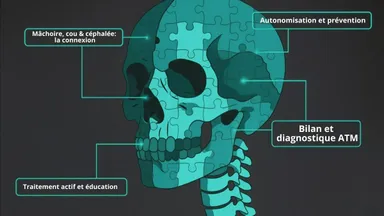
This course offers a modern, practical and evidence-based perspective for assessing and treating temporomandibular disorders (TMD) and craniocervical pain.

You will learn to structure your assessment, to analyse the interactions between bruxism, stress, sleep, breathing and lifestyle habits, then to guide the patient towards greater self-management.

A simple, clear and effective course to turn theory into concrete practice from the very next day in the clinic.

Your practice today

  • Difficulty connecting jaw, neck and headaches in your clinical reasoning
  • An assessment that is sometimes incomplete or loosely structured
  • Uncertainty about warning signs and when to refer on
  • Management that is too passive or barely individualised

After the course

  • A structured, patient-centred clinical assessment
  • A clear analysis of biomechanical and behavioural factors
  • Active exercises and self-rehabilitation matched to the deficits
  • Better interdisciplinary collaboration and consistent follow-up

Learning outcomes

Identify the key factors

Anatomical, biomechanical and behavioural factors involved in orofacial, temporomandibular and cervicocephalic pain.

Carry out a structured assessment

History taking, observations and appropriate functional tests.

Analyse the interactions

Bruxism, stress, sleep, breathing and lifestyle habits.

Deliver active management

Understanding, participation and patient self-management.

Prescribe self-rehabilitation

Exercises matched to the deficits identified and to functional goals.

Collaborate effectively

Set management within a coherent interdisciplinary approach.

Ready to master maxillofacial rehabilitation?

Your instructor

Hi, I'm Quentin!

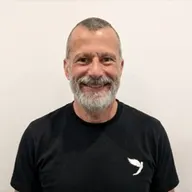
Portrait de Quentin, kinésithérapeute spécialisé en maxillo-facial

I'm Quentin, a physiotherapist since 2016, specialised in the management of jaw pain, neck pain and headaches. With 10 years' experience in musculoskeletal rehabilitation, particularly of the cervico-oro-facial region, I share a pragmatic, evidence-based approach to help clinicians turn theory into concrete practice.

Find out more about Quentin Hindelang.

Course content

14 modules for a modern, practical and evidence-based perspective . Applicable in the clinic from the very next day.

01Introduction to the course
  • Introducing the instructor, the framework and the learning outcomes of the course.
02Pathophysiology in the maxillofacial region
  • Understand the anatomical, functional and pathophysiological basis of the maxillofacial region.
03Structured, patient-centred history taking
  • Structure the clinical interview and bring out the patient's expectations.
04Pain and warning signs: identifying and referring on
  • Spot red flags and know when to refer on.
05Therapeutic patient education
  • Build a simple, clear and reassuring therapeutic message.
06Observation & mobility
  • Observe posture, breathing and the mobility that informs clinical reasoning.
07Symptom modification techniques
  • Use targeted techniques to modulate symptoms.
08Review of symptom modification techniques
  • Review, consolidate and refine symptom modification strategies.
09Specific clinical tests
  • Choose the clinical tests that are relevant to objectify the deficits.
10Assessment through muscle and joint palpation
  • Palpate the muscular and articular structures involved methodically.
11Reasoned manual therapy
  • Integrate manual therapy in a reasoned, contextualised way.
12Muscle testing and motor control
  • Explore motor control and muscle testing in a functional way.
13Active exercises matched to the deficits
  • Build an active, individualised exercise progression.

They trained with us

See where the healthcare professionals trained on this topic practise.

100 trained on this course

⭐ 4,8/5 Average rating of our training provider on a sample of 675 reviews

Funding available

Two French schemes can fund it, for practitioners working in France. What sets them apart: what you pay upfront, and when.

DPC

Fully funded*

The Agence nationale du DPC, the French agency for continuing professional development, pays the training provider directly, and your attendance is compensated. Open to healthcare professionals practising in France.

You pay upfront
Nothing
The Agence covers
The full cost of the course
and pays you 266 € to 532 € for attending
* Un reste à charge peut exister, selon le prix de la formation et le montant pris en charge.
  1. You register on agencedpc.fr and choose your session.
  2. Your application is approved: the Agence pays Physio Learning, you pay nothing upfront.
  3. You receive your allowance in the months following the course.

Action DPC n° 99GX2525054

DPC allowance for masseurs-kinésithérapeutes, 2026: not every profession comes under the DPC, and those that do are not on the same allowance. Subject to your application being approved and to your annual allowance still being available. A French scheme, for professionals practising in France.1

FIFPL

Up to 300 € per day

You pay for the course, then claim reimbursement from the FIFPL, the French training fund for self-employed professionals. Open to practitioners registered in France.

You pay upfront
The course fee
The FIFPL reimburses
Up to 300 €
per day, up to 900 € a year
Cette formation dure 2 jours.
For the exact amount in your own situation, put the request to the FIFPL.
  1. You book your place and pay for the course.
  2. You file your claim with the FIFPL, enclosing the programme and the quote.Programme PDF
  3. The FIFPL reimburses you after the course.

Registered with the FIFPL: kinésithérapeutes S0620260380218

FIFPL 2026 caps and how to claim

Amounts from the masseur-kinésithérapeute scale, 2026: each profession has its own. Reimbursement is decided by the FIFPL, based on your remaining annual allowance and on the budget allocated to your profession. A French fund, for self-employed practitioners registered in France.2

Invest in your expertise

Value 890€590€

TTC · Pre-Learning included

↳ that is 295€ / day of training

Meals not included

Included in the course

  • 2 on-site days at the course venue (14h)
  • PowerPoint, videos, clinical cases
  • Practice in pairs
  • Multiple-choice test + practical cases
  • WhatsApp support 7 days a week
  • DPC / FIFPL funding

🎁 Bonus included

  • Access to the Physio Learning community for this course
  • Listing on PhysioMaps once you complete the course
  • Villeurbanne

    17 – 18 September 2026

    Full
  • Saint André Lez Lille

    7 – 8 November 2026

    Full

See all dates on the map →

None of these dates work for you?

Leave your email: we will let you know as soon as a session opens.

Qualiopi-certified training provider100+ trained on this courseNo prerequisites

  • ✓ Certificate and paperwork kept for you
  • ✓ Instructor support after the course
  • ✓ Dedicated app, lifetime access

What fellow physios say.

  • I particularly appreciated Quentin's teaching, as well as his kind and humble approach to physiotherapy. He passes on a vision built on trial and error and clinical reflection, which makes the course very concrete and rewarding.
    Margaux D.Physiotherapist
  • Excellent content, reasoning that is really interesting and easy to take in. Quentin has a unique expertise in the field to share.
    Robin V.Physiotherapist
  • He answered all my questions, easy to understand, a great instructor!
    Thomas S.Physiotherapist
  • Very professional, no time wasted, straight to the essentials and to the practical work.
    Mylène T.Physiotherapist
  • What was really good: the quizzes after each section to check we had understood. A well-structured course.
    Chirine H.Physiotherapist
  • A broad range covering every area of this kind of rehabilitation. A very complete course.
    Matthieu C.Physiotherapist
  • We covered a lot of ground, it is very comprehensive. A great teacher, flexible and attentive.
    Claire O.Physiotherapist
  • Quentin is a great teacher, flexible and attentive. A concrete and rewarding course.
    Lise M.Physiotherapist

Find out more

Next course session

Paris: 23 and 24 May 2026 (full) Lyon: 17 and 18 September 2026 (full) Lille: 7 and 8 November 2026

Course programme in PDF format

DPC funding

For 2026, if your application is approved (a decision that does not depend on Physio-learning) and depending on your annual allowance, the course may be funded by the DPC, the French continuing professional development scheme. 2026 funding criteria: funding capped at 798€ plus 532€ of allowance, within the budget allocated to the profession and subject to the checks carried out by the ANDPC, the agency that runs the scheme.

Funding capped at 14h over the year 2026, provided you are established/a collaborator/an assistant on the date of the course.

To enrol through the DPC: go to agencedpc to sign up for your session, activity number 99GX2525054 . Only enrolment on the agency's website secures your funding. A 50€ deposit is required to guarantee your attendance on the course.

FIFPL funding

For 2026, if your application is approved (a decision that does not depend on Physio-learning) and depending on your annual allowance, the course may be reimbursed by the FIFPL, the French training fund for self-employed professionals. 2026 funding criteria: funding capped at 300€ per day and 900€ per professional.

The submission is under way on the FIFPL website; we will have their answer during the first quarter of 2026.

NACPRO 2026 FOR PHYSIOTHERAPISTS: S0620260380218

You log in to the online applications area on this site: adherent.fifpl.fr

In the catalogue search bar, you can find our training provider by copying and pasting this name: physio-learning .

When you create your FIFPL application, you can attach an agreement or a quote or an invoice and a programme: programme · quote .

Do take care to fill in the quote before sending it to the FIFPL. If you decide to apply for funding after enrolling, the documents will be sent to you already filled in.

Questions about PRO-Q Kiné

The course has not yet been submitted to Pro-Q Kiné. If you are interested, get in touch!

All the steps are explained here.

Employer funding

We are a Qualiopi-certified training provider and you can contact us directly about employer funding.

Contact the team on WhatsApp by clicking here or, if you do not have WhatsApp, send us an email at hello@physio-learning.com!

Contact us

Contact the team on WhatsApp by clicking here

If you do not have WhatsApp you can send us an email at hello@physio-learning.com

Please check first whether your answer is in our help centre by clicking here .

Master maxillofacial rehabilitation.

Join the healthcare professionals trained by Physio Learning.

Qualiopi-certified training providerDPC / FIFPL

Email · WhatsApp · Instagram

The practical details, at a glance

Course arrangements

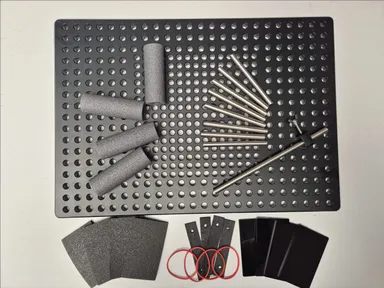
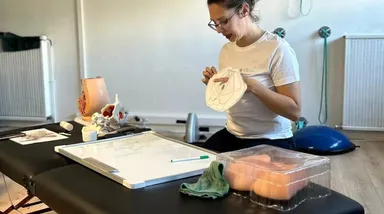
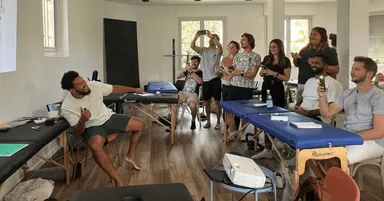
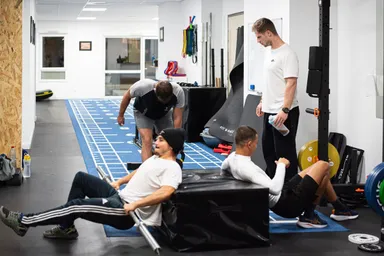
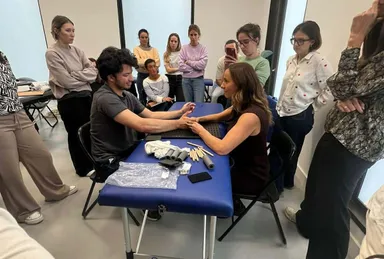
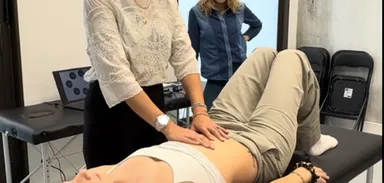
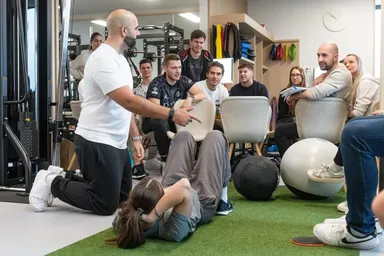
2 days of on-site teaching at the course venue (14h). The teaching materials are many and varied: PowerPoint, teaching videos, clinical cases. Time for practice in pairs is scheduled throughout the course.

Dates:

– Paris: 23 and 24 May 2026 (full) – Lyon: 17 and 18 September 2026 (full) – Lille: 7 and 8 November 2026

Who it is for: self-employed or salaried physiotherapists; osteopaths

No prerequisites for this course.

Price: 590€ TTC* Pre-registration at 50€ possible for 2026

*Pre-Learning on the site included – *Meals not included – *DPC/FIFPL funding

Multiple-choice test to validate what you have learnt, plus practical cases

1 instructor to answer all your questions on the subject.

1 technical and teaching support service available 7 days a week via the WhatsApp button at the bottom right.

The course provides what you need to manage jaw conditions.

Prerequisites

No prerequisites for this course.

Accessing the learning platform

Log in to the Physio-Learning platform, then complete the two-factor authentication (code received by SMS or email).

I have a specific need

If you have a disability, or if you need any particular adjustment for the course, whatever it may be, contact the team on WhatsApp by clicking here or, if you do not have WhatsApp, send us an email at hello@physio-learning.com!

Our course venues are always accessible to people with reduced mobility, and we will do our best to adapt to your situation. So do get in touch!

  1. DPC: the Agence nationale du DPC pays the training provider directly, subject to your application being approved and to your annual allowance still being available. Some of the cost may remain payable by you, depending on the course price and the amount funded. The attendance allowance is paid by the Agence, at its own rates and for on-site courses only. The DPC only covers healthcare professions bound by the French three-yearly requirement, and the allowance depends on the profession: the amounts shown are those for masseurs-kinésithérapeutes in 2026. A French scheme, open to healthcare professionals practising in France.
  2. FIFPL: you pay for the course, then claim reimbursement. It is full or partial depending on the course, and decided by the FIFPL independently of Physio Learning, within your remaining annual allowance and the budget allocated to your profession. The caps shown are those of the masseur-kinésithérapeute scale for 2026; other professions come under their own section's scale. An online course is capped at half these amounts. A French fund, open to self-employed practitioners registered in France.
  3. Number of professionals trained, rounded down to the nearest fifty, across all sessions of this course: 50+

Maxillofacial rehabilitation: from assessment to self-management

DPC : rien à avancer, participation indemnisée