Skip to content
Sign up
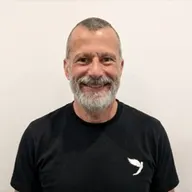
Miguel Galan, osteopath and instructor at Physio Learning

Physio Learning instructor

Miguel Galanosteopath, peripheral nerve disorders

An osteopath who qualified at the Collège ostéopathique de Provence in 2015 and holds a university diploma in clinical research methodology, he practises in the Pyrénées-Orientales. Pain and the understanding of it are his foundation; peripheral nerve disorders now make up the bulk of his caseload.

  • Canet-en-Roussillon (66)
  • Osteopath D.O since 2015
  • University diploma in clinical research
  • Pain education
  • French, Spanish, Portuguese

Miguel Galan's career

His is the path of a practitioner who chose first to understand: pain neuroscience, motivational interviewing, critical appraisal, research methodology. Peripheral nerve disorders came afterwards, and have become the greater part of his work.

  1. 2010 to 2015 · Initial training

    Osteopathy diploma (D.O)

    Collège ostéopathique de Provence, Aix-Marseille.

  2. Since 2015 · Clinical

    Osteopath in private practice

    Practising in Canet-en-Roussillon, with a focus on pain and peripheral nerve disorders.

  3. 2018 to 2019 · Research

    University diploma in clinical research methodology

    Université de Bordeaux, science, technology and health.

  4. 2018 to 2021 · Continuing education

    Pain neuroscience and communication

    Feldenkrais and neuroscience with Todd Hargrove, management of musculoskeletal pain with Gary Fryer, pain modulation with Lars Avemarie, hypnosis and pain with Théo Chaumeil, pain management with Anthony Halimi.

  5. 2020 to 2023 · Specialisation

    Neurodynamics, neuropathies and triage

    Neurodynamics and neuropathies with Bryan Littré, sciatica and femoral nerve pain with Laurent Fabre, vascular disorders with Olivia Ferrand and Bryan Littré, then the Physio Learning course on neurological disorders in musculoskeletal practice.

  6. Since 2024 · Teaching

    Instructor in neurological disorders

    After assisting Bryan Littré on his courses, he became a co-teacher, then sole instructor on this session.
What underpins his practice

  • Pain education and motivational interviewing, at the heart of his practice: what patients understand about their pain changes what they do with it.

  • Critical appraisal and methodology: a university diploma in clinical research, and a sustained watch on the literature.

  • Movement therapy and hypnosis: two tools he has worked on in continuing education since 2018.

Their course at Physio Learning

What participants say

  • Excellent!! A global approach with a sound neuro physio assessment thanks to triage and to ranking the clinical findings. A clear course, well explained.
    Guillaume R.Physiotherapist
  • A hugely enriching course to carry out a solid neuro assessment, know what to take from it and how to drive the treatment. I recommend it!!
    Léonie C.Physiotherapist
  • A great course with Miguel, who brought a lot of clarity to a topic that is nonetheless dense
    Alexis G.Physiotherapist

Frequently asked questions

Who is Miguel Galan?

Miguel Galan is an osteopath D.O who qualified at the Collège ostéopathique de Provence in 2015 and holds a university diploma in clinical research methodology from Université de Bordeaux. He works in private practice in the Pyrénées-Orientales, with a focus on pain and peripheral nerve disorders.

Which course does he teach at Physio Learning?

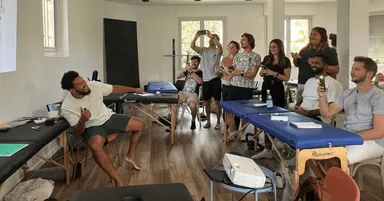
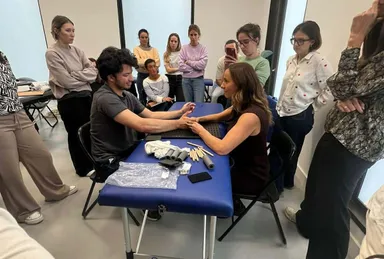
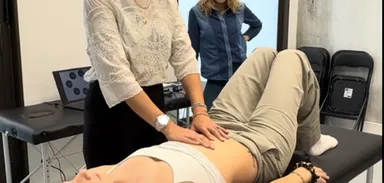
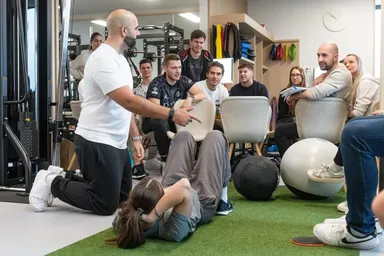
He teaches Neurological disorders in musculoskeletal practice, on-site: triage, assessment and treatment. The programme and practical details are on its course page.

How does his course differ from Bryan Littré’s?

It does not differ in substance: it is the same course, on different sessions. Miguel Galan first assisted Bryan Littré before becoming a co-teacher in 2024, then running his own sessions. All our courses in this field are gathered on the neurology courses page.

Is this course also open to osteopaths?

The intended audience is stated on the course page. Miguel Galan is himself an osteopath: the clinical reasoning and triage he teaches concern any practitioner who sees pain of neurological origin in a musculoskeletal context.