On-siteDPCFIFPLEnrolment is open2 days · 14hOn-site course
Newprofessionals waiting for this new course
New courseby Théo Ultré
Qualiopicertified training provider
Why this course?
A practical, person-centred, evidence-based approach to managing low back pain in athletes.
No more off-the-shelf recipes. Reasoning comes first.
Tired of standardised protocols applied indiscriminately to every case of low back pain? Afraid of loading a painful back?
This course offers you structured thinking , rooted in the reality of the sporting field, to understand the mechanisms of pain and to dose load intelligently.
The aim: to support a lasting return to sport by making your patient self-sufficient in the face of their pain.
✕Worry and a lack of clarity when the patient flares up again
✕Passive sessions that create patient dependency
After the course
✓Safe implementation of progressive overload (EBP)
✓An individualised rehabilitation plan geared to return to sport
✓Concrete tools to make the patient self-sufficient during a flare-up
✓Effective, reassuring therapeutic communication
Learning outcomes
Clinical presentations
Identify and tell apart the various clinical presentations of low back pain in athletes.
Functional assessment
Carry out a precise functional and contextual clinical assessment.
Progressive overload
Understand and apply the principles of progressive overload to the lumbar spine.
Therapeutic exercise
Design and adapt relevant exercises according to tolerance.
Communication
Develop effective therapeutic and educational communication (BPS model).
Return to sport
Build an individualised rehabilitation plan geared to return to sport.
Ready to master the athlete's back?
Your instructor
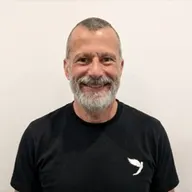
Hi, I'm Théo!
A self-employed physiotherapist specialised in sports physiotherapy, return to performance and management of the spine. After several years practising in the Lille area, he settled in La Teste-de-Buch in 2022, where he works with athletes both in the clinic and remotely, notably on low back pain and persistent pain.
His practice draws on very thorough continuing education (sports physiotherapy, manual therapy, McKenzie, shoulder, strength training) and solid experience in the field (CrossFit, Muay Thai, national-level rugby). Alongside this, he is building a science communication activity to make current evidence more accessible.
8 modules to understand the mechanisms at play, dose load intelligently and support a lasting return to sport.
1 / 9
01
Assessment and analysis of the athlete
Identify the clinical information with the greatest impact.
Set aside superfluous data to clarify your reasoning.
Sort patients into subgroups.
02
Assessing the athlete's lumbar spine
Identify the tests that are relevant for guiding programming.
The clinical value of strength, mobility and motor control tests.
Select tests that genuinely change management.
03
Progressive overload applied to the spine
Understand the principles by which the spine adapts to load.
Explain the principle of progressive overload to the patient.
Identify the criteria and the warning signs when reloading.
04
Core exercises for rehabilitation
Classify exercises according to the demands they place and their aims.
Choose a relevant exercise (the patient's clinical picture and sport).
Know how to perform, adapt and coach the exercises.
05
Advanced exercises and choices under constraint
Adapt exercises to complex clinical situations.
Manage sports participation and rehabilitation at the same time.
Weigh up performance, tolerance and safety.
06
Planning a return-to-sport block
Draw up a plan suited to the sport and its demands.
Know when to progress, maintain or regress.
Build in self-regulation strategies.
07
Managing flare-ups and fluctuations
Know how to respond to a resurgence of pain.
Support the patient in managing fluctuations on their own.
Adapt management without interrupting progress.
08
Return-to-sport criteria (RTS / RTP)
Decide on a reasoned, individualised return to sport.
Explain and justify your decision to the patient.
Consolidate self-management and prevent recurrence.
They trained with us
Join the community of professionals trained by Physio Learning.
8,450+professionals registered with Physio Learning
⭐ 4.8/5Overall average rating
📍 Map coming soon
Funding available
Two French schemes can fund it, for practitioners working in France. What sets them apart: what you pay upfront, and when.
DPC
Fully funded*
The Agence nationale du DPC, the French agency for continuing professional development, pays the training provider directly, and your attendance is compensated. Open to healthcare professionals practising in France.
You pay upfront
Nothing
The Agence covers
The full cost of the course
and pays you 266 € to 532 € for attending
* Some of the cost may remain payable by you, depending on the course price and the amount funded.
1You register on agencedpc.fr and choose your session.
2Your application is approved: the Agence pays Physio Learning, you pay nothing upfront.
3You receive your allowance in the months following the course.
DPC action no. 99GX2626002
DPC allowance for masseurs-kinésithérapeutes, 2026: not every profession comes under the DPC, and those that do are not on the same allowance. Subject to your application being approved and to your annual allowance still being available. A French scheme, for professionals practising in France.1
FIFPL
Up to 600 € reimbursed
You pay for the course, then claim reimbursement from the FIFPL, the French training fund for self-employed professionals. Open to practitioners registered in France.
You pay upfront
The course fee
The FIFPL reimburses
Up to 600 €
300 € per day over 2 days, up to 900 € a year
For the exact amount in your own situation, put the request to the FIFPL.
1You book your place and pay for the course.
2You file your claim with the FIFPL, enclosing the programme and the quote.Programme PDF
3The FIFPL reimburses you after the course.
Registered with the FIFPL: kinésithérapeutes S0620260380416
Amounts from the masseur-kinésithérapeute scale, 2026: each profession has its own. Reimbursement is decided by the FIFPL, based on your remaining annual allowance and on the budget allocated to your profession. A French fund, for self-employed practitioners registered in France.2
The course in pictures
Invest in your expertise
Value 890€590€
TTC · Pré Learning included
↳ that is 295€ / day of training
Meals not included
Included in the course
2 days of on-site training (14h)
PowerPoint, videos, clinical cases
Practice in pairs
Multiple-choice test + practical cases to validate learning
Teaching support 7 days a week
DPC / FIFPL funding
🎁 Bonus included
Lifetime access to the dedicated community (WhatsApp)
Listing on PhysioMaps once you complete the course
Leave your email: we will let you know as soon as a session opens.
✓ Qualiopi-certified training provider✓ No prerequisites
✓ Certificate and paperwork kept for you
✓ Instructor support after the course
✓ Dedicated app, lifetime access
Find out more
Next course session / Drop Learning
The next course will take place in PARIS on 17 and 18 October 2026.
Most of our courses are Drop Learning, so feel free to set up your own! If there are 15 to 20 of you keen to learn and you have a venue, we drop the instructor off at your place. Contact the team on WhatsApp.
If your application is approved and depending on your annual allowance, the course may be funded by the DPC, the French continuing professional development scheme.
To enrol through the DPC: go to agencedpc to sign up for your session (activity no.: 99GX2626002 ).
If your application is approved and depending on your annual allowance, the course may be reimbursed by the FIFPL, the French funding body for self-employed professionals. Physiotherapy NACPRO number: S0620260380416 .
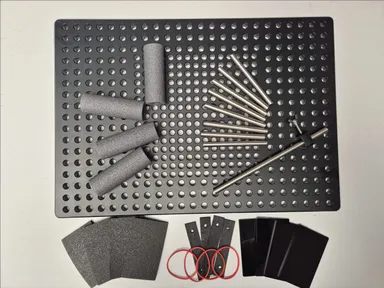
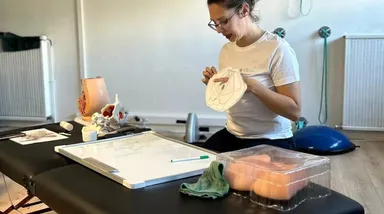
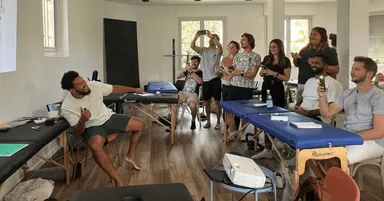
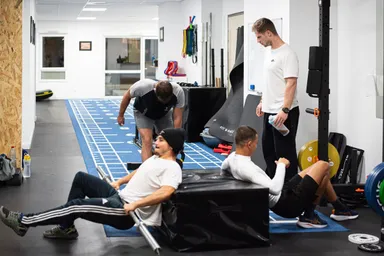
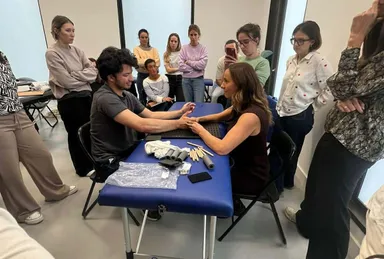
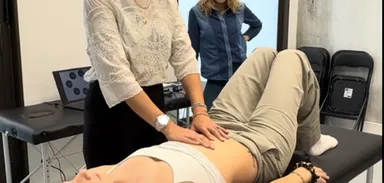
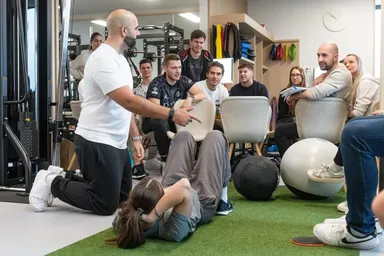
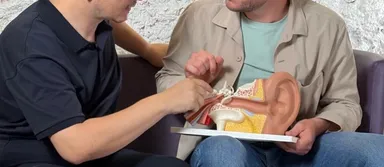
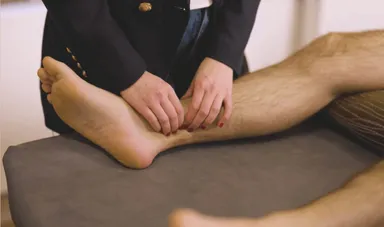
2 days of on-site teaching (14h). The teaching materials are many and varied: PowerPoint, teaching videos, clinical cases. Time to practise in pairs is scheduled throughout the course.
Date: 17-18 October 2026 in PARIS. Follow us on social media to hear about future dates.
Who it is for: self-employed or salaried physiotherapists; osteopaths. No prerequisites for this course.
*Pré Learning on the website included – *Meals not included – *DPC/FIFPL funding possible
A multiple-choice test to validate what you have learnt, plus practical cases. 1 instructor to answer all your questions on the subject. 1 technical and teaching support service available 7 days a week. 1 lifetime access to the dedicated WhatsApp community.
Prerequisites
No prerequisites for this course.
Accessing the learning platform
Log in to the Physio-Learning platform, then complete two-factor authentication (code received by SMS or email).
Course venues are always wheelchair accessible, and we will do our very best to adapt to your situation! So do get in touch!
1.DPC: the Agence nationale du DPC pays the training provider directly, subject to your application being approved and to your annual allowance still being available. Some of the cost may remain payable by you, depending on the course price and the amount funded. The attendance allowance is paid by the Agence, at its own rates and for on-site courses only. The DPC only covers healthcare professions bound by the French three-yearly requirement, and the allowance depends on the profession: the amounts shown are those for masseurs-kinésithérapeutes in 2026. A French scheme, open to healthcare professionals practising in France.
2.FIFPL: you pay for the course, then claim reimbursement. It is full or partial depending on the course, and decided by the FIFPL independently of Physio Learning, within your remaining annual allowance and the budget allocated to your profession. The caps shown are those of the masseur-kinésithérapeute scale for 2026; other professions come under their own section's scale. An online course is capped at half these amounts. A French fund, open to self-employed practitioners registered in France.