Skip to content
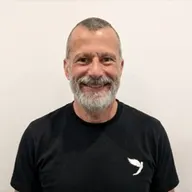
Antoine Couly, physiotherapist and instructor at Physio Learning

Physio Learning instructor

Antoine Coulyphysiotherapist, persistent pain and psychology

A physiotherapist in private practice since 2017, he also holds a master’s degree in psychology, motor control and sports performance. He teaches the psychological factors of pain at a physiotherapy school and co-wrote “Tiens-toi droit ?!”, published by Flammarion.

  • Levallois-Perret (92)
  • Private practice since 2017
  • Master’s in psychology
  • Co-author, Flammarion
  • Persistent pain

Antoine Couly's career

A physiotherapist who went back to university for psychology in order to understand what pain does to people. That is where his teaching at the ENKRE, his book and the two courses he leads come from — one on psychological factors, the other on endometriosis.

  1. 2014 to 2017 · Initial training

    French State Diploma in physiotherapy

    With a dissertation in respiratory care on massage and anxiety in patients with COPD, presented at the Journées francophones de la kinésithérapie in 2017.

  2. 2017 to 2018 · University

    Master’s in psychology, motor control and sports performance

    Université Paris-Sud, with a biomechanics dissertation on cervical mobility and gait initiation.

  3. Since 2017 · Clinical

    Physiotherapist in private practice

    Practising in Levallois-Perret, with a focus on persistent pain and respiratory physiotherapy.

  4. Since 2017 · Academic teaching

    Lecturer at the ENKRE

    École nationale de kinésithérapie et de rééducation de Saint-Maurice, on the psychological factors involved in pain.

  5. 2021 to 2022 · Continuing education

    Neuropathies and pain management

    Neuropathies and entrapment syndromes with Bryan Littré, pain management with Anthony Halimi.

  6. Since 2022 · Writing

    Co-author of “Tiens-toi droit ?!”

    A book written with Olivia Ferrand and published by Flammarion, alongside ongoing critical work on what physiotherapy takes for knowledge.
Writing, teaching and community work

  • “Tiens-toi droit ?!”, co-written with Olivia Ferrand and published by Flammarion: what science does — and does not — say about posture.

  • Lecturer at the ENKRE in Saint-Maurice on the psychological factors involved in pain.

  • Critical thinking in physiotherapy: he runs an account followed by sixty thousand people, devoted to the critical examination of what the profession takes for knowledge.

  • Co-founder of a sport and health association that enables people living with Alzheimer’s disease to play table tennis.

Their courses at Physio Learning

What participants say

  • The explanations are simple, which makes putting things into practice easier. I finally understood some tools and content already covered in other courses, but which I had not really managed to apply in the clinic. I find your course clear and relevant!
    Oriane L.Physiotherapist
  • A lot of excellent content. I liked the neurophysiology of pain, and the bonus material on looking after yourself as a clinician. Plenty to take away and think about, all of it explained clearly. Thank you for this course.
    Sophia F.Physiotherapist
  • Really useful, really practical — this is my first course since qualifying (physio + Master's in adapted physical activity). The communication keys are not always easy to put in place in the clinic, but you leave with good tips, and the role-play videos are great!
    Charlie H.Physiotherapist

Frequently asked questions

Who is Antoine Couly?

Antoine Couly has been a physiotherapist in private practice since 2017 and holds a master’s degree in psychology, motor control and sports performance from Université Paris-Sud. He teaches the psychological factors of pain at the ENKRE and co-wrote “Tiens-toi droit ?!”, published by Flammarion.

Which courses does he teach at Physio Learning?

Three: Psychological disorders and pain, and endometriosis from A to Z, on-site as well as e-learning.

Is his pain course really a psychology course?

It is a physiotherapy course: recognising the psychological factors that keep persistent pain going, knowing what to do with them within a session, and knowing when to refer. It is co-taught with a clinical psychologist, precisely in order to hold that boundary.

What is his position on posture?

That most of the postural instructions given to patients rest on nothing solid — this is the argument of his book, co-written with Olivia Ferrand, and a position he holds as part of an evidence-based practice approach.