


Kiné on Fire
- Online
- 23 h
The accounting part of the course he co-teaches with Martin Millet: reading your balance sheet, understanding your costs, and knowing what those figures actually allow you to decide.
Discover the courseGo further

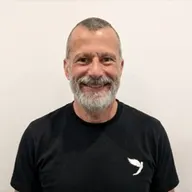
Physio Learning instructor
A state-registered physiotherapist who qualified at the IFMK d'Alençon physiotherapy school in 2016, he also holds a master's degree in animal biology and Canadian physiotherapy equivalence. Head of a spine unit and then a lecturer at a physiotherapy training institute, he now trains private-practice physiotherapists in the accounts of their own practice.
2016
State Diploma in Physiotherapy, IFMK d'Alençon
2
Manual therapy certifications: McKenzie and Mulligan
2016 to 2018
Head of the spine unit at a specialist centre
2021
Lecturer at a physiotherapy training institute
The spine first, practice management second. After leading a spine unit and teaching manual therapy, he found that what newly established practitioners lacked most was not clinical: it was understanding their own balance sheet.
2016 · Initial training
IFMK d'Alençon, after a master's degree in animal biology.
2016 to 2018 · Clinical
Care focused on low back pain and neck pain.
In practice · Clinical
Private practice in France, together with physiotherapy equivalence obtained in Canada.
2021 to 2022 · Academic teaching
Ongoing · Continuing education
McKenzie and Mulligan certifications, lumbar spine manual therapy following the Canadian system, neurodynamics, lumbar patho-anatomical diagnosis with Mark Laslett, differential diagnosis with Chad Cook, shoulder with Jo Gibson.
Today · Teaching
He passes on the accounting side of private physiotherapy practice, with one conviction: understanding your balance sheet is the easiest way to save money.
McKenzie and Mulligan certifications, two full programmes in manual therapy and mechanical reasoning.
Lecturer at a physiotherapy school in 2021 and 2022, on the musculoskeletal modules.
Continuing education: acute and persistent low back pain with Mark Laslett, reconciling biomechanics and neuroscience with Greg Lehman, motivational interviewing, running, hip and elbow.
The accounting part of the course he co-teaches with Martin Millet: reading your balance sheet, understanding your costs, and knowing what those figures actually allow you to decide.
Discover the coursePlease note. This course is strictly educational. It does not constitute wealth management advice, investment advice or a personalised recommendation within the meaning of articles L. 541-1 et seq. of the French Monetary and Financial Code, and it is no substitute for the advice of a chartered accountant.
Jérôme Madeira is a state-registered physiotherapist who qualified at the IFMK d'Alençon in 2016, and holds a master's degree in animal biology and Canadian physiotherapy equivalence. A former head of a spine unit and a lecturer at a physiotherapy school, he trains private-practice physiotherapists in running their practice.
He co-teaches Kiné on Fire with Martin Millet, as e-learning: accounting and management for a private practice.
No. It is educational: it teaches you to read your balance sheet and understand your costs, so you can talk usefully with your accountant — not do without one.


See all 36 Physio Learning instructors or explore all our physiotherapy courses.