










OnlineFIFPL


Neurological rehabilitation
Neurology and geriatrics
Bryan Littré · Lucas Meilhou
Go further
FTD, Alzheimer's and Lewy body disease: what each major neurocognitive disorder changes in the physiotherapy session, falls and communication.

It is not "how much memory has been lost" that matters, but which disease: FTD, Alzheimer's or Lewy body disease each dictate their own approach to a session.
1.2million people affected in France by a major neurocognitive disorder
What follows covers each of these points in detail, with sources. It is there if you need it.
This topic is taught in a course: Neurology and geriatrics, online with Bryan Littré.
1 / 14
13 article chapters · 55 min in total
Defining◔ 3 min
The DSM-5 dropped the word "dementia" in favour of major neurocognitive disorder, defined by aetiology.
Common ground◔ 2 min
The patient comes because they fall or can no longer get up from their armchair.
Evidence◔ 6 min
The reference review pools 43 randomised trials and 3,988 participants, graded with GRADE.
Instruction◔ 4 min
The memory that recounts the session and the one that performs the movement again are not the same.
Falls◔ 4 min
Patients with dementia fall nearly eight times more than controls.
FTD◔ 7 min
The behavioural variant is about four times more frequent than primary progressive aphasias.
Alzheimer's◔ 6 min
The patient keeps the ability to execute for a long time, and loses early the ability to retain the instruction.
Lewy body disease◔ 9 min
81% of Lewy body patients who received a neuroleptic reacted badly.
Lewy vs Parkinson's◔ 1 min
Both diseases belong to the same pathology; the boundary that separates them is chronological.
Comparing◔ 3 min
The physiotherapist does not make the diagnosis, but needs to know which disease drives the session.
Case studies◔ 3 min
An 85-year-old Alzheimer's patient saw her Tinetti score go from 8/28 to 16/28 in four weeks.
In practice◔ 4 min
Always the same beginning: same time, same room, same first task.
Questions◔ 3 min
Exercise improves strength, balance and gait speed, with a strong level of evidence.
Train on this
Neurological rehabilitation
Bryan Littré · Lucas Meilhou
Next comes practice: the course that teaches this topic, with Bryan Littré.
Our courses on this topic may be covered by DPC or FIFPL, the French continuing-education funding schemes, depending on your profession and situation.
Three distinct diseases, one and the same job. Faced with a patient who has a major neurocognitive disorder, the physiotherapist always does the same four things: adapt the instruction to a memory that no longer holds anything, prevent falls eight times more frequent than at the same age, hold on to independence for as long as possible, and work with the carer rather than alongside them. What changes from one aetiology to the next is the way it is done. This review first sets out that common ground and its exact level of evidence, negative trials included, then what frontotemporal lobar degeneration, Alzheimer's disease and Lewy body disease each require you to do differently. Only one of these three diseases carries an immediate risk to life from an ordinary prescription: it gets a box of its own.
In brief
Three figures that govern management
The risk of falling, the frequency of orthostatic hypotension in Lewy body disease, and the proportion of severe reactions to neuroleptics in that same disease.
Sources: Allan LM, et al. PLoS One 2009;4(5):e5521 (PMID 19436724); Isik AT, et al. Clin Auton Res 2023;33(2):133-141 (PMID 36862320); McKeith I, et al. BMJ 1992;305(6855):673-8 (PMID 1356550).
The vocabulary has changed, and it is not cosmetic: it has moved the question from “how much memory has been lost” to “which disease, and therefore what course of action”. That is exactly the question a physiotherapist asks before the first session.
The DSM-5, then its 2022 revision, dropped the word “dementia” in favour of major neurocognitive disorder, defined by significant cognitive decline in at least one domain, enough to compromise independence in the activities of daily living.14 The diagnosis is then broken down by aetiology: major neurocognitive disorder due to Alzheimer's disease, to frontotemporal lobar degeneration, with Lewy bodies, of vascular origin, and so on. It is this second part that matters for the session.
The Haute Autorité de Santé, in its care pathway guide of May 2018, states what practice confirms every day: “even though Lewy body disease or vascular and frontotemporal neurocognitive disorders are designated as ‘related diseases’, their warning signs and their management differ appreciably from those of Alzheimer's disease”.12 A patient with a neurocognitive disorder is therefore not interchangeable with another.
The Global Burden of Disease estimated 57.4 million people affected worldwide in 2019 (uncertainty interval 50.4 to 65.1), and projects 152.8 million in 2050 (130.8 to 175.9). Age-standardised prevalence, on the other hand, is stable: the growth comes from ageing and demography, not from an epidemic. In Western Europe, the projected rise in the number of cases is 74 % (58 to 90). Women are 1.69 times more numerous than men among those affected.1
In France, Santé publique France puts the figure at about 1,200,000 people affected in 2014, including nearly 24,000 before the age of 65, with a frequency about twice as high in women.13 Those 24,000 young cases are the blind spot of clinical reasoning: that is where frontotemporal degeneration hides, and that is where it is first called depression or burnout.
Four epidemiological landmarks
What to keep in mind before reasoning about a given patient.
Sources: GBD 2019 Dementia Forecasting Collaborators. Lancet Public Health 2022;7(2):e105-e125 (PMID 34998485); Santé publique France, 2014 data; Schneider JA, et al. Neurology 2007;69(24):2197-204 (PMID 17568013); Vann Jones SA, O'Brien JT. Psychol Med 2014;44(4):673-83 (PMID 23521899).
The autopsy series of the Rush Memory and Aging Project, 141 brains, gives the most useful result in this whole chapter. Among patients with dementia, only 30 % had pure Alzheimer's disease ; 38 % combined Alzheimer's and cerebral infarcts, 12 % Alzheimer's and Lewy body pathology. In all, more than half of those with dementia carried several neuropathological diagnoses, against fewer than 20 % of those without dementia, and the presence of several pathologies multiplied the probability of being demented by 2.8 (CI 1.2 to 6.7).2
Practical consequence: a patient labelled “Alzheimer's” who shows marked fluctuations, visual hallucinations or rigidity is not necessarily mislabelled, they may be both. Reasoning by entity, which is how this article is built, is a tool for deciding what to do, not a promise of nosological purity.
Key points
Before separating the three diseases, we have to set out what does not separate. Four objectives hold, from diagnosis to the end: they depend neither on the protein involved nor on the lobe affected.
A patient with a major neurocognitive disorder never comes to rehabilitation for their memory. They come because they fall, because they can no longer get out of their armchair, because their wife can no longer walk them to the car. The request is motor and functional. What the disease changes is the channel through which you can act on it.
It is the precondition for everything else, and it is the only point where physiotherapy for neurocognitive disorder is genuinely a discipline apart. An exercise the patient does not understand, does not encode or does not accept has no effect, however sound it is biomechanically. The chapter devoted to adapting the instruction sets out the mechanisms you can use, procedural memory first among them.
This is the dominant risk, and it is massive. The only prospective study to have followed patients with dementia for twelve months, split by aetiology, with an age-matched control group, measures 9,118 falls per 1,000 person-years against 1,023 in the controls, an incidence density ratio of 7.58 (CI 3.11 to 18.5).3 The chapter on falls sets out the predictors, three of which can be changed by a care action.
The aim is not to make progress, it is to decline more slowly. That is a difference in kind from rehabilitating a sprain, and it must be said to the patient as to the carer: success looks like stability. The Finnish FINALEX trial, 210 Alzheimer's patients living at home with their spouse as carer, is the best illustration available: every group declined over a year, but the loss on the Functional Independence Measure was 7.1 points with an individual home exercise programme, 10.3 with a group programme, and 14.4 with no programme.8 You do not climb back up the slope, you make it half as steep.
The carer is the only person present for the 165 hours of the week when the physiotherapist is not. In FINALEX, the most effective arm was the home arm, with the spouse in the room.8 The Cochrane review also identified, in a single trial of 40 dyads, a fall in carer burden when the carer supervises the programme themselves (mean difference 15.30 points, CI 5.87 to 24.73): fragile data, one trial only, but pointing the same way as everything else.5
The question is not whether the patient will remember the session. They will not. The question is whether their body has kept something, and whether the person who lives with them knows what to do with it tomorrow morning.
This is the most important chapter of this article, and the most uncomfortable. The literature is clear on two opposing points: exercise does very well what exercise does, and it does not do what we would like it to do.
The systematic review most useful to the physiotherapist is the one in the Journal of Physiotherapy : 43 randomised controlled trials, 3,988 participants with mild cognitive impairment or major neurocognitive disorder, effects graded with GRADE. With a strong level of evidence, supervised exercise improves:4
The dose associated with these results is precise and reproducible in the clinic: about 60 minutes, 2 to 3 days a week, supervised. And a detail that changes the selection of patients: it is the low motor level at baseline, and not the cognitive level, that predicts the best response to training.4 In other words, a patient who is very diminished physically is not a poor candidate, they are the best one.
On the parameter that is most specifically a physiotherapy matter, walking, a double-blind randomised trial provides the clearest demonstration. Sixty-one patients averaging 81.9 years, mild to moderate neurocognitive disorder, three months of progressive strengthening and functional training two times two hours a week, against a low-intensity placebo motor programme: speed (p < 0.001), cadence (p = 0.002), step length (p = 0.008), cycle duration (p = 0.001) and double support duration (p = 0.001) all improved, with large effect sizes, Cohen's d from 0.80 to 1.27. Adherence reached 91.9 %.9
Two parameters, on the other hand, did not move in that trial: step width and temporal step variability. And it is precisely variability that is the best-established marker of fall risk. Strengthening changes gait; it does not yet change its regularity.
The idea that exercise slows cognitive decline is appealing, very widespread, and refuted by the largest trial that has tested it. The DAPA trial randomised 494 patients with mild to moderate neurocognitive disorder, 2 to 1, between four months of moderate to high intensity aerobic and strength training and usual care. At twelve months, the adjusted difference on the ADAS-Cog was 1.4 points against the exercise group (CI 0.2 to 2.6, p = 0.03), that is, slightly poorer cognition in those who had trained. The authors themselves stress that the gap is small and of uncertain clinical relevance. Physical capacity, for its part, had improved: 18.1 metres more on the 6-minute test at six weeks (CI 11.6 to 24.6). Adherence was good, with 214 of the 329 patients attending more than three quarters of the sessions: this is not a trial that failed for want of participation.6
The Cochrane review, 17 trials and 1,067 participants, points the same way on cognition: standardised mean difference of 0.43 (CI 0.05 against to 0.92 in favour), massive heterogeneity at 80 %, quality of evidence judged very low. It does find a signal on activities of daily living, standardised mean difference of 0.68 (CI 0.08 to 1.27), but with the same heterogeneity and the same very low quality. No effect on neuropsychiatric symptoms or on depression.5
Lastly, the British PrAISED trial, published in 2023, is the hardest to take because it tested exactly what this article recommends. Three hundred and sixty-five people with early neurocognitive disorder or mild cognitive impairment, a home rehabilitation programme designed specifically for dementia, covering strength, balance, physical activity and the activities of daily living, up to 50 sessions over twelve months, with a reported average of 121 minutes of exercise a week. Result: no difference on the disability scale for dementia (adjusted difference 1.3 points, CI 5.2 against to 2.6 in favour; Cohen's d 0.06), and a non-significant reduction in falls, 79 falls against 200 in the control group, but an adjusted incidence rate ratio of 0.78 with a confidence interval of 0.5 to 1.3 (p = 0.3).7
How to read a negative trial without throwing out rehabilitation
PrAISED and DAPA do not say that physiotherapy is useless in major neurocognitive disorder. They say three precise things. One: exercise does not alter the cognitive trajectory of the disease, and promising that is a fault. Two: a generic programme, even an intensive one and even a well-followed one, is not enough to move a global independence score over twelve months. Three: the measurable benefit lies in the physical capacities, which are exactly what the physiotherapist measures and follows. The operational conclusion is not to stop, it is to set objectives on what exercise really shifts, and to write them as such in the assessment.
Improves strength, balance, gait speed and endurance. Dose: 60 min, 2 to 3 times a week. Figures given earlier in this chapter.4
Improves the spatiotemporal parameters of gait, large effect sizes (d 0.80 to 1.27), but with no effect on step variability.9
FINALEX shows functional decline halved at one year at home8 ; PrAISED finds no effect on disability despite 50 sessions.7 The difference probably lies in the population and in the comparator arm.
Superior to trial and error on a procedural task, with a d of 1.61 at delayed testing in the mild to moderate forms; an experimental demonstration, clinical transfer not proven.10
Effect judged inconclusive by the GRADE review4 ; PrAISED, the most powerful trial, does not establish it (IRR 0.78; CI 0.5 to 1.3).7 To be set against a very real observational protective factor (see the chapter on falls).
DAPA, 494 patients: 1.4 ADAS-Cog points against the exercise group.6 Cochrane finds no effect.5 Do not promise it.
STRONG evidence of no effect in the GRADE review of 43 trials.4 A finding we do not like, and which remains true.
How to read this: the pills give the level of evidence as it was graded by the authors of the reviews cited, and not an appraisal made by this article.
What exercise shifts, and by how much
Mean effects and 95 % confidence intervals, across 43 randomised trials and 3,988 participants, all graded “strong evidence” unless stated otherwise.
The first four rows come from Lam FM, et al. J Physiother 2018;64(1):4-15 (PMID 29289581), strong level of evidence according to GRADE. The “cognition” row comes from Lamb SE, et al. BMJ 2018;361:k1675 (PMID 29769247), a randomised trial of 494 patients. The scales are not comparable with one another: each row is to be read against its own line of no effect.
Key points
This is the know-how specific to this population. It rests on a simple neuropsychological dissociation: the memory that lets you recount the session and the memory that lets you perform the movement again are not the same, and they do not deteriorate at the same rate.
A patient who cannot say what they did ten minutes ago can nonetheless improve their performance on a repeated motor task. That is procedural memory, and every rehabilitation that is possible in major neurocognitive disorder rests on it. The practical implication is direct: you do not explain an exercise, you get it done, and you get it done again.
The cleanest trial on this point compares errorless learning, where the patient is given the cue before they can go wrong, with trial-and-error learning, where the cue only comes after the mistake. Sixty participants, split into three groups of twenty: severe neurocognitive disorder, mild to moderate disorder, and controls with no disorder. Performance was overall better after errorless learning (p = 0.012), with a maximal effect size in the mild to moderate group at delayed testing 1 to 3 days later, Cohen's d of 1.61. And the most interesting point: the gap between the two methods grows with the delay.10
Why does that gap grow? Because a mistake once made is encoded as a trace, and the patient no longer has the explicit memory that would let them recall that the trace was wrong. They retain the error with the same strength as the success. In a healthy person, explicit memory sorts it out; here, it no longer does.
| Situation | Instruction to avoid | Instruction to prefer | Why |
|---|---|---|---|
| Starting a sit-to-stand | “So, how do we go about standing up?” | “Feet there. Hands here. We stand up.” | An open question calls for explicit retrieval, which is not available, and sets the patient up to fail before the first movement. |
| Correcting a support point | “No, not like that, start again” | Guide the hand or the foot to the right place BEFORE the movement starts | A mistake once made is encoded and repeated: that is the very principle of errorless learning.10 |
| Linking two exercises | A two-part instruction: “you go up then you turn” | One action, one sentence, a pause, then the next | A verbal and motor dual task is the leading cause of disorganised movement. |
| Getting the exercise repeated at home | A written sheet handed to the patient | A sheet handed to the carer, plus a demonstration performed in front of them | The patient will not read the sheet, or will read it without connecting it to the action. The carer, on the other hand, is there every day.8 |
| Obtaining participation | Arguing the long-term benefit | Anchoring the exercise in an activity that means something to the person | Projecting into the long term assumes a prospective memory that is already affected; a meaningful activity, on the other hand, engages without arguing.21 |
A case series published in the Journal of Geriatric Physical Therapy tempers the enthusiasm. Three women aged 89 to 95, moderate Alzheimer's disease, in residential care, received twelve physiotherapy sessions over four weeks explicitly incorporating errorless learning, massed repetition and spaced retrieval. All improved on the objective balance measures, but only one exceeded the minimal detectable change, and neither the Timed Up and Go nor comfortable gait speed changed. The authors conclude that the feasibility of the errorless paradigm was limited in practice.25
This is a finding to hold on to: the learning principles that come out of the laboratory are robust, their transfer to a real session with a 93-year-old patient is not yet. We apply them because they are plausible and cost nothing, not because they are demonstrated at that level of detail.
Errorless learning against trial and error: the gap widens with the delay
Procedural task, 60 participants split into three groups of 20. The effect size is measured at delayed testing 1 to 3 days later.
Source: Kessels RP, Hensken LM. NeuroRehabilitation 2009;25(4):307-12 (PMID 20037224). The “severe disorder” and “no disorder” bars show the direction of the effect reported by the authors, with no published figure for each subgroup: only the d of 1.61 in the mild to moderate group is a number from the article.
Key points
This is the most frequent reason for referral, and the only area where physiotherapy in this population has an objective that nobody disputes. The difficulty is that the strongest factor is not a motor one.
The reference study followed 179 people over 65 for twelve months with a prospective falls diary: 38 with Alzheimer's disease, 32 with vascular disorders, 30 with Lewy body disease, 40 with Parkinson's dementia and 39 healthy controls. Patients with dementia fell nearly eight times more often than the controls: 9,118 falls per 1,000 person-years against 1,023, incidence density ratio 7.58 (CI 3.11 to 18.5).3
On univariate analysis, two predictors dominate: belonging to the Lewy body group in the broad sense (Lewy body disease and Parkinson's dementia together) multiplies the risk by 3.33 (CI 2.11 to 5.26); having fallen in the previous twelve months multiplies it by 2.52 (CI 1.52 to 4.17).
But it is the multivariate predictors that matter for care, because they are modifiable:
What predicts a fall in major neurocognitive disorder
Hazard ratios and 95 % confidence intervals. Left of the line, protective factor; right, risk factor.
Source: Allan LM, Ballard CG, Rowan EN, Kenny RA. Incidence and prediction of falls in dementia: a prospective study in older people. PLoS One 2009;4(5):e5521 (PMID 19436724). The first two ratios are univariate, adjusted for age and sex; the four that follow are multivariate. Non-linear scale, chosen for legibility.
Three direct consequences, and one qualification.
First, the blood pressure cuff enters the assessment. Symptomatic orthostatic hypotension doubles the risk of falling, and it takes three minutes to measure: blood pressure lying down after five minutes of rest, then standing at one and three minutes. This is not an encroachment on the medical role, it is a screening test whose result determines the day's session and the content of the letter to the doctor.
Second, mood is a fall factor. A high depression score predicts falls independently of everything else. An apathetic patient who refuses to stand up is not a non-compliant patient, they may have a symptom that calls for treatment.
Third, physical activity is the only protective lever identified in this cohort. It is the soundest argument in favour of intervening, and it must be quoted for what it is: an observational association, not an effect demonstrated by a trial.
For that is where the qualification lies, and it must be stated plainly. The intervention trials have not confirmed the promise. The GRADE review of 43 trials judges the effect of exercise on falls inconclusive.4 PrAISED, the largest trial designed specifically for this population, finds 79 falls against 200, which looks spectacular, but an adjusted incidence rate ratio of 0.78 with an interval running from 0.5 to 1.3: statistically, no conclusion is possible.7 FINALEX, for its part, reports significantly fewer falls in both of its exercise arms.8
The physiotherapist who promises a family that they will prevent falls promises what the literature does not support. The one who treats orthostatic hypotension, flags depression and maintains walking acts on three factors that we know count.
Red flags for a fall in a patient with a neurocognitive disorder
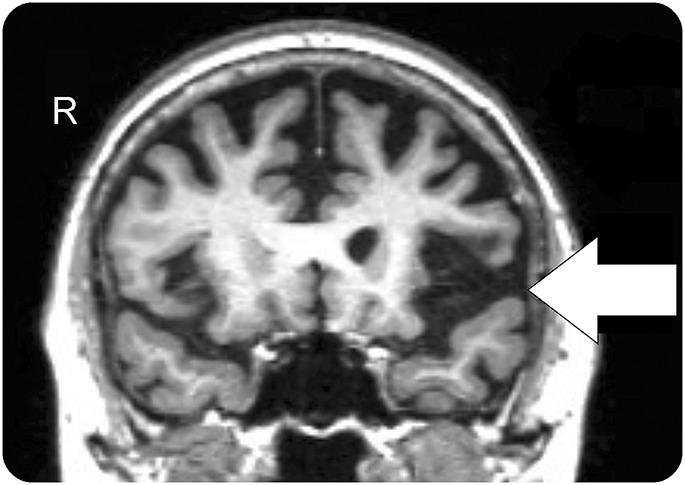
MRICoronal T1-weighted brain MRI: asymmetric atrophy of the left insula and opercular inferior frontal gyrus (arrow), an appearance typical of nonfluent variant primary progressive aphasia, a form of frontotemporal degeneration.
Source : Marshall et al., Neurology, 2016 · CC BY
This is the disease on this list that least resembles the idea we have of a dementia. The patient is often young, remembers their address and their grandchildren's first names perfectly, and does not do what is asked of them. The temptation to conclude a lack of motivation is almost irresistible, and it is wrong.
Frontotemporal lobar degenerations cover several clinical syndromes, two of which dominate practice: the behavioural variant, by far the most frequent, and the primary progressive aphasias, themselves split into three variants (non-fluent or agrammatic, semantic, logopenic) by the international classification of 2011.16 The ratio between the two is about four to one in favour of the behavioural variant.18
The most recent meta-analysis, 32 population studies, puts overall incidence at 2.28 per 100,000 person-years (CI 1.55 to 3.36) and prevalence at 9.17 per 100,000 (CI 3.59 to 23.42). For the behavioural variant alone, incidence 1.20 and prevalence 9.74. For the primary progressive aphasias, incidence 0.52 and prevalence 3.67. In the under-65s, incidence is 1.84 per 100,000 person-years and prevalence 7.47. The authors conclude that the frequency of frontotemporal degeneration is comparable to that of Lewy body disease.17
The figure that has to stay in mind is a ratio, not an absolute value. In studies that include people over 65, frontotemporal degeneration accounts on average for 2.7 % of cases of neurocognitive disorder. In those restricted to the under-65s, 10.2 %, with values running up to 15.7 %.18 In a patient under 65 referred for “cognitive problems”, the frontotemporal hypothesis is not exotic: it is about one case in ten.
The sex ratio is balanced, unlike neurocognitive disorders as a whole: 373 men to 338 women across the studies reporting the information, a non-significant difference (p = 0.18).18
The international cohort of the genetic forms, 3,403 mutation carriers from 1,492 families, gives age landmarks very different from those of Alzheimer's disease:19
Age at onset and disease duration by causative gene
Genetic forms of frontotemporal degeneration, 3,403 mutation carriers, 1,492 families. Means and standard deviations.
Source: Moore KM, Nicholas J, Grossman M, et al. Age at symptom onset and death and disease duration in genetic frontotemporal dementia. Lancet Neurol 2020;19(2):145-156 (PMID 31810826). Standard deviations of 8.8 to 11.3 years depending on the group: these means cover a wide spread.
A patient of 52 in full working life, with a mean disease duration of six to nine years, does not raise the same questions as a patient of 84. They often have dependent children, a mortgage running, a spouse still working, and sometimes a disability claim to put together. The HAS explicitly mentions referral to the maisons départementales des personnes handicapées, the French departmental disability offices, “for young people”.12
The international criteria revised in 2011 define a “possible” behavioural variant by the presence of at least three of the following six features : disinhibition, apathy or inertia, loss of sympathy or empathy, perseverative or compulsive behaviours, hyperorality and dietary change, a dysexecutive neuropsychological profile with relative sparing of memory and visuospatial skills. The “probable” form adds functional impact and suggestive imaging. These criteria were validated on 137 autopsy-confirmed cases: sensitivity of 86 % for the possible form and 76 % for the probable, against 53 % for the earlier criteria (p < 0.001).15
One detail of that validation is worth the physiotherapist knowing: the patients the new criteria still missed were older and had an atypical presentation with marked memory impairment.15 In other words, an older patient who forgets a great deal does not rule out frontotemporal degeneration; it only makes it harder to recognise.
The Swedish register of behavioural and psychological symptoms, 10,405 care-home residents assessed with the neuropsychiatric inventory, makes it possible to place the frontotemporal profile precisely against Alzheimer's. Compared with Alzheimer's patients, frontotemporal patients have more apathy, more disinhibition and more abnormalities of appetite and eating behaviour, and fewer delusions, fewer hallucinations and less irritability.42
Each of these items translates directly into the session.
This is the most important point of the chapter. Frontotemporal apathy is a deficit of initiation: the patient wants to, understands, and does not start. Reproaching them for it is as useful as reproaching someone with Parkinson's for their tremor. What works is to remove the initiation step: begin the movement with them, place the limbs physically, use a regular external trigger (a rhythm, a count, an object to grasp) rather than a verbal invitation. An instruction that begins with “whenever you are ready” is an instruction that will never be followed.
A disinhibited patient may stand up in the middle of the exercise, leave the room, or say inappropriate things. The strategies that work are environmental: short session, room without competing stimuli, same time and same running order every time, equipment brought out at the last moment. Identical repetition also exploits the perseverative tendency rather than fighting it.
Rapid weight gain, sugar cravings, putting non-food objects in the mouth: this alters the load to be moved, the risk of aspiration, and sometimes the running order of the session itself. In a young patient it is also one of the most frequent causes of carer exhaustion.
Frontotemporal degeneration is often presented as a purely behavioural disease. That is false, and the GENFI study shows it well. Across 322 mutation carriers, a principal component analysis identifies five clusters of motor signs : a profile suggesting progressive supranuclear palsy, a bulbar-onset amyotrophic lateral sclerosis profile, a mixed profile with amyotrophic lateral sclerosis predominance, a parkinsonian profile and a corticobasal syndrome profile. Mixed and amyotrophic lateral sclerosis type signs are the most frequent, followed by parkinsonian signs. In C9orf72 carriers, motor signs are detectable up to 25 years before the expected onset of symptoms.20
In practice, this means that a frontotemporal patient may arrive with a motor picture that resembles Parkinson's disease, a corticobasal syndrome, or motor neurone disease, and that the programme must fit that motor picture, not the label of the diagnosis.
Red flags specific to frontotemporal degeneration
The intervention literature is thin. The most useful trial is a feasibility study of the Tailored Activity Program, an occupational therapy programme that prescribes the carer personalised activities calibrated to the preserved abilities, adapted here to frontotemporal degeneration. Twenty dyads randomised, nine in the programme and eleven as controls, assessed at four months: a significant reduction in behavioural symptoms (F = 8.073, p = 0.011) and maintenance of functional performance (p = 0.548), that is, no decline over the period of the study. The qualitative analysis documents acceptability for the carers.21
Twenty dyads is not proof. But the principle transfers and costs little: anchor the exercise in an activity that means something to the person, hand its starting over to the carer, and take not declining over four months as a result.
Faced with a frontotemporal patient, the physiotherapist is not first rehabilitating a motor deficit: they are building the conditions in which a movement can start. The rest of the job comes afterwards.
Key points
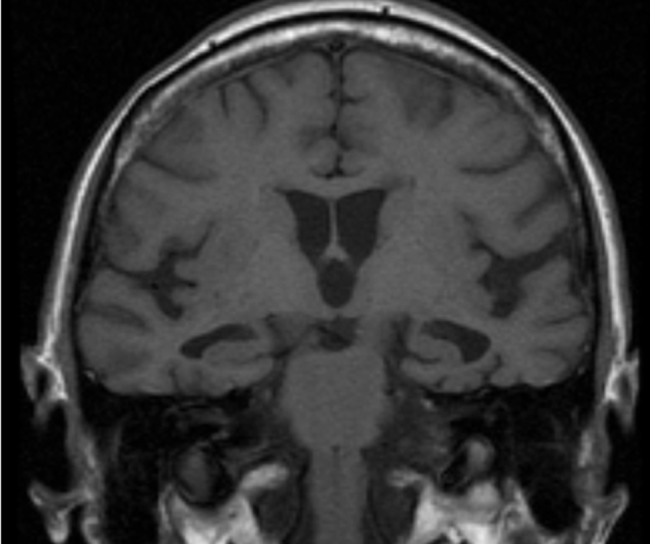
MRICoronal T1-weighted brain MRI: bilateral hippocampal atrophy, a characteristic sign of Alzheimer's disease, with associated dilation of the temporal horns of the lateral ventricles.
Source : Kuruvilla et al., Psychiatric Bulletin, 2014, figure 1 · CC BY
This is the most frequent aetiology, and therefore the one we believe we know. Its particularity for physiotherapy comes down to one sentence: the patient keeps the ability to execute for a long time, and loses very early the ability to retain what they have been asked to execute.
The reference clinical criteria remain those of the working group of the National Institute on Aging and the Alzheimer's Association, published in 2011, which define dementia due to Alzheimer's disease and recognise, alongside the classic amnestic presentation, non-amnestic presentations: language, visuospatial, or dysexecutive.22
In 2024, an Alzheimer's Association workgroup published a revision that changes the very nature of the diagnosis: Alzheimer's disease is defined there biologically, by its biomarkers, with a clinical staging system distinct from the biological definition.23 A patient can therefore be “biologically Alzheimer's” with no symptom, or symptomatic at a given stage. For the physiotherapist, the practical consequence is not to confuse the biological label with the functional stage: it is the second that decides the session, and it cannot be read off a PET scan report.
Citing the version in force matters: between the 2011 criteria and the 2024 revision, what moved was not a detail of wording, it was the very object of the definition.
The most frequent presentation begins with a disorder of anterograde episodic memory : the patient no longer encodes new events. They can recount their military service and not what they had for lunch. At that stage their motor function is normal, and they perform perfectly any movement shown to them. The problem is never execution, it is autonomous repetition between two sessions.
Then, later, the instrumental signs appear: aphasia, apraxia, agnosia. Apraxia changes everything, because it attacks directly the object of physiotherapy work: the patient can no longer organise the motor sequence, get dressed, use a walking frame, turn over in bed in the right order. This is no longer a memory problem, it is a movement problem.
This shift has prognostic value. Two cohorts followed with a repeated Mini-Mental State, 57 and 70 patients, show that patients who develop aphasia or apraxia early decline faster than those who do not develop them, and that this difference is not explained by the baseline score.24 Seeing apraxia appear in a session is therefore not only a technical nuisance on the day: it is a signal of acceleration, to be recorded and to be passed on.
The Finnish FINALEX trial is the most convincing, because it involves Alzheimer's patients living at home with their spouse as carer, which is exactly the situation in community practice. Two hundred and ten patients, three arms: group exercise (four-hour sessions including about one hour of training), individual home exercise (one hour of training), both twice a week for a year, and a usual care arm.8
A year of exercise does not take you back up the slope, it makes it half as steep
Loss on the Functional Independence Measure at 12 months, 210 patients with Alzheimer's disease living at home. The shorter the bar, the less independence the patient has lost.
Source: Pitkälä KH, Pöysti MM, Laakkonen ML, et al. Effects of the Finnish Alzheimer disease exercise trial (FINALEX): a randomized controlled trial. JAMA Intern Med 2013;173(10):894-901 (PMID 23589097). The thin lines show the published 95 % confidence intervals. Total health and social service costs did not rise; they were even lower in the group arm (p = 0.03).
Two lessons for the clinic. The first: the most effective arm is the home one, with the spouse present, and not the group run by professionals. The second: the intervention did not increase health costs, it even reduced them in the group arm (p = 0.03), a useful argument when the funding has to be justified.8
On walking itself, the double-blind trial already cited elsewhere in this article involved 61 patients averaging 81.9 years, with a confirmed mild to moderate neurocognitive disorder, with no distinction of aetiology: progressive strengthening and functional work, two times two hours a week for three months, with large gains in speed, cadence, step length and double support, Cohen's d from 0.80 to 1.27.9
The gait of an Alzheimer's patient deteriorates above all under dual task, when walking demands part of the attentional resources. A randomised trial in patients at the mild cognitive impairment stage tested donepezil on this precise parameter: the dual-task cost fell significantly in the treated group, whether the second task was counting backwards by 1 (10.25 % against 1.75 %, p = 0.048) or by 7 (21.38 % against 14.64 %, p = 0.037). Dual-task speed improved by 4 to 11 cm/s but without reaching significance, and the reduction in the fall rate was not significant.27
This result is not a prescription, it is a framework for reasoning: in these patients, part of the instability is attentional and not muscular. It justifies testing dual-task walking in the assessment, and not concluding too quickly that there is a balance deficit when the patient walks well as long as nobody speaks to them.
When walking disappears, the role does not disappear. The HAS guide lists explicitly, for the stages of major loss of independence: maintaining walking and balance and preventing falls for as long as the patient is mobile; measures against the effects of immobility once they are not; prevention of the complications linked to immobility and incontinence; prevention of aspiration ; adapted stimulation in the non-communicating person, relational touch being given as an example.12 Dysphagia in Alzheimer's disease has been the subject of a dedicated systematic review, which documents its reality and what is at stake.28
A sourcing precaution, because it is instructive
A much-cited systematic review announces in its title the prevalence of oropharyngeal dysphagia in stroke, Parkinson's disease and Alzheimer's disease. Its text nevertheless concludes: no relevant study on dysphagia in Alzheimer's disease was identified. It therefore cannot be used to put a figure on what its title promises. This is the kind of error that checking that a PMID exists never catches: you have to read what the source establishes.
In an Alzheimer's patient, the best-chosen exercise is worth nothing if it is not done again between two sessions. The useful programme is not the best programme: it is the one the carer knows how to restart.
Key points
This is the only one of the three where information passed on in time by a physiotherapist can prevent a death. This chapter therefore begins there, before even the clinical description.
Emergency: neuroleptic hypersensitivity
The seminal study analysed 41 patients whose diagnosis had been confirmed at autopsy: 21 Alzheimer's disease and 20 Lewy body disease. Among the Lewy body patients, 16 (80 %) had received a neuroleptic, 13 of them (81 %) reacted badly, and in 7 (54 %) the reaction was severe. Those who reacted severely had increased mortality in the year following their psychiatric admission, compared with those whose sensitivity was mild or absent: hazard ratio 2.70 (CI 2.50 to 8.99). Among the treated Alzheimer's patients, one severe reaction out of 14 (7 %).30
The authors conclude with a sentence every clinician should know: severe, and often fatal, neuroleptic sensitivity can occur in the confused, demented or agitated older person, and its occurrence may be a sign of Lewy body disease.30
The rule holds too for the so-called atypical antipsychotics: a neuroleptic malignant syndrome on quetiapine in a Lewy body patient has been published.38
One detail of the 2017 consensus deserves to be read correctly, because it invites misreading. Severe antipsychotic hypersensitivity was downgraded to the rank of supportive feature. The reason, written in black and white, is not that the risk would have fallen: it is that these drugs are now prescribed less in this disease, which reduces the diagnostic value of the sign. The text adds that caution about their use, for its part, remains unchanged.29
What the physiotherapist does: faced with a parkinsonian, fluctuating, hallucinating patient in whom a neuroleptic has just been started, or faced with abrupt motor worsening over a few days after a change of treatment, they call the prescriber the same day. They obviously do not change any treatment; they pass on an observation that only they are in a position to make, because they watch the patient walk every week.
The Haute Autorité de Santé has built this constraint into its care pathway guide: low-dose risperidone comes in only as a third-line option, and the text states “after ruling out a MCL”, that is, a maladie à corps de Lewy, a Lewy body disease. Where hallucinations or delusions are associated with this disease, the guide points towards rivastigmine or clozapine, after a specialist opinion. Any neuroleptic prescription must also be preceded by an electrocardiogram.12
The reference criteria are those of the fourth consensus report of the DLB Consortium, published in 2017, and not the third report of 2005 that is still often cited. This revision separates clinical features clearly from diagnostic biomarkers, and gives greater diagnostic weight to REM sleep behaviour disorder and to myocardial metaiodobenzylguanidine scintigraphy. It also recalls that its management recommendations rest largely on expert opinion, randomised trials in this disease being few.29
The four core clinical features are:
REM sleep behaviour disorder deserves particular attention, because it is both highly informative and greatly under-recorded. In a cohort of patients given a diagnosis of Lewy body disease in secondary care, it was found in only 8.4 % of the records, which the authors themselves judge well below what was expected.35 A multicentre study of idiopathic REM sleep behaviour disorder has also quantified the risk of conversion to a dementia or a parkinsonism.36 The question “does your husband wave his arms, talk or hit out during his sleep?” put to the spouse takes thirty seconds at the end of the assessment, and it points the way.
The reference systematic review puts the figure at 4.2 % of all the dementias diagnosed in the population, and 7.5 % in secondary care, with an incidence representing 3.8 % of new cases. That is about one case in 25 in the community and one in 13 in hospital. The authors add that the real prevalence is probably far higher, diagnoses being frequently missed.31
A British study of memory services confirms the order of magnitude, 4.6 % of cases (CI 4.0 to 5.2), and documents the extent of the under-diagnosis: the rate varies from 2.4 to 5.9 % across services, and Parkinson's dementia accounts for only 9.7 % of Parkinson's patients (CI 8.3 to 11.1), far fewer than expected. The authors conclude that both forms are considerably under-diagnosed.32
What this means for the clinic: across a geriatric caseload, a physiotherapist sees Lewy body disease. Some cases carry the right diagnosis, many carry the label “Alzheimer's” or “Parkinson's”.
In the prospective falls cohort already cited, belonging to the Lewy body group multiplied the risk of falling by 3.33 (CI 2.11 to 5.26) compared with the other causes of neurocognitive disorder, at equal age and sex.3
And these falls precede the diagnosis. A comparison of 4,682 Lewy body patients, 20,214 with Alzheimer's, 28,222 with Parkinson's and 20,214 controls, drawn from general practice data, shows that falls, psychiatric symptoms and dysautonomia are more strongly associated with Lewy body disease than with Alzheimer's disease or Parkinson's disease in the five years preceding the diagnosis.34 The physiotherapist who takes on a 72-year-old for repeated unexplained falls, with a little constipation and a sad mood, is sometimes sitting opposite a Lewy body disease that nobody has yet named.
A meta-analysis of 18 studies finds orthostatic hypotension in 50.8 % of 662 patients with Lewy body disease, with an odds ratio of 7.71 (CI 4.42 to 13.44) compared with controls.33 One patient in two: measuring blood pressure on standing is not a precaution of principle, it is a high-yield examination, and it determines the way the patient is moved from the treatment couch to standing.
A Lewy body patient may pass a balance test on Tuesday and fail it on Thursday with no worsening of the disease at all. This has two operational consequences. First, an assessment done on a good day overestimates the real capacities, and the home adaptations set on that assessment will fall short. Second, the variability seen in a session is not a failure of motivation or a problem of measurement: it is a clinical sign, and it is worth recording and dating.
What to do with a patient who might have Lewy body disease
A decision aid for the physiotherapist. It does not make the diagnosis: it decides what must be passed on, and how quickly.
Built from McKeith IG, et al. Neurology 2017;89(1):88-100 (PMID 28592453) for the core features; McKeith I, et al. BMJ 1992;305(6855):673-8 (PMID 1356550) for neuroleptic hypersensitivity; Isik AT, et al. Clin Auton Res 2023;33(2):133-141 (PMID 36862320) for orthostatic hypotension; Haute Autorité de Santé, care pathway guide, May 2018, for the place of antipsychotics.
It has to be said plainly: this is the area where we know least, and for a structural reason. A systematic review sifted 111,485 articles, read 288 in full text, and retained only five studies totalling sixteen participants. The cause of that collapse is explicit: 89.6 % of the articles set aside were set aside because they excluded participants who had both a dementia and a parkinsonism. Exercise trials in Parkinson's disease exclude people with dementia; exercise trials in dementia exclude people with parkinsonism. Lewy body patients fall between the two.39
Across the thirteen participants whose habitual gait speed was measured, the gain was 0.18 m/s (CI 0.02 against to 0.38 in favour), which exceeds the moderate important change threshold used in Parkinson's disease (0.14 m/s). The authors ask that this result be treated with caution, and they are right: thirteen people.39
The PRIDE trial, published in 2022, is the first conducted specifically in this population. A non-randomised crossover design, nine participants included, six having received the intervention (three Parkinson's dementias, three Lewy body diseases), with an eight-week waiting phase followed by eight weeks of high-intensity progressive resistance training, demanding balance work and functional exercises, three days a week. During the waiting list, the participants declined to a clinically significant degree in functional independence, cognition, physical function, muscle mass and weight. After the intervention, they improved to a clinically significant degree in functional independence, cognition, physical function and strength. Adherence exceeded 80 % and only one minor exercise-related adverse event was reported.40
Six participants do not make a proof. But the tolerance message is useful: high-intensity resistance training was carried out in patients with dementia and parkinsonism, from the mild to the severe stage, without notable incident.
Finally, a point worth knowing even though it is not a physiotherapy matter: rivastigmine showed, in an international randomised double-blind placebo-controlled trial, an improvement in behavioural symptoms, with 37 patients (63 %) improved by at least 30 % against 18 (30 %) on placebo, and gains bearing particularly on tasks with a strong attentional component.37 A patient whose attentional fluctuations improve on treatment becomes a patient with whom the session is possible.
In the other two diseases, the physiotherapist adapts their practice. In this one, they also act as a sensor: they watch the patient walk every week, which nobody else in the care chain does.
Key points
The question necessarily arises, because the two diseases share their lesion, their motor signs and a good part of their management. The boundary is a convention, and you have to know which one you are using.
Both entities belong to the same Lewy body pathology. The diagnostic convention that separates them is chronological: when the neurocognitive disorder appears before the parkinsonian signs or in the year that follows them, we speak of Lewy body disease ; when it arises in a patient known to have Parkinson's for more than a year, we speak of Parkinson's dementia. The fourth consensus explicitly maintains this rule, while calling it an arbitrary threshold based on expert opinion, useful in clinical practice and open to revision once the mechanisms of these diseases are better known.29 The exercise studies, for their part, treat the two together under the term Lewy body dementia in the broad sense.3940
Parkinson's dementia is frequent: it concerns 9.7 % of Parkinson's patients in the British survey already cited, a figure the authors themselves judge far below reality.32
The boundary with our article on Parkinson's disease
What you are reading deals with major neurocognitive disorder : what a cognitive impairment changes in the running of a session, whatever its cause. Our article Parkinson's disease and physiotherapy deals with the parkinsonian motor disorder : exercise intensity, work on gait and freezing, LSVT BIG, dance, tai chi, fall prevention in Parkinson's.
For a Lewy body patient or a Parkinson's dementia, both are worth reading, and in this order: the Parkinson's article for the motor content of the sessions, this one for adapting the instruction, the fluctuations, orthostatic hypotension and the contraindication to neuroleptics.
The physiotherapist does not make the diagnosis. They do, however, need to know which disease they probably have in front of them, because the running of the session, the precautions and the information to pass on all depend on it.
| What we look at | Frontotemporal degeneration | Alzheimer's disease | Lewy body disease |
|---|---|---|---|
| Frequency | 2.7 % of neurocognitive disorders, but 10.2 % before the age of 6518 | The most frequent; pure in only 30 % of autopsied patients with dementia2 | 4.2 % in the population, 7.5 % in secondary care, widely under-diagnosed3132 |
| Age at onset | Early. Genetic forms: 49.5 years (MAPT) to 61.3 years (GRN)19 | Most often after 70 | Most often after 65 |
| First symptom | Behaviour: disinhibition, apathy, loss of empathy, compulsions, hyperorality (3 features out of 6 are enough)15 | Anterograde episodic memory; non-amnestic forms recognised22 | Variable: memory 27.1 %, hallucinations 25.4 %, low mood 25.1 % of first consultations35 |
| Memory | Preserved for a long time, which misleads the diagnosis | Affected from the outset, the heart of the picture | Affected in a fluctuating way, with a major attentional component |
| Motor function | Five profiles described: parkinsonian, progressive supranuclear palsy, amyotrophic lateral sclerosis, corticobasal syndrome, mixed20 | Normal for a long time, then apraxia and gait disorders | Spontaneous parkinsonism, often axial and symmetrical29 |
| Fall risk | High if there is a motor profile (early backward falls in the supranuclear profile)43 | High, and tied to the cognitive-motor interface (dual task)27 | The highest of the three: HR 3.33 compared with the other aetiologies3 |
| Dysautonomia | Not characteristic | Not characteristic | Orthostatic hypotension in 50.8 % (OR 7.71)33 |
| Symptoms compared with Alzheimer's | More apathy, disinhibition and eating problems; fewer delusions and hallucinations and less irritability42 | Reference for the comparison | More delusions and hallucinations; less euphoria and irritability42 |
| Vital precaution | Spot an overlap with amyotrophic lateral sclerosis: dysarthria, fasciculations, aspiration20 | Prevention of aspiration at the advanced stage1228 | Neuroleptic hypersensitivity: 54 % of severe reactions, excess mortality HR 2.7030 |
| What governs the session | The initiation of movement. Start with the patient, ritualise, avoid the open question | The encoding of the instruction. Get it done, do not explain, hand the repetition to the carer | Variability and blood pressure. Repeat the tests on another day, measure on standing, slow transitions |
| What we pass on to the doctor | New motor signs, risky behaviour, weight loss | Appearance of an apraxia or an aphasia: marker of a faster decline24 | Restless sleep reported by the spouse, dated fluctuations, standing blood pressure figures, any introduction of a neuroleptic |
Wide table: scroll it horizontally to see the three columns.
Symptom profiles compared with Alzheimer's disease
Direction of the significant differences across 10,405 care-home residents assessed with the neuropsychiatric inventory. Alzheimer's disease serves as the reference: the arrows say “more than” or “less than”, not an absolute value.
Source: Schwertner E, Pereira JB, Xu H, et al. Behavioral and Psychological Symptoms of Dementia in Different Dementia Disorders: A Large-Scale Study of 10,000 Individuals. J Alzheimers Dis 2022;87(3):1307-1318 (PMID 35491774). The mentions “no difference” mean that no significant difference was reported for that symptom and diagnosis pair, and not that an equivalence was demonstrated.
Four publications, one for each typical situation. They are cited with their identifier: these are real patients, not vignettes made up to illustrate a point.
An 85-year-old woman with Alzheimer's disease, living in a long-term care facility. She develops balance problems and weakness leading to gait deviations and falls; the whole set of clinical measures and her history place her at high risk of falling.
The programme put in place is ordinary in content and unusual in form: lower limb and trunk strengthening, work on balance, on walking and on walking aids, and above all training the care staff in a functional maintenance programme, centred on activities that engage implicit memory and on the aspects of communication usually preserved in dementia.
Result after four weeks and twelve 30-minute sessions: the Tinetti score goes from 8/28–16/28, the Berg Balance Scale from 7/56–19/56, and the number of incident reports linked to a fall goes from 2 to 0 over a four-week period. The authors stress that these results were obtained by modifying the usual fall prevention interventions, taking account of the fall in cognitive capacity, the communication deficits and the behavioural problems.26
What this case demonstrates, and what it does not demonstrate
It demonstrates that a classic physiotherapy programme, re-tooled for cognition and relayed by the care staff, produces clinically important gains in a very diminished patient. It does not demonstrate a causal effect: it is a single case, without a control group, over four weeks, and a regression towards the mean after a period of falls is always possible.
Three women aged 89 to 95, moderate Alzheimer's disease, in assisted living. Twelve physiotherapy sessions over four weeks, with explicit integration of high-frequency repetition, errorless learning and spaced retrieval. All attended at least ten of the twelve sessions.
Result: improvement in the objective balance measures in all three patients, but only one exceeded the minimal detectable change, and none changed their Timed Up and Go or their comfortable gait speed. The authors conclude that the feasibility of the errorless learning paradigm was limited in practice and call for further research.25
This case is cited here precisely because it is disappointing. One positive case series and one mixed case series in comparable populations: that is the real state of the literature, signals rather than certainties.
An 87-year-old man with Lewy body disease, living in a care home for dependent older people. Over nine months he shows a rapid functional decline and weight loss, together with injurious falls. He is assessed by a geriatrician and an exercise physiologist, independently of one another, during a prolonged waiting period before entry into an exercise pilot trial.
The analysis identifies three treatable contributors to his frailty and his functional collapse: polypharmacy, sarcopenia and undernutrition. The intervention combines deprescribing of hazardous medications, intensive exercise and increased calorie intake. The authors report an improvement in his physical and neuropsychological state, and conclude with a sentence worth quoting: frailty is not a contraindication to robust exercise, it is on the contrary one of the most important reasons to prescribe it.41
Three lessons for the clinic. The first: faced with a rapid decline, look for what is reversible before concluding that the disease is progressing. The second: the list of medications is part of the assessment, and a physiotherapist who reads it can trigger a review. The third: very advanced age and an advanced stage do not rule out progressive resistance work.
The personalised activity programme already mentioned was tested in twenty patient and carer dyads, nine receiving the intervention and eleven as controls, with assessment at baseline and at four months. The intervention consists of working with the carer to prescribe activities calibrated to the patient's preserved abilities, with a view to managing behaviour.
Results: a significant reduction in behavioural symptoms (F = 8.073, p = 0.011) and maintenance of functional performance (p = 0.548). The qualitative analysis brings out five themes, including the benefits perceived by the carer, their readiness to change, the strategies they use to engage the patient, and the obstacles to implementation.21
In a disease whose mean duration is six to nine years,19 an unchanged functional performance at four months is a result, provided it is announced as such at the first appointment.
This chapter is deliberately operational: what you measure, what you do during the hour, what you write. It does not replace clinical reasoning, it stops you forgetting what counts.
| Item | Why | Frequency |
|---|---|---|
| Blood pressure lying down, then standing at 1 and 3 minutes | Symptomatic orthostatic hypotension: fall HR 2.13.3 One Lewy body patient in two has one.33 | At the initial assessment, then at every change of treatment |
| History of falls over 12 months | Having fallen multiplies the risk by 2.52.3 | At the assessment, then recorded continuously with the carer |
| 30-second sit-to-stand and gait speed | These are the two parameters that exercise shifts with a strong level of evidence.4 | Every 6 to 8 weeks |
| Balance: Berg or Tinetti | Sensitive to change in this population, including at very advanced stages.26 | Every 6 to 8 weeks, repeating on another day if there are fluctuations |
| Dual-task walking | Part of the instability is attentional and not muscular.27 | At the assessment, then at every functional change |
| List of medications | A neuroleptic in a Lewy body patient is an emergency;30 polypharmacy is a reversible contributor to frailty.41 | At every assessment, and at every hospital admission |
| Weight, and its variation | Sarcopenia and undernutrition are reversible and weigh heavily on the trajectory.41 | Monthly if a loss is noted |
| Question to the spouse about restless sleep | REM sleep behaviour disorder is an under-recorded core feature.2935 | Once, at the initial assessment |
The systematic review devoted to communication strategies in supporting people with a neurocognitive disorder is a reminder that the way of saying things is part of the care, in the same way as what is said.11 Three sentences are enough to frame a course of treatment honestly:
What deserves to be written, and almost never is
The five situations that make you pick up the telephone
Yes, for what exercise demonstrably does: strength, balance, gait speed, endurance, with a strong level of evidence and an established dose of 60 minutes, 2 to 3 times a week, supervised.4 No, if the stated objective is to slow cognitive decline or to improve quality of life: both promises are contradicted by the trials.64
The GRADE review indicates that a low motor level, and not the cognitive level, predicts the best response to training.4 A pilot trial ran high-intensity progressive strengthening in Lewy body patients from the mild to the severe stage, with more than 80 % adherence and a single minor adverse event.40 And an 87-year-old man in a care home, in a full frailty spiral, saw his trajectory reverse under anabolic exercise, deprescribing and refeeding.41 Frailty is an indication, not a contraindication.
Not by asking them. You see it by watching them do it, and you prevent the mistake instead of correcting it: that is the principle of errorless learning, whose benefit grows with the recall delay.10 A successful instruction is one whose execution starts within two seconds.
Before talking about refusal, consider two hypotheses. An apathy of frontal origin, which is a deficit of initiation and not of willingness: the answer is to start the movement with them rather than inviting them to. Or a depression, which independently predicts falls in this population (HR 1.053 per point of the Cornell scale) and which calls for treatment.3
Yes, by the procedural route. It is the basis of everything described in this article: a patient who will never be able to recount the session can nonetheless improve their performance on a repeated task.10 Honesty requires adding that the transfer of this principle into measurable functional gains, in patients over 89, produced only an inconsistent result in the one published series.25
Because 54 % of the patients who received one, in the reference autopsy series, had a severe reaction, with excess mortality within the year (HR 2.70), against 7 % in the Alzheimer's patients.30 The HAS allows risperidone only as a third-line option and only after ruling out this disease.12 The physiotherapist does not prescribe, but is often the first to see the motor consequence of the prescription.
Little, in practice. Both belong to the same pathology and the few exercise studies treat them together.3940 The one-year rule that separates them is explicitly called arbitrary by the 2017 consensus.29 What really changes what you do is the fluctuations, orthostatic hypotension and the contraindication to neuroleptics, which hold for both. For the motor content of the sessions, our article Parkinson's disease and physiotherapy remains the reference.
It is one of the hypotheses to consider. In studies restricted to the under-65s, frontotemporal degeneration accounts for 10.2 % of neurocognitive disorders, against 2.7 % across all age groups.18 The genetic forms begin at 49.5 years on average for MAPT.19 And the initial picture is behavioural, with memory normal for a long time: that is exactly what leads to a wrong diagnosis of depression or burnout.
In Lewy body disease, yes, systematically. Cognitive fluctuations are a core feature of the disease,29 and an assessment carried out on a good day overestimates the real capacities, and so under-sizes the adaptations. In the other two diseases, a single measure is generally enough, provided it is repeated under the same conditions of time of day.
Forty-three references. Every identifier was checked in PubMed through the E-utilities API, then the full abstract was read to check what the source really establishes, and finally the citation line itself (full authors, journal, year, volume, pagination, DOI) was rechecked against the XML record. One reference was set aside along the way: its title announced dysphagia in Alzheimer's disease, its text concluded that no study on that point had been identified. The PMID links open the PubMed record.
Published on 14 August 2026. Last scientific review on 14 August 2026.
Behind this article
An author who explains, a reviewer who checks.
How we write and check our content

Physiotherapist · co-founder of Physio Learning
Marked for life by his first four-hour lecture without a single image, he took a master’s in instructional design so that it would never happen to anyone again. He hunts down publication bias and unreadable slides with the same intransigence.

Head of scientific content
Physiotherapist specialising in neuro-musculoskeletal practice and holder of a master’s in public health. He checks the methodological rigour of every article: primary sources, levels of evidence, no exceptions.
