







On-siteDPCFIFPL

Pain management
Managing complex pain
Anthony Halimi
Go further
Everyone says they practise it, and the measurements say otherwise: in studies of practice, only one treatment in two is among the recommended ones.
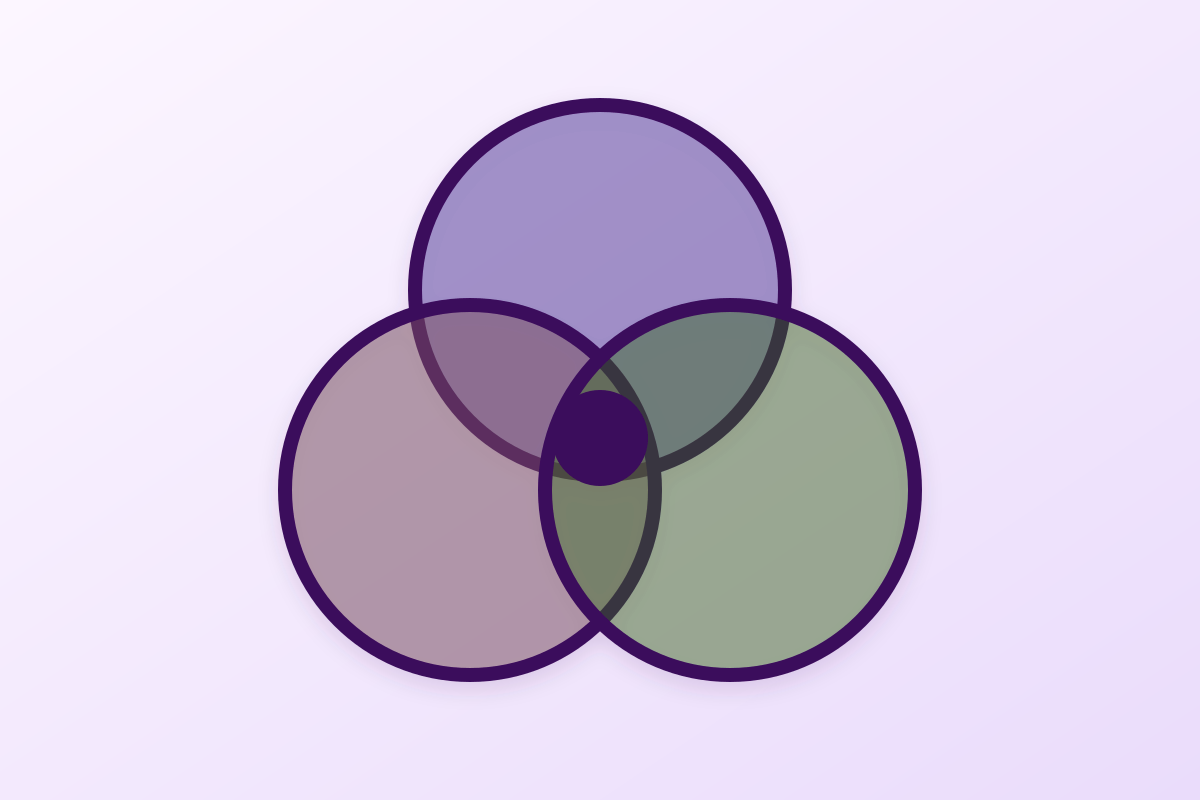
EBP is not “applying a study”, but integrating external evidence, clinical expertise and the patient's values.
54%of treatments are recommended by the evidence, in self-report surveys
What follows covers each of these points in detail, with sources. It is there if you need it.
This topic is taught in a course: Managing complex pain, on-site with Anthony Halimi.
1 / 11
10 article chapters · 20 min in total
Definition◔ 3 min
The founding text of EBP gives half of its argument to what it is not.
Gap◔ 2 min
The “no recommendation” category dominates: a large part of practice is simply not evaluated.
Barriers◔ 2 min
The obstacle to EBP is not attitude among practitioners: convincing is not enough.
Self-critique◔ 1 min
The most cited critique of EBM comes from inside the movement, not from its opponents.
Clinical question◔ 1 min
A badly framed question leads to hours of unusable reading.
Reading fast◔ 4 min
Read in an order that lets you stop early: question, comparator, outcome, effect, relevance.
Shared decision making◔ 2 min
Expectations about benefit and harm are wrong on both sides, patients and clinicians.
Clearing out◔ 2 min
Removing non-recommended treatments is the harder half of the job.
Routine◔ 1 min
One question a week, properly framed, is worth more than ten skimmed.
Questions◔ 2 min
Guidelines, Cochrane reviews, PubMed Central and the PEDro database cover a large part of the field.
Train on this
Pain management
Anthony Halimi
Next comes practice: the course that teaches this topic, with Anthony Halimi.
Our courses on this topic may be covered by DPC or FIFPL, the French continuing-education funding schemes, depending on your profession and situation.
Professional practice · Method
Everyone says they practise it, and the measurements say otherwise: in studies of practice, only one treatment in two is among the recommended ones. This article does not argue for EBP; it describes what EBP actually demands, what it costs in time, and where to start.
The original definition is more modest than its reputation. Sackett and colleagues set it out in 1996 in the BMJ : the conscientious, explicit and judicious use of the best available evidence in making decisions about the care of individual patients, integrated with individual clinical expertise1. The article is titled “what it is and what it isn't”: from the very first text, half of the argument consists in ruling out misreadings.
The gap between guidelines and practice has been measured. A systematic review of 94 studies quantified how far physiotherapists' treatment choices matched the guidelines. Median for recommended treatments: 54 % in self-report surveys, 63 % in chart audits. Median for non-recommended treatments: 43 % in surveys, 27 % in audits2.
Expectations are wrong on both sides of the desk. Across 35 studies and 27,323 patients, the majority overestimates the benefit of an intervention and underestimates its harms3. Across 48 studies and 13,011 clinicians, a majority of professionals estimated the benefit correctly for 3 outcomes out of 28 and the harm for 9 out of 694. This is not a problem of attitude, it is a problem of calibration.
The barriers are known, and they are not attitudes. A systematic review of 32 studies concludes that physiotherapists mostly hold positive attitudes towards EBP, without that translating into consistent practice. The obstacles cited are lack of time, lack of skills, and mistaken beliefs about what EBP is5.
And the movement has criticised itself. In 2014, Greenhalgh, Howick and Maskrey published in the BMJ a piece whose title says it plainly: is evidence-based medicine a movement in crisis? They describe the hijacking of the brand by industry, the unmanageable volume of guidelines, rules that take precedence over judgement, and a poor fit with multimorbidity6. Knowing this critique is part of the competence, not of dissent.
The most common confusion is not about substance, it is about scope. EBP is often understood as “applying what the study says”, which is exactly what its founding text rules out.
The 1996 editorial sets out a definition in two parts. First part: the conscientious, explicit and judicious use of current best evidence in making decisions about the care of individual patients. Second part, and it is the one that gets forgotten: the practice means integrating individual clinical expertise with the best available external clinical evidence from systematic research1.
The word that carries everything is “integrating”. Neither the evidence alone, nor the experience alone: their composition. Evidence without clinical expertise produces mechanical application to a patient who is not the patient in the study; expertise without evidence endlessly reproduces what was learnt at one point in time.
The three components, and what happens when one is missing
Wording taken from the Sackett 1996 definition (PMID 8555924), completed by Hoffmann 2014 (PMID 25268434) for the place of patient values and shared decision making.
The three boxes at the top are unremarkable. The three at the bottom describe real practices, and each one is met in clinic.
| What you hear | Why it is wrong | Source |
|---|---|---|
| “EBP means applying the guidelines” | The original definition requires integration with clinical expertise and with the patient. A guideline does not describe the patient in front of you. | Sackett 19961 |
| “It is a way of rationing care” | An objection anticipated in the founding editorial itself, part of which is given over to what EBM is not. | Sackett 19961 |
| “Without a randomised trial, nothing can be said” | The hierarchy of evidence depends on the question asked. Prognosis, diagnostic accuracy and lived experience are not studied through randomised trials. | Guyatt 20087 |
| “My experience is worth as much as a study” | Clinicians estimate the benefit of an intervention correctly for 11 % of the outcomes measured, and the harm for 13 %. | Hoffmann 20174 |
| “Patients want us to decide for them” | Without balanced information on benefits and harms, they overestimate the first and underestimate the second. Shared decision making exists for that reason. | Hoffmann 20153, Hoffmann 20148 |
There is a measurement, and it is uncomfortable. It has the merit of shifting the debate: the question is no longer whether to practise EBP, but why convinced professionals do not manage it.
Zadro, O'Keeffe and Maher searched seven databases up to April 2018, crossing terms for “professional practice” and “physiotherapy”, and retained 94 studies quantifying physiotherapists' treatment choices in musculoskeletal conditions, through surveys, chart audits, billing audits or clinical observation. Results are reported as medians and interquartile ranges, separately for surveys and for audits2.
How far treatment choices match the guidelines
Medians from 94 studies, separately for self-report surveys of physiotherapists and for clinical chart audits. After Zadro 2019 (PMID 31591090).
The three categories do not add up to 100 %: one practitioner chooses several treatments, and each row counts a different proportion. Chart audits, which sit closer to real care, give a less severe picture than self-reports.
The authors' conclusion is blunt: many physiotherapists appear not to follow the guidelines when managing musculoskeletal conditions, and there is considerable scope to increase the use of recommended treatments and reduce the use of non-recommended ones2.
One methodological point is worth noting, because it matters for what follows: the “no recommendation” category is the largest, at 81 % in surveys. Much of what a physiotherapist does is neither recommended nor advised against: it simply has not been evaluated. That is where clinical expertise does the work, and it is also where we tell ourselves the most stories.
The reference survey on behaviour dates from 2003 and covers 488 physiotherapists who were members of the American association, with a response rate of 48.8 %. Respondents reported a positive attitude: using evidence is necessary, the literature is useful, care is better when it is used. Then the behaviour figures: 17 % read fewer than two articles a month, and a quarter used the literature in their clinical decisions fewer than twice a month. The first barrier reported was lack of time9.
If the obstacle were attitude, convincing people would be enough. The systematic review of barriers says it is not, and that changes the strategy completely.
Scurlock-Evans, Upton and Upton searched six databases on physiotherapy practice between 2000 and 2012, and retained 32 studies addressing either knowledge, attitudes or implementation of EBP, or interventions designed to improve it. Their conclusions come down to three findings5.
First finding: many physiotherapists hold positive attitudes towards EBP, but this does not necessarily translate into consistent, high-quality practice. Second finding: the barriers are numerous, foremost among them lack of time and lack of skills, along with mistaken beliefs about what EBP is. Third finding, and the most useful for acting on: there is no one-size-fits-all approach to improving implementation, and assessing the culture of the organisation before designing an intervention is decisive.
| Barrier | What it produces | A workable way round |
|---|---|---|
| Lack of time | The clinical question arises during the session and does not survive the day | Write the question down, do not search for it there and then. A notebook of open questions, worked through once a week |
| Lack of search skills | You type the name of a technique into a search engine and read the first result | Start with sources that are already synthesised, not with primary studies |
| Mistaken beliefs about EBP | You believe you have to read randomised trials for questions that do not call for them | Choose the source according to the question: treatment, prognosis, diagnosis or lived experience |
| Access to publications | You stop at the abstract, which presents the results in their best light | PubMed Central, PEDro and open-access journals cover a large share of rehabilitation questions |
| The culture of the team or the practice | Individual changes do not hold in a group that does not follow | The review says it explicitly: assess the culture of the organisation before designing the intervention |
This chapter exists because a practitioner who discovers EBP through its most enthusiastic advocates will eventually meet its limits, and will feel misled. Better to learn them from the people who set them out.
In June 2014, Greenhalgh, Howick and Maskrey published in the BMJ, on behalf of the Evidence Based Medicine Renaissance Group, an article whose title asks a question: is evidence-based medicine a movement in crisis? Their argument is that EBM has produced many benefits, and unintended negative consequences. They call for a refocus on usable evidence, combinable with context and professional expertise, so that each patient receives optimal treatment6.
A second critique, older and more radical, targets the raw material itself. Chalmers and Glasziou, in the Lancet in 2009, document the avoidable waste in the production and reporting of research: questions of no interest to clinicians or patients, inadequate study designs and methods, non-publication, and incomplete or unusable reports10. A practitioner who conscientiously reads the literature is therefore reading, in part, research that should not have existed in that form.
This is the step we skip, and it is the one that determines everything else. A badly framed question leads to hours of unusable reading.
The tried and tested format breaks the question into four elements: the population (who this patient is, precisely), the intervention under consideration, the relevant comparison (against what, including against no treatment or against waiting), and the outcome that matters to this patient.
Two elements deserve particular emphasis. The comparison, because it is almost always left out: “do shockwaves work?” has no answer, “do they do better than a progressive exercise programme in calcific tendinopathy of the shoulder?” does. And the outcome, because a study can be positive on an outcome the patient has no interest in.
| Type of question | Design that answers it | Where to look first |
|---|---|---|
| Does this treatment work? | Randomised trial, systematic review of trials | Recent guidelines, Cochrane reviews, the PEDro database |
| Does this test help me decide? | Diagnostic accuracy study against a reference standard | Systematic reviews of diagnostic accuracy, with likelihood ratios |
| What is going to happen to them? | Prospective cohort, not a randomised trial | Prognosis reviews, population cohorts |
| Is this factor to blame? | Prospective cohort, appraisal against causal criteria | Reviews that explicitly apply causal criteria |
| How does the patient experience this? | Qualitative study, thematic synthesis | Qualitative reviews, meta-ethnography syntheses |
| How much does it cost? | Economic evaluation alongside a trial | Economic reviews, agency reports |
This table is the most direct way round the mistaken belief that the barriers review identifies: searching for a randomised trial to answer a prognosis question means finding nothing, and then concluding that there is no evidence.
Time is the first barrier reported. The answer is not to read more, it is to read in an order that lets you stop early.
The reading order that lets you stop early
Each level can close the reading. It is the most direct answer to the barrier that the surveys put first: lack of time (Jette 2003, Scurlock-Evans 2014).
The point of this order is not to be exhaustive: it is to make stopping possible at every level, which is the only way to read a lot in a short time.
The PEDro scale rates the methodological quality of trials in rehabilitation, and its reliability has been measured. Two studies: eleven independent raters on 25 trials, then two raters on 120 trials with a third adjudicating. Item-level kappas run from 0.36 - 0.80 for individual raters and from 0.50 to 0.79 for consensus ratings. For the total score, the intraclass correlation coefficient is 0.56 (95 % CI 0.47 to 0.65) for a single rater, and 0.68 (0.57 to 0.76) by consensus. The authors describe this reliability as “fair” to “good”11.
What the rating itself is worth
Reliability of the PEDro scale, measured by two studies: 11 raters on 25 trials, then 2 raters on 120 trials with a third adjudicating. Intraclass correlation coefficient for the total score. After Maher 2003 (PMID 12882612).
The authors themselves describe this reliability as “fair” to “good”. The scale remains useful for placing a trial, not for ranking trials to the point.
The practical lesson is not to give up the scale, it is not to over-read a one-point gap: a trial rated 6 out of 10 and a trial rated 7 out of 10 cannot be reliably told apart.
One level up, the GRADE approach rates the quality of the body of evidence for a given outcome, and the strength of the recommendation that follows from it, in only two categories for the latter. This is what most of the systematic reviews and guidelines cited on this site use7. A practitioner does not have to do the rating: they have to be able to read “moderate certainty” or “very low quality” when they meet them, and to draw the consequences in what they tell the patient.
This is the pillar most often missing from EBP training, and yet it is the one without which the other two produce nothing. It rests on a measured finding: expectations are wrong, on both sides.
Hoffmann and Del Mar screened 15,343 references and retained 36 articles from 35 studies, totalling 27,323 patients, whose expectations of benefit or harm had been quantified. Result: among the 34 outcomes for which data on overestimation were available, the majority of participants overestimated the benefit for 22 of them (65 %). For harms, across 15 usable outcomes, the majority underestimated the harm for 10 (67 %). A correct estimate by at least half of the participants occurred for only two benefit outcomes and two harm outcomes3.
Two years later, the same authors applied the same method to professionals: 8,166 references screened, 48 articles, 13,011 clinicians. Among the studies comparing benefit expectations with a correct answer (28 outcomes in all), the majority of participants gave a correct estimate for 3 outcomes only (11 %). For harms (69 outcomes), a majority estimated correctly in 9 cases (13 %). The direction of the error is consistent: clinicians underestimate harms more often and overestimate benefits more often4.
Wrong expectations on both sides of the desk
Two systematic reviews by the same team, applying the same method to patients and then to clinicians. After Hoffmann 2015 (PMID 25531451) and Hoffmann 2017 (PMID 28097303).
The figure of 11 % is the one that should hold a clinician's attention: it does not describe patients, it describes them.
Hoffmann, Montori and Del Mar wrote it in 2014 in JAMA : shared decision making and evidence-based medicine are connected, and each is incomplete without the other. Without shared decision making, EBP degenerates into mechanical application; without evidence, shared decision making is not informed8.
Adding recommended treatments is half the job. The other half is removing the ones that are not recommended, and it is the harder half, because it touches habits that look as though they work.
The Choosing Wisely movement was designed for this: reducing low-value care by encouraging professionals and patients to discuss unnecessary tests and treatments. Its uptake in physiotherapy was mapped in 2025: out of 127 national associations affiliated to World Physiotherapy, only seven (5.5 %) carried Choosing Wisely recommendations, those of Brazil, the United States, Norway, Italy, Australia, Spain and Switzerland. Between them, those seven associations carried 62 recommendations, of which 48.4 % in musculoskeletal practice, 27.4 % on mixed topics, 14.5 % in women's health, 6.4 % in cardiorespiratory practice and 3.2 % in neurology12.
The collective clearing-out effort, worldwide
Systematic search of the websites of national associations affiliated to World Physiotherapy, completed by direct contact. After Yi 2025 (PMID 40024194).
Removing what does not help is work the profession has not equipped itself for collectively. So it falls, for the most part, to the individual practitioner.
That figure of 5.5 % says something about the profession: the collective clearing-out effort is marginal, and it therefore rests, for the most part, on individual decisions.
Since the barrier is time, any proposal that demands a lot of it will fail. What follows fits into an hour a week, and is not a validated recommendation: it is an arrangement derived from the documented barriers.
| When | What | How long | Barrier addressed |
|---|---|---|---|
| During sessions | Write down the clinical question as it arises, without searching for it | A few seconds | Lack of time: the question dies if it is not written down |
| Once a week | Take the questions you noted, choose one, and reframe it in four elements | 10 minutes | The badly framed question, which makes the search unusable |
| Straight after | Look first for a source that is already synthesised, according to the type of question | 15 minutes | Lack of search skills |
| Then | Read in order: question, comparator, primary outcome, effect, relevance | 20 minutes | Time again: the order lets you stop early |
| Finally | Write one sentence: what I am changing, or why I am changing nothing | 5 minutes | The gap between positive attitude and actual practice |
| Once a quarter | Take one established practice and put the three sorting questions to it | 30 minutes | Non-recommended treatments, which do not go away on their own |
One question a week makes about forty questions a year. That is well below what an ideal of exhaustive reading would imply, and well above what the behaviour surveys describe. That is where the calibration sits.
Not for most rehabilitation questions. Clinical practice guidelines, Cochrane reviews in many countries, PubMed Central and the PEDro database cover a large part of the field. Access to publications nevertheless remains a documented barrier, and stopping at the abstract is a risky compromise: an abstract presents results in their best light.
That is the most frequent case, and the concordance review shows it: the “no recommendation” category dominates by a wide margin. You then fall back on the other two components, clinical expertise and patient values, and you say so explicitly to the patient. “There is no study on this point, here is what I am proposing and why” is an EBP sentence, not an admission of weakness.
It counts for a third of the definition, and it is irreplaceable for recognising a presentation, adapting an exercise, sensing reluctance. What the data show is that it is poorly calibrated for estimating effect sizes : for only 11 % of outcomes did a majority of clinicians estimate a benefit correctly. The two statements coexist without contradicting each other.
Take what they bring seriously, then put the figures on the table. The review of patient expectations shows that they massively overestimate benefits: the disagreement is most often about an order of magnitude, not about a principle. Give a figure, state its uncertainty, and decide together.
Look at whether it states the quality of the evidence and the strength of the recommendation separately, which is what the GRADE approach does. A guideline that asserts without rating its level of evidence needs checking at source.
No, and that would be a misreading. “Non-recommended” and “no recommendation” are not the same thing: the first category calls for withdrawal, the second calls for clinical judgement and transparency. It is the 43 % of non-recommended treatments that deserve attention, not the 81 % with no recommendation.
The time constraint is real and documented as the first barrier. That is precisely why the routine proposed here fits into an hour a week and one question at a time. The barriers review also stresses that there is no one-size-fits-all approach and that the culture of the workplace matters: in a group practice, the question of the week can be shared.
Twelve references, resolved one by one through the PubMed E-utilities API. For each of them the abstract was read in full and the figures cited in the article checked at source. The year kept is that of the issue, re-read on the XML record: the first “year” field of a PubMed record is sometimes a revision date, and shifts the citation by a year.
Three articles in the corpus take this one further on the regulatory side of professional practice: how the DPC works, the evaluation of professional practice and periodic certification, which make keeping knowledge up to date an obligation rather than a choice. For a concrete example of what this method gives when applied to a clinical topic, the article on tibialis anterior tendinopathy shows what can honestly be written about a subject on which no randomised trial exists.
Behind this article
An author who explains, a reviewer who checks.
How we write and check our content

Physiotherapist · co-founder of Physio Learning
Marked for life by his first four-hour lecture without a single image, he took a master’s in instructional design so that it would never happen to anyone again. He hunts down publication bias and unreadable slides with the same intransigence.

Head of scientific content
Physiotherapist specialising in neuro-musculoskeletal practice and holder of a master’s in public health. He checks the methodological rigour of every article: primary sources, levels of evidence, no exceptions.
