








Clinical summary of the place of physiotherapy in endometriosis (chronic pelvic pain, pelvic floor rehabilitation), based on the ESHRE guidelines and recent reviews. Every reference has been verified on PubMed.
📝 In brief: clinical summary
- A common condition that long went unseen. Endometriosis affects around 10 % of women of reproductive age, i.e. close to 190 million people worldwide 2. The delay between the first symptoms and surgical diagnosis reaches 6,7 years in the landmark multicentre study conducted across 10 countries 4, and recent reviews still report delays of 0,3 to 12 years, mainly attributable to the medical side of the pathway 5. The physiotherapist, often consulted early for lumbopelvic pain or dyspareunia, is well placed to spot the condition and refer on, never to diagnose it.
- Pain cannot be reduced to the lesion. Symptom severity is not correlated with surgical stage: a stage I patient may suffer severely, while a stage IV patient may be asymptomatic 2. Pelvic pain is both inflammatory and neuropathic, with possible sensitisation of the central nervous system that maintains pain even after the lesions have been excised; around 30 % of patients develop chronic pelvic pain refractory to conventional treatment 2. Neither imaging nor the operative report predicts the level of pain or the need for rehabilitation.
- Central sensitisation and myofascial dysfunction are the rule, not the exception. Central sensitisation, measured with the Central Sensitization Inventory, affects 41.4 % of women with endometriosis (95 % CI 35.8–47.2; n = 285) and is associated with moderate to severe chronic pelvic pain, failure of hormonal treatment, migraine, irritable bowel syndrome and anxiety 11. Among women with chronic pelvic pain, 94 % and 91 % have myofascial trigger points and 83 %/82 % show signs of regional sensitisation, against 15 % of healthy volunteers: irrespective of whether endometriosis was found at surgery 8. Hence the need for a neuromusculoskeletal assessment distinct from the assessment of the lesions.
- The pelvic floor: a plausible target, an objectified mechanism, an imperfect measurement. In a cross-sectional study of 30 women with chronic pelvic pain associated with endometriosis, all had pelvic floor spasm which they themselves identified as a major focus of their pain, with diffuse myofascial dysfunction extending beyond the pelvis 9. An RCT (34 women, deep endometriosis, 5 sessions of pelvic floor physiotherapy) demonstrated on 3D/4D ultrasound better relaxation (change in levator hiatal area on Valsalva: +20,0 ± 24,8 % vs −0,5 ± 3,3 %; P = 0,02) and a marked reduction in superficial dyspareunia (median Δ-NRS −3; P < 0,01) 10. A word of caution: across 151 studies, only 15 tools provide convincing evidence on tone, and 5 of them find no difference at all: the measurement of hypertonicity remains poorly standardised 12.
- An effect on pain, with a low level of evidence. The most recent meta-analysis (7 studies analysed out of 8 eligible) concludes that physiotherapy techniques significantly reduce pain compared with no physiotherapy (mean difference −1.97; CI −2.99 to −0.95), with physical modalities (electrotherapy, laser) achieving the largest reduction (−2.03; CI −3.9 to −0.14) and locally applied techniques outperforming general approaches 13. Another meta-analysis (6 RCTs) finds an effect on pain intensity (SMD −0,89; CI −1,21 to −0,57) and on physical function (SMD −1,49; CI −2,88 to −0,10), without significance on the other quality-of-life dimensions, and with high heterogeneity 14. The target is the pain, not the disease.
- Do not over-promise: negative results count too. In the same randomised population, pelvic floor physiotherapy showed no significant difference in urinary, bowel or sexual function, despite a trend for constipation; the authors ask that patients be informed of this uncertain impact 11. Physical activity improves quality of life on the pain, control/helplessness and emotional well-being dimensions, but on only 2 studies that could be meta-analysed out of 6 RCTs (251 patients) 16. Manual therapy improves pain (d = 1,00 to 2,28) and physical quality of life, and its authors explicitly position it as an adjunct 15.
- The reference level of evidence calls for humility, not for abstention. The ESHRE 2022 guideline (109 recommendations) issues no recommendation in favour of any specific non-pharmacological intervention, physiotherapy and exercise are named explicitly, as the benefits and risks remain uncertain; the group nevertheless recommends (Good Practice Point no. 38) that clinicians discuss non-pharmacological strategies for quality of life and psychological well-being 3. To claim that “ESHRE recommends physiotherapy” would be false. Yet the same guideline places the physiotherapist within a multidisciplinary team alongside the gynaecologist, the pain physician and the psychologist 2, and stresses the need to offer options addressing psychological, sexual and physical factors in order to improve quality of life even when pain cannot be reduced 3. Lastly, endometrioma recurrence after surgery without hormonal treatment reaches 27 % at 24 months 6 : support has to be planned for the long term.
🌸 What are the fundamentals to know about endometriosis?
🌸 A common disease, a pain that is often refractory
Endometriosis affects around one woman in ten of reproductive age, and in close to a third of them, the pain resists conventional treatment.
It is this refractory subgroup that justifies a multidisciplinary approach including the management of musculoskeletal dysfunction. Source: Zondervan et al., 2020 (PMID 32212520).
Before opening the question of treatment, the scene has to be set: endometriosis is a common disease, slow to diagnose, costly in quality of life and in capacity to work, and above all one whose pain cannot be reduced to its lesions. For the physiotherapist, it is precisely this last point that grounds both the legitimacy, and the limits, of their intervention. This section brings together the essential landmarks: definition, epidemiology, impact, pain mechanisms, and the link with the pelvic floor.
Definition: a chronic inflammatory disease, not merely a “lesion”
Endometriosis is described as a chronic inflammatory condition associated with pain of multiple mechanisms: nociceptive, neuropathic and nociplastic 1. This definition “by pain mechanism” rather than “by lesion” is not a rhetorical device: it is the key that allows the physiotherapist to understand what they are treating, and what they are not.
In lesional terms, the disease is classically staged (rASRM classification), from stage I (a limited number of lesions, few adhesions), to stage IV, combining more numerous lesions, endometrioma and/or extensive adhesions 2. But the correlation between stage and clinical experience is poor: a woman at stage I may suffer severe pain, infertility, or both, while a woman at stage IV may be asymptomatic 2. Symptom heterogeneity is high.
Strong evidence A direct clinical corollary for the physiotherapist: neither the imaging report nor the surgical stage predicts the level of pain or the need for rehabilitation. A patient with “few lesions” is not a patient with “little pain”, and the reverse is just as true.
As for examination, the European guideline states that clinical examination, including vaginal examination where appropriate, should be considered in order to detect deep nodules or endometriomas in patients with suspected disease, but that its diagnostic accuracy is low, and a normal examination does not rule out the diagnosis 3. In other words: neither the physiotherapist nor anyone else can “exclude” endometriosis on the basis of a reassuring physical examination.
Finally, the breadth of the field is worth recalling: the ESHRE 2022 guideline issues 109 recommendations covering diagnosis, the treatment of pain and infertility, the management of recurrence, asymptomatic or extrapelvic endometriosis, adolescents, postmenopausal women, prevention and the association with cancer 3. Recurrence features there as a management item in its own right, not as a marginal complication: a point we shall return to.
Key points: the definition that matters for the physio
- A chronic inflammatory disease, associated with nociceptive, neuropathic and nociplastic pain 1.
- The lesional stage (rASRM I to IV) does not predict symptom severity: a very painful stage I and an asymptomatic stage IV coexist 2.
- Clinical examination has low diagnostic accuracy: a normal examination does not rule out the disease 3.
- Consequence: a patient is not assessed on the basis of her imaging, but on the basis of her pain mechanisms and her dysfunctions.
Epidemiology: 10 %, 190 million women, and a diagnostic wandering that persists
This prevalence, extrapolated from World Bank population estimates for 2017, means that any physiotherapy practice seeing women of reproductive age is statistically seeing patients with endometriosis: diagnosed or not. And the “not” is substantial.
Moderate evidence The delay between symptom onset and diagnosis is a long-documented problem, measured in several ways:
| Source | Method | Reported delay |
|---|---|---|
| Nnoaham 2011 | Multicentre study, 10 countries, 1,418 women | 6.7 years between symptom onset and surgical diagnosis, mostly accrued in primary care: 8.3 years in publicly funded centres against 5.5 years elsewhere |
| Zondervan 2020 | Landmark review | 7 years on average; women consult on average seven doctors before the diagnosis is made |
| De Corte 2025 | Systematic review, 17 observational studies published since 2018 | 0.3 to 12 years depending on the definition used (overall, primary or clinical delay), the geographical area and the population |
The authors of the most recent review conclude that diagnostic delay persists and that it is mainly attributable to doctors, and stress the need for standardised definitions, for greater awareness and for targeted diagnostic interventions 5. Zondervan 2020 describes an explanatory tetrad: non-specific symptoms, absence of a biomarker, lack of awareness, and the normalisation/stigmatisation of symptoms. The review also recalls that most adults date the onset of their pelvic pain to adolescence, and that most young women do not receive timely treatment 2.
Why does this concern the physiotherapist directly? Because they are often consulted early (for pelvic pain, lumbopelvic pain or dyspareunia), that is to say frequently upstream of the diagnosis. They therefore occupy a position of detection and referral for specialist opinion 5. They of course make no diagnosis; they simply prevent a woman from leaving, once again, without the possibility having been raised.
Impact: working time, quality of life, recurrence
This loss of productivity translates into significant costs per woman per week, ranging from 4 US dollars in Nigeria to 456 US dollars in Italy 4. The most instructive figure for practice is not the cost, it is the mechanism : the woman is there, at work, but functioning less well. The disease does not show up in absenteeism figures: it shows up in life.
Moderate evidence Around 30 % of patients with endometriosis develop chronic pelvic pain that does not respond to conventional treatment 2. This is the refractory subgroup, and it is precisely the population in which a multidisciplinary approach, including the management of musculoskeletal dysfunction, makes full sense.
Nor does management stop at the surgical procedure. A systematic review with meta-analyses (55 studies included, data from 23 studies pooled) covering operated endometrioma without postoperative hormonal treatment finds recurrence rates of 4 %, 14 %, 17 % and 27 % at 3, 6, 12 and 24 months respectively 6. More than one patient in four recurs by two years: this justifies long-term follow-up, and a place for physiotherapy support over time rather than as an isolated episode.
Finally, a principle that the European guideline states explicitly in its detailed document: it is important that women with endometriosis have access to options addressing psychological, sexual and physical factors in order to improve quality of life even when pain cannot be reduced 3. This is a therapeutic objective in its own right, and it legitimises patient education and functional support, independently of the VAS curve.
The pathophysiology of pain: inflammatory, neuropathic… and nociplastic
This is the heart of the matter, and the most important argument in the whole article.
Strong evidence Pelvic pain related to endometriosis can be both inflammatory and neuropathic in nature, characterised by potential sensitisation of the central nervous system that may maintain persistent pain even after surgical excision of the lesions 2. A patient may therefore be operated on, “cleared” of her lesions, and go on suffering. This is not a surgical failure: it is the demonstration that the pain had taken on a life of its own.
The scoping review by Gentles 2024 (30 articles retained from 379 citations) completes the picture: endometriosis is associated with nociceptive, neuropathic and nociplastic pain, with central sensitisation as the principal nociplastic mechanism. But the authors immediately add a major caveat: there is currently no standardised method for detecting central sensitisation or nociplastic pain, and further research is needed to assess the validity of the tools and to standardise the methods 1. In other words: the concept is solid, the consensus measurement tool does not exist. Pain education is possible; claiming to “measure central sensitisation” with a validated, consensual instrument is not.
How frequent is it?
That is between one patient in four and one in two. In this cohort, central sensitisation is associated with:
- moderate to severe chronic pelvic pain;
- failure of hormonal treatment;
- migraine or tension-type headache;
- irritable bowel syndrome;
- anxiety / panic attacks.
The authors conclude that screening for it is useful in order to direct patients towards multimodal treatment 11, which situates the physiotherapist's place very precisely: inside a multidisciplinary pathway, not in place of the others.
Moderate evidence The Stratton 2015 study goes further and unsettles habitual classifications. Among women with chronic pelvic pain:
- 94 % and 91 % of the patients in pain had myofascial trigger points: virtually all of them;
- regional sensitisation (allodynia and hyperalgesia) affected 83 % and 82 % of the pain groups, against 15 % of healthy volunteers (P < 0.001);
- and above all, these signs were present irrespective of whether endometriosis was found at surgery.
The authors conclude that traditional methods of classifying endometriosis-associated pain, based on disease, duration and anatomy, are inadequate and should be replaced by a mechanism-based assessment 8. Translated for the clinic: the physiotherapist's neuromusculoskeletal assessment is distinct from the surgeon's lesional assessment, and it is not redundant with it.
| What the literature establishes | What it does not establish |
|---|---|
| Pain can persist after surgical excision of the lesions 2 | That any validated, consensual tool allows central sensitisation or nociplastic pain to be detected 1 |
| Central sensitisation affects 41.4 % of patients 11 | That the lesional stage predicts pain: it does not 2 |
| Trigger points and sensitisation are the rule in chronic pelvic pain, with or without endometriosis at surgery 8 | That these signs are specific to endometriosis 8 |
| ≈ 30 % of patients develop chronic pelvic pain refractory to conventional treatment 2 | That any specific non-pharmacological intervention is recommended to reduce this pain 3 |
The pelvic floor link: hypertonicity, trigger points, and caution over measurement
If the pain is partly central, why the pelvic floor? Because the data show that it is very often involved, and that it is one of the few levers directly accessible to the physiotherapist.
Limited evidence In a cross-sectional study of 30 women with chronic pelvic pain associated with endometriosis, all had spasm of the pelvic floor muscles which they themselves identified as a major focus of their pain 9. The most telling detail: 20 of the 30 women described their pain as focal, whereas all had diffuse myofascial dysfunction, with lowered pressure pain thresholds and trigger points in more than two thirds of the 26 regions assessed. The authors conclude that women with chronic pelvic pain associated with endometriosis often have myofascial dysfunction and sensitisation beyond the pelvic region, potentially initiated or maintained by persistent pelvic floor spasm 9.
What the patient localises and what the clinician finds therefore do not coincide: this is a direct argument for an extended examination, not one confined to the area the complaint points to.
The mechanism of action can be objectified
Limited evidence A randomised controlled trial in 34 nulliparous women with deep endometriosis and superficial dyspareunia assessed 5 individual 30-minute sessions of pelvic floor physiotherapy (versus no intervention), using 3D/4D transperineal ultrasound 10 :
- change in the levator hiatal area on Valsalva: +20.0 ± 24.8 % in the physiotherapy group against −0.5 ± 3.3 % in the control group (P = 0.02), reflecting better pelvic floor relaxation;
- superficial dyspareunia : median Δ-NRS −3 (IQR −4 to −2) in the physiotherapy group against 0 (IQR 0–0) in the control group (P < 0.01);
- a significant difference also for chronic pelvic pain (P = 0.01).
This is one of the rare objectified demonstrations of the mechanism of action of physiotherapy here: releasing pelvic floor hypertonicity. Reservations to state without burying them: small sample (30 women analysed), no blinding, a control group receiving no intervention at all (placebo effect not controlled for).
The counterpoint, from the same population
The benefits do not extend to every functional dimension. In the same randomised trial (30 women analysed: 17 experimental / 13 control), no significant difference was found in urinary, bowel or sexual function, with only a trend towards improved constipation in the experimental group 11. The authors are explicit: despite the improvement in superficial dyspareunia, in chronic pelvic pain and in pelvic floor relaxation, with high treatment satisfaction, women must be informed of the uncertain impact of pelvic floor physiotherapy on these functions 11. Not something to over-promise in the consultation room.
The methodological caveat on “hypertonicity”
Limited evidence A systematic review of 151 studies devoted to pelvic floor muscle tone and overactivity adds a nuance that it would be dishonest to omit: among the 15 measurement tools providing convincing evidence, 10 find increased tone in a pelvic condition (all of them painful) compared with controls, but 5 find no difference at all. The authors conclude that, despite an abundant literature, few studies provide convincing evidence, interpretation being limited by design and measurement problems: 94 % of the methods used being unvalidated or unusable 12.
An honest conclusion: pelvic floor hypertonicity is a plausible clinical target, consistent with the imaging data of Del Forno 2021 and the findings of Phan 2021, but its measurement remains poorly standardised. It can be treated; modesty is required about any claim to quantify it.
What the guidelines do, and do not, say
The most delicate point in the whole dossier, and the one on which professional discourse is judged.
Reference guideline The European ESHRE 2022 guideline recommends (grade GPP, good practice point, no. 38) that clinicians discuss non-pharmacological strategies for quality of life and psychological well-being with women living with endometriosis symptoms. But no recommendation can be made in favour of any specific non-pharmacological intervention (Chinese medicine, nutrition, electrotherapy, acupuncture, physiotherapy, exercise, psychological interventions), to reduce pain or improve quality of life, as the potential benefits and risks remain uncertain 3.
Key points: the nuance not to be side-stepped
- To claim that “physiotherapy is recommended by ESHRE in endometriosis” would be false 3.
- This is a finding of insufficient evidence, and not a recommendation against physiotherapy: “uncertain benefits and risks” ≠ “ineffective”.
- The guideline's literature search was closed on 1st December 2020 : later trials are therefore not taken into account 3.
- This is an argument for humility in what physiotherapists claim, not for abstention.
The detailed version of the guideline in fact frames the scope of the profession very finely: “Physiotherapy is not ‘a treatment' in itself, but a profession that addresses human movement and function impaired by injury or disease.” And it adds that physiotherapists working in pain management have probably developed additional skills in behavioural approaches and multidisciplinary working, centred less on the organ or on tissue dysfunction than on nervous system responses and quality of life (ESHRE Endometriosis Guideline 2022, detailed document, to be cited as such, as this text does not appear in the indexed summary article).
This multidisciplinary place is described explicitly elsewhere: women with chronic pelvic pain should receive care from a multidisciplinary team made up of a pain physician, a physiotherapist and a psychologist, in addition to the gynaecologist, the therapeutic range running from pharmacological treatments (analgesics, anxiolytics, antidepressants, membrane stabilisers) to pelvic floor physiotherapy and cognitive behavioural therapy 2.
And since 2020? What the trials and meta-analyses add
Low-level evidence A recent meta-analysis (8 eligible studies, 7 included in the quantitative analysis, 433 participants) concludes that physiotherapy techniques significantly reduce endometriosis-associated pain compared with no physiotherapy: mean difference −1.97 (CI −2.99 to −0.95) 13. The locally applied techniques achieve a greater reduction than generally applied techniques (−2.26; 95 % CI −3.28 to −1.24), and it is the physical modalities (electrotherapy, laser) that achieve the largest reduction (MD −2.03; CI −3.9 to −0.14). Essential reservations: the level of evidence is rated low (GRADE), with very few studies and small samples. And above all: the target is the pain, not endometriosis itself.
Low-level evidence A systematic review with meta-analysis of 6 randomised controlled trials comparing non-pharmacological conservative therapies with placebo finds a significant effect on pain intensity (SMD −0.89; 95 % CI −1.21 to −0.57; I² 69 %) and, for quality of life, on the physical function subscale only (SMD −1.49; 95 % CI −2.88 to −0.10; I² 95 %), with no significant difference on the other variables analysed 14. High heterogeneity and few trials: caution is called for.
Low-level evidence A placebo-controlled randomised clinical trial (41 women: 21 in manual therapy, 20 in placebo) shows that a manual therapy protocol significantly improves pain intensity immediately after the intervention and at one month of follow-up (T1: p < 0.001, d = 1.00; T2: p < 0.001, d = 0.89; T3: p < 0.001, d = 2.28) as well as physical quality of life (p < 0.05). The authors explicitly position manual therapy as an adjunct, and not as a treatment for endometriosis itself 15.
Low-level evidence Finally, on physical activity: a systematic review with meta-analysis (6 RCTs, 251 patients) concludes that physical activity and exercise have a beneficial effect on quality of life, pain intensity, mental health, pelvic floor dysfunction and bone density. Heterogeneity of the outcome measures meant that only 2 studies could be meta-analysed, showing a significant improvement in quality of life on the pain (P < 0.0001), control / helplessness (P < 0.00001) and emotional well-being (P = 0.006) dimensions. The authors call for RCTs of better quality and longer duration 16.
Key points: the fundamentals in ten lines
- Frequency : ≈ 10 % of women of reproductive age, ≈ 190 million worldwide 2.
- Diagnostic wandering : 6.7 years 4, 7 years and seven doctors consulted 2, 0,3 to 12 years depending on the definitions, with the delay mainly attributable to doctors 5. The physio is often consulted upstream of the diagnosis: their role is to refer on, never to diagnose.
- Impact : 10.8 h of work lost per week, mostly through reduced effectiveness 4 ; ≈ 30 % chronic pelvic pain refractory to conventional treatment 2 ; up to 27 % endometrioma recurrence at 24 months without postoperative hormonal treatment 6.
- Pain ≠ lesion : inflammatory and neuropathic pain, with possible CNS sensitisation that may persist after excision of the lesions 2 ; central sensitisation in 41,4 % of patients 11 ; the rASRM stage predicts neither the pain nor the need for rehabilitation 2.
- Pelvic floor : spasm found in all 30 women with pain, identified by them as a major focus, with diffuse myofascial dysfunction despite an often focal complaint 9 ; trigger points in 91–94 % of those in pain with chronic pelvic pain, irrespective of endometriosis at surgery 8 ; relaxation objectified on ultrasound after 5 sessions of pelvic floor physiotherapy 10, but poorly standardised measurement of tone 12 and no demonstrated effect on urinary, bowel or sexual function 11.
- Level of evidence : ESHRE 2022 recommends no specific non-pharmacological intervention, physiotherapy included, as benefits and risks remain uncertain, while recommending that non-pharmacological strategies be discussed for quality of life and psychological well-being 3. Later meta-analyses are favourable on pain but of low evidential level 1314.
The guiding thread is therefore simple to state, and demanding to hold: the physiotherapist treats neither the disease nor the lesions. They treat a pain whose mechanism is partly central, and dysfunctions that persist independently of the lesional state 2. It is a narrow scope, an honest one, and a clinically useful one.
🔍 How is endometriosis diagnosed?
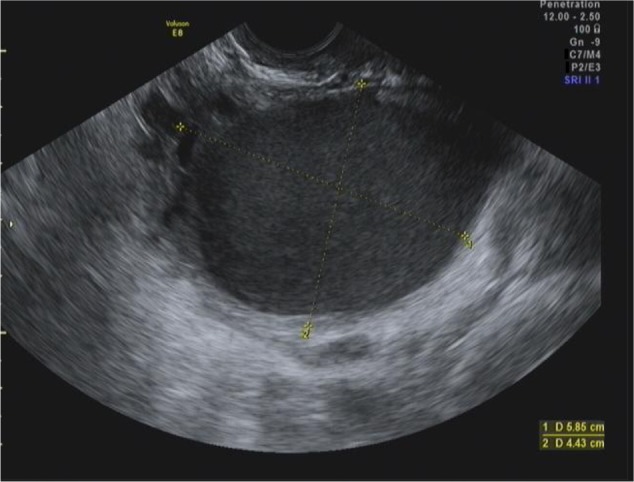
UltrasoundTransvaginal ultrasound: ovarian cyst with ground-glass echogenicity, an appearance typical of endometrioma.
Source : Smorgick et al., International Journal of Women's Health, 2014, figure 6 · CC BY-NC
🔍 Almost 7 years of wandering before the diagnosis
Diagnostic delay is accrued mainly in primary care, where the physiotherapist is often the first person consulted for pelvic pain.
Delay between symptom onset and surgical diagnosis, multicentre study across 10 countries (1,418 women). A systematic review of 17 studies published since 2018 finds delays of 0.3 to 12 years depending on the definition used 5. Sources: Nnoaham et al., 2011 (PMID 21718982); De Corte et al., 2025 (PMID 39373298).
Diagnosing endometriosis is not the physiotherapist's remit. It belongs to a medical pathway whose framework is set by the reference European guideline: 109 recommendations covering diagnosis, the treatment of pain and infertility, recurrence, asymptomatic or extrapelvic endometriosis, adolescents and postmenopausal women 3. Yet the physiotherapist occupies a singular position in that pathway: because the disease is common, because its first expression is pain, and because the delay between the first symptoms and the diagnosis is still counted in years, they regularly see women who have not been diagnosed, consulting for “pelvic pain”, “low back pain”, “dyspareunia” or “bowel problems”. Knowing what the diagnosis requires, what it does not tell us, and what must not be confused with it, is therefore part of the clinical toolkit.
A common disease, a diagnosis that lags
Endometriosis is estimated to affect around 10 % of women of reproductive age, i.e. approximately 190 million women worldwide 2. This frequency contrasts starkly with the slowness of the diagnosis. The mean delay between symptom onset and diagnosis is 7 years, and women consult on average seven doctors before the diagnosis is made 2. The landmark multicentre study, conducted in 10 countries in 1,418 women, measured a delay of 6,7 years between symptom onset and the surgical diagnosis of endometriosis: a delay accrued mainly in primary care, and one that stretches to 8,3 years in publicly funded centres against 5,5 years elsewhere 4.
This is not a historical problem. A systematic review of the literature published since 2018, covering 17 studies, all observational, reports diagnostic delays ranging from 0.3 to 12 years, with wide variation depending on the definition adopted for “time to diagnosis” (overall, primary or clinical delay), the geographical area and the characteristics of the populations studied. The authors conclude that diagnostic delay persists, and that it is mainly attributable to doctors, hence their call for standardised definitions, for greater awareness and for targeted diagnostic interventions 5.
Diagnostic delay is still present, and it is carried mainly by the medical side of the pathway 5.
Four factors combine to produce this delay: non-specific symptoms, the absence of a biomarker, the lack of awareness among professionals, and the normalisation or stigmatisation of symptoms 2. Added to this is a generational gap: most adults report that their pelvic pain began in adolescence, yet most young women do not receive timely treatment 2. The cost of this latency is not only medical: each affected woman loses on average 10,8 hours of work per week (SD 12,2), essentially through reduced effectiveness at work rather than through absenteeism 4. In other words, a patient may work, hold on, say nothing, and be massively impaired.
The key symptoms, and why they mislead
There is no single clinical picture. Symptom heterogeneity is high 2 : the reason for consulting may be pelvic pain, dyspareunia, infertility, or a combination. Three observations shape how the physiotherapist listens.
- Pain can be severe with very few lesions. A woman at rASRM stage I (a limited number of lesions, few adhesions) may present with severe pain, infertility, or both; conversely, a woman at stage IV (numerous lesions, endometrioma, extensive adhesions) may be asymptomatic 2.
- Superficial dyspareunia is a documented reason for physiotherapy referral. It is the very population of the landmark randomised trial in pelvic floor physiotherapy: 34 nulliparous women with deep endometriosis and superficial dyspareunia 10.
- Pain does not stop at surgery. Chronic pelvic pain refractory to conventional treatment develops in around 30 % of patients with endometriosis 2.
Painful comorbidities are a signal in their own right. In a cohort of 285 women with endometriosis, central sensitisation, measured with the Central Sensitization Inventory, affects 41.4 % of patients (95 % CI: 35.8–47.2) and is associated with moderate to severe chronic pelvic pain, with failure of hormonal treatment, with migraine or tension-type headache, with irritable bowel syndrome and with anxiety or panic attacks 11. A patient who combines pelvic pain, headaches, bowel symptoms and anxiety, and in whom hormonal therapy has failed, is not a patient “who somatises”: this is a described profile, and screening for it is useful in order to direct her towards multimodal treatment.
Clinical examination: to be considered, never enough to exclude
The ESHRE position is explicit and deserves to be remembered word for word for its implications: clinical examination, including vaginal examination where appropriate, should be considered in order to detect deep nodules or endometriomas in patients with suspected endometriosis, although its diagnostic accuracy is low 3. The corollary is immediate, and it is the one that counts in the clinic: a normal examination does not rule out the diagnosis. A patient may have been examined, reassured, sent home, and still have the disease.
Two examinations must be separated here, as they have neither the same object nor the same operator. Gynaecological examination looks for a lesion ; the physiotherapist's assessment looks for a mechanism. This distinction is not rhetorical: it is directly supported by the data below.
Imaging and lesional stage: what they do not tell us about pain
Imaging modalities and investigation criteria belong to the medical work-up and are covered by the ESHRE guideline 3 ; they are not detailed here, and the physiotherapist has neither to request nor to interpret them. One point concerning them, however, bears directly on their practice.
The lesional stage does not predict pain. This is the clinical consequence of the heterogeneity noted above: a very painful stage I, a silent stage IV 2. It follows that neither imaging nor surgical stage predicts the level of pain or the need for rehabilitation. A “reassuring” operative report does not invalidate the complaint; a heavy lesional picture does not mechanically call for pain management. The pathophysiological basis of this decoupling is known: the pelvic pain of endometriosis can be both inflammatory and neuropathic in nature, characterised by potential sensitisation of the central nervous system that may maintain persistent pain even after surgical excision of the lesions 2.
Finally, the diagnosis does not close the story. A systematic review with meta-analyses (55 studies included, 23 pooled) covering operated endometrioma without postoperative hormonal treatment finds recurrence rates of 4 %, 14 %, 17 % and 27 % at 3, 6, 12 and 24 months respectively 6. More than one patient in four recurs by two years: follow-up, and physiotherapy support where indicated, belong to the long term.
What the physiotherapist must be able to spot
The physiotherapist does not diagnose endometriosis. They assess mechanisms, and these are, in this population, remarkably constant.
Myofascial trigger points and sensitisation are the rule, not the exception. Among women with chronic pelvic pain, almost all of those in pain had myofascial trigger points (94 % and 91 % depending on the group), and sensitisation, regional allodynia and hyperalgesia, affected 83 % and 82 % of the pain groups against 15 % of healthy volunteers. The decisive point: these signs were present irrespective of whether endometriosis was found at surgery. The authors conclude that traditional methods of classifying endometriosis-associated pain, based on the disease, its duration and anatomy, are inadequate and should be replaced by a mechanism-based assessment 8.
Classifying pain by disease, duration and anatomy is inadequate: mechanism-based assessment must take over 8.
Pelvic floor spasm is identified by the patients themselves. In a cross-sectional study of 30 women with chronic pelvic pain associated with endometriosis, all had spasm of the pelvic floor muscles which they themselves identified as a major focus of their pain. Twenty of the 30 women nevertheless described their pain as focal, whereas all had diffuse myofascial dysfunction, with lowered pressure pain thresholds and trigger points in more than two thirds of the 26 regions assessed 9. The practical lesson is twofold: a localised complaint often masks widespread dysfunction, and the examination must extend beyond the pelvic area.
Pain is plural. A scoping review (30 articles retained from 379 citations) recalls that endometriosis is a chronic inflammatory condition associated with nociceptive, neuropathic and nociplastic pain, with central sensitisation as the principal nociplastic mechanism 1.
Two caveats not to be side-stepped
The mechanistic reasoning above is solid in its observations, fragile in its metrology. Two limits must be stated plainly, including to the patient.
- There is no standardised method for detecting central sensitisation or nociplastic pain ; the authors call for further research to assess its validity and to standardise the methods 1. The Central Sensitization Inventory is used in research 11 : that does not make it a diagnostic test.
- The measurement of pelvic floor hypertonicity remains poorly standardised. A systematic review of 151 studies on pelvic floor muscle tone and overactivity shows that, among the 15 measurement tools providing convincing evidence, 10 find increased tone in a pelvic condition (all of them painful) versus controls, but 5 find no difference at all ; the authors conclude that few studies provide convincing evidence, interpretation being limited by design and measurement problems (94 % of methods unvalidated or unusable) 12. Hypertonicity is therefore a plausible clinical target: the trial by Del Forno et al. 10 does in fact demonstrate, on 3D/4D transperineal ultrasound, better relaxation after 5 sessions (change in levator hiatal area on Valsalva: +20,0 ± 24,8 % vs −0,5 ± 3,3 %; P = 0,02), but a target whose quantification is not consolidated.
Received ideas and confirmed data
| Received idea | What the literature says | Source | Level |
|---|---|---|---|
| “A normal clinical examination rules out endometriosis” | Clinical examination, including vaginal examination where appropriate, should be considered in order to detect deep nodules and endometriomas, but its diagnostic accuracy is low | Becker et al. 2022 (ESHRE) | Guideline |
| “The more extensive the lesions, the stronger the pain” | Stage I possibly very painful, stage IV possibly asymptomatic: symptom heterogeneity is high | Zondervan et al. 2020 | Review |
| “Once the lesions are removed, the pain goes away” | Inflammatory and neuropathic pain, with central sensitisation able to maintain pain even after excision; ~30 % refractory chronic pelvic pain | Zondervan et al. 2020 | Review |
| “Diagnostic delay is a thing of the past” | Delays of 0.3 to 12 years reported in 17 studies published since 2018; delay persists and is mainly attributable to doctors | De Corte et al. 2025 | Systematic review |
| “Trigger points are the hallmark of endometriosis” | Trigger points (94 % / 91 %) and sensitisation (83 % / 82 % vs 15 % in controls) present irrespective of whether endometriosis was found at surgery | Stratton et al. 2015 | Comparative study |
| “We know how to measure pelvic floor hypertonicity” | Of 15 tools providing convincing evidence, 10 show increased tone, 5 show no difference; 94 % of methods unvalidated or unusable | Worman et al. 2023 | Systematic review |
| “We know how to screen for central sensitisation” | No standardised method currently exists for detecting central sensitisation or nociplastic pain | Gentles et al. 2024 | Scoping review |
| “Physiotherapy is recommended by ESHRE in endometriosis” | False. No recommendation can be made in favour of any specific non-medical intervention, physiotherapy is named explicitly, as the benefits and risks remain uncertain; only the discussion of non-medical strategies for quality of life and psychological well-being is recommended (GPP) | Becker et al. 2022 (ESHRE) | Guideline |
Spot, refer, and speak honestly
The physiotherapist's role in the diagnostic phase comes down to one sentence: spot and refer, never conclude. Since diagnostic delay is carried mainly by the medical side 5 and accrues mainly in primary care 4, the physiotherapist, often consulted early for pelvic or lumbopelvic pain, is frequently upstream of the diagnosis. A woman describing pelvic pain that began in adolescence, dyspareunia, a train of painful comorbidities and ineffective hormonal therapy deserves a specialist opinion, not one more mechanical explanation.
Once the patient is in the system, the management of chronic pelvic pain belongs to a multidisciplinary team bringing together, in addition to the gynaecologist, a pain physician, a physiotherapist and a psychologist, with a therapeutic range running from pharmacological treatments (analgesics, anxiolytics, antidepressants, membrane stabilisers) to pelvic floor physiotherapy and cognitive behavioural therapy 2. The physiotherapist is one component of it, not the pivot.
There remains the question of the level of evidence, which it would be dishonest to dodge. The ESHRE 2022 guideline invites clinicians to discuss non-pharmacological strategies for quality of life and psychological well-being, but makes no recommendation in favour of any specific non-pharmacological intervention (Chinese medicine, nutrition, electrotherapy, acupuncture, physiotherapy, exercise, psychological interventions), to reduce pain or improve quality of life, as the potential benefits and risks remain uncertain 3. This is a finding of insufficient evidence, not a recommendation against physiotherapy; note too that the guideline's literature search was closed on 1st December 2020, so that later trials are not taken into account. Since then, a meta-analysis (8 eligible studies, 7 analysed quantitatively) has concluded that physiotherapy techniques reduce endometriosis-associated pain compared with no physiotherapy (mean difference −1,97; CI −2,99 to −0,95), with locally applied techniques outperforming general approaches, at a level of evidence rated low (GRADE) and on a very small number of studies 13.
The detailed version of the ESHRE guideline in fact frames the scope of the profession with a precision worth borrowing: physiotherapy is not “a treatment” in itself, but a profession that addresses human movement and function impaired by injury or disease; physiotherapists trained in pain management develop behavioural approaches and multidisciplinary working centred less on the organ or on tissue dysfunction than on nervous system responses and quality of life. The same document stresses the importance of offering women options addressing psychological, sexual and physical factors in order to improve quality of life even when pain cannot be reduced 3. That is probably the most accurate formulation of what the physiotherapist brings during the diagnostic wandering: not a diagnosis, not a cure: a mechanistic assessment, a referral, and a quality of life defended in the meantime.
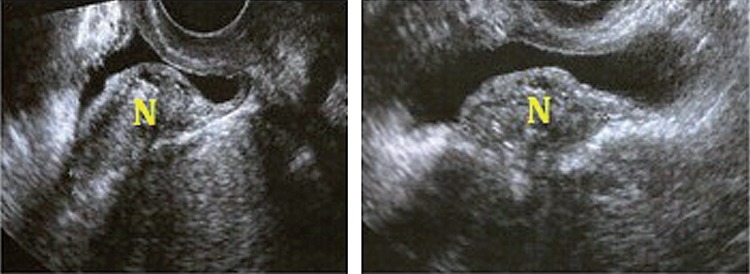
UltrasoundTransvaginal ultrasound, two views: endometriosis nodule infiltrating the bladder wall, marked with the letter N.
Source : Stopiglia et al., International Brazilian Journal of Urology, 2017, figure 1B · CC BY
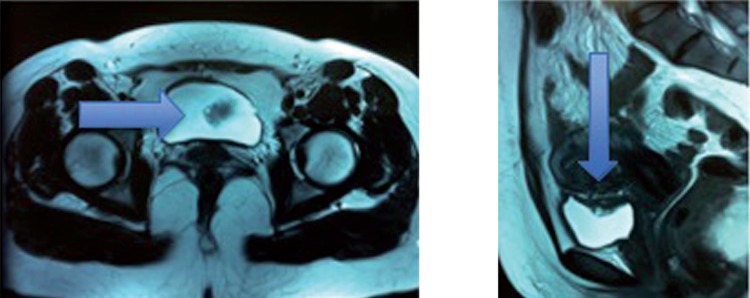
MRIPelvic MRI, axial and sagittal sections: endometriosis lesion infiltrating the bladder wall, arrows on the lesion.
Source : Stopiglia et al., International Brazilian Journal of Urology, 2017, figure 1C · CC BY
Key points
- Frequency and delay. Around 10 % of women of reproductive age, ~190 million worldwide 2 ; a mean delay of 7 years and seven doctors consulted before diagnosis 2, 6,7 years to surgical diagnosis in a 10-country study, mostly accrued in primary care 4.
- The delay persists. Delays of 0.3 to 12 years in 17 observational studies published since 2018, mainly attributable to doctors 5.
- Clinical examination. To be considered in order to detect deep nodules and endometriomas, but diagnostic accuracy is low: a normal examination does not rule out the diagnosis 3.
- Stage does not predict pain. Stage I possibly severely painful, stage IV possibly asymptomatic 2 : imaging and surgical stage predict neither the pain nor the need for rehabilitation.
- Pain is not the lesion. Inflammatory and neuropathic pain, with possible central sensitisation maintaining pain even after excision; ~30 % refractory chronic pelvic pain 2. Central sensitisation in 41,4 % of 285 patients, associated with moderate to severe pelvic pain, hormonal failure, migraine/tension-type headache, IBS and anxiety 11.
- What the physio spots. Myofascial trigger points (94 % / 91 %) and regional sensitisation (83 % / 82 % vs 15 % in healthy controls), present irrespective of endometriosis found at surgery → mechanism-based assessment 8 ; pelvic floor spasm in 30/30 women, with diffuse myofascial dysfunction despite an often focal complaint 9.
- Caveats. No standardised method for detecting central sensitisation or nociplastic pain 1 ; poorly standardised measurement of pelvic floor hypertonicity 12.
- Scope. ESHRE 2022 recommends no specific non-pharmacological intervention, physiotherapy included, as benefits and risks remain uncertain 3: a finding of insufficient evidence, not a recommendation to the contrary. Physiotherapy belongs within a multidisciplinary team 2, with a signal of pain reduction at a low level of evidence 13.
🔥 Why is the pain of endometriosis so complex?
🧠 Central sensitisation affects more than one patient in three
Measured with the Central Sensitization Inventory in 285 women with endometriosis: a mechanism that explains why pain persists beyond the lesions.
It is associated with moderate to severe chronic pelvic pain, with failure of hormonal treatment and with painful comorbidities (migraine or tension-type headache, irritable bowel syndrome). Source: Raimondo et al., 2023 (PMID 36441085).
🔥 Musculoskeletal signs exist independently of the lesions
In women with chronic pelvic pain, trigger points and sensitisation are the rule, whether or not endometriosis is found at surgery.
Sensitisation measured by regional allodynia and hyperalgesia (p < 0,001 vs volontaires saines). Ces signes étant présents indépendamment de la lésion, ils justifient une évaluation neuro-musculo-squelettique distincte du bilan lésionnel. Source : Stratton et al., 2015 (PMID 25730237).
Endometriosis is estimated to affect around 10 % of women of reproductive age, i.e. approximately 190 million women worldwide 2. Behind that figure lies a clinical problem that still bewilders many practitioners: the pain experienced can be read neither on the imaging nor on the operative report. For the physiotherapist, it is precisely this gap between lesion and complaint that defines their field of intervention, and demands rigorous honesty about what rehabilitation can, and cannot, promise.
Pain cannot be reduced to the lesion
The pathophysiological basis is explicit in the landmark literature: the pelvic pain of endometriosis can be both inflammatory and neuropathic in nature, characterised by potential sensitisation of the central nervous system that may maintain persistent pain even after surgical excision of the lesions 2. In other words, removing the tissue does not guarantee removing the pain.
This is reinforced by a fact every physiotherapist should know before seeing their first patient: symptom severity is not correlated with the lesional stage. A patient at rASRM stage I (limited lesions, few adhesions) may suffer severe pain, infertility, or both; a patient at stage IV (numerous lesions, endometrioma, extensive adhesions) may be entirely asymptomatic 2. The clinical corollary is direct: imaging and surgical stage predict neither the level of pain nor the need for rehabilitation.
Finally, chronic pelvic pain that does not respond to conventional treatment develops in around 30 % of patients with endometriosis 2. This refractory subgroup, close to one patient in three, is precisely the population in which a multidisciplinary approach, including the management of musculoskeletal dysfunction, makes full sense.
“Pain can persist even after surgical excision of the lesions”, that sentence alone justifies a physiotherapist having a place in this pathway. They do not treat the disease: they treat a pain whose mechanism is partly central.
Central sensitisation: between one patient in four and one in two
A recent scoping review (30 articles retained from 379 citations) recalls that endometriosis is a chronic inflammatory condition associated with nociceptive, neuropathic AND nociplastic pain, with central sensitisation as the principal nociplastic mechanism 1. Three mechanisms therefore coexist in one and the same patient, which explains why mono-causal reasoning (“it's the lesion”, “it's the muscle”, “it's in her head”) fails every time.
The prevalence has been quantified. In a cohort of 285 women with endometriosis, central sensitisation measured with the Central Sensitization Inventory affects 41.4 % of patients (95 % CI: 35.8–47.2) 11. It is associated there with moderate to severe chronic pelvic pain, with failure of hormonal treatment, and with a train of painful comorbidities: migraine or tension-type headache, irritable bowel syndrome, anxiety and panic attacks. Screening for it is useful in order to direct patients towards multimodal treatment, which situates the physio's place exactly within a multidisciplinary pathway, and not working alone.
The Stratton study 8 goes further and supplies the strongest argument for a neuromusculoskeletal assessment distinct from the lesional work-up. Among women with chronic pelvic pain, sensitisation, measured by regional allodynia and hyperalgesia, affected 83 % and 82 % of the pain groups against 15 % of healthy volunteers (P < 0.001). Above all, these signs were present irrespective of whether endometriosis was found at surgery. The authors conclude that traditional methods of classifying endometriosis-associated pain, based on disease, duration and anatomy, are inadequate and should be replaced by a mechanism-based assessment.
One major reservation must nevertheless be stated, because it governs what can be said: there is currently no standardised method for detecting central sensitisation or nociplastic pain 1. Pain education therefore rests on solid mechanistic reasoning, but without a validated, consensual assessment tool. The practitioner reasons; they do not measure.
Pelvic floor hypertonicity and myofascial dysfunction: the rule, not the exception
This is the side most directly accessible to the physiotherapist. In Stratton 8, almost all the patients in pain had myofascial trigger points (94 % and 91 %), once again whatever the surgical endometriosis status.
The cross-sectional study by Phan 9 fills in the picture in 30 women with chronic pelvic pain associated with endometriosis: all had spasm of the pelvic floor muscles which they themselves identified as a major focus of their pain. An essential clinical detail: 20 of the 30 women described their pain as focal, whereas all demonstrated diffuse myofascial dysfunction, with lowered pressure pain thresholds and trigger points in more than two thirds of the 26 regions assessed. The authors conclude that myofascial dysfunction and sensitisation extend beyond the pelvic region, and may be initiated or maintained by persistent pelvic spasm. The patient's complaint therefore underestimates the true extent of the problem, which argues for an examination reaching well beyond the area pointed to.
That this hypertonicity is a modifiable target is no longer a hypothesis. A randomised controlled trial in 34 nulliparous women with deep endometriosis and superficial dyspareunia (5 individual 30-minute sessions of pelvic floor physiotherapy versus no intervention) demonstrated, on 3D/4D transperineal ultrasound, better pelvic floor relaxation: the change in levator hiatal area on Valsalva was +20.0 ± 24.8 % in the physiotherapy group against −0.5 ± 3.3 % in the control group (P = 0.02), with a marked reduction in superficial dyspareunia (median Δ-NRS −3; IQR −4 to −2; P < 0.01, against 0 in the control group) and a significant difference in chronic pelvic pain (P = 0.01) 10. This is, to date, the clearest demonstration of the mechanism of action of physiotherapy in this indication: releasing hypertonicity. Reservations to state: small sample (30 analysed), no blinding, a control group with no intervention at all: the placebo effect is not controlled for.
A methodological caveat is nevertheless required before building a whole discourse on “hypertonicity”. A systematic review of 151 studies devoted to pelvic floor muscle tone and overactivity shows that, among the 15 measurement tools providing convincing evidence, 10 find increased tone in a pelvic condition (all of them painful) versus controls, but 5 find no difference at all. The authors conclude that, despite a voluminous literature, few studies provide convincing evidence, interpretation being limited by design and measurement problems (94 % of methods unvalidated or unusable) 12. Pelvic floor hypertonicity is therefore a clinical target that is plausible and clinically useful, but whose measurement remains poorly standardised. Beware of peremptory numerical claims in the consultation room.
Impact on quality of life: the invisible cost
Diagnostic wandering is not a campaigning anecdote, it is measured data. The landmark multicentre study conducted in 10 countries (1,418 women) measured a delay of 6.7 years between symptom onset and the surgical diagnosis of endometriosis, accrued mainly in primary care: a longer delay in publicly funded centres (8.3 years against 5.5 years) 4. Zondervan 2 reports a mean delay of 7 years, with women consulting on average seven doctors before the diagnosis is made, under the effect of a tetrad: non-specific symptoms, absence of a biomarker, lack of awareness, and the normalisation and stigmatisation of symptoms. Although most adults report that their pain began in adolescence, most young women do not receive timely treatment.
This delay has not gone away. A systematic review of the literature published since 2018 (17 studies, all observational) reports diagnostic delays ranging from 0.3 to 12 years depending on the definition adopted (overall, primary or clinical delay), the geographical area and the characteristics of the population. The authors conclude that diagnostic delay persists and that it is mainly attributable to doctors, stressing the need for standardised definitions, for awareness and for targeted diagnostic interventions 5. The physiotherapist, often consulted early for pelvic pain, lumbopelvic pain or dyspareunia, is frequently upstream of the diagnosis: they occupy a key position for referral, without ever making the diagnosis themselves. It is worth recalling, too, that clinical examination, including vaginal examination where appropriate, should be considered in order to detect deep nodules or endometriomas, but that its diagnostic accuracy is low: a normal examination does not rule out the diagnosis 3.
The functional cost has been quantified: each affected woman lost on average 10.8 hours of work per week (SD 12.2), essentially through reduced effectiveness at work rather than through absenteeism 4. A loss largely invisible to employer and family alike: the patient is present, but diminished.
Finally, management does not stop at the surgical procedure. A systematic review with meta-analyses (55 studies included; 23 pooled) covering operated endometrioma without postoperative hormonal treatment finds recurrence rates of 4 %, 14 %, 17 % and 27 % at 3, 6, 12 and 24 months respectively 6. More than one patient in four recurs by two years. The management of recurrence is in fact an item in its own right among the 109 recommendations of ESHRE 2022, on the same footing as diagnosis, pain and infertility, and not a marginal complication. This chronic, relapsing profile is exactly the one that calls for support over time.
Key points: the complexity in five points
- Pain ≠ lesion. Pelvic pain is both inflammatory and neuropathic, with possible CNS sensitisation that may persist after surgical excision; ~30 % of patients develop chronic pain refractory to conventional treatment 2.
- Stage predicts nothing. A stage I may be very painful, a stage IV asymptomatic 2. Never calibrate a rehabilitation programme on an imaging or operative report.
- Central sensitisation: 41.4 % (95 % CI 35.8–47.2) in 285 patients, associated with moderate to severe CPP, hormonal failure, headaches, IBS and anxiety 11. But no standardised method exists for detecting it 1.
- Trigger points and spasm = the rule. 94 % and 91 % trigger points in women with pain, regional sensitisation 83/82 % vs 15 % in healthy women, irrespective of endometriosis at surgery 8 ; pelvic floor spasm in 30/30 patients, with diffuse myofascial dysfunction despite a focal complaint 9.
- Humility is compulsory. ESHRE 2022 recommends no specific non-pharmacological intervention, physiotherapy is named explicitly, to reduce pain or improve quality of life, as benefits and risks remain uncertain (GPP no. 38). To say otherwise would be false.
What the physiotherapist may say, and what they must not
This section is the most important, and the one most often mishandled in professional communications. The level of evidence must be displayed as it is.
High-level evidence: official recommendation The ESHRE working group recommends that clinicians discuss non-pharmacological strategies for the quality of life and psychological well-being of women managing endometriosis symptoms. But it states, at grade GPP (Good Practice Point no. 38), that no recommendation can be made in favour of any specific non-pharmacological intervention (Chinese medicine, nutrition, electrotherapy, acupuncture, physiotherapy, exercise, psychological interventions), to reduce pain or improve quality of life, as the potential benefits and risks remain uncertain 3. Any claim that physiotherapy is “recommended by ESHRE” in endometriosis is therefore false. This is a finding of insufficient evidence, not a recommendation against physiotherapy. Note too: the guideline's literature search was closed on 1st December 2020: later trials are not taken into account.
The detailed ESHRE document in fact frames the scope of the profession with a precision worth borrowing: physiotherapy is not “a treatment” in itself, but a profession that addresses human movement and function impaired by injury or disease; physiotherapists trained in pain develop behavioural approaches and multidisciplinary working centred less on the organ or on tissue dysfunction than on nervous system responses and quality of life; and it is important to offer women options addressing psychological, sexual and physical factors in order to improve quality of life even when pain cannot be reduced 3. That is where patient education finds its legitimacy, not in a promise of analgesia.
Zondervan 2 explicitly positions physiotherapy within the pathway: in women with chronic pelvic pain, management belongs to a multidisciplinary team bringing together, in addition to the gynaecologist, a pain physician, a physiotherapist and a psychologist, with a therapeutic range running from pharmacological treatments (analgesics, anxiolytics, antidepressants, membrane stabilisers) through to pelvic floor physiotherapy and cognitive behavioural therapy.
| Claim | What the source says | Level |
|---|---|---|
| “ESHRE recommends physiotherapy in endometriosis” | False. No recommendation is possible for any specific non-pharmacological intervention, physiotherapy explicitly named; only a GPP invites clinicians to discuss non-pharmacological strategies for QoL and psychological well-being 3 | Guideline, to be respected |
| “Physiotherapy reduces endometriosis-associated pain” | Meta-analysis (7 trials / 433 participants): MD −1.97 (95 % CI −2.99 to −0.95) vs no physiotherapy; locally applied techniques superior to general approaches (−2.26; CI −3.28 to −1.24); physical modalities (electrotherapy, laser) largest reduction (−2.03; CI −3.9 to −0.14). Level of evidence rated low (GRADE), very few studies 13 | Low-level evidence |
| “Physiotherapy improves pelvic floor relaxation and superficial dyspareunia” | RCT, 34 randomised / 30 analysed, deep endometriosis: levator hiatus on Valsalva +20.0 ± 24.8 % vs −0.5 ± 3.3 % (P = 0.02); superficial dyspareunia median Δ-NRS −3 (IQR −4 to −2; P < 0.01); CPP P = 0.01. Small sample, no blinding, control with no intervention 10 | Moderate evidence / to be replicated |
| “Physiotherapy improves urinary, bowel and sexual function” | Not demonstrated. Same randomised population (30 analysed): no significant difference in these three functions, only a trend for constipation; the authors ask that women be informed of the uncertain impact 11 | Negative result: do not over-promise |
| “Non-pharmacological conservative therapies improve pain and physical function” | Meta-analysis of 6 RCTs vs placebo: pain SMD −0.89 (CI −1.21 to −0.57; I² 69 %); quality of life, only the physical function subscale reaches significance (SMD −1.49; CI −2.88 to −0.10; I² 95 %); no difference on the other variables. High heterogeneity 14 | Low-level evidence |
| “Manual therapy is a useful adjunct” | Placebo-controlled RCT (41 women: 21 manual therapy / 20 placebo): significant improvement in pain intensity at T1 (p < 0.001; d = 1.00), T2 (p < 0.001; d = 0.89) and T3 (p < 0.001; d = 2.28) and in physical quality of life (p < 0.05). The authors explicitly position it as an adjunct, not a treatment for the disease 15 | Moderate evidence |
| “Physical activity helps” | Systematic review (6 RCTs, 251 patients): beneficial impact on quality of life, pain intensity, mental health, pelvic floor dysfunction and bone density; meta-analysis limited to 2 studies (heterogeneity): QoL significantly improved on pain (P < 0.0001), control/helplessness (P < 0.00001) and emotional well-being (P = 0.006). The authors call for RCTs of better quality and longer duration 16 | Low-level / promising evidence |
The line of conduct that emerges is therefore twofold, and internally consistent. On the one hand, ESHRE 2022 records a finding of insufficient evidence: physiotherapy has no guideline backing for treating endometriosis, and the practitioner owes their patient honesty on that point. On the other, the pathophysiology (inflammatory, neuropathic and nociplastic pain persisting after surgery), the clinical epidemiology (trigger points in 91–94 % of women with pain, sensitisation in 82–83 %, pelvic floor spasm in 30/30, central sensitisation in 41.4 %) and the available trials 10131514 converge on an identifiable and modifiable target: pain and musculoskeletal dysfunction, not the lesions.
This is an argument for humility in what physiotherapists claim, not for abstention. Physiotherapy belongs within a multidisciplinary pathway: it acts on pain and function; it treats neither the disease nor the recurrence.
There remains the most unsettling, and most useful, conclusion from Stratton 8 : traditional methods of classifying endometriosis-associated pain, based on disease, duration and anatomy, are inadequate and should be replaced by a mechanism-based assessment. That is exactly the reasoning the physiotherapist is trained to carry out. It still has to be announced for what it is: a neuromusculoskeletal assessment, distinct from the lesional work-up, whose benefits on pain are real but supported by a low level of evidence, and whose effects on urinary, bowel and sexual function have not, to date, been demonstrated.
🤲 What is the physiotherapist's role in endometriosis?
📊 Non-pharmacological conservative therapies: size of the effect
Standardised mean differences (SMD) from a meta-analysis of 6 placebo-controlled randomised trials.
Pain intensity: SMD −0.89 (95 % CI −1.21 to −0.57; I² 69 %). These are standardised effect sizes, not percentages of patients; heterogeneity between studies is high. Source: Abril-Coello et al., 2023 (PMID 36571475).
🤲 What physiotherapy shifts on pain
Reduction in pelvic pain achieved by physiotherapy techniques, in points on a pain scale (mean difference vs comparator).
Meta-analysis of 7 studies (433 participants): −1.97 point (95 % CI −2.99 to −0.95) versus no physiotherapy; greater effect from local techniques (−2.26; 95 % CI −3.28 to −1.24). To be read with the ESHRE 2022 caveat : the European guideline makes no recommendation in favour of any specific non-pharmacological intervention, physiotherapy included, as the benefits and risks remain uncertain, and the number of studies is still small. Sources: Can et al., 2026 (PMID 40705433); Becker et al., 2022 (PMID 35350465).
The question deserves to be put this way round, and not the other. Not “does physiotherapy cure endometriosis?” (the answer is no, and no available data allow anyone to claim otherwise), but “what is left to treat, in a woman with endometriosis, that falls within the physiotherapist's field of competence?”. The answer to that is substantial: pain, neuromusculoskeletal dysfunction, sensitisation of the nervous system, impaired physical function and quality of life. This is precisely what ESHRE states in the detailed version of its guideline: “physiotherapy is not ‘a treatment' in itself, but a profession that addresses human movement and function impaired by injury or disease” 3.
This section therefore sets two boundaries, and works the space between them: what the physiotherapist can legitimately claim, and what they cannot promise without lying.
The essential framing: what physiotherapy treats, and what it does not
Endometriosis is a disease. It affects around 10 % of women of reproductive age, i.e. approximately 190 million women worldwide 2. Its treatment (hormonal, surgical) is not the physiotherapist's remit, and no manual technique, no exercise and no physical modality has demonstrated the slightest action on the endometriotic lesions themselves.
But the pain of endometriosis is not the disease of endometriosis. That is the tipping point of the whole clinical argument:
- Pelvic pain here is both inflammatory and neuropathic in nature, characterised by potential sensitisation of the central nervous system that may maintain persistent pain even after surgical excision of the lesions 2. Removing the lesion does not necessarily remove the pain.
- Chronic pelvic pain that does not respond to conventional treatment develops in around 30 % of patients 2. This refractory subgroup is exactly the population in which a multidisciplinary approach, including the management of musculoskeletal dysfunction, makes sense.
- Symptom severity is not correlated with the lesional stage : a stage I patient (limited lesions, few adhesions) may suffer severe pain, while a stage IV patient (numerous lesions, endometrioma, extensive adhesions) may be asymptomatic 2.
The clinical corollary is direct: imaging and surgical stage predict neither the level of pain nor the need for rehabilitation. An operative report does not tell you what to treat.
The physiotherapist therefore does not intervene “on endometriosis”. They intervene on a pain whose mechanism is partly central, on objectifiable muscular dysfunction, on physical function and on quality of life. That scope is narrow, and it is real.
Key points: the sentence never to be uttered
“Physiotherapy is recommended by ESHRE in endometriosis” is false. The ESHRE 2022 guideline (109 recommendations covering diagnosis, pain, infertility, recurrence, asymptomatic or extrapelvic endometriosis, adolescents, postmenopausal women, prevention and the link with cancer) states, under Good Practice Point no. 38: the group recommends that clinicians discuss non-pharmacological strategies for quality of life and psychological well-being, but no recommendation can be made in favour of any specific non-pharmacological intervention (Chinese medicine, nutrition, electrotherapy, acupuncture, physiotherapy, exercise, psychological interventions), to reduce pain or improve quality of life, as the potential benefits and risks remain uncertain 3.
Two nuances, in both directions:
- This is a finding of insufficient evidence, not a recommendation against physiotherapy. It is an argument for humility in what is claimed, not for abstention.
- The guideline's literature search was closed on 1st December 2020 : later trials are not taken into account.
Levels of evidence: where do we really stand?
Setting the data side by side avoids the two symmetrical pitfalls: the marketing of the “indispensable physio” and the nihilism of “nothing is proven”.
| Question | What the data say | Level |
|---|---|---|
| Is physiotherapy recommended in endometriosis? | No recommendation is possible in favour of any specific non-pharmacological intervention, physiotherapy explicitly named; benefits and risks uncertain 3 | Reference guideline |
| Does physiotherapy reduce endometriosis-associated pelvic pain? | Yes vs no physiotherapy: MD −1.97 (95 % CI −2.99 to −0.95); 7 studies analysed / 8 eligible, 433 participants 13 | Meta-analysis: GRADE level rated low, very few studies |
| Which techniques come out best? | Physical modalities (electrotherapy, laser): MD −2.03 (CI −3.9 to −0.14); locally applied techniques > generally applied techniques: −2.26 (CI −3.28 to −1.24) 13 | Low: indirect comparisons, minimal sample sizes |
| Non-pharmacological conservative therapies vs placebo? | Pain: SMD −0.89 (CI −1.21 to −0.57; I² 69 %). Quality of life: significant only for physical function (SMD −1.49; CI −2.88 to −0.10; I² 95 %); non-significant on the other dimensions; 6 RCTs 14 | Moderate to low: high heterogeneity |
| Does pelvic floor physiotherapy improve superficial dyspareunia? | Yes: median Δ-NRS −3 (IQR −4 to −2) vs 0 in the control group; P < 0.01; RCT, 34 randomised / 30 analysed 10 | A single RCT, small sample, no blinding, control with no intervention |
| …and urinary, bowel and sexual function? | No : no significant difference between groups; only a trend for constipation 11 | Negative result, same randomised population |
| Manual therapy vs placebo? | Pain significantly improved at T1 (p < 0.001; d = 1.00), T2 (p < 0.001; d = 0.89) and T3 at 1 month (p < 0.001; d = 2.28); physical quality of life p < 0.05; 41 women (21 vs 20) 15 | Placebo-controlled RCT, but a single trial with a small sample |
| Physical activity and exercise? | Reported benefit on quality of life, pain intensity, mental health, pelvic floor dysfunction, bone density; 6 RCTs, 251 patients; meta-analysis limited to 2 studies: pain P < 0.0001, control/helplessness P < 0.00001, emotional well-being P = 0.006 16 | Low: heterogeneity, short duration, the authors' call for RCTs of better quality |
The honest reading of this table fits in one sentence: the signal is consistent and always points the same way, a reduction in pain, but it rests on a very small number of trials of limited quality. That is neither nothing, nor solid proof.
Pelvic floor rehabilitation: the most tangible piece of data
This is the strand with the best-objectified mechanism. The randomised controlled trial by Del Forno 10 included 34 nulliparous women with deep endometriosis and superficial dyspareunia, allocated between five individual 30-minute sessions of pelvic floor physiotherapy and a group with no intervention. Assessment was based on 3D/4D transperineal ultrasound.
Clinically, this was accompanied by a marked reduction in superficial dyspareunia (median Δ-NRS −3, IQR −4 to −2, against 0 [IQR 0–0] in the control group; P < 0.01) and by a significant difference in chronic pelvic pain (P = 0.01). The authors conclude that, in women with deep endometriosis, pelvic floor physiotherapy appears to increase hiatal area on Valsalva, leading to an improvement in superficial dyspareunia, chronic pelvic pain and muscle relaxation 10.
What this trial demonstrates : the mechanism of action of physiotherapy is identifiable and measurable, releasing pelvic floor hypertonicity. This is not a vague effect on “well-being”, it is a biomechanical change visible on ultrasound, correlated with symptomatic improvement.
What this trial does not demonstrate : small sample (30 women analysed), no blinding, a control group with no intervention, the placebo effect is therefore not controlled for. To be interpreted with caution.
And above all, the counterpoint from the same team and the same randomised population: pelvic floor physiotherapy showed no significant difference in urinary, bowel or sexual function (30 women analysed, 17 experimental / 13 control), with only a trend towards improved constipation. The authors conclude explicitly that, despite the improvement in superficial dyspareunia, in chronic pelvic pain and in pelvic floor relaxation, achieved with high patient satisfaction, women must be informed of the uncertain impact of rehabilitation on these functions 11.
This negative result is a clinical gift: it calibrates what is said. What is offered is management of pain and of muscle relaxation. What is not promised is the resolution of urinary or bowel symptoms, or of sexual function as a whole.
Pelvic floor hypertonicity: a plausible target, a fragile measurement
Hypertonicity and spasm of the pelvic floor are the targets most frequently invoked by physiotherapists. The prevalence data support them. In a cross-sectional study of 30 women with chronic pelvic pain associated with endometriosis, all had spasm of the pelvic floor muscles which they themselves identified as a major focus of their pain. Notably: 20 of the 30 women described their pain as focal, whereas all had diffuse myofascial dysfunction, with lowered pressure pain thresholds and trigger points in more than two thirds of the 26 regions assessed. The authors conclude that myofascial dysfunction and sensitisation extend well beyond the pelvic region and may be initiated or maintained by persistent pelvic spasm 9.
This matches the findings of Stratton 8 in women with chronic pelvic pain: almost all the patients in pain had myofascial trigger points (94 % and 91 %), and sensitisation, measured by regional allodynia and hyperalgesia, affected 83 % and 82 % of the pain groups against 15 % of healthy volunteers (P < 0.001). The decisive point: these signs were present irrespective of whether endometriosis was found at surgery. The authors draw a conclusion that ought to be framed on the wall of every practice: traditional methods of classifying endometriosis-associated pain, based on the disease, its duration and anatomy, are inadequate and should be replaced by a mechanism-based assessment 8.
Myofascial trigger points and sensitisation are the rule, not the exception. That is what justifies a neuromusculoskeletal assessment by the physiotherapist, distinct from the surgeon's lesional work-up.
The methodological caveat, however, is severe. A systematic review of 151 studies devoted to pelvic floor muscle tone and overactivity shows that, among the 15 measurement tools providing convincing evidence, 10 find increased tone in a pelvic condition (all of them painful) versus controls, and 5 find no difference at all. The authors conclude that, despite an abundant literature, few studies provide convincing evidence, interpretation being limited by design and measurement problems: 94 % of the methods used being unvalidated or unusable 12.
Translated for practice: pelvic floor hypertonicity is a plausible clinical target, consistent with the prevalence data and with the mechanism objectified by Del Forno, but its measurement remains poorly standardised. It can be treated; it cannot be claimed to be rigorously quantified.
Manual therapy: the only placebo-controlled trial
Methodologically this is the cleanest piece of data in the field, because it controls for what Del Forno did not. A placebo-controlled randomised clinical trial compared, in 41 women (21 in manual therapy, 20 in placebo), a manual therapy protocol with a sham intervention.
One remarkable point, which should serve the profession as a model of wording: the authors themselves explicitly position manual therapy as an adjunct, “an excellent complement”, relieving pain and improving the health profile and physical quality of life of women with endometriosis, and not as a treatment for endometriosis itself 15. The effect sizes are large, but the trial remains a single one with a small sample: it is a strong signal, not a definitive demonstration.
Exercise and physical activity: a self-management lever, evidence still thin
Exercise is named explicitly among the non-pharmacological interventions for which ESHRE can make no recommendation 3. That has to be said first, and then the more recent data examined.
A systematic review with meta-analysis covering 6 RCTs and 251 patients indicates that physical activity and exercise have a beneficial impact on quality of life, pain intensity, mental health, pelvic floor dysfunction and bone density. Because of heterogeneity in the outcome measures and incomplete reporting, only a simple meta-analysis of two studies could be carried out : it shows a significant improvement in quality of life on the pain (P < 0.0001), control and helplessness (P < 0.00001) and emotional well-being (P = 0.006) dimensions. The authors conclude that, given the limited quality of the included studies and the short duration of the treatments, RCTs of better quality and longer duration are needed 16.
This result converges with Abril-Coello 14, whose meta-analysis of 6 RCTs of non-pharmacological conservative therapies found an effect on pain intensity (SMD −0,89; CI −1,21 to −0,57; I² 69 %) and, for quality of life, on the physical function subscale only (SMD −1.49; CI −2.88 to −0.10; I² 95 %), with no significant difference on the other dimensions analysed.
The “control and helplessness” dimension deserves a pause: in a chronic disease where the patient endures a diagnostic delay of several years and treatments she does not control, restoring a lever of action is in itself a legitimate therapeutic objective: all the more so as ESHRE stresses the importance of offering women options addressing psychological, sexual and physical factors in order to improve quality of life even when pain cannot be reduced 3.
Pain education: the strongest pathophysiological justification, the least standardised tool
The paradox of the field: this is the strand whose rationale is the most solid and whose evaluation is the most uncertain.
The rationale first. Central sensitisation affects 41.4 % of women with endometriosis (95 % CI 35.8–47.2) in a cohort of 285 patients assessed with the Central Sensitization Inventory. It is associated with moderate to severe chronic pelvic pain, with failure of hormonal treatment, and with painful comorbidities: migraine or tension-type headache, irritable bowel syndrome, anxiety and panic attacks 11. Between one patient in four and one in two, then, and screening for it is useful in order to direct patients towards multimodal treatment.
A scoping review (30 articles retained from 379 citations) recalls that endometriosis is a chronic inflammatory condition associated with nociceptive, neuropathic AND nociplastic pain, with central sensitisation as the principal nociplastic mechanism 1. Combined with Zondervan's observation 2, pain that may persist after excision of the lesions, this is the central pathophysiological argument for pain education: explaining to a patient why she still hurts after “successful” surgery is not a consolation, it is an intervention.
Then the limit, and it is a plain one: there is currently no standardised method for detecting central sensitisation or nociplastic pain, and further research is needed to assess the validity of the existing methods and to standardise them 1. We are therefore reasoning about a documented mechanism with assessment tools on which there is no consensus.
This is exactly the territory ESHRE describes when it states that physiotherapists trained in pain management have probably developed additional skills in behavioural approaches and multidisciplinary working, centred less on the target organ or on tissue dysfunction than on nervous system responses and quality of life 3.
Detection and referral: a role that comes before treatment
Even before treating, the physiotherapist occupies a position in the pathway that few professionals occupy: they see these women early, often at length, and for reasons (pelvic pain, lumbopelvic pain, dyspareunia) that precede the diagnosis.
This delay results from a documented tetrad: non-specific symptoms, absence of a biomarker, lack of awareness, and the normalisation and stigmatisation of symptoms 2. The landmark multicentre study conducted in 10 countries in 1,418 women measured a delay of 6.7 years between symptom onset and surgical diagnosis, accrued mainly in primary care, and longer in publicly funded centres (8.3 years against 5.5 years) 4.
And this is not a historical problem. A systematic review of 17 observational studies published since 2018 reports diagnostic delays ranging from 0.3 to 12 years, varying with the definition adopted (overall, primary or clinical delay), the geographical area and the characteristics of the population. The authors conclude that diagnostic delay persists and that it is mainly attributable to doctors, stressing the need for standardised definitions, greater awareness and targeted diagnostic interventions 5.
The physiotherapist is therefore a potential agent of detection and referral, without ever making the diagnosis themselves. They should also know that clinical examination itself performs poorly: ESHRE states that clinical examination, including vaginal examination where appropriate, should be considered in order to detect deep nodules or endometriomas, but that its diagnostic accuracy is low: a normal examination does not rule out the diagnosis 3. In other words: refer on a cluster of arguments, never reassure on a negative palpation.
The place in the pathway: one component, not an isolated pillar
The positioning is written in black and white in the landmark literature: women with chronic pelvic pain should receive care from a multidisciplinary team made up of a pain specialist, a physiotherapist and a psychologist, in addition to the gynaecologist. The therapeutic range runs from pharmacological treatments (analgesics, anxiolytics, antidepressants, membrane stabilisers), through to pelvic floor physiotherapy and cognitive behavioural therapy 2.
The physiotherapist is therefore explicitly a component of the multidisciplinary pain pathway, alongside the surgery and hormonal therapy delivered by others. Neither peripheral, nor central.
This place extends over time. Recurrence is not a marginal complication: it is a management item in its own right among the 109 ESHRE recommendations 3. A systematic review with meta-analyses (55 studies included, data from 23 studies pooled) covering operated endometrioma without postoperative hormonal treatment finds recurrence rates of 4 %, 14 %, 17 % and 27 % at 3, 6, 12 and 24 months respectively 6. More than one patient in four recurs by two years: management does not stop at the surgical procedure, and physiotherapy support has a long horizon.
Key points: the physiotherapist's role, in six lines
- They do not treat the disease. No data support any action of physiotherapy on endometriotic lesions. Surgery and hormonal therapy belong to others.
- They treat a pain whose mechanism is partly central 2, and objectifiable dysfunctions: pelvic floor hypertonicity, myofascial trigger points, regional sensitisation: present irrespective of lesional status 89.
- What has the most support : reduction in pain 131415, pelvic floor relaxation and superficial dyspareunia 10, physical function 14.
- What must not be promised : urinary, bowel and sexual function, an explicit negative result 11. Nor an effect on the disease. Nor guideline backing 3.
- They refer : a mean delay of 7 years, 7 doctors consulted 2, delays of 0,3 to 12 years still documented and mainly attributable to doctors 5. A normal clinical examination rules nothing out 3.
- They work as a team and over time : pain specialist, psychologist, gynaecologist 2 ; recurrence up to 27 % at 24 months after endometrioma surgery without hormonal therapy 6.
The right stance : a reasonable field of practice, pathophysiologically coherent, supported by a convergent but low-level signal, and stated as such to the patient. ESHRE recalls the importance of offering options addressing psychological, sexual and physical factors in order to improve quality of life even when pain cannot be reduced. That is perhaps the best definition of the physiotherapist's remit here.
🤝 How to fit into multidisciplinary management?
Endometriosis is not a condition the physiotherapist treats. It is a condition in which they intervene, on a specific side of it, with a limited remit, alongside others who do act on the disease. Setting out that distinction from the start is not a token show of humility: it is the condition for a tenable discourse in front of a patient who has often already heard a great many promises. The reference European guideline is explicit on this point: in women with chronic pelvic pain, management belongs to a multidisciplinary team bringing together, in addition to the gynaecologist, a pain physician, a physiotherapist and a psychologist, with a therapeutic range running from pharmacological treatments (analgesics, anxiolytics, antidepressants, membrane stabilisers) through to pelvic floor physiotherapy and cognitive behavioural therapy 2. The physio is therefore neither peripheral nor central: they are one component.
The foundation of the argument: pain cannot be reduced to the lesion
The whole legitimacy of physiotherapy intervention rests on a pathophysiological fact, not on a professional-interest argument. The pelvic pain of endometriosis can be both inflammatory and neuropathic in nature, characterised by potential sensitisation of the central nervous system that may maintain persistent pain even after surgical excision of the lesions 2. A recent scoping review (30 articles retained from 379 citations) completes the picture: endometriosis is a chronic inflammatory condition associated with nociceptive, neuropathic and nociplastic pain, with central sensitisation as the principal nociplastic mechanism 1.
The clinical consequence is immediate, and counter-intuitive for anyone still reasoning in terms of lesions: symptom severity is not correlated with the lesional stage. A patient at rASRM stage I (limited lesions, few adhesions) may suffer severe pain, infertility, or both; a patient at stage IV (numerous lesions, endometrioma, extensive adhesions) may be asymptomatic 2. In other words: imaging and the operative report predict neither the level of pain nor the need for rehabilitation. A physiotherapist who calibrates their assessment on the surgical stage is looking at the wrong variable.
Chronic pelvic pain that does not respond to conventional treatment develops in around 30 % of patients with endometriosis 2. It is precisely in this refractory subgroup that the multidisciplinary approach, and the management of musculoskeletal dysfunction, makes full sense.
The biopsychosocial approach: assessing mechanisms, not a stage
The biopsychosocial approach is not a conceptual veneer here: it is imposed by the data. Central sensitisation affects 41.4 % of women with endometriosis (95 % CI: 35.8–47.2) in a cohort of 285 patients, and it is associated with moderate to severe chronic pelvic pain, with failure of hormonal treatment, and with a train of painful comorbidities: migraine or tension-type headache, irritable bowel syndrome, anxiety and panic attacks 11. Between one patient in four and one in two, then, presents a profile in which the psychological side and the comorbidities are not “extras” but components of the pain problem, and for which the authors explicitly propose screening in order to direct patients towards multimodal treatment.
The neuromusculoskeletal side is just as well documented. Among women with chronic pelvic pain, myofascial trigger points and signs of sensitisation are the rule and not the exception: almost all the patients in pain had myofascial trigger points (94 % and 91 %), and sensitisation, measured by regional allodynia and hyperalgesia, affected 83 % and 82 % of the pain groups against 15 % of healthy volunteers 8. The decisive point: these signs were present irrespective of whether endometriosis was found at surgery. The authors conclude that traditional methods of classifying endometriosis-associated pain, based on disease, duration and anatomy, are inadequate and should be replaced by a mechanism-based assessment.
A cross-sectional study of 30 women with chronic pelvic pain associated with endometriosis fills in the clinical picture: all had spasm of the pelvic floor muscles which they themselves identified as a major focus of their pain. And while 20 of the 30 women described their pain as focal, all demonstrated diffuse myofascial dysfunction, with lowered pressure pain thresholds and trigger points in more than two thirds of the 26 regions assessed 9. The gap between the complaint (“it hurts there”) and the examination (widely distributed dysfunction) is the most useful clinical information here, and it justifies a neuromusculoskeletal assessment by the physiotherapist, distinct from the lesional work-up carried out by the gynaecologist.
A caveat is nevertheless required on the measurement of hypertonicity. A systematic review of 151 studies on pelvic floor muscle tone and overactivity shows that, among the 15 measurement tools providing convincing evidence, 10 find increased tone in a pelvic condition (all of them painful) versus controls, and 5 find no difference at all; the authors conclude that few studies provide convincing evidence, interpretation being limited by design and measurement problems 12. Likewise, there is currently no standardised method for detecting central sensitisation or nociplastic pain 1. Pelvic floor hypertonicity and sensitisation are therefore plausible and coherent clinical targets, but their assessment has no consensual gold standard. To be stated as such, rather than brandishing a score as though it were an objective measurement.
Fitting in with surgery and hormonal therapy: who does what, and how far
The European ESHRE 2022 guideline structures management around 109 recommendations covering diagnosis, the treatment of pain and infertility, the management of recurrence, asymptomatic or extrapelvic endometriosis, adolescents, postmenopausal women, prevention and the link with cancer 3. Surgery and hormonal therapy belong to that medical remit. Physiotherapy does not intervene there, and must never be presented as an alternative to those treatments, nor as a way of acting on the lesions or on the course of the disease.
Three points of articulation deserve to be stated explicitly, both to the team and to the patient:
- Surgery does not close the question of pain. Sensitisation of the central nervous system can maintain persistent pain even after excision of the lesions 2. A patient who has been operated on and still hurts is not a patient who was “badly operated on”, nor one who “exaggerates”: this is the expected behaviour of a nociplastic mechanism. It is often after surgery that the physiotherapist is most useful.
- Recurrence is a management item, not a marginal complication. A systematic review with meta-analyses (55 studies included, data from 23 studies pooled) covering operated endometrioma without postoperative hormonal treatment finds recurrence rates of 4 %, 14 %, 17 % and 27 % at 3, 6, 12 and 24 months respectively 6. More than one patient in four recurs by two years: support belongs to the long term, not to a block of ten sessions closed off after theatre.
- Hormonal failure is a signal to refer. Central sensitisation is associated with failure of hormonal treatment 11. A patient whose pain resists hormonal therapy is a candidate for multimodal reassessment, and the physio is well placed to pass that information back to the prescriber.
What the guideline does, and does not, say about physiotherapy
This is the passage no physiotherapist should side-step. The ESHRE working group recommends that clinicians discuss non-pharmacological strategies for the quality of life and psychological well-being of women managing endometriosis symptoms. But it states, at grade GPP (Good Practice Point, no. 38), that no recommendation can be made in favour of any specific non-pharmacological intervention (Chinese medicine, nutrition, electrotherapy, acupuncture, physiotherapy, exercise and psychological interventions are named explicitly), to reduce pain or improve quality of life in endometriosis, as the potential benefits and risks remain uncertain 3.
Two faulty readings must be ruled out symmetrically. To claim that “ESHRE recommends physiotherapy in endometriosis” is false. To conclude that physiotherapy is discouraged is just as false: this is a finding of insufficient evidence, not a recommendation against it. To which must be added a point of timing that carries weight: the guideline's literature search was closed on 1st December 2020: trials published since are not taken into account.
The detailed version of the guideline also frames the scope of the profession with an accuracy worth quoting: physiotherapy is not “a treatment” in itself, but a profession that addresses human movement and function impaired by injury or disease; faced with persistent pelvic pain, physiotherapists trained in pain management develop skills in behavioural approaches and multidisciplinary working, centred less on the organ or on tissue dysfunction than on nervous system responses and quality of life 3. The same document stresses the importance of offering women options addressing psychological, sexual and physical factors in order to improve quality of life even when pain cannot be reduced.
Key points
- No ESHRE recommendation in favour of physiotherapy (nor of any other specific non-pharmacological intervention) to reduce pain or improve quality of life in endometriosis: benefits and risks judged uncertain, grade GPP 3. To say otherwise is a factual error.
- This is not an argument for abstention, but for humility in what is claimed. The same group recommends discussing non-pharmacological strategies for quality of life and psychological well-being, and recalls that options addressing psychological, sexual and physical factors should be offered even when pain cannot be reduced.
- The physio's remit covers pain and dysfunction, not the disease. Pelvic pain is inflammatory and neuropathic, with possible central sensitisation persisting after excision of the lesions 2 ; the lesional stage does not predict pain.
- The clinical signal is robust, the level of evidence is low. Trigger points in 94 % and 91 % of the patients in pain, sensitisation in 83 % and 82 % against 15 % in healthy controls 8 ; meta-analysis favourable to physiotherapy on pain (MD −1,97; CI −2,99 to −0,95) but on only 7 studies, with a GRADE level of evidence rated low 13.
- Do not over-promise. No significant difference in urinary, bowel or sexual function after pelvic floor physiotherapy in deep endometriosis 11 : the patient must be informed of this uncertain impact.
- Position in the pathway: the physio works alongside the gynaecologist, the pain physician and the psychologist 2, downstream of surgery and hormonal therapy, never in their place.
What the post-2020 literature adds: a real signal, a low level of evidence
Since the guideline's literature cut-off, several studies have been published. They do not overturn the ESHRE recommendation: they give it a counterpoint that must be presented with its reservations.
A recent meta-analysis (8 eligible studies, 7 included in the quantitative analysis, 433 participants) concludes that physiotherapy techniques significantly reduce endometriosis-associated pain compared with no physiotherapy (mean difference −1.97; 95 % CI −2.99 to −0.95), with a greater effect for locally applied techniques (−2.26; 95 % CI −3.28 to −1.24) than for generally applied techniques 13. Two nuances must accompany that figure wherever it is quoted: first, the largest reduction came from the physical modalities, electrotherapy and laser, (MD −2.03; CI −3.9 to −0.14), which is not exactly what is usually meant by “rehabilitation”; second, the number of studies is still very small and the level of evidence is rated low under GRADE. And the target remains pain, not endometriosis itself.
A systematic review with meta-analysis of 6 randomised controlled trials comparing non-pharmacological conservative therapies (including physiotherapy) with placebo finds a significant effect on pain intensity (SMD −0.89; 95 % CI −1.21 to −0.57; I² 69 %) and, for quality of life, on the physical function subscale only (SMD −1.49; 95 % CI −2.88 to −0.10; I² 95 %), with the other dimensions not reaching significance 14. Heterogeneity is high (I² up to 95 %) and the number of trials small: the result points a direction, it does not settle the matter.
A placebo-controlled randomised clinical trial (41 women: 21 in manual therapy, 20 in placebo) shows that a manual therapy protocol significantly improves pain intensity immediately after the intervention and at one month of follow-up (T1: p < 0.001, d = 1.00; T2: p < 0.001, d = 0.89; T3: p < 0.001, d = 2.28), as well as physical quality of life (p < 0.05). The authors themselves explicitly position manual therapy as an adjunct, and not as a treatment for endometriosis itself 15.
Finally, the trial that is most instructive mechanistically, because it objectifies the action and because it shows its limits. In 34 nulliparous women with deep endometriosis and superficial dyspareunia, five individual 30-minute sessions of pelvic floor physiotherapy (versus no intervention) improved pelvic floor relaxation, measured on 3D/4D transperineal ultrasound: the change in levator hiatal area on Valsalva was +20.0 ± 24.8 % in the physiotherapy group against −0.5 ± 3.3 % in the control group (P = 0.02), with a marked reduction in superficial dyspareunia (median Δ-NRS −3, IQR −4 to −2, against 0; P < 0.01) and a significant difference in chronic pelvic pain (P = 0.01) 10. This is the most direct demonstration of the mechanism of action claimed: releasing pelvic floor hypertonicity. Reservations not to be glossed over: small sample (30 women analysed), no blinding, a control group with no intervention at all: the placebo effect is not controlled for.
And the counterpoint, from the same team and the same randomised population (30 women analysed, 17 in the experimental group / 13 in the control group): no significant difference in urinary, bowel or sexual function, despite a mere trend towards improved constipation. The authors conclude that, despite the improvement in superficial dyspareunia, in chronic pelvic pain and in muscle relaxation with high patient satisfaction, women must be informed of the uncertain impact of pelvic floor physiotherapy on these functions 11. This negative result matters as much as the positive one: it calibrates what can be announced in the first session.
| Target | Available data | Level of evidence | A tenable wording |
|---|---|---|---|
| Pelvic pain / superficial dyspareunia | Meta-analysis: MD −1.97 (CI −2.99 to −0.95), 7 studies 13 ; RCT: median Δ-NRS −3 for superficial dyspareunia 10 ; manual therapy: d = 1,00 to 2,28 15 | Moderate to low: few trials, small samples, low GRADE, no blinding in the pelvic floor RCT | “There are data in favour of a reduction in pain, from a small number of studies of limited quality.” |
| Pelvic floor relaxation / hypertonicity | +20.0 ± 24.8 % vs −0.5 ± 3.3 % change in levator hiatal area on Valsalva (P = 0.02), 3D/4D ultrasound 10 ; pelvic floor spasm in 30/30 women 9 | Moderate to low: mechanism objectified but a single small RCT; poorly standardised measurement of tone 12 | “Muscle relaxation is measurable and can be improved; the measurement tool remains imperfect.” |
| Physical function / quality of life | SMD −1.49 (CI −2.88 to −0.10; I² 95 %) on physical function only, other dimensions non-significant 14 ; physical activity: QoL significant for pain, control/helplessness, emotional well-being 16 | Low: 95 % heterogeneity, meta-analysis limited to 2 studies out of 6 in Xie 2025 | “A possible benefit on physical function and on some quality-of-life dimensions; the data are fragile.” |
| Urinary, bowel and sexual function | No significant difference between groups after pelvic floor physiotherapy; only a trend for constipation 11 | A negative result to be announced: impact described as uncertain by the authors themselves | “I cannot promise you any effect on these functions: the available trial does not show one.” |
| Endometriosis itself (lesions, course of the disease) | No data. ESHRE makes no recommendation in favour of any specific non-pharmacological intervention, physiotherapy and exercise explicitly named 3 | Out of scope: physiotherapy acts on pain, not on the disease | “Physiotherapy does not treat endometriosis. It addresses pain and dysfunction.” |
| Detection and referral for specialist opinion | Diagnostic delays of 0.3 to 12 years, delay mainly attributable to doctors 5 ; 6,7 years between symptoms and surgical diagnosis, mostly in primary care 4 ; on average 7 doctors consulted 2 | High for the epidemiological finding: consistency across several reviews and a multicentre study of 10 countries / 1,418 women | “A physio who thinks of the diagnosis and refers on acts on the best-documented determinant of the problem.” |
Patient education: the most solid side of the physio's remit
A useful paradox: education is where the physiotherapist is most mandated by the reasoning, and least supported by trials. The guideline takes no position on any specific educational intervention: ESHRE explicitly places psychological interventions among those for which no recommendation can be made 3. But the same body of evidence provides the building blocks of what can be said:
- Explaining why pain persists after surgery (possible central sensitisation, inflammatory and neuropathic pain, possible persistence after excision of the lesions 2) is not a consolation, it is accurate pathophysiological information. It defuses the most damaging interpretation (“they found nothing, so it's in my head”).
- Explaining why stage says nothing about pain : stage I with severe pain, stage IV asymptomatic 2. A patient who has been told that “her lesions are minimal” needs to hear that this in no way diminishes the legitimacy of her pain.
- Explaining the gap between a focal complaint and diffuse dysfunction : 20 women out of 30 described focal pain although all had diffuse myofascial dysfunction, with trigger points in more than two thirds of the 26 regions assessed 9. This makes intelligible a treatment that is not confined to the place that hurts.
- Naming the comorbidities : migraine or tension-type headache, irritable bowel syndrome, anxiety and panic attacks are associated with central sensitisation 11. Seeing them appear in the history is not a digression: it is a reason to refer for multimodal management.
- Stating the uncertainty. This is where the physio's credibility within the team is decided. The detailed ESHRE document itself acknowledges that options addressing psychological, sexual and physical factors should be offered in order to improve quality of life even when pain cannot be reduced 3. Announcing a quality-of-life objective rather than a promise of analgesia is not a retreat: it is the only target the evidence allows anyone to guarantee as an intention.
Physical activity: a self-management lever at a limited level of evidence
Physical activity occupies a particular position: it is named explicitly by ESHRE among the interventions for which no recommendation can be made 3, and yet it has data of its own, still fragile. A systematic review with meta-analysis (6 RCTs, 251 patients) concludes that physical activity and exercise have a beneficial effect on quality of life, pain intensity, mental health, pelvic floor dysfunction and bone density. The meta-analysis proper, however, could cover only 2 studies, because of heterogeneity in the outcome measures and incomplete reporting of results; it shows a significant improvement in quality of life on the pain (P < 0.0001), control / helplessness (P < 0.00001) and emotional well-being (P = 0.006) dimensions. The authors explicitly call for RCTs of better quality and longer duration 16.
The “control and helplessness” dimension deserves noting: in a condition where the patient has spent years not being believed, restoring a sense of agency is not a secondary objective. Provided, once again, that exercise is not sold as a treatment for endometriosis. The meta-analysis most favourable to physiotherapy incidentally recalls that the largest reduction in pain came from the physical modalities (electrotherapy, laser) and that locally applied techniques outperformed general approaches 13 : the evidence does not single out exercise as the best-supported modality for pain.
Detection: the physiotherapist's best-documented contribution
If a single quantified justification had to be kept for the physio's place in the endometriosis pathway, it would not be analgesia: it would be detection. A systematic review of the literature published since 2018 (17 studies, all observational) reports diagnostic delays ranging from 0.3 to 12 years depending on the definition adopted (overall, primary or clinical delay), the geographical area and the characteristics of the population, and concludes that diagnostic delay persists and that it is mainly attributable to doctors, stressing the need for standardised definitions, greater awareness and targeted diagnostic interventions 5.
The landmark multicentre study, conducted in 10 countries in 1,418 women, measured a delay of 6.7 years between symptom onset and the surgical diagnosis of endometriosis, accrued mainly in primary care: a longer delay in publicly funded centres (8.3 years against 5.5 years). Each affected woman lost on average 10.8 hours of work per week (SD 12.2), essentially through reduced effectiveness at work rather than through absenteeism 4. And according to the landmark review, women see on average seven doctors before the diagnosis is made, the mean delay between symptom onset and diagnosis being 7 years: the result of a tetrad: non-specific symptoms, absence of a biomarker, lack of awareness, and the normalisation and stigmatisation of symptoms 2.
The physiotherapist is frequently consulted for pelvic pain, lumbopelvic pain or dyspareunia, that is to say often upstream of the diagnosis, in the very window where the delay accrues. One limit must nevertheless be stated unambiguously: referring is not diagnosing. ESHRE recalls that clinical examination, including vaginal examination where appropriate, should be considered in order to detect deep nodules or endometriomas in patients with suspected disease, but that its diagnostic accuracy is low: a normal examination does not rule out the diagnosis 3. A reassuring physiotherapy assessment therefore permits no negative conclusion. The only useful step is referral for a specialist opinion, and, once the pathway is under way, a contribution to the team working described by Zondervan 2 : gynaecologist, pain physician, physiotherapist, psychologist.
Physiotherapy is not “a treatment” in itself, but a profession that addresses human movement and function impaired by injury or disease 3. In endometriosis, that definition is not a restriction: it is precisely the remit.
📋 What do concrete case studies teach us?
Group data tell us what happens on average ; the clinic, meanwhile, receives one person at a time. To bridge the two, we set out below two clinical trajectories. They serve to show how the principles drawn from the confirmed studies (pain mechanisms, pelvic floor hypertonicity, sensitisation, diagnostic delay, the real scope of physiotherapy), come together in clinical reasoning.
Explicit warning: these two cases are fictional. “Camille” and “Inès” do not exist. They are not real patients, nor cases reported in the literature, nor clinical data. They are teaching constructs assembled solely from the published results cited in this article. No course of events described here constitutes evidence: a case, even a true one, demonstrates nothing. The figures quoted in brackets come from the source studies, not from the “patients”.
Why illustrative cases, and what they do not prove
A case study has no demonstrative value: it has no control group, no blinding, no measurement of the spontaneous course. Its only use is to make reasoning explicit. This precaution is all the more necessary here in that the European reference framework is explicitly cautious: the ESHRE working group recommends that clinicians discuss non-pharmacological strategies for quality of life and psychological well-being, but states (Good Practice Point no. 38) that no recommendation can be made in favour of any specific non-pharmacological intervention, physiotherapy and exercise being named explicitly, to reduce pain or improve quality of life, as the potential benefits and risks remain uncertain 3. Writing that “ESHRE recommends physiotherapy in endometriosis” would therefore be false. This is a finding of insufficient evidence, not a recommendation against it.
What the cases below illustrate is therefore a practice that is reasonable and honest within a limited evidence space, and not the application of a validated protocol.
Illustrative case no. 1: “Camille”, 29 years old: superficial dyspareunia and pelvic floor hypertonicity
The constructed picture
Camille is nulliparous. She has diagnosed deep endometriosis, superficial dyspareunia that dominates the complaint, and background chronic pelvic pain. She arrives at the clinic with a simple question: “can physiotherapy do anything when the disease itself is not going away?”
The physiotherapist's reasoning
The answer lies in a fundamental dissociation: pain cannot be reduced to the lesion. The pelvic pain of endometriosis can be both inflammatory and neuropathic in nature, with potential sensitisation of the central nervous system capable of maintaining persistent pain even after surgical excision of the lesions 2. A decisive corollary for the assessment: symptom severity is not correlated with the lesional stage: a stage I patient may suffer severe pain, while a stage IV patient with endometrioma and extensive adhesions may be asymptomatic 2. In other words: imaging and the operative report predict neither the level of pain nor the need for rehabilitation. The physiotherapist does not read the stage, they examine the patient.
The neuromusculoskeletal assessment is justified because myofascial dysfunction is the rule and not the exception. In a cross-sectional study of 30 women with chronic pelvic pain associated with endometriosis, all had spasm of the pelvic floor muscles which they themselves identified as a major focus of their pain; 20 of the 30 nevertheless described their pain as focal, whereas all showed diffuse myofascial dysfunction, with lowered pressure pain thresholds and trigger points in more than two thirds of the 26 regions assessed 9. The gap between where the patient localises the pain and what the examination finds is precisely what the physiotherapy assessment is meant to reveal.
What the literature says about the target lever
The target here is hypertonicity / impaired relaxation of the pelvic floor. It is the only physiotherapy mechanism of action objectified by imaging in this population. A randomised controlled trial in 34 nulliparous women with deep endometriosis and superficial dyspareunia (5 individual 30-minute sessions of pelvic floor physiotherapy versus no intervention) measured, on 3D/4D transperineal ultrasound, a change in levator hiatal area on Valsalva of +20.0 ± 24.8 % in the physiotherapy group against −0.5 ± 3.3 % in the control group (P = 0.02), reflecting better pelvic floor relaxation. Superficial dyspareunia remained almost unchanged in the control group (median Δ-NRS 0) whereas a marked reduction was observed in the treated group (median Δ-NRS −3, IQR −4 to −2; P < 0.01), with a significant difference also in chronic pelvic pain (P = 0.01) 10.
Reservations to state, not to suppress: small sample (30 women analysed), no blinding, a control group with no intervention at all: the placebo effect is therefore not controlled for. Moreover, the measurement of hypertonicity itself remains fragile: a systematic review of 151 studies on pelvic floor muscle tone and overactivity shows that, among the 15 tools providing convincing evidence, 10 find increased tone in a pelvic condition (all of them painful) versus controls and 5 find no difference at all, the authors concluding that few studies provide convincing evidence, interpretation being limited by design and measurement problems (94 % of methods unvalidated or unusable) 12. Hypertonicity is a plausible target, not a metrological certainty.
What is not promised to Camille
This is the most important point of the case, and the one most often glossed over. The same team, in the same randomised population (30 women analysed), found no significant difference in urinary, bowel or sexual function, despite a mere trend towards improved constipation. The authors conclude explicitly that, even though the improvement in superficial dyspareunia, in chronic pelvic pain and in muscle relaxation comes with high satisfaction, women must be informed of the uncertain impact of rehabilitation on these functions 11.
The right wording at the first appointment therefore looks something like this: “On pain during penetration and on your pelvic floor's ability to relax, there is an experimental signal, modest and still to be confirmed. On your urinary and bowel symptoms and on sexual function as a whole, the available trial showed no effect. And on the disease itself, the lesions, I have no action.”
Illustrative case no. 2: “Inès”, 37 years old: pain persisting after surgery, and sensitisation
The constructed picture
Inès has had surgery. The lesions were removed, the report is “satisfactory”, and the pain is still there. She reports frequent headaches, irritable bowel syndrome, episodes of anxiety. Hormonal treatment has not delivered what it promised. She feels that “no one understands any more”, and reaches the physiotherapist after a long journey.
Why this picture is neither rare nor aberrant
It is predicted by the pathophysiology. Sensitisation of the central nervous system can maintain persistent pain after excision of the lesions, and chronic pelvic pain that does not respond to conventional treatment develops in around 30 % of patients with endometriosis 2. This refractory subgroup is precisely the one in which the multidisciplinary approach, including the management of musculoskeletal dysfunction, makes sense.
The prevalence of central sensitisation, measured with the Central Sensitization Inventory in 285 women with endometriosis, is 41.4 % (95 % CI 35.8–47.2); it is associated with moderate to severe chronic pelvic pain, with failure of hormonal treatment, with migraine or tension-type headache, with irritable bowel syndrome and with anxiety / panic attacks 11. Inès's picture (post-surgical pain, hormonal failure, painful comorbidities) is literally the association profile described in that cohort. Screening is presented there as useful in order to direct patients towards multimodal treatment, which situates the physio's place: within a pathway, not in its place.
The examination reinforces this reading. Among women with chronic pelvic pain, myofascial trigger points affected 94 % and 91 % of the patients in pain, and sensitisation (regional allodynia and hyperalgesia) 83 % and 82 % of the pain groups against 15 % of healthy volunteers, and these signs were present irrespective of whether endometriosis was found at surgery. The authors conclude that traditional methods of classifying endometriosis-associated pain, based on disease, duration and anatomy, are inadequate and should be replaced by a mechanism-based assessment 8. This is the most direct argument in favour of a neuromusculoskeletal assessment distinct from the lesional work-up.
The honest limit: assessing sensitisation remains vague
A scoping review (30 articles retained from 379 citations) recalls that endometriosis is a chronic inflammatory condition associated with nociceptive, neuropathic and nociplastic pain, with central sensitisation as the principal nociplastic mechanism, but stresses that there is currently no standardised method for detecting central sensitisation or nociplastic pain, and that research is needed to assess the validity of the existing methods and to standardise them 1. The physiotherapist can therefore reason in terms of “mechanisms”, that is legitimate, but must not claim to measure sensitisation with a consensual tool: there is none.
What can be drawn on, and at what level of evidence
- Reduction in pain from physiotherapy techniques : meta-analysis of 7 trials (433 participants), mean difference −1.97 (95 % CI −2.99 to −0.95) versus comparators, with a greater effect from locally applied techniques (−2.26; 95 % CI −3.28 to −1.24) and a maximal reduction for physical modalities, electrotherapy and laser (−2.03; CI −3.9 to −0.14). Level of evidence rated low (GRADE), small samples, very few studies 13. The target is pain, not endometriosis itself.
- Non-pharmacological conservative therapies : meta-analysis of 6 RCTs, significant effect on pain intensity (SMD −0.89; 95 % CI −1.21 to −0.57; I² 69 %) and, for quality of life, on physical function only (SMD −1.49; 95 % CI −2.88 to −0.10; I² 95 %), with no difference on the other dimensions. High heterogeneity 14.
- Manual therapy : placebo-controlled RCT (41 women; 21 manual therapy / 20 placebo), significant improvement in pain intensity immediately after the intervention and at one month (T1: p < 0.001, d = 1.00; T2: p < 0.001, d = 0.89; T3: p < 0.001, d = 2.28) and in physical quality of life (p < 0.05). The authors position it explicitly as an adjunct, not as a treatment for the disease 15.
- Physical activity and exercise : systematic review with meta-analysis (6 RCTs, 251 patients), beneficial impact on quality of life, pain intensity, mental health, pelvic floor dysfunction and bone density; meta-analysis limited to 2 studies because of heterogeneity, showing a significant improvement in quality of life on the pain (P < 0.0001), control / helplessness (P < 0.00001) and emotional well-being (P = 0.006) dimensions. The authors call for RCTs of better quality and longer duration 16.
- Education and quality of life : the detailed ESHRE document stresses the importance of offering women options addressing psychological, sexual and physical factors in order to improve quality of life even when pain cannot be reduced, and describes physiotherapists trained in pain as developing behavioural approaches and multidisciplinary working centred less on the organ or on tissue dysfunction than on nervous system responses and quality of life 3.
The physio's role in Inès's pathway
It is not isolated, and it must not be. In women with chronic pelvic pain, management belongs to a multidisciplinary team bringing together, in addition to the gynaecologist, a pain physician, a physiotherapist and a psychologist, with a therapeutic range running from pharmacological treatments (analgesics, anxiolytics, antidepressants, membrane stabilisers) through to pelvic floor physiotherapy and cognitive behavioural therapy 2. The physiotherapist is one component, alongside the surgery and hormonal therapy delivered by others.
Finally, management does not stop at the operation: a systematic review with meta-analyses (55 studies; data from 23 studies pooled) covering operated endometrioma without postoperative hormonal treatment finds recurrence rates of 4 %, 14 %, 17 % and 27 % at 3, 6, 12 and 24 months respectively 6. More than one patient in four recurs by two years. Recurrence is in fact a management item in its own right among the 109 ESHRE recommendations, alongside diagnosis and the treatment of pain and infertility 3. Physiotherapy support is therefore conceived over the long term, not as a “course of treatment”.
A third lesson, by implication: the patient who does not yet have a diagnosis
Both cases above assume a diagnosis has been made. Yet that is far from the usual situation in the clinic. The mean delay between symptom onset and diagnosis is 7 years, and women consult on average seven doctors before the diagnosis is made: a delay resulting from a tetrad: non-specific symptoms, absence of a biomarker, lack of awareness and the normalisation/stigmatisation of symptoms 2. The landmark multicentre study conducted in 10 countries (1,418 women) measured a delay of 6.7 years between symptom onset and surgical diagnosis, accrued mainly in primary care, and longer in publicly funded centres (8.3 years against 5.5 years); each affected woman lost on average 10.8 hours of work per week (SD 12.2), essentially through reduced effectiveness at work rather than through absenteeism 4.
This delay is no relic: a systematic review of 17 observational studies published since 2018 reports diagnostic delays ranging from 0.3 to 12 years depending on the definition adopted (overall, primary or clinical delay), the geographical area and the population, and concludes that diagnostic delay persists and that it is mainly attributable to doctors, stressing the need for standardised definitions, for awareness and for targeted diagnostic interventions 5. Given that endometriosis affects around 10 % of women of reproductive age, i.e. approximately 190 million women worldwide 2, any physiotherapist seeing pelvic pain, lumbopelvic pain or dyspareunia is statistically upstream of diagnoses not yet made.
The course of action is to flag, never to diagnose. And humility applies to medical examination too: clinical examination, including vaginal examination where appropriate, should be considered in order to detect deep nodules or endometriomas, but its diagnostic accuracy is low: a normal examination does not rule out the diagnosis 3. A “reassuring” physiotherapy assessment therefore rules nothing out at all.
What comparing the two cases brings out
| Element | Fictional case no. 1: “Camille” | Fictional case no. 2: “Inès” |
|---|---|---|
| Dominant complaint | Superficial dyspareunia + chronic pelvic pain | Pain persisting after excision of the lesions, painful comorbidities |
| Mechanism highlighted by the literature | Hypertonicity / impaired pelvic floor relaxation 109 | Central sensitisation, nociplastic pain 2111 |
| What the lesional stage predicts | Nothing: stage I may be very painful, stage IV asymptomatic 2 | |
| Plausible physiotherapy target | Muscle relaxation, local pain; locally applied techniques 13 | Pain, physical function, education, exercise, multidisciplinary working 14162 |
| Available quantitative signal | Levator hiatal area on Valsalva +20.0 % vs −0.5 % (P = 0.02); dyspareunia Δ-NRS −3 (P < 0.01) | Pain MD −1.97 (CI −2.99 to −0.95), low GRADE evidence |
| What is NOT demonstrated | Effect on urinary, bowel and sexual function 11 | Standardised detection of central sensitisation 1 ; action on the lesions |
| Status with regard to ESHRE 2022 | No recommendation in favour of any specific non-pharmacological intervention, physiotherapy included: benefits and risks uncertain (GPP no. 38) | |
The two trajectories differ in their dominant mechanism and converge on one point: neither of them is treated “for her endometriosis” by the physiotherapist. They are supported for pain and dysfunction whose mechanism is partly independent of the lesional state. This dissociation is not a rhetorical device designed to save the profession's place: it is the explicit conclusion of Stratton et al. 8, who call for a classification based on disease, duration and anatomy to be replaced by a mechanism-based assessment.
Key points
- Both cases are fictional and prove nothing. They illustrate reasoning built from published studies; no “course of events” described is data.
- The lesional stage predicts neither the pain nor the need for rehabilitation : a very painful stage I and an asymptomatic stage IV coexist 2. The physio examines the patient, not the report.
- The neuromusculoskeletal assessment is justified by how frequent the signs are : trigger points in 94 % and 91 % of women in pain, sensitisation in 83 % and 82 % against 15 % of healthy volunteers, irrespective of whether endometriosis was found at surgery 8.
- The only mechanism of action objectified by imaging is the improvement in pelvic floor relaxation after 5 sessions of pelvic floor physiotherapy (+20.0 ± 24.8 % vs −0.5 ± 3.3 %; P = 0.02), with a reduction in superficial dyspareunia (Δ-NRS −3; P < 0.01): small sample, no blinding 10.
- The counterpoint is compulsory : in the same population, no significant effect on urinary, bowel or sexual function; patients must be told so 11.
- The overall analgesic signal is real but fragile : MD −1.97 (CI −2.99 to −0.95) across 7 trials / 433 participants, low level of evidence, local techniques superior to general approaches 13.
- Around 30 % of patients develop chronic pelvic pain refractory to conventional treatment, and central sensitisation affects 41.4 % (CI 35.8–47.2) of women with endometriosis: this is the ground of the multidisciplinary pathway 211.
- The physio is often upstream of the diagnosis : a mean delay of 7 years, seven doctors consulted, reported delays of 0.3 to 12 years, with the delay mainly attributable to doctors. Their role is to refer on, never to diagnose, and a normal examination rules nothing out 253.
- The reference framework calls for humility, not abstention : ESHRE 2022 recommends no specific non-pharmacological intervention, physiotherapy included, as benefits and risks remain uncertain; it nevertheless recommends discussing non-pharmacological strategies for quality of life and psychological well-being 3. The guideline's literature search closed on 1st December 2020: later trials are not taken into account.
The lesson of the two cases fits into one sentence the practitioner can say without lying: “I am not treating your endometriosis. I work on pain and on dysfunctions that we know sometimes persist independently of the lesions, with techniques whose signal exists but remains modest and poorly established, within a team in which I am only one link.” It is less appealing than a promise, and it is the only thing the data allow us to say.
🧭 How to apply this concretely in practice?
Everything above is worth something only if it changes what happens on Monday morning, in the clinic, in front of a woman who arrives with a thick file, a long history and often the repeated experience of not being believed. This section offers an operational translation of the available data, with its limits explicitly stated. The European reference framework 3 recommends no specific non-pharmacological intervention, physiotherapy included, to reduce pain or improve quality of life in endometriosis, on the grounds that the potential benefits and risks remain uncertain. This is not a recommendation against physiotherapy: it is a finding of insufficient evidence. What follows is therefore a reasonable field of practice, not a protocol validated by a guideline.
Landmarks for the clinic
1. Set the scope before laying on hands
The first step is not technical, it is conceptual: the physiotherapist treats neither endometriosis nor the lesions. They intervene on pain and dysfunction which, precisely, cannot be reduced to the lesional state. That is the pathophysiological foundation of their legitimacy: the pelvic pain of endometriosis is both inflammatory and neuropathic, marked by possible sensitisation of the central nervous system capable of maintaining pain even after surgical excision of the lesions 2. A recent scoping review adds the third dimension: nociceptive, neuropathic and nociplastic, with central sensitisation as the principal nociplastic mechanism 1.
A direct corollary for practice: a stage I patient may suffer severe pain, a stage IV patient may be asymptomatic 2. Imaging and surgical stage predict neither the level of pain nor the need for rehabilitation. A reassuring operative report does not cancel a complaint; an advanced stage does not require heavy management. The physiotherapy assessment is built on what the patient reports and on what the neuromusculoskeletal examination finds, not on the lesional classification.
2. A neuromusculoskeletal assessment, distinct from the lesional work-up
This assessment has a solid empirical justification. Among women with chronic pelvic pain, myofascial trigger points and signs of sensitisation are the rule, not the exception : almost all the patients in pain had myofascial trigger points (94 % and 91 % depending on the group), and sensitisation, regional allodynia and hyperalgesia, affected 83 % and 82 % of the pain groups against 15 % of healthy volunteers 8 Moderate evidence. The crucial point: these signs were present irrespective of whether endometriosis was found at surgery. The authors conclude that classifying endometriosis-associated pain by disease, duration and anatomy is inadequate and should be replaced by a mechanism-based assessment.
A second landmark: do not be boxed in by the topography the patient describes. In a cross-sectional study of 30 women with chronic pelvic pain associated with endometriosis, all had spasm of the pelvic floor muscles which they themselves identified as a major focus of their pain ; 20 out of 30 described focal pain, whereas all had diffuse myofascial dysfunction, with lowered pressure pain thresholds and trigger points in more than two thirds of the 26 regions assessed 9 Low-level evidence. In other words: the patient says “it's there”, the examination finds “it's everywhere”. Exploring beyond the pelvis is part of the assessment.
3. Screen for central sensitisation, without claiming to measure it
Central sensitisation affects 41.4 % of women with endometriosis (95 % CI: 35.8–47.2) in a cohort of 285 patients assessed with the Central Sensitization Inventory 11 Moderate evidence. It is associated there with moderate to severe chronic pelvic pain, with failure of hormonal treatment, and with a train of painful comorbidities: migraine or tension-type headache, irritable bowel syndrome, anxiety or panic attacks. Screening for it is useful in order to direct patients towards multimodal management, which situates the physio's place very precisely: one component of a pathway, not a stand-alone treatment.
A caveat not to be side-stepped : there is currently no standardised method for detecting central sensitisation or nociplastic pain, and the authors call for validation and standardisation work 1. A questionnaire is therefore not a diagnosis. It guides the reasoning, it does not close it.
4. Pelvic floor hypertonicity: a plausible target, a fragile measurement
This is probably where the temptation to say too much is strongest. Two facts must coexist.
On the one hand, hypertonicity is a measurable and modifiable clinical target : in a randomised controlled trial of 34 nulliparous women with deep endometriosis and superficial dyspareunia, five individual 30-minute sessions of pelvic floor physiotherapy increased levator hiatal area on Valsalva on 3D/4D transperineal ultrasound (change +20.0 ± 24.8 % against −0.5 ± 3.3 % in the control group; P = 0.02), reflecting better pelvic floor relaxation, with a marked reduction in superficial dyspareunia (median Δ-NRS −3; IQR −4 to −2; P < 0,01) et une différence significative sur la douleur pelvienne chronique (P = 0,01) 10 Low-level evidence. Reservations to state: small sample (30 analysed), no blinding, a control group with no intervention: the placebo effect is not controlled for.
On the other, the measurement of tone remains poorly standardised. A systematic review of 151 studies on pelvic floor muscle tone and overactivity shows that, among the 15 measurement tools providing convincing evidence, 10 find increased tone in a pelvic condition (all of them painful) versus controls, but 5 find no difference at all ; the authors conclude that few studies provide convincing evidence, interpretation being limited by design and measurement problems, with 94 % of methods unvalidated or unusable 12 Moderate evidence (on the methodology). Operational conclusion: pelvic floor hypertonicity is a plausible clinical target whose measurement remains poorly standardised. We treat it; we do not over-interpret it.
5. What the literature says about the effect, and about its size
| Clinical question | What the data show | Level | Source |
|---|---|---|---|
| Does physiotherapy reduce endometriosis-associated pelvic pain? | Yes, versus no physiotherapy: mean difference −1.97 (CI −2.99 to −0.95), across 7 trials (433 participants) included in the quantitative analysis out of 8 eligible. Level of evidence rated low (GRADE), small samples. | Low | Can 2026 |
| Local or general? | Techniques applied locally outperform general approaches (−2.26; CI −3.28 to −1.24). Physical modalities (electrotherapy, laser) achieve the largest reduction (−2.03; CI −3.9 to −0.14). | Low | Can 2026 |
| Non-pharmacological conservative therapies in general? | Significant improvement in pain intensity (SMD −0.89; CI −1.21 to −0.57; I² 69 %) and in physical function (SMD −1.49; CI −2.88 to −0.10; I² 95 %) across 6 RCTs. The other quality-of-life dimensions do not reach significance. High heterogeneity. | Low | Abril-Coello 2023 |
| Manual therapy? | RCT against placebo (21 vs 20): significant improvement in pain intensity immediately after the intervention and at 1 month (T1: p < 0,001 ; d = 1,00 — T2 : p < 0,001 ; d = 0,89 — T3 : p < 0,001 ; d = 2,28) et de la qualité de vie physique (p < 0,05). Positionnée par les auteurs comme un adjunct, not a treatment for the disease. | Low | Muñoz-Gómez 2023 |
| Physical activity / exercise? | 6 RCTs, 251 patients: beneficial impact on quality of life, pain intensity, mental health, pelvic floor dysfunction, bone density. Meta-analysis limited to 2 studies (heterogeneity): QoL improved on pain (P < 0,0001), contrôle/sentiment d'impuissance (P < 0,00001), bien-être émotionnel (P = 0,006). Les auteurs appellent à des ECR de meilleure qualité et de plus longue durée. | Low | Xie 2025 |
| Effect on urinary, bowel and sexual function? | No significant difference between groups (30 women analysed: 17 vs 13), despite a trend towards improved constipation. The authors ask that women be informed of the uncertain impact on these functions. | Negative result | Del Forno 2023 |
| Is it recommended by ESHRE? | No. No recommendation can be made in favour of any specific non-pharmacological intervention, physiotherapy and exercise explicitly named, to reduce pain or improve quality of life, as benefits and risks remain uncertain. The group recommends only (GPP no. 38) that clinicians discuss non-pharmacological strategies for quality of life and psychological well-being. | Reference guideline | Becker 2022 |
A point of reading, important if one is not to be caught out: the ESHRE guideline's literature search was closed on 1st December 2020. Later trials (including Del Forno 2021, Muñoz-Gómez 2023, Abril-Coello 2023, Xie 2025, Can 2026) are not taken into account in that position. This does not license anyone to say that “ESHRE recommends physiotherapy” (which would be false), but it explains why the trial literature and the guideline's position do not overlap exactly.
When to refer back
This is probably the physiotherapist's most measurable contribution in this condition, and it costs nothing but attention. Diagnostic delay is still substantial. A systematic review of 17 observational studies published since 2018 reports delays of 0.3 to 12 years depending on the definition adopted (overall, primary or clinical delay), the geographical area and the population; the authors conclude that the delay persists and that it is mainly attributable to doctors 5 Moderate evidence. The landmark multicentre study, conducted in 10 countries in 1,418 women, measured a delay of 6.7 years between symptom onset and surgical diagnosis, accrued mainly in primary care, and longer in publicly funded centres (8.3 years against 5.5 years) 4. Zondervan 2 reports a mean delay of 7 years and seven doctors consulted on average before the diagnosis is made, the result of a tetrad: non-specific symptoms, absence of a biomarker, lack of awareness, and the normalisation and stigmatisation of symptoms.
The physiotherapist is often consulted for pelvic pain, lumbopelvic pain or dyspareunia. They are therefore frequently upstream of the diagnosis, in a position to refer. A point that admits no ambiguity: they refer, they never diagnose.
Situations that warrant a medical or specialist opinion
- A complaint of pelvic pain, disabling dysmenorrhoea or dyspareunia with no gynaecological investigation, in a patient who has never been referred. Given the documented delay and the fact that it is carried by the medical side 5, simply naming the hypothesis and suggesting an opinion is a useful act.
- An adolescent or young woman whose pain is being normalised. Most adults report that their pelvic pain began in adolescence, yet most young women do not receive timely treatment 2.
- A normal clinical examination in a patient who is in pain. ESHRE states that clinical examination, including vaginal examination where appropriate, should be considered in order to detect deep nodules or endometriomas, but that its diagnostic accuracy is low: a normal examination does not rule out the diagnosis 3. “I found nothing” therefore does not mean “there is nothing”.
- Failure of hormonal treatment together with moderate to severe chronic pelvic pain and painful comorbidities (migraine or tension-type headache, irritable bowel syndrome, anxiety/panic attacks): this picture is associated with central sensitisation 11 and argues for multimodal treatment, and therefore for going back to the team.
- Pain that does not respond to conventional treatment. It occurs in around 30 % of patients with endometriosis 2. This refractory subgroup is precisely the one in which the multidisciplinary approach, including the management of musculoskeletal dysfunction, makes sense. It is not a reason to stop physiotherapy, it is a reason to coordinate.
- Symptoms reappearing or worsening after surgery. For operated endometrioma without postoperative hormonal treatment, a systematic review (55 studies, data from 23 pooled) finds recurrence rates of 4 %, 14 %, 17 % and 27 % at 3, 6, 12 and 24 months 6 Moderate evidence. More than one patient in four recurs by 2 years: management does not stop at the surgical procedure, and long-term physiotherapy follow-up makes sense, as does going back to the surgeon when symptoms return.
To whom, and with whom
Physiotherapy makes sense here only when embedded in a team. Zondervan 2 is explicit: women with chronic pelvic pain should receive care from a multidisciplinary team bringing together a pain physician, a physiotherapist and a psychologist, in addition to the gynaecologist, with a therapeutic range running from pharmacological treatments (analgesics, anxiolytics, antidepressants, membrane stabilisers) through to pelvic floor physiotherapy and cognitive behavioural therapy. The physio is neither the conductor of the orchestra nor an auxiliary: they are a named component of the pain pathway, alongside the surgery and hormonal therapy delivered by others.
Key messages
What can honestly be said to a patient
- “Your pain is real, and it cannot be read on the images.” This is not a comforting formula, it is a documented fact: symptom severity is not correlated with the lesional stage 2, and sensitisation as well as myofascial trigger points are frequent irrespective of whether endometriosis is found at surgery 8. For a woman who has been told over and over that “everything is normal”, that sentence repairs something.
- “The pain can persist even after successful surgery, that is not a failure, neither yours nor the surgeon's.” Sensitisation of the central nervous system can maintain pain after excision of the lesions 2. Saying so in advance prevents the collapse when it happens.
- “What I treat is not the disease: it is the pain and the dysfunctions.” A framing borrowed from ESHRE: physiotherapy is not “a treatment” in itself, but a profession that addresses impaired movement and function; physiotherapists trained in pain work less on the organ or on tissue dysfunction than on nervous system responses and quality of life 3.
- “There is evidence, but it is fragile: I would rather tell you than hide it from you.” The most favourable meta-analysis finds a significant reduction in pain (−1.97; CI −2.99 to −0.95) but with a level of evidence rated low across 7 trials with small samples 13, and the reference guideline recommends no specific non-pharmacological intervention 3. This transparency does not weaken the therapeutic alliance: it founds it.
- “Improving your quality of life is a legitimate objective, even if the pain does not go down.” ESHRE stresses the importance of offering women options addressing psychological, sexual and physical factors in order to improve quality of life even when pain cannot be reduced 3. That is what legitimises patient education and work on function.
- “You are not obliged to keep going.” Each affected woman lost on average 10.8 hours of work per week (SD 12.2), essentially through reduced effectiveness at work rather than through absenteeism 4. Many patients work while in pain and feel guilty for “doing less well”: naming that figure removes the guilt and opens a discussion about adjustments.
What must not be said
- “Physiotherapy is recommended in endometriosis.” That is false. The ESHRE 2022 guideline explicitly names physiotherapy among the non-medical interventions for which no recommendation can be made, as benefits and risks remain uncertain 3.
- “Rehabilitation will sort out your urinary, bowel and sexual problems.” In the best-conducted RCT in deep endometriosis, no significant difference was found in urinary, bowel or sexual function, despite a trend for constipation, and the authors explicitly ask that women be informed of this uncertain impact 11. It is a negative result from the same team and the same population as the positive result on dyspareunia: quoting it in full is a requirement of honesty.
- “Your pelvic floor is hypertonic, that's the cause.” A plausible target, yes; a certainty, no: across 151 studies, among the 15 tools providing convincing evidence, 5 find no difference in tone versus controls, and 94 % of the methods are unvalidated or unusable 12.
- “Your pain is central.” There is no standardised method for detecting central sensitisation or nociplastic pain 1. A score is not a proven mechanism in that particular patient.
Key points
- A public health issue. Endometriosis affects around 10 % of women of reproductive age, i.e. approximately 190 million women worldwide 2. No practice can afford to ignore the subject.
- The level of evidence, unvarnished. ESHRE 2022 recommends no specific non-pharmacological intervention, physiotherapy and exercise explicitly named, to reduce pain or improve quality of life; the group recommends only (Good Practice Point no. 38) that clinicians discuss non-pharmacological strategies for quality of life and psychological well-being 3. To claim that ESHRE recommends physiotherapy in endometriosis would be false. It is an argument for humility in what is claimed, not for abstention.
- A real but fragile signal of effectiveness. Meta-analysis: reduction in pain from physiotherapy versus no physiotherapy (MD −1.97 ; CI −2.99 to −0.95) across 7 trials / 433 participants, with locally applied techniques superior (−2.26; CI −3.28 to −1.24) and the largest reduction for physical modalities, electrotherapy and laser (−2.03; CI −3.9 to −0.14). Low level of evidence (GRADE), very few studies 13. The target is pain, not the disease.
- Pain cannot be reduced to the lesion. Inflammatory and neuropathic pain, with possible central sensitisation maintaining pain after surgical excision; around 30 % of patients develop chronic pelvic pain refractory to conventional treatment; the lesional stage predicts neither the pain nor the need for rehabilitation 2.
- The neuromusculoskeletal assessment is justified. Myofascial trigger points in 94 % and 91 % of women in pain, regional sensitisation in 83 % and 82 % against 15 % of healthy volunteers, irrespective of whether endometriosis was found at surgery 8. Central sensitisation: 41.4 % (95 % CI 35.8–47.2) in 285 patients, associated with moderate to severe pain, hormonal failure and painful comorbidities 11.
- The documented mechanism of action: releasing hypertonicity. RCT (34 women, deep endometriosis, superficial dyspareunia, 5 sessions): better pelvic floor relaxation objectified on 3D/4D ultrasound (+20.0 ± 24.8 % vs −0.5 ± 3.3 %; P = 0.02) and a marked reduction in superficial dyspareunia (median Δ-NRS −3; P < 0,01) 10. But : no significant effect on urinary, bowel or sexual function in the same cohort 11. Do not over-promise.
- Referring back is an act of care. Diagnostic delays of 0.3 to 12 years, a delay that persists and is mainly attributable to doctors 5 ; 6.7 years between symptoms and surgical diagnosis across 10 countries, mostly in primary care, 8.3 years in the public sector against 5.5 years elsewhere 4 ; 7 doctors consulted on average 2. A normal clinical examination does not rule out the diagnosis 3.
- A place in a team, not an isolated place. A multidisciplinary team is recommended: pain physician, physiotherapist and psychologist, in addition to the gynaecologist 2. And follow-up that goes beyond surgery: endometrioma recurrence without postoperative hormonal treatment of 4 %, 14 %, 17 % and 27 % at 3, 6, 12 and 24 months 6.
The stance that follows from all this is neither triumphalist nor defeatist. It fits into one sentence: we have a consistent signal of effectiveness on pain, a plausible and partly objectified mechanism of action, an explicit place within a multidisciplinary pathway, and a reference guideline which, for want of sufficient evidence as at 1st December 2020, does not recommend us. Saying both halves of that sentence to a patient is the only way to deserve her trust over time.
References
Every reference individually verified on PubMed (clickable PMID). 16 sources. Click a superscript note marker in the text: the reference list opens and highlights the source.
- Gentles A, Goodwin E, Bedaiwy Y, Marshall N, Yong PJ (2024). Journal of Clinical Medicine. PMID 39768444. doi:10.3390/jcm13247521.
- Zondervan KT, Becker CM, Missmer SA (2020). New England Journal of Medicine 2020;382(13):1244-1256. PMID 32212520. doi:10.1056/NEJMra1810764.
- Becker CM, Bokor A, Heikinheimo O, Horne A, Jansen F, Kiesel L, King K, Kvaskoff M, Nap A, Petersen K, Saridogan E, Tomassetti C, van Hanegem N, Vulliemoz N, Vermeulen N; ESHRE Endometriosis Guideline Group (2022). Human Reproduction Open. PMID 35350465. doi:10.1093/hropen/hoac009.
- Nnoaham KE, Hummelshoj L, Webster P, d'Hooghe T, de Cicco Nardone F, de Cicco Nardone C, Jenkinson C, Kennedy SH, Zondervan KT; World Endometriosis Research Foundation Global Study of Women's Health consortium (2011). Fertility and Sterility. PMID 21718982. doi:10.1016/j.fertnstert.2011.05.090.
- De Corte P, Klinghardt M, von Stockum S, Heinemann K (2025). BJOG: An International Journal of Obstetrics and Gynaecology. PMID 39373298. doi:10.1111/1471-0528.17973.
- Veth VB, Keukens A, Reijs A, Bongers MY, Mijatovic V, Coppus SFPJ, Maas JWM (2024). Fertility and Sterility, 122(6):1079-1093. PMID 39098538. doi:10.1016/j.fertnstert.2024.07.033.
- Raimondo D, Raffone A, Renzulli F, Sanna G, Raspollini A, Bertoldo L, Maletta M, Lenzi J, Rovero G, Travaglino A, Mollo A, Seracchioli R, Casadio P (2023). Journal of Minimally Invasive Gynecology. PMID 36441085. doi:10.1016/j.jmig.2022.10.007.
- Stratton P, Khachikyan I, Sinaii N, Ortiz R, Shah J (2015). Obstetrics and Gynecology. PMID 25730237. doi:10.1097/AOG.0000000000000663.
- Phan VT, Stratton P, Tandon HK, Sinaii N, Aredo JV, Karp BI, Merideth MA, Shah JP (2021). European Journal of Pain. PMID 33326662. doi:10.1002/ejp.1713.
- Del Forno S, Arena A, Pellizzone V, Lenzi J, Raimondo D, Cocchi L, Paradisi R, Youssef A, Casadio P, Seracchioli R (2021). Ultrasound in Obstetrics & Gynecology 2021;57(5):726-732. PMID 33428320. doi:10.1002/uog.23590.
- Del Forno S, Cocchi L, Arena A, Pellizzone V, Lenzi J, Raffone A, Borghese G, Paradisi R, Youssef A, Casadio P, Raimondo D, Seracchioli R (2023). Medicina (Kaunas). PMID 38256327. doi:10.3390/medicina60010067.
- Worman RS, Stafford RE, Cowley D, Prudencio CB, Hodges PW (2023). American Journal of Obstetrics and Gynecology 2023;228(6):657-674.e91. PMID 37272325. doi:10.1016/j.ajog.2022.10.027.
- Can G, Pinto Amorim das Virgens I, Fehér B, Orbán EP, Fehérvári P, Bánhidy F, Hegyi P, Mayer ÁA, Ács N (2026). Pain Medicine. PMID 40705433. doi:10.1093/pm/pnaf083.
- Abril-Coello R, Correyero-León M, Ceballos-Laita L, Jiménez-Barrio S (2023). International Journal of Gynecology & Obstetrics. PMID 36571475. doi:10.1002/ijgo.14645.
- Muñoz-Gómez E, Alcaraz-Martínez AM, Mollà-Casanova S, Sempere-Rubio N, Aguilar-Rodríguez M, Serra-Añó P, Inglés M (2023). Journal of Clinical Medicine. PMID 37176750. doi:10.3390/jcm12093310.
- Xie M, Qing X, Huang H, Zhang L, Tu Q, Guo H, Zhang J (2025). PLoS One, 20(2):e0317820. PMID 39946383. doi:10.1371/journal.pone.0317820.
❓ Frequently asked questions
Is physiotherapy recommended in endometriosis?
No, not in the sense of a formal recommendation. The European ESHRE 2022 guideline states that no recommendation can be made in favour of any specific non-pharmacological intervention (physiotherapy, exercise, electrotherapy and acupuncture are explicitly named), to reduce pain or improve quality of life, as the potential benefits and risks remain uncertain 3. The working group does, however, recommend at Good Practice Point grade that clinicians discuss non-pharmacological strategies for quality of life and psychological well-being. This is a finding of insufficient evidence, not a recommendation against physiotherapy: the literature search for that guideline was closed on 1 December 2020, and trials published since are not taken into account. Any claim that “ESHRE recommends physiotherapy in endometriosis” is false. The practical conclusion is humility in what is claimed, not abstention.
What does the recent literature say about the effect of physiotherapy on pain?
The most recent meta-analysis on the subject identified 8 eligible studies, 7 of them included in the quantitative analysis: physiotherapy techniques significantly reduce pain compared with no physiotherapy (mean difference −1.97; CI −2.99 to −0.95). Physical modalities (electrotherapy and laser) achieve the largest reduction (−2.03; CI −3.9 to −0.14), and locally applied techniques outperform general approaches 13. A second meta-analysis covering 6 randomised controlled trials of non-pharmacological conservative therapies finds a significant effect on pain intensity (SMD −0,89; 95 % CI −1,21 to −0,57; I² 69 %) and, for quality of life, on the physical function subscale only (SMD −1,49; 95 % CI −2,88 to −0,10; I² 95 %) 14. Two major reservations: the number of studies remains very small and heterogeneity is high. And above all, the target is pain, not endometriosis itself.
Why does pain persist after surgery on the lesions?
Because the pain of endometriosis cannot be reduced to the lesion. It can be both inflammatory and neuropathic in nature, characterised by potential sensitisation of the central nervous system that may maintain persistent pain even after surgical excision of the lesions; chronic pelvic pain refractory to conventional treatment develops in around 30 % of patients 2. Central sensitisation affects 41,4 % of women with endometriosis (95 % CI 35,8–47,2; n = 285) and is associated with moderate to severe chronic pelvic pain, with failure of hormonal treatment, with migraine or tension-type headache, with irritable bowel syndrome and with anxiety 11. A scoping review recalls that endometriosis combines nociceptive, neuropathic and nociplastic pain, with central sensitisation as the principal nociplastic mechanism, but that there is to date no standardised method for detecting it 1. To which recurrence must be added: after endometrioma surgery without postoperative hormonal treatment, recurrence rates reach 4 %, 14 %, 17 % and 27 % at 3, 6, 12 and 24 months 6.
Does the stage of endometriosis predict the intensity of the pain?
No, and this is a key point for the physiotherapist. Symptom heterogeneity is high: a patient at rASRM stage I (a limited number of lesions, few adhesions) may present with severe pain, infertility, or both, while a patient at stage IV (numerous lesions, endometrioma, extensive adhesions) may be asymptomatic 2. The clinical corollary is direct: imaging and surgical stage predict neither the level of pain nor the need for rehabilitation. This dissociation is confirmed by clinical examination data: among women with chronic pelvic pain, myofascial trigger points (94 % and 91 %) and signs of regional sensitisation (83 % and 82 %, against 15 % in healthy volunteers) are present irrespective of whether endometriosis is found at surgery 8. The authors indeed conclude that classifications based on disease, duration and anatomy are inadequate and should be replaced by a mechanism-based assessment.
What does pelvic floor physiotherapy actually act on, and what does it not act on?
A randomised controlled trial conducted in 34 nulliparous women with deep endometriosis and superficial dyspareunia assessed 5 individual sessions of pelvic floor physiotherapy. The change in levator hiatal area during the Valsalva manoeuvre, measured on 3D/4D transperineal ultrasound, was greater than in the control group (+20.0 ± 24.8 % vs −0.5 ± 3.3 %; P = 0.02), reflecting better pelvic floor relaxation, with a marked reduction in superficial dyspareunia (median Δ-NRS −3; IQR −4 to −2; P < 0,01) et une différence significative sur la douleur pelvienne chronique 10. The mechanism of action is therefore objectified: releasing pelvic floor hypertonicity. But the counterpoint, from the same randomised population (30 women analysed), is essential: no significant difference in urinary, bowel or sexual function, despite a trend towards improved constipation; the authors explicitly ask that patients be informed of this uncertain impact 11. Methodological reservations: small samples, no blinding, a control group with no intervention.
What is the physiotherapist's role in the face of diagnostic delay?
A role of detection and referral, never of diagnosis. The landmark multicentre study conducted in 10 countries in 1,418 women measured a delay of 6.7 years between symptom onset and surgical diagnosis, accrued mainly in primary care, with a longer delay in publicly funded centres (8.3 years against 5.5 years); each affected woman lost on average 10.8 hours of work per week (SD 12.2), essentially through reduced effectiveness at work rather than through absenteeism 4. A systematic review of publications since 2018 (17 observational studies) reports delays of 0,3 to 12 years depending on the definition adopted, the geographical area and the population, and concludes that diagnostic delay persists and that it is mainly attributable to doctors 5. Women consult on average seven doctors before the diagnosis is made 2. The physiotherapist, often consulted for pelvic pain, lumbopelvic pain or dyspareunia, is frequently upstream of the diagnosis. A word of caution: clinical examination, including vaginal examination where appropriate, has low diagnostic accuracy: a normal examination does not rule out the diagnosis 3. Management belongs to a multidisciplinary team bringing together gynaecologist, pain physician, physiotherapist and psychologist 2.
Also worth reading in the review