



On-siteDPCFIFPL

Neurological rehabilitation
Neurological disorders in musculoskeletal practice: screen, assess and treat
Bryan Littré
Go further
In dystonia, over half of patients see a physiotherapist before their GP: the sensory trick takes ten seconds, works in 68.7% of cases, and settles it.

A light touch that corrects the posture is the strongest argument for dystonia, to the point that an expert recommendation treats it as a confirmatory criterion.
1%of professional musicians have a focal dystonia
What follows covers each of these points in detail, with sources. It is there if you need it.
This topic is taught in a course: Neurological disorders in musculoskeletal practice: screen, assess and treat, on-site with Bryan Littré.
1 / 15
14 article chapters · 67 min in total
Define◔ 4 min
Dystonia combines abnormal movements, abnormal postures, or both.
Diagnostic delay◔ 4 min
The diagnosis of cervical dystonia takes on average 6.8 years, with several doctors consulted.
Sensory trick◔ 5 min
A present sensory trick confirms the diagnosis of dystonia, according to experts.
Differentials◔ 3 min
Three situations are most often confused with stubborn chronic neck pain.
Task-specific dystonia◔ 7 min
Task-specific dystonia has been confused with tendinopathy for a century and a half.
Epidemiology◔ 3 min
The overall prevalence of primary dystonia is estimated at about 16 per 100,000 people.
Botulinum toxin◔ 10 min
Botulinum toxin remains the first-line treatment for focal dystonias in adults.
Levels of evidence◔ 3 min
The levels shown are an assessment by the author, not a published GRADE rating.
Sensorimotor◔ 5 min
Sensorimotor retraining has a low level of evidence: stay precise about what that allows telling the patient.
Widespread dystonias◔ 3 min
In generalised forms, toxin is not enough: the mainstay treatment becomes pharmacological then surgical.
Clinical cases◔ 4 min
A sensory trick can take unexpected forms, including ocular or electrical.
In practice◔ 4 min
Three minutes of targeted assessment can change the pathway of a stubborn chronic neck pain.
Common beliefs◔ 3 min
The plateau phase is non-progressive; the fear of continuous decline is not confirmed.
Related articles◔ 9 min
Cervical dystonia is the diagnosis most often usurped early on by whiplash.
Train on this
Neurological rehabilitation
Bryan Littré
Next comes practice: the course that teaches this topic, with Bryan Littré.
Our courses on this topic may be covered by DPC or FIFPL, the French continuing-education funding schemes, depending on your profession and situation.
Two patients come through the practice without the word dystonia ever being said. The first is referred for stubborn neck muscle spasm that has yielded to nothing for two years. The second is a musician or a writer whose fingers give way, who has been diagnosed with an overuse tendinopathy and prescribed rest, without result. In both cases the examination contains one sign that settles matters, and it is free. This article sets out that sign, the classification in force since its 2025 revision, and the real place of physiotherapy around botulinum toxin injections, with the level of evidence each modality deserves and not one notch more.
Three figures that explain why this topic concerns the physiotherapist
The diagnostic pathway in cervical dystonia and the yield of the sensory trick
Sources: Bertram and Williams, J Clin Neurosci 2016 (PMID 26601813) for the 6.8-year delay and the share of patients who first see a physiotherapist, in 49 patients from a specialist centre caseload; Mehta et al., Brain Behav 2026 (PMID 42446153) for the proportion of effective sensory tricks in the largest registry of their systematic review.
Dystonia has a reputation for obscurity that owes most to its vocabulary. Yet the definition fits in one sentence, and the classification in two axes. Knowing them is already knowing what to look for on examination.
The international panel that carries authority defines dystonia as a movement disorder characterised by abnormal movements, abnormal postures, or both, sustained or intermittent. Three details of this definition are worth keeping, because each of them is an examination criterion2 :
Stiffness that gets worse when the patient acts, and not when you move them, is almost never mechanical.
The founding consensus dates from 2013 and proposed two axes1. Twelve years later the same panel published a revision, drawing the lessons of how that framework was actually used2. What has to be known about this revision fits in three lines. The definition is kept, with minor clarifications of wording. The two-axis structure is kept too, but revised. And the stated aim of the revision is to make uniform implementation easier, in other words to make the framework usable by clinicians who are not movement disorder specialists.
| Axis | What it describes | What the physiotherapist takes from it |
|---|---|---|
| Axis I clinical characteristics |
Age at onset, family history, body distribution, temporal dimensions, phenomenology, and whether it is isolated or combined with other neurological or medical disorders2 | This is the axis filled in at the assessment. The distribution (focal, segmental, generalised) governs the functional prognosis, and the temporal dimension says whether you are dealing with an action dystonia, a rest dystonia, or a task-specific one. |
| Axis II aetiology |
Genetic, acquired or anatomical origin, and shared disease mechanisms2 | Outside the direct scope of rehabilitation, but it shapes referral: a dystonia of acquired origin (drug-induced, lesional) calls for a medical work-up before anything else. |
The terms met in clinic letters describe the extent of the involvement, and nothing else:
Cervical dystonia, the commonest focal form in adults, has moreover received a diagnostic consensus of its own. It describes three presentations (idiopathic focal or segmental, genetic, acquired), recognises two levels of certainty for the idiopathic form, definite and probable, explicitly includes non-motor manifestations, and addresses the question of the relationship between cervical dystonia and isolated head tremor. Its authors state that a probable diagnosis is enough for clinical practice, the higher level being reserved for research3.
This distinction is not academic: focal dystonias in adults are treated first line with botulinum toxin injections, whereas generalised dystonias, often of earlier onset and often genetic, call for general pharmacological treatment and then, if that fails, deep brain stimulation39.
Four numerical landmarks on dystonia
Orders of magnitude, each with its source study and its interval where one is published
Sources, in reading order: Steeves et al., Mov Disord 2012 (PMID 23114997); LaHue et al., Mov Disord 2020 (PMID 31774238); Altenmüller and Jabusch, Eur J Neurol 2010 (PMID 20590806); Dressler et al., J Neural Transm 2024 (PMID 38244034). Dystonia prevalences are heterogeneous depending on the case-finding method: general population studies find higher figures than studies based on clinic caseloads, and Steeves et al. write explicitly that their estimate probably underestimates reality.
Key points
Dystonia is stereotyped, repetitive, and triggered or worsened by action. The classification in force is the 2025 revision of the 2013 consensus: two axes, clinical and aetiological. Remembering the distribution (focal, segmental, generalised) is enough to understand the treatment pathway of the patient sitting in front of you.
This is not a beginner's mistake. It is a system-level mistake, documented by whole cohorts, and the physiotherapist holds a particular place in it: they are very often the first professional consulted.
A study of more than three million members of a Californian integrated health system compared the diagnoses recorded in patients in the years preceding their diagnosis of cervical dystonia with those of matched controls. The results map out exactly the path of a patient who passes through our practices5 :
The diagnoses recorded BEFORE that of cervical dystonia
Odds ratios against matched controls, logarithmic scale
Source: LaHue et al., Mov Disord 2020 (PMID 31774238), 200 incident cases identified across 15.4 million person-years, compared with controls matched on age, sex and length of membership. The thin lines show the 95 % confidence intervals: essential tremor 28.2 to 164.5; cervical disc disease 2.8 to 5.2; sprain or muscle spasm 1.99 to 3.62. An odds ratio is not a risk: it says that this diagnosis was recorded more often in future dystonia patients than in controls, not that it causes the dystonia.
Two readings of this graph. The first is neurological: the odds ratio of 68 for essential tremor mainly signals that dystonic head tremor is regularly labelled essential tremor, and that confusion has been the subject of a published exchange between teams5. The second concerns us directly: neck sprain or muscle spasm, odds ratio 2.77. That diagnosis is our most ordinary referral letter.
An Australian cohort of 49 patients followed in a specialist centre reconstructed their pathway by questionnaire. The mean delay between first symptoms and diagnosis was 6.8 years, with a range of 0 to 53 years. Patients had seen three doctors on average, up to nine. Only 40 % had consulted within the first six months, and only 10 % had been given the right diagnosis straight away. The GP's first referral was to a specialist other than a neurologist in 31 % of cases4.
And the figure that should appear in every entry-level curriculum: more than half of patients had first sought physical therapies, even before consulting their general practitioner4. A substantial share of those 6.8 years is therefore played out in our practices. The authors go on to conclude that the delay owes partly to poor knowledge of the disease among health professionals, and that better diagnostic competence would have had a substantial effect on this population's access to treatment.
The patient referred for stubborn neck muscle spasm who has responded to nothing for eighteen months is not a poor responder: they may simply be mislabelled.
A more recent Turkish national survey, of 789 dystonia patients treated with toxin, finds a diagnostic delay of the order of a year and 15 % of initial diagnoses wrong17. The gap between one year and 6.8 years deserves to be stated plainly: these two figures do not measure the same thing, in different health systems and with different data collection methods. What is constant from one study to the next is the existence of the delay, not its length.
The trap
A cervical dystonia responds partially to manual techniques for a few hours. That transient relief is error's best ally: it validates the muscular hypothesis in the eyes of patient and therapist alike, and keeps the sessions rolling. The criterion is therefore not "does it relieve", but "does it stay relieved, and does the abnormal posture always come back the same". A posture that always returns in the same direction, session after session, is an argument for dystonia, not for muscle spasm.
Red flags: when to refer without delay
This is the most useful sign in this whole article. It costs nothing, it needs no equipment, it takes ten seconds, and an expert recommendation goes as far as writing that its presence confirms the diagnosis.
The manoeuvre known in French as the geste antagoniste, and called a sensory trick or alleviating manoeuvre in the English-language literature, is a voluntary manoeuvre that transiently relieves the dystonic posture or movement. The best-known form in cervical dystonia is a light touch to the cheek, the chin or the occiput on the side towards which the head deviates. The patient places two fingers, without force, and the head recentres. This is not a correction by force: a patient who has to push with the palm to straighten their head is performing a different, so-called forcible trick, and the literature distinguishes it from the classic trick49.
A landmark review proposed ordering this family of manoeuvres, because it is broader than one might think: sensory tricks in the strict sense, motor tricks, imaginary tricks (thinking about the trick is enough in some patients), forcible tricks, and reverse sensory tricks, which worsen instead of relieving. Its authors stress that sensory stimulation is not necessarily the critical element, and propose that these tricks act by reducing an abnormal facilitation in the dystonic brain8. Their practical conclusion deserves quoting as it stands: it seems useful for patients to look for a possible sensory trick.
A systematic review published in 2026 gathered 53 studies on the subject, 31 of them in qualitative synthesis. Its results are the ones to have in mind, with their limitations6 :
One team reports, moreover, in the introduction to a functional imaging study, that more than 80 % of patients with cervical dystonia have their symptoms improved by a sensory trick49. That figure is quoted in passing, not produced by an epidemiological study: the value to keep is the one from the systematic review.
An Italian expert panel has formalised diagnostic recommendations for cervical, oromandibular and limb dystonia, explicitly aimed at clinicians unfamiliar with dystonia. Their architecture is simple. The core of the diagnosis is the patterned and repetitive character of the movements or postures. And then the sentence that interests us: if a sensory trick is present, it confirms the diagnosis of dystonia. In patients who do not show one, the clinical features of the conditions that mimic dystonia must instead be actively excluded7.
The authors themselves state that the reliability, the sensitivity and the specificity of these recommendations have yet to be demonstrated. This is an expert recommendation, not a diagnostic accuracy study, and it must be cited as such. That does not lessen its practical value: in the hierarchy of signs that can be looked for free of charge in the practice, this one comes first.
How to look for the sensory trick, and what to do with it
Decision tree for the session, faced with a persistent abnormal neck posture
Author's construction, from three sources: Defazio et al., Neurol Sci 2019 (PMID 30269178) for the confirmatory value of the trick and the place of the patterned and repetitive character; Mehta et al., Brain Behav 2026 (PMID 42446153) for the prevalences and the size of the effect; Ramos et al., JNNP 2014 (PMID 24487380) for the trick variants, including the imagined trick. This tree is an aid to orientation, not a validated diagnostic tool: no study has measured its sensitivity or its specificity.
Key points
Three sentences are enough. A light touch that corrects the posture is a strong argument for dystonia, to the point that an expert recommendation makes it a confirmatory criterion. Its absence rules nothing out, since at least a third of patients do not have one. It is looked for without equipment, by simply asking the patient to place their own fingers, without forcing.
The table that follows is the practical heart of this article. It is built for the real situation: a patient sitting in front of you, referred for something cervical, with no decisive imaging and no neurological opinion.
| Criterion | Cervical dystonia | Muscular torticollis (acute, or neglected congenital) |
Mechanical stiffness (osteoarthritic, post-traumatic) |
|---|---|---|---|
| Onset | Progressive over months in 81 % of cases; in under 6 months in 19 %16 | Sudden, often on waking or after an awkward movement, for the acute form | Very gradual, over years, with painful flare-ups |
| Direction of the deviation | Always the same, stereotyped and repetitive: this is the core of the definition2 | An antalgic avoidance position, varying from day to day in the acute form; fixed and unilateral in the congenital form | No imposed postural deviation, but a restriction of range |
| Sensory trick | Present in a majority of cases, about 69 % in the largest registry; it confirms the diagnosis when it is present7 | Absent. The patient supports their head with their hand to ease the pain, which is not the same thing: it takes force, and the relief is analgesic | Absent |
| Effect of voluntary action | Worsening on walking, on writing, on carrying a load, sometimes on speaking2 | Worsening on movement of the painful segment, not with general activity | Worsening at end of range and under sustained load |
| Pain | Frequent and disabling, but not to the fore in everyone ; its severity is associated with a younger age at onset48 | To the fore, it dominates the picture and dictates the position | Mechanical, paced by effort, eased by rest |
| Associated tremor | Possible and compatible: jerky or regular head tremor, whose severity is associated with a longer disease duration48 | Absent | Absent |
| Course without treatment | Non-progressive after the onset phase; remissions rare in the slow form (5 %), frequent in the rapid form (92 %)16 | Resolution within days to weeks for the acute form | Slow worsening, tracking the structural changes |
| Response to local treatment | Relief transient, a few hours, then the same posture returns | Clear and lasting improvement within a few sessions | Moderate but lasting improvement, maintained by exercise |
| Reference treatment | Botulinum toxin injections, with physiotherapy as an adjunct20 | Physiotherapy, analgesics; sternocleidomastoid surgery in the fibrotic congenital form in adults35 | Exercise, education, load management |
Neglected congenital muscular torticollis. It is rare in adults, but it exists, and it resembles cervical dystonia to the point of being diagnosed as such. A published case describes exactly that situation: an adult with a sternocleidomastoid fibromatosis missed in childhood, labelled cervical dystonia, in whom physiotherapy and chemodenervation were largely ineffective because of fibrous replacement of the muscle. Treatment was surgical, with partial relief35. The lesson is the mirror image of the one running through this article: the error goes both ways, and a dystonia that responds neither to physiotherapy nor to toxin must prompt the diagnosis to be reconsidered.
Functional dystonia. It belongs to the field of functional neurological disorders and is distinguished from idiopathic dystonia by a cluster of clinical pointers: often sudden onset, a posture fixed from the start rather than progressive, distractibility, variability, incongruence with the known dystonic patterns43. A recent case in a guitarist illustrates the difficulty of this differential diagnosis in the context, precisely, of a presumed task-specific dystonia44. This diagnosis is not made in the physiotherapy practice, but knowing it prevents stubbornness and prompts referral.
The vocabulary trap
The tenth revision of the international classification of diseases, still used in French coding, calls cervical dystonia "spasmodic torticollis" (code G24.3). The word torticollis therefore appears in the official nomenclature of the very diagnosis we are trying to tell apart from torticollis. A report that carries the word torticollis has therefore settled nothing: you have to read the code, or ask.
Because the patient is a manual worker of high precision, because they have repeated their movement a great deal, and because the first hypothesis in front of an upper limb that gives way in a musician is overload. This confusion is not recent: it is exactly one hundred and fifty years old, and it is at the origin of the literature on lateral epicondylalgia.
In 1873, Dr Ferdinand Runge published a paper entitled, in translation, "On the etiology and treatment of writer's cramp". That paper is universally cited as the first description of tennis elbow. Three German-speaking authors retranslated it in full in 2022 to make it accessible, and their finding is clear: the main object of Runge's work was not the epicondyle, it was writer's cramp, illustrated by four clinical observations. His conclusion, in 1873, was that careful assessment of the activities that hampered writing before the cramp appeared is the key to management38.
The first paper on tennis elbow is a paper on writer's cramp. The confusion between task-specific dystonia and overuse tendinopathy is written into the very foundations of our literature.
Three features make all the difference, and they are accessible from the history alone, with no additional investigation.
First feature: task specificity. A task-specific dystonia appears only during the highly trained movement. The pianist whose ring finger curls on the keyboard has a normal hand for buttoning a shirt. The accountant whose index finger stiffens on the pen holds chopsticks perfectly well. A tendinopathy, by contrast, shows up on anything that loads the tendon, whatever the task. The largest phenotyping work published to date reviewed 173 patients with focal task-specific dystonia of the musician's arm, 50 writer's cramps and 16 other arm dystonias, examined by a single clinician over twenty-five years: it finds preferential involvement according to instrument class, the precision hand in pianists and guitarists on one side, the power hand on the other37. In other words, the disorder follows the technique, not the anatomy of the load.
Second feature: the absence of pain. Musician's focal dystonia is described in the specialist literature as a painless movement disorder, specific to the task, which impairs fine motor control during instrumental playing9. A musician who describes a loss of control without pain is not describing a tendinopathy. One caution, however: this absence of pain is the rule, not a law, and a dystonia can coexist with a genuine overuse condition in the same patient. So the question to ask is not "does it hurt?", but "does it hurt, or does it no longer obey you?".
Third feature: rest does not fix it. This is the criterion that should trigger the rethink. An overuse tendinopathy improves with a reduction in load, even partially, even transiently. A task-specific dystonia does not budge. A musician who has stopped for three months and finds the symptom intact at the first session back has not mismanaged their return: they do not have a tendinopathy.
| Question put to the patient | Task-specific dystonia | Overuse tendinopathy |
|---|---|---|
| Does it hurt? | Most often no. The patient talks of loss of control, of fingers that go off on their own, of a hand that no longer responds | Yes, it is the reason for the consultation itself |
| When does it happen? | Only during the trained task, and often from one precise technical passage onwards | On any loading of the tendon, including outside the main activity |
| Did rest help? | No, or negligibly, and the symptom returns identical on resuming | Yes, at least partially |
| Is it always the same finger, the same movement? | Yes, stereotyped. One finger curls or extends always in the same way | No, the pain follows the load, it does not impose a motor pattern |
| Are there stray movements elsewhere? | Yes, overflow movements in the neighbouring fingers or higher up the limb | No |
| Palpation and tension tests | Normal, or secondary pain linked to compensations | Pain reproduced on palpation and on selective tensioning |
| What does a sensory trick do? | Sometimes effective: changing the grip, placing a finger on the neck of the instrument, altering the fingering can transiently restore the movement | No effect |
The three questions that settle it, in the history
No additional investigation, no equipment, two minutes
Sources: Détári and Egermann, Med Probl Perform Art 2022 (PMID 36053497) for the painless, task-specific character; Altenmüller and Jabusch, Eur J Neurol 2010 (PMID 20590806) for the phenomenology of musician's dystonia; Frucht, Tremor Other Hyperkinet Mov 2025 (PMID 40688733) for the match between the dystonic pattern and instrumental technique. These three questions have been the subject of no diagnostic accuracy study: they orient, they do not conclude.
About 1 % of professional musicians have a focal dystonia, and the risk is higher for the instruments that demand the most fine motor control. When the workload differs between the two hands, the dystonia preferentially affects the more heavily used one. Psychological studies find more perfectionist tendencies in these musicians than in healthy musicians, which has led to a model in which a largely genetic predisposition meets intrinsic and extrinsic triggering factors10. A survey of fourteen practitioners who had seen, cumulatively, more than two thousand dystonic musicians draws a converging profile: an unfavourable social environment and poor-quality instrumental teaching, a perfectionist, anxious and compliant personality, and obsessive, inadequate practice9. The authors themselves state that these factors rest largely on anecdotal data and call for controlled work: this is a profile, not a quantified risk factor.
Beyond musicians, task-specific dystonia affects writers (writer's cramp), some precision trades, and athletes. A systematic review devoted to sport retained 31 studies out of 7,000 identified, and its verdict is harsh: no standardised outcome measures, a low level of evidence for every option, including botulinum toxin and pharmacological treatments45.
A French study published in 2026 brings a useful detail for building an exercise. Twenty-three patients with writer's cramp were compared with twenty matched controls on three dexterity tasks. The patients wrote more slowly (97 letters per minute against 171, p < 0.001) and less legibly. But of the three tasks, only the one measuring finger independence showed a difference : finger selectivity was lower in the patients (median 0.84 against 0.89, p = 0.01). Maximum tapping speed and visuomotor force tracking did not differ (p > 0.44 for both). In the patients, the legibility of automatic writing correlated with digital selectivity (r = 0.50, p = 0.02), and rehabilitation improved both dexterity and legibility46.
The practical consequence is direct: it is neither strength nor speed that has to be worked, it is the selective activation of one finger independently of its neighbours. A strengthening or endurance programme, which would be relevant in a tendinopathy, misses the measured deficit entirely.
Red flags in front of an upper limb that gives way in a professional of movement
In all these cases, referral is to a neurologist, if possible one with a movement disorder practice. Time matters: responding to the sensory trick is associated with a shorter disease duration6.
Key points
Three questions separate a task-specific dystonia from a tendinopathy: is it painless, is it limited to a single task, and has rest changed anything. Three dystonic answers, and treating a tendinopathy loses months. The measurable deficit in writer's cramp is a failure of digital selectivity, not a failure of strength or of speed.
Two questions that patients ask systematically, and that the data answer better than one might think: is it going to get worse, and can it disappear.
The reference meta-analysis retained sixteen original studies, fifteen of which reported a prevalence. Across the twelve studies based on clinic caseloads, the overall prevalence of primary dystonia is estimated at 16.43 per 100,000 (95 % CI 12.09 to 22.32). The three general population studies find higher values. The incidence of cervical dystonia was reported by only one of the sixteen studies, with a corrected estimate of 1.07 per 100,000 person-years (95 % CI 0.86 to 1.32). The authors explicitly conclude that their own estimate probably underestimates the real prevalence18.
The Californian study already cited provides the most solid incidence estimate, from 200 cases identified among 15.4 million person-years: 1.18 per 100,000 person-years (95 % CI 0.35 to 2.0), with a clear imbalance between women (1.81) and men (0.52), and an incidence that rises with age5.
These figures have a practical consequence that must be stated bluntly. Dystonia is rare. A physiotherapist in private practice will see a handful of cases in a career, not a handful a year. That is not a reason to look for it everywhere: it is a reason to think of it precisely in the situation where it hides, that is, chronic neck pain stubborn to everything, or a painless loss of control specific to one task.
A German team followed 100 patients with idiopathic cervical dystonia, recruited from its botulinum toxin clinics, over a mean of 17.5 years, with semi-structured interviews. Its results redraw the prognosis16 :
Two courses of idiopathic cervical dystonia
Cohort of 100 patients, mean follow-up 17.5 years
Source: Dressler et al., J Neural Transm 2024 (PMID 38244034), 100 patients from botulinum toxin clinics, mean follow-up 17.5 years (SD 11.5). Schematic representation: the authors publish no severity curve, only the onset durations, the remission rates and the non-progressive character of the plateau. The cohort comes from specialist clinics, which exposes it to recruitment bias towards treated forms.
Three conclusions to pass on to the patient, attributing them honestly to this study and to its limitations:
What a remission does not mean
A remission is not a definitive cure, and the older literature describes recurrences after remissions that were sometimes long. Telling a type 2 patient that they have a 92 % chance of recovery would be overreading a retrospective single-centre study of 100 patients. The right wording is: forms that come on in a few weeks have a spontaneous prognosis very different from forms that come on over several years, and that difference is documented.
This is the practical question every physiotherapist who receives a dystonic patient asks: at what point in the injection cycle should the work be done, and towards what goal. The literature answers in part, and where it stops has to be said clearly.
Botulinum toxin is the first-line treatment of focal dystonias in adults. The practice guideline of the American Academy of Neurology classed, in 2016, abobotulinumtoxinA and rimabotulinumtoxinB as established as effective and to be offered (level A) in cervical dystonia, onabotulinumtoxinA and incobotulinumtoxinA as probably effective and to be considered (level B)19. One point of honesty is needed here: the record of this guideline carries the label "RETIRED", meaning that it has been withdrawn from the Academy's active corpus. A withdrawn guideline is not a refuted guideline: the trials that underpinned it still exist. But citing it as the guideline in force would be inaccurate.
More recent documents confirm the ranking of toxin without calling it into question. A systematic review driven by practice questions concludes that the beneficial effect of toxin on various aspects of cervical dystonia is well established, while noting that robust evidence is still lacking on several concrete points: dose equivalence between formulations, optimal treatment intervals, injection approaches, and the value of electromyographic or ultrasound guidance20. A joint document from three Italian learned societies also covers the pharmacological, surgical and rehabilitation options in adult dystonia21.
A scoping review conducted by three reference authors in the field sets the frame: treating cervical dystonia with botulinum toxin usually requires injections every 3 to 4 months, for as long as the symptoms persist, which may mean a lifetime. And above all, there is at present no consensus on how to assess the duration of the effect. The estimation methods vary from one publication to another, most rest on artificial constructs designed for clinical trials and are not transferable to practice. The authors call for flexible reinjection intervals, adjusted to individual needs50.
The question "when to schedule the sessions in relation to the injections" has no established answer, because the upstream question, "how long does the injection work for", has none either.
The most recent meta-analysis included fourteen articles in its review, only two of which were meta-analysable. Its main result is clear: physiotherapy has a significant effect on pain reduction when it is used as an add-on therapy to the toxin injection, with a mean difference of 5.00 points (95 % CI 3.74 to 6.26). The authors also report a possible positive effect on severity, disability and quality of life, and conclude that the variety of intervention types and durations does not allow any particular type of physiotherapy to be recommended11.
Two earlier reviews go the same way with the same caution. The original systematic review by the same team already concluded that a benefit was possible in 201423, and a review restricted to randomised trials alone, six in total, concludes that add-on physiotherapy and active home exercise programmes appear useful, toxin remaining the treatment of choice, and calls for research on the dose-response relationship22.
A source to read to the end, and not only in its abstract
A German cross-sectional study asked 91 patients with cervical dystonia about the physiotherapy they were actually receiving. It brings one useful datum: 53.8 % were receiving physiotherapy, most often a mixture of exercises aimed either at correcting posture or at reducing tone, with a little stress management (14.3 %), psychotherapy (9.9 %) and electromyographic biofeedback (2.2 %). It also confirms that pain severity is significantly associated with quality of life25.
But this paper contradicts itself. Its Results section writes that the patients receiving physiotherapy showed a non-significant trend towards HIGHER pain scores ; its Highlights section claims on the contrary to have shown that physiotherapy reduces perceived pain. Both sentences are in the same paper. The result that stands is the one in the Results section, and the correct reading of this uncontrolled study is that it describes a real practice without demonstrating an effect, the causality being very probably the other way round (the patients who hurt most are the ones physiotherapy is prescribed to).
| Trial | Sample | Intervention and schedule | Result |
|---|---|---|---|
| Counsell 201612 | 110 randomised 84 assessed at 24 wks. |
Specialised technique (Bleton method) up to once a week for 24 weeks, against standard neck advice. Primary outcome measured before the injections that were due, that is, at the end of the cycle | No difference on the TWSTRS at 24 weeks (adjusted difference 1.44; 95 % CI minus 3.63 to 6.51) or at 52 weeks, nor on any secondary outcome. Both groups improve markedly from baseline, most of it in the first four weeks. 92 % were receiving toxin |
| van den Dool 201913 | 96 included 72 completed |
Specialised physiotherapy against ordinary physiotherapy, over 12 months, in primary care. Patients stable on toxin for a year | No difference on TWSTRS disability at 12 months (p = 0.326). Both groups improve (1.7 points against 1.0). Advantage to specialised physiotherapy on general health perception (p = 0.046) and on perceived improvement (p = 0.007), at a lower cost ($1,373 against $1,614) |
| Verriello 202615 | 20 included 18 completed |
Single-centre crossover, toxin alone against toxin plus physiotherapy, 4-week washout. Individualised 6-week programme: one supervised session a week plus daily home exercises | Both arms improve the total TWSTRS, with an advantage to the combination (p = 0.0024). Reduction in disability (p = 0.0024), in pain (p = 0.0024) and in depression (p = 0.0089). CDIP-58 quality of life clearly better (p < 0.0001). Anxiety improved with no difference between groups |
| Hu 201914 | 16 patients 10 healthy controls |
Patients reporting a suboptimal benefit from toxin. Manual physiotherapy on the DAY of the injection, then six weeks of self-exercises : stretching, range of motion, isometrics | TWSTRS improved: severity 31 % (p = 0.002), pain 28 % (p = 0.01). Disability only a trend (p = 0.14). The sensorimotor plasticity measured with magnetic stimulation normalised, and its change correlated with the clinical gain (severity r = 0.56; pain r = 0.61) |
| Werner 202124 | 200 planned protocol |
Multimodal physiotherapy plus toxin, against non-specific cupping plus toxin. Assessments every 3 months, timed to the injection rhythm, for 9 months | Results not published at the date of this summary. It would be the largest randomised trial in the field, designed explicitly to produce the evidence the guidelines lack |
This table reads badly if all the trials are put on the same line, because they do not ask the same question. Two different comparisons hide in it, and confusing them produces exactly the misreading heard on courses: "the trials show that physiotherapy is of no use in dystonia". That is not what they show.
Two different questions, two different answers
What each trial actually compared
Sources: Hu et al., Parkinsonism Relat Disord 2019 (PMID 30837195); Verriello et al., Neurol Sci 2026 (PMID 41483253); Kassaye et al., BMC Neurol 2024 (PMID 38302911); Counsell et al., Parkinsonism Relat Disord 2016 (PMID 26723272); van den Dool et al., Arch Phys Med Rehabil 2019 (PMID 30796919). The two trials on the left have small samples, those on the right samples four to seven times larger: the best established result in this figure is the one on the right, and it is a negative result.
No trial has compared two schedules against each other. What can be said with the available data comes down to this: the two trials that found a benefit from physiotherapy added to toxin both placed their programme in the weeks that followed an injection, and the two trials that found no difference were comparing two forms of physiotherapy with each other, not physiotherapy with its absence. These two findings do not contradict each other, they answer different questions.
Where the trials placed physiotherapy in the injection cycle
A typical cycle of 3 to 4 months, from the published protocols
Sources: Hu et al., Parkinsonism Relat Disord 2019 (PMID 30837195); Verriello et al., Neurol Sci 2026 (PMID 41483253); Counsell et al., Parkinsonism Relat Disord 2016 (PMID 26723272); Werner et al., Trials 2021 (PMID 34696821). The cycle duration is the one reported by Castagna et al., Parkinsonism Relat Disord 2024 (PMID 38909588): injections usually every 3 to 4 months, with no consensus on assessing the duration of the effect.
The reasonable course of action, which must be presented for what it is, namely a rationale of usage and not a validated recommendation:
The trial by Hu et al. includes a physiological strand worth flagging. The authors probed sensorimotor plasticity with a paired associative stimulation paradigm in transcranial magnetic stimulation. In the physiotherapy plus toxin arm, that plasticity, abnormally high in dystonia, fell towards the values of healthy controls, and its change correlated significantly with the clinical improvement14. This is an argument of plausibility, in sixteen patients: it makes the hypothesis credible, it does not demonstrate it.
A second pointer comes from the assessment. Cervical sensorimotor control is measurably impaired in cervical dystonia: on a blindfolded head repositioning task, 24 patients made an error 1.5 degrees greater than that of 70 controls (p < 0.006), and, an interesting detail, they overshot the neutral position systematically where the controls stayed short of it. The error correlated with no disease characteristic. The authors conclude that this control is trainable and could form a target for treatment adjunctive to the injections26.
Key points
Toxin is the mainstay treatment, physiotherapy is an adjunct whose best-established benefit is on pain (mean difference 5.00 points). No technique has demonstrated superiority over another. The optimal schedule is not established : the positive protocols placed their sessions in the weeks that followed the injection, which is a reasonable usage, not a proof.
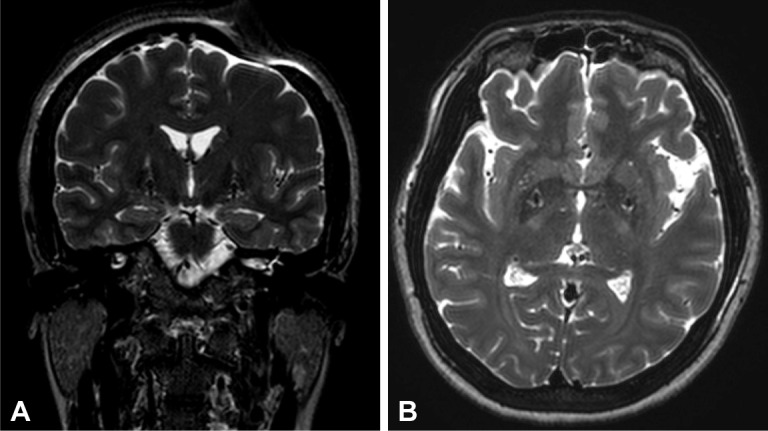
MRIPostoperative coronal and axial T2-weighted brain MRI: trajectories of deep brain stimulation electrodes implanted bilaterally in the internal globus pallidus, in a patient with segmental dystonia (Meige syndrome).
Source : Bae et al., Journal of movement disorders, 2014, figure 1 · CC BY-NC
The table that follows rates each modality against the GRADE domains. One clarification straight away, because it changes how to read it.
What this rating is, and what it is not
None of the systematic reviews cited in this article has published a formal GRADE assessment of these modalities. The 2024 meta-analysis used the Cochrane and Joanna Briggs risk-of-bias tools, not GRADE11. The levels below are therefore an assessment by the author, built by applying the GRADE domains (study design, risk of bias, imprecision, indirectness, consistency) to the primary trials cited, each of which is named. They indicate the confidence that can be placed in each statement, they do not reproduce a published rating.
| Modality | Indication | Level of confidence | What justifies this level |
|---|---|---|---|
| Physiotherapy added to toxin, for pain | Cervical dystonia | Moderate | Meta-analysis of trials with a significant effect and a narrow interval (mean difference 5.00; 95 % CI 3.74 to 6.26), but only two studies in the calculation11. Downgraded for imprecision, supported by the agreement of two independent trials1415 |
| Physiotherapy added to toxin, for severity and disability | Cervical dystonia | Low | Positive results in 16 and 20 patients1415, but the disability outcome did not reach the threshold in the first (p = 0.14), and the largest trial was not comparing against the absence of physiotherapy12 |
| Specialised technique against ordinary physiotherapy | Cervical dystonia | Moderate, in favour of no difference | Two independent randomised trials, 110 and 96 patients, in agreement: no superiority of the specialised technique on the primary outcome1213. This is one of the best established results in the field |
| Active programme of home exercises | Cervical dystonia | Low | A component common to the positive protocols, never isolated in an arm of its own. The review of randomised trials judges it useful without being able to fix the dose22 |
| Training of cervical sensorimotor control | Cervical dystonia | Very low | The deficit is measured (repositioning error 1.5 degrees greater, p < 0.006), and it is trainable in principle26. But no trial has tested training it as an intervention. A plausible target, an unmeasured effect |
| Peripheral stimulation (TENS, NMES, vibration) | Cervical dystonia | Very low | Single-case experimental design in 19 patients: improvement in rotation in 33 to 42 % depending on the modality, in flexion-extension in 47 to 56 %, immediate pain reduction. The authors themselves call their results exploratory27 |
| Sensorimotor rehabilitation and retraining | Task-specific dystonia | Very low | Case series and feasibility studies only, with no control group, in samples of 4 to 12 patients2831. Reviews of the field conclude that there is no reference protocol29. See the next chapter, given over entirely to this question |
| Grip modification and handwriting retraining | Writer's cramp | Low | Controlled study in 26 patients and 14 controls, with seven sessions: a fall in writing pressure and in grip force, maintained at three months33. Intermediate outcomes, no control arm treated otherwise |
| Botulinum toxin (medical treatment, for context) | Cervical dystonia | High | Level A recommendation for two formulations, on controlled trials19, a position confirmed by the later reviews2050. The recommendation itself has been withdrawn from the AAN's active corpus |
| Botulinum toxin | Musician's dystonia | Low | A single double-blind, placebo-controlled, crossover randomised trial, 21 professional musicians recruited over six years, 19 analysed: a significant but modest benefit (p = 0.04 on severity, p = 0.027 on musical performance)36. And 9 times less satisfaction than in facial dystonias17 |
Only two statements reach this level.
1. Physiotherapy added to toxin reduces pain in cervical dystonia.
2. No physiotherapy technique has demonstrated superiority over ordinary physiotherapy, and this negative result rests on two independent randomised trials totalling more than 200 patients.
Effect probable, magnitude uncertain.
Benefit on severity and disability in cervical dystonia; active home exercises; handwriting retraining with a modified grip; botulinum toxin in musician's dystonia. These statements rest on small samples or on intermediate outcomes, and one well-conducted study could shift them.
A rational avenue, an undemonstrated effect.
Sensorimotor rehabilitation in task-specific dystonias, training of cervical sensorimotor control, peripheral stimulation. They can be offered if they are explained to the patient. No result can be promised from them, and that has to be said.
This is the only field where the physiotherapist can be the main therapist and not the adjunct. All the more reason to be exact about the level of evidence, which is low, and about what that licenses saying to the patient.
The reasoning is pathophysiological. In a task-specific dystonia the cortical representations of the fingers are disorganised and overlap, and some patients have impaired spatial sensory discrimination. If the disorder rests on maladaptive plasticity, then training can, in principle, redirect it. Three families of programme follow from this.
Pure sensory training. Ten patients with focal hand dystonia learned to read braille, 30 to 60 minutes a day for eight weeks. Patients and controls both improved their spatial acuity; the patients showed a significant difference on the Fahn dystonia scale, 60 % of them reduced the time needed to write a standard paragraph, and the improvement in sensory perception correlated positively with the clinical improvement51. The one-year follow-up covered only three patients, who were continuing to improve52.
Splint-based retraining (sensory motor retuning). Eleven professional musicians wore splints immobilising one or more fingers other than the dystonic one, which performed repetitive exercises in coordination with the others, an hour and a half to two and a half hours a day for eight consecutive days under supervision, then one hour a day for a year. Every pianist and every guitarist improved markedly. The three wind instrument players, whom the authors themselves describe as accidental placebo controls, did not improve53. That detail is crucial: the founding method has no control group designed as such, it has a control group found after the fact.
Structured motor retraining. An anatomy-based programme, developed for musicians, offers a progression of fine motor control exercises performed away from the instrument, before being transferred to playing. The pilot covered four patients followed for about twelve months: all improved, two returned to their previous level of performance31.
The most recent work is a seven-year follow-up of a feasibility study of sensorimotor rehabilitation. All twelve original participants, seven musician's dystonias and five writing dystonias, were traced. All showed improvement in the clinical outcomes at one year and at seven years, with effect sizes of 0.25 to 0.93, and the interviews indicated that they were still using the strategies learned seven years after the programme28.
This result has to be read properly. Twelve participants, no control group, a seven-year follow-up on a feasibility study, and conclusions that the authors themselves frame with restraint: the benefits may be maintained, and the underlying mechanisms need investigating. An effect size of 0.93 in twelve patients with no control is not the same thing as an effect size of 0.93 in a randomised trial.
For the whole rehabilitation of task-specific dystonias we have case series and feasibility studies. Not a single randomised trial of useful size. That does not mean that nothing should be done; it means that it has to be said to the patient.
Reviews of the field converge. A 2024 scoping review retained 17 articles out of 190, identifying ten different rehabilitation approaches in twenty years, and concludes that no definitive intervention protocol exists, a multimodal approach being commonly recommended29. An earlier systematic review had analysed 36 publications with a similar finding30. Ten approaches, none compared with the others: that is the definition of a field where we do not yet know.
A French team explored, with magnetoencephalography, the somatosensory evoked fields of fingers I, II, III and V in healthy controls, in untreated patients with writer's cramp, and in patients who had recovered legible handwriting after rehabilitation. In the cortex controlling the dystonic limb, the size of the hand representation in the trained patients was similar to that of healthy controls and significantly different from that of the untrained patients, with a reorganisation of the digit maps that the authors describe as supra-normal. In the cortex controlling the non-dystonic limb, trained and untrained resembled each other, and the representation remained enlarged and disorganised32.
This is an elegant result and a strong hypothesis: prolonged, appropriate rehabilitation could induce long-term plasticity phenomena, lateralised to the cortex of the dystonic hand. It is also a cross-sectional comparison between groups, whose direction of causality is not established: we do not know whether rehabilitation remodelled the cortex, or whether the patients whose cortex was remodelling are the ones who recovered.
The deficit measured in writer's cramp is a failure of digital selectivity, with no impairment of tapping speed or of force control46. That gives a precise target, and rules out two false trails.
The sentence to say to the patient, and the one not to say
To say: "There are retraining programmes for which several case series report lasting benefits, sometimes a return to the previous level. This work covers few patients and has no comparison group, so I cannot give you a probability of success. What I can tell you is that it takes months of daily practice, and that the reference medical treatment remains to be discussed with a neurologist."
Not to say: "rehabilitation cures musician's dystonia in X % of cases". That percentage exists in no publication.
Key points
Level of evidence very low : case series and feasibility studies, samples of 4 to 12 patients, ten distinct approaches never compared with one another. The measured target is digital selectivity, and the useful protocols are counted in months of daily practice. That is little, but it is what we have, and the patient is entitled to that exact information.
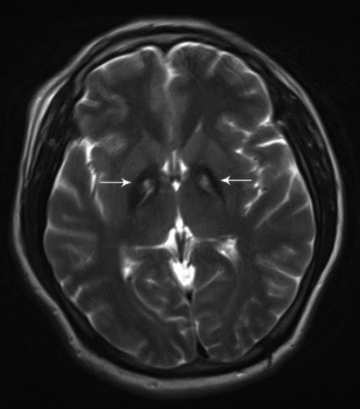
MRIAxial T2-weighted brain MRI: symmetrical hypointensity of the globus pallidus with central hyperintensity, the eye-of-the-tiger sign, arrows.
Source : Chang et al., Brain and behavior, 2011, figure 1 · CC BY-NC
Generalised dystonias are rarer, often of earlier onset, often genetic, and their treatment pathway has nothing in common with that of a cervical dystonia. The physiotherapist has a part in it, but a different one.
The logic is arithmetic: botulinum toxin acts on the muscles injected, and the total dose is capped by tolerance. In a dystonia involving the trunk and several regions, all the muscles concerned cannot be covered. Toxin keeps a place for targeting the most disabling sites, but the mainstay treatment is general pharmacological, then surgical.
Two landmark trials established the efficacy of internal pallidal stimulation in primary generalised or segmental dystonia.
The first, French and multicentre, covered patients with primary generalised dystonia40. The second, German, randomised 40 patients with primary segmental or generalised dystonia between active stimulation and sham stimulation for three months, with blinded video assessment. At three months the change in the motor score of the Burke-Fahn-Marsden scale was minus 15.8 points (SD 14.1) under stimulation against minus 1.4 points (SD 3.8) under sham stimulation (p < 0.001). The benefit was maintained in the open phase, and the patients initially on sham stimulation benefited in their turn. Twenty-two adverse events occurred in 19 patients, including four infections of the stimulator site and one lead displacement; the commonest adverse effect was dysarthria39.
A 2026 review takes stock of the twenty years that followed. Its message is that individual response varies a great deal, that this variability reflects the heterogeneity of clinical presentations, of genetic background and of the brain networks involved, and that dystonia should be understood as a network disorder affecting cortico-striato-cerebellar circuits. The effects of stimulation would therefore result from modulating distributed circuits rather than a single anatomical target41.
It has to be said directly: there is no randomised trial of physiotherapy in generalised dystonia comparable to those in cervical dystonia. What can be done falls under clinical reasoning and the general principles of neurological rehabilitation, and must be presented as such.
One more experimental avenue deserves mention for what it is: a French team combined transcranial direct current stimulation of the cerebellum with a goal-oriented motor training programme, in five patients with cervical dystonia poorly controlled by toxin. The maximum improvement in the total TWSTRS reached 37 % on average after stimulation alone, non-significant (p = 0.147), and 53 % after stimulation combined with motor training (p = 0.014), with a longer duration of improvement (3.4 months against 1.4; p = 0.011). The authors themselves conclude that these results remain to be confirmed by a randomised placebo-controlled trial in a larger sample47. Five patients, open-label: this is a hypothesis to test, not a modality to offer.
Red flags specific to the generalised forms
Key points
Generalised dystonia: general pharmacological treatment, then pallidal stimulation, whose benefit is established by a randomised trial against sham stimulation. No comparable physiotherapy trial exists in this indication: our main objective, and the best justified, is the prevention of fixed deformities and the maintenance of function.
Four published observations, with their identifiers. Each illustrates a point the statistics do not convey: the variety of the sensory trick, the reversibility of the diagnostic error, and what rehabilitation carried over months can do.
A patient with primary cervical dystonia had an unusual sensory trick: a voluntary tonic deviation of the left eye, which transiently reduced the dystonic cervical activity, with improved range of motion and reduced dystonic tremor. The authors documented the phenomenon with multichannel surface electromyography and with video, and conclude that this observation is phenotypically consistent with the limb sensorimotor tricks already described54.
What to take from it for the session: looking for the sensory trick is not limited to having the cheek touched. A voluntary movement of another part of the body can play that role. The question to ask is an open one: "is there anything you do, anything at all, that improves the position of your head, even for a second?". Many patients have found their trick on their own and have never mentioned it, because nobody asked them.
Boyd JT, Fries TJ, Nagle KJ, Hamill RW. Tremor Other Hyperkinet Mov (N Y). 2013;3:tre-03-199-4624-1. PMID 24386606.
Congenital muscular torticollis is the third commonest congenital malformation in the newborn, but its going unrecognised into adulthood is rare. Untreated early, it produces range-of-motion deficits in side-bending and rotation, and irreversible facial and skeletal deformities. Discreet cases can go unnoticed until early adulthood, with a predominantly fibrous replacement of the sternocleidomastoid that makes physiotherapy and chemodenervation largely ineffective. The authors report the follow-up of a previously published case, wrongly diagnosed as a cervical dystonia, operated on with a partial myectomy of the anterior head of the sternocleidomastoid, with partial relief but without complete resolution after the right diagnosis, a fibromatosis colli, had been made35.
What to take from it: the error goes both ways. The thread is not "think dystonia more often", it is reconsider the diagnosis when treatment does nothing. A cervical dystonia that responds neither to physiotherapy nor to toxin may not be a dystonia.
Uluer MC, Bojovic B. Front Neurol. 2016;7:7. PMID 26869987. PMCID PMC4738269.
This patient had a chronic involuntary flexion of the third and fourth fingers of the right hand, occurring while playing the guitar. Electrical stimulation at 40 Hz at 1.5 times the sensory threshold, applied to the nails of the third and fourth fingers, allowed fluent playing. The authors measured the surface electromyogram of the extensor digitorum and of the flexor digitorum superficialis while playing with and without stimulation, to objectify the sensory-trick-like effect. They stress the practical advantage of electrical stimulation: it can be switched off to avoid habituation, and the device is simple and portable55.
What to take from it: one patient, a single one, in an open observation. This is not a treatment, it is a proof of concept that opens an avenue for a device. What it teaches in practice is that the sensory trick of a task-specific dystonia can be a sensory stimulation of the affected segment, and not only a change of fingering. That is worth exploring in the session, with what is to hand, before concluding failure.
Nishida D, Mizuno K, Takahashi O, Liu M, Tsuji T. Brain Sci. 2023;13(2):223. PMID 36831766. PMCID PMC9954457.
This pianist had had a unilateral focal hand dystonia for ten years, which affected his playing as much as his activities of daily living. The treatment applied was sensory motor retuning. The improvement was clear from the start of therapy. After ten months of treatment the level of performance was comparable to that before the illness, the patient returned to high-level playing, and after eight years of follow-up performance remained normal34.
What to take from it, and what not to: this is a single case, published because it is remarkable, and remarkable cases are the ones that get published. It says nothing about the proportion of patients who respond. It says two verifiable things: a dystonia established for ten years was able to regress, and the programme took ten months. Disease duration is therefore not in itself a reason to give up, and the treatment horizon to announce is counted in months.
Rosset-Llobet J, Fàbregas-Molas S. Med Probl Perform Art. 2011;26(2):106-107. PMID 21695359.
How to read these four cases
They are real, published and identifiable, which is the minimum that can be asked. But a case report is the weakest of the levels of evidence, and it is structurally biased towards success : rehabilitation that fails does not get published. The only honest counterweight available in this literature comes from the founding series of sensory motor retuning, where the three wind instrument players did not improve while every pianist and guitarist was progressing53. The method has non-responders, and they were in the original study.
This chapter is the user manual. It contains nothing that is not sourced above, and it clearly flags what belongs to usage rather than to evidence.
Faced with any stubborn chronic neck pain, especially after three months of treatment with no lasting progress:
And in front of a professional of movement whose upper limb gives way: the three questions from the corresponding chapter, in that order. Does it hurt or does it no longer obey you. Does it happen only during that task. Has rest changed anything.
This is a neglected point and it weighs heavily: the GP's first referral was to a specialist other than a neurologist in 31 % of cases4. A precise letter shortens the circuit. Include in it:
| Situation | What is done | Status of the evidence |
|---|---|---|
| Cervical dystonia on toxin, pain to the fore | A block of sessions in the weeks that follow the injection, active work, daily home exercises, education about the injection cycle | The best established in this whole table. Effect on pain supported by meta-analysis11 ; the schedule, though, is usage |
| Cervical dystonia on toxin, benefit judged insufficient by the patient | Manual session on the day of the injection then six weeks of self-exercises, on the model of the published protocol | Randomised trial of 16 patients : severity minus 31 %, pain minus 28 %14. Weak evidence, reproducible protocol |
| Cervical dystonia not yet diagnosed | Do not carry on indefinitely. Three months without lasting progress and a stereotyped posture call for the referral letter | Rationale of usage, supported by the documented diagnostic delay45 |
| Task-specific dystonia in a musician or a writer | Retraining of digital selectivity, away from the instrument first, over months; grip modification; sensory discrimination work; neurological referral in parallel | Very weak. Case series, no randomised trial of useful size2829. To be offered, saying so |
| Generalised dystonia, with or without an implanted stimulator | Prevention of contractures and fixed deformities, maintenance of function, support through the programming periods | No comparable trial in this indication. Principles of neurological rehabilitation |
| Dystonia that responds to nothing, physiotherapy and toxin included | Take the diagnosis back up with the prescriber rather than changing technique | Illustrated by a published case of a mimic35. General clinical principle |
Key points
Three extra minutes in the assessment of a stubborn neck pain: direction of the posture, effect of action, sensory trick. A letter that writes the word dystonia. And, once the diagnosis is made, a physiotherapy honest about what it brings, that is, first of all less pain.
In a cohort of 100 patients followed for a mean of 17.5 years, the plateau phase was non-progressive in both of the disease courses identified. The authors write explicitly that this result contradicts the fear widespread among patients of a constant and continuous decline16. This is a retrospective, single-centre study of patients attending a toxin clinic: the message is solid, extrapolating it to every patient calls for caution.
Yes, and it depends heavily on how fast it comes on. In the same cohort, the rapid-onset form (less than six months, 19 % of patients) had a remission rate of 92 %, against 5 % in the slow form16. A remission is no guarantee against recurrence.
Its effect is transient: 30 to 50 % improvement in the deviation, and only while the trick is being performed6. So it is not a treatment, but it has three real uses: it is a major diagnostic argument, it is a prognostic pointer (responding to the trick is associated with a better response to toxin), and it is a functional strategy the patient can call on in the moments when it is needed. Work on stimulation devices that mimic the trick is exploratory55.
No trial has compared two schedules against each other, so there is no demonstrated answer. What we do know: the two trials that found a benefit from physiotherapy added to toxin placed their programme in the weeks following the injection, one of them on the day itself1415. And the injection cycle usually lasts 3 to 4 months, with no consensus on assessing the duration of the effect50.
Nothing shows that. The only trial that included mean toxin dose among its secondary outcomes found no difference between the groups12. This argument must not be put to the patient.
The disorder does end the careers of many affected musicians10, and that is precisely why it must be recognised early. But returns to high-level playing have been published, including after ten years of symptoms34. No data allow the proportion of patients who recover to be quantified.
They are part of the programmes used in the trials that showed a benefit, in particular the protocol combining a manual session with self-administered stretching, range-of-motion and isometric exercises14. But none of these components has been isolated in an arm of its own: we do not know which one carries the effect. The review of randomised trials also stresses that the dose-response relationship has yet to be established22.
No. It is a movement disorder of neurological origin, whose definition and classification come from an international consensus of neurologists2. Two qualifications, however. Major psychological stress precedes the rapid-onset form in 63 % of cases against 1 % in the slow form, and the authors of that observation suggest that it acts as an epigenetic trigger on predetermined ground16. And there are functional dystonias, which belong to the field of functional neurological disorders and are recognised by clinical pointers of their own43. Neither of these qualifications licenses telling a patient that their dystonia is in their head.
The scale used in almost every cervical dystonia trial is the Toronto Western Spasmodic Torticollis Rating Scale (TWSTRS), with its severity, disability and pain subscores. Work by the International Movement Disorder Society has reviewed the available scales and issued its recommendations42. In community practice the disability part and the pain part are the most useful for follow-up, because they measure what physiotherapy has been shown to affect.
The founding method of sensory motor retuning rests precisely on splinting one or more fingers other than the dystonic finger, which works in coordination with the others53. So it is not an immobilisation of the affected segment, it is the opposite. The level of evidence remains that of a case series of eleven musicians.
Each reference has been checked against two independent databases: the MEDLINE record served by Europe PMC for the PMID, the author list, the journal and the pagination, and CrossRef for the DOI. The lines below are produced automatically from those records, never typed by hand.
Behind this article
An author who explains, a reviewer who checks.
How we write and check our content

Physiotherapist · co-founder of Physio Learning
Marked for life by his first four-hour lecture without a single image, he took a master’s in instructional design so that it would never happen to anyone again. He hunts down publication bias and unreadable slides with the same intransigence.

Head of scientific content
Physiotherapist specialising in neuro-musculoskeletal practice and holder of a master’s in public health. He checks the methodological rigour of every article: primary sources, levels of evidence, no exceptions.
