


In brief
Headache of cervical origin, or cervicogenic headache (ICHD-3 11.2.1), is a secondary headache in which the pain, felt in the head, comes from a disorder of the upper cervical spine by way of trigeminocervical convergence. The pain is typically unilateral without side shift, non-pulsating, triggered by neck movements or sustained postures; the C2-C3 joint is its most common source. The cervical flexion-rotation test is the most valid screening tool. Management is multimodal: education, manual therapy targeted at C1-C2/C2-C3 and craniocervical flexion exercises. Median prevalence is 2 to 4 % in the general population.
A clinical review based on the most recent meta-analyses and international consensus statements: ICHD-3, Demont 2023 PM&R meta-analysis, prevalence revisited by Robinson 2025 Cephalalgia, network meta-analyses Xu & Ling 2025 and Koonalinthip 2026.
Clinical summary
- Headache of cervical origin (cervicogenic headache, CGH, ICHD-3 code 11.2.1) is a secondary headache in which the pain, felt in the head, comes from a disorder of the upper cervical spine by way of trigeminocervical convergence (Bogduk 2014).
- The meta-analysis Robinson 2025 Cephalalgia objectifies major heterogeneity in prevalence estimates (0.4–42 %), with a median around 2–4 % in the general population. The earlier « 4.1 % » figure (Sjaastad 2008) is today regarded as a local overestimate.
- The C2-C3 zygapophysial joint, and more rarely the atlantoaxial joint (C1-C2), are the most common symptomatic sources documented by anaesthetic blocks under fluoroscopy (Bogduk & Govind 2009 Lancet Neurology).
- The pain is typically unilateral without side shift, non-pulsating, triggered by neck movements or sustained postures, radiating in a cervico-occipito-fronto-orbital pattern (ICHD-3 2018).
- The differential diagnosis against migraine and tension-type headache is mandatory: the sensory profiles diverge, and cervical treatment can be ineffective where migraine predominates.
- The cervical flexion-rotation test (CFRT) is the most valid non-invasive clinical tool for screening for C1-C2 dysfunction: sensitivity 86-91 %, specificity 90-100 % (Ogince 2007; Hall 2010; Rubio-Ochoa 2016).
- The meta-analysis Demont 2023 PM&R confirms the effectiveness of multimodal physiotherapy on frequency, intensity and disability (moderate evidence, GRADE).
- And Manual therapy (C1-C2/C2-C3 mobilisations, Mulligan SNAGs, upper cervical manipulation) provides a clinically significant short-term effect (Bini 2022 Chiropr Man Therap; Núñez-Cabaleiro 2022 Headache).
- The Xu & Ling 2025 network meta-analysis in Frontiers in Neurology suggests that Mulligan SNAG techniques are superior to the other cervical mobilisations (weak to moderate evidence, heterogeneous samples).
- And Craniocervical flexion exercises and strengthening of the scapular stabilisers are essential as a complement (Jull 2002 RCT of 200 patients; Demont 2023).
- And Pain neuroscience education (Louw 2011 APMR) and biopsychosocial management reduce kinesiophobia and improve adherence to the home exercise programme.
- The return to sport must be progressive and symptom-guided : no progression if a stage triggers the familiar headache, in line with the principles of the post-traumatic protocols (Sterling 2014 J Physiother).
- On clinical cases, the case report Lewis & Naude 2010 SAJP illustrates resolution in 9 sessions; the case report Satpute 2020 JMMT (PMID 31537198) shows the value of « headache symptom modification » in patients with mixed migraine + CGH features.
- Recognising the red flags (Finucane 2020 JOSPT) requires medical referral: thunderclap headache, progressive neurological deficit, fever + neck stiffness, recent cervical trauma.
- Standardised outcome tools (NDI, NPRS, HIT-6, MIDAS) are indispensable for objectifying effectiveness and adapting management.
Contents
- What are the fundamentals to know about headache of cervical origin?
- How can cervicogenic headache be assessed and diagnosed with certainty?
- Which treatment strategies are the most effective?
- How do you ensure lasting recovery and prevent recurrences?
- What do real clinical cases teach us?
- How can these recommendations be applied in practice?
What are the fundamentals to know about headache of cervical origin?
How is this condition defined, who is affected and what are the risk factors?
The headache of cervical origin, or cervicogenic headache (CGH), is classified by the 3rd edition of the International Classification of Headache Disorders (ICHD-3, 2018) under code 11.2.1 as a secondary headache caused by a disorder of the cervical spine and its bony, disc or soft-tissue components.¹ It is therefore fundamentally distinct from tension-type headache (ICHD-3 ch. 2, primary) and from migraine (ch. 1, primary), even though the clinical presentations can overlap and generate diagnostic errors.¹, The pathophysiology rests on the anatomical convergence of nociceptive afferents from the C1, C2 and C3 roots and from the trigeminal branch in the trigeminocervical nucleus caudalis of the brainstem. This convergence explains the referred pain from the neck to the oculo-fronto-temporal regions, demonstrated experimentally by stimulating the upper cervical structures.²,³ The C2-C3 zygapophysial joint is the source most frequently identified by controlled anaesthetic blocks under fluoroscopy; next come C1-C2 (atlantoaxial), the atlanto-occipital joint and the suboccipital muscles.²📊 CGH prevalence: major heterogeneity in the estimates (Robinson 2025)
Cephalalgia 2025 meta-analysis including 34 population and clinic studies (search to 03/09/2024)
Source: Robinson CL, Christensen RH, Al-Khazali HM, et al. Cephalalgia. 2025 (PMID 40094720). Very wide methodological heterogeneity flagged by the authors.
- Cervical trauma, particularly whiplash : Sterling 2014 J Physiother documents the frequency of post-traumatic headache of cervical origin, particularly in grade II-III whiplash-associated disorders (WAD).⁴
- Sustained postures (screen work, forward head position), repeated microtrauma: a factor frequently described in narrative reviews (with no controlled prospective study at a high level of evidence).⁵
- Pre-existing joint dysfunction of the upper cervical spine, whose demonstration rests on anaesthetic blocks (Bogduk & Govind 2009).²
- Stress, anxiety, sleep disturbance : aggravating factors, and factors in chronicity through central amplification (Castien & De Hertogh 2019 Front Neurol).³
What happens in the body and how does CGH progress naturally?
The pain generally arises from structures innervated by the C0 to C3 segments. When the nociceptive stimulus persists, phenomena of central sensitisation can appear: a lowered pain threshold, expansion of the painful field, pericranial allodynia. Castien & De Hertogh 2019 summarise the neurobiology of these changes: the modulation of craniocervical PPTs (pressure pain thresholds) reflects sensitisation of the trigeminocervical nucleus, observable in CGH as in migraine and tension-type headache.³ The classic presentation includes:- Pain that is unilateral without side shift between attacks (a practically pathognomonic sign according to ICHD-3).¹
- Cervico-occipital onset, with oculo-fronto-temporal radiation.
- A non-pulsating character, a dull, deep pain of moderate intensity.
- Reproduction by neck movements, sustained postures, or pressure on the back of the neck.
- No aura; mild nausea/photophobia possible but discreet (to be distinguished from migraine).
- CGH is a secondary headache coded ICHD-3 11.2.1: pain referred to the head from the cervical spine by way of trigeminocervical convergence.
- Prevalence is very heterogeneous (Robinson 2025): 2-4 % in the general population, up to 15-20 % in headache centres, and up to 42 % after whiplash.
- The C2-C3 joint is the most common source (Bogduk & Govind 2009).
- Classic presentation: pain that is fixed and unilateral, non-pulsating, of cervico-occipital onset, with oculo-fronto-temporal radiation, triggered by neck movements.
- Course without treatment: chronicity is common, spontaneous remission rare.
Bibliography: chapter 1
- Headache Classification Committee of the International Headache Society (IHS). The International Classification of Headache Disorders, 3rd edition. Cephalalgia. 2018;38(1):1-211. PMID 29368949.
- Bogduk N, Govind J. Cervicogenic headache: an assessment of the evidence on clinical diagnosis, invasive tests, and treatment. Lancet Neurology. 2009;8(10):959-968. PMID 19747657.
- Castien R, De Hertogh W. A neuroscience perspective of physical treatment of headache and neck pain. Frontiers in Neurology. 2019;10:276. PMID 30972008.
- Sterling M. Physiotherapy management of whiplash-associated disorders (WAD). Journal of Physiotherapy. 2014;60(1):5-12. PMID 24856935.
- Bogduk N. The neck and headaches. Neurologic Clinics. 2014;32(2):471-487. PMID 24703540.
- Robinson CL, Christensen RH, Al-Khazali HM, Mohammad Amin F, Yang A, Lipton RB, Ashina S. Prevalence and relative frequency of cervicogenic headache in population- and clinic-based studies: A systematic review and meta-analysis. Cephalalgia. 2025;45(3):03331024251322446. PMID 40094720.
- Knackstedt H, Bansevicius D, Aaseth K, Grande RB, Lundqvist C, Russell MB. Cervicogenic headache in the general population: the Akershus study of chronic headache. Cephalalgia. 2010;30(12):1468-1476. PMID 20974607.
- Sjaastad O, Bakketeig LS. Prevalence of cervicogenic headache: Vågå study of headache epidemiology. Acta Neurologica Scandinavica. 2008;117(3):173-180. PMID 18031563.
- Page P. Cervicogenic headaches: an evidence-led approach to clinical management. International Journal of Sports Physical Therapy. 2011;6(3):254-266. PMC3201065.
How can cervicogenic headache be assessed and diagnosed with certainty?
What questions should be asked to understand the patient and their history properly?
🎯 The history should explore five key dimensions:- Fixed laterality : « Is the pain always on the same side? » Unilaterality without side shift points strongly towards CGH (vs migraine, which can alternate).¹
- Cervical mechanics : « Do your neck movements or certain postures (prolonged screen work, driving, pillow) trigger the headache? » A positive answer is highly suggestive.³
- Pain character : non-pulsating, deep, dull; moderate intensity, different from migraine (pulsating, severe) and from tension-type headache (a mild bilateral band).¹
- Associated symptoms : mild nausea, ipsilateral blurred vision possible; no aura (vs migraine).¹
- History of trauma : whiplash, craniocervical trauma, contact sport, a very common factor (Sterling 2014).⁴
| Criterion | CGH (11.2.1) | Migraine without aura (1.1) | Tension-type headache (2) |
|---|---|---|---|
| Laterality | Unilateral, fixed | Unilateral, may alternate | Bilateral, band-like |
| Character | Non-pulsating | Pulsating | Pressing |
| Intensity | Moderate | Moderate-severe | Mild-moderate |
| Cervical mechanical trigger | Yes | Not specific | Possible |
| Aura | Absent | Possible (ch. 1.2) | Absent |
| Nausea/photophobia | Discreet | Marked | Absent-rare |
| Positive CFRT | Highly suggestive | Expected negative | Usually negative |
Which clinical tests should be carried out and which other conditions must be ruled out?
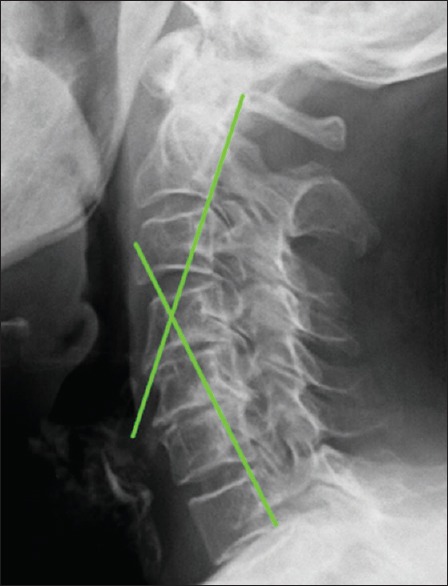
X-rayLateral cervical spine X-ray: straightening of the cervical spine with loss of lordosis, lines measuring the angle between vertebrae.
Source : Lippa et al., Journal of craniovertebral junction & spine, 2017, figure 1 · CC BY-NC-SA
- Assessment of active and passive cervical range: looking for segmental and global restriction, recommended by the JOSPT guidelines (Blanpied 2017).⁵
- Cervical flexion-rotation test (CFRT) ⭐: patient supine, the examiner performs maximal upper cervical flexion then passive rotation to each side. The test is positive if rotation is < 32° or the side-to-side difference is > 10°. Sensitivity 86-91 %, specificity 90-100 % according to Ogince 2007 and Hall 2010.⁶,⁷ The Rubio-Ochoa 2016 SR confirms the diagnostic value of the CFRT and of deep flexor strength for distinguishing CGH from migraine.²
- Segmental palpation C0-C1, C1-C2, C2-C3 : sustained pressure seeking to reproduce the patient's familiar pain, a major ICHD-3 criterion.¹,³
- Deep cervical flexor test (Cranio-Cervical Flexion Test, CCFT) : objectifies the failure of deep motor control, common in CGH patients (Jull 2002).⁸
📐 Cervical flexion-rotation test: diagnostic value for CGH
Pooled data from Ogince 2007 (n=46) and Hall 2010 (n=24): Manual Therapy
Sources: Ogince M et al. Manual Therapy. 2007;12(3):256-262 (PMID 17112768); Hall T et al. JMMT. 2010;18(3):126-131 (PMID 21886422); SR Rubio-Ochoa 2016.
Red flags specific to headache
- Thunderclap headache (peak intensity < 1 min) → subarachnoid haemorrhage, arterial dissection
- Progressive focal neurological deficit (weakness, visual disturbance, dysarthria) → stroke, tumour, dissection
- Fever + neck stiffness + photophobia → meningitis, encephalitis
- New headache in a person > 50 with temporal tenderness → giant cell (temporal) arteritis
- Recent cervical trauma + acute neck pain → fracture, ligamentous instability
- Worse on Valsalva, lying down, coughing → raised intracranial pressure
- History of cancer + night neck pain → spinal metastasis
⚠️ Any red flag → prompt medical referral before physiotherapy management (Finucane 2020 JOSPT).
Should patients with CGH be classified, and for what benefit?
A Mechanistic subclassification allows treatment to be individualised ✅. Three broad clinical subtypes emerge from the literature:- Dominant joint dysfunction (segmental hypomobility at C1-C2 or C2-C3): benefits first and foremost from targeted mobilisation/manipulation (Núñez-Cabaleiro 2022).⁹
- Cervical motor control dysfunction (weakness of the deep flexors, overactivity of the superficial ones): directed first towards Jull's exercises (CCFT).⁸
- Predominant central sensitisation (diffuse hypersensitivity, allodynia, psychosocial comorbidity): pain education + biopsychosocial management (Castien & De Hertogh 2019).¹⁰
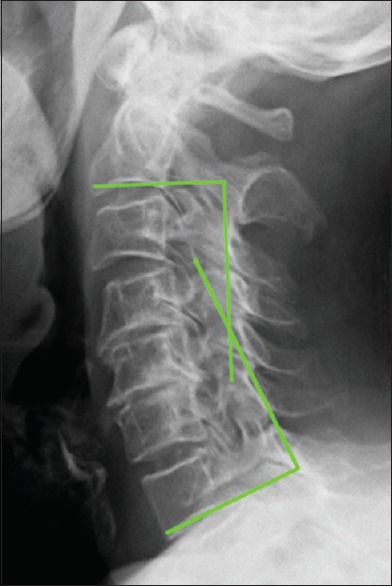
X-rayLateral cervical spine X-ray: straightening of the cervical spine, measurement of the lordosis angle using the Cobb method.
Source : Lippa et al., Journal of craniovertebral junction & spine, 2017, figure 2 · CC BY-NC-SA
- The diagnosis of CGH rests on ICHD-3 (ch. 11.2.1) and on the convergence of history + physical examination + reproducibility.
- The differential history (fixed laterality, cervical triggers, no aura) is the first key step.
- The CFRT is the most valid non-invasive clinical tool (specificity 90-100 % for C1-C2).
- And Segmental palpation C0-C3 reproducing the familiar pain is a major ICHD-3 criterion.
- And Classification into subgroups (joint / motor / sensory) guides personalised therapy.
Bibliography: chapter 2
- Headache Classification Committee of the International Headache Society (IHS). The International Classification of Headache Disorders, 3rd edition. Cephalalgia. 2018;38(1):1-211. PMID 29368949.
- Rubio-Ochoa J, Benítez-Martínez J, Lluch E, Santacruz-Zaragozá S, Gómez-Contreras P, Cook CE. Physical examination tests for screening and diagnosis of cervicogenic headache: A systematic review. Man Ther. 2016;21:35-40. PMID 26423982.
- Bogduk N, Govind J. Cervicogenic headache: an assessment of the evidence on clinical diagnosis, invasive tests, and treatment. Lancet Neurology. 2009;8(10):959-968. PMID 19747657.
- Sterling M. Physiotherapy management of whiplash-associated disorders (WAD). Journal of Physiotherapy. 2014;60(1):5-12. PMID 24856935.
- Blanpied PR, Gross AR, Elliott JM, et al. Neck Pain: Revision 2017 Clinical Practice Guidelines. JOSPT. 2017;47(7):A1-A83. doi:10.2519/jospt.2017.0302.
- Ogince M, Hall T, Robinson K, Blackmore AM. The diagnostic validity of the cervical flexion-rotation test in C1/2-related cervicogenic headache. Manual Therapy. 2007;12(3):256-262. PMID 17112768.
- Hall T, Briffa K, Hopper D. The influence of lower cervical joint pain on range of motion and interpretation of the flexion-rotation test. Journal of Manual & Manipulative Therapy. 2010;18(3):126-131. PMID 21886422.
- Jull G, Trott P, Potter H, et al. A randomized controlled trial of exercise and manipulative therapy for cervicogenic headache. Spine. 2002;27(17):1835-1843. PMID 12221344.
- Núñez-Cabaleiro P, Leirós-Rodríguez R. Effectiveness of manual therapy in the treatment of cervicogenic headache: A systematic review. Headache. 2022;62(3):271-283. PMID 35294051.
- Castien R, De Hertogh W. A neuroscience perspective of physical treatment of headache and neck pain. Frontiers in Neurology. 2019;10:276. PMID 30972008.
- Demont A, Lafrance S, Gaska C, Kechichian A, Bourmaud A, Desmeules F. Efficacy of physiotherapy interventions for the management of adults with cervicogenic headache: A systematic review and meta-analyses. PM&R. 2023;15(5):613-628. doi:10.1002/pmrj.12856.
- Finucane LM, Downie A, Mercer C, et al. International Framework for Red Flags for Potential Serious Spinal Pathologies. JOSPT. 2020;50(7):350-372. PMID 32438853.
Which treatment strategies are the most effective for cervicogenic headache?
Where do you start? What is the recommended hierarchy of interventions?
The recommended pragmatic sequence is:- 🧠 Education and reassurance : explain the benign but persistent nature of CGH, the mechanism of referred pain and the patient's active role. Pain neuroscience education (PNE) improves outcomes in chronic musculoskeletal pain (Louw 2011 APMR).⁴
- 🤲 Manual therapy targeted at the C1-C2/C2-C3 segments: mobilisations, Mulligan SNAGs, upper cervical manipulation. A clinically significant short-term effect on pain and frequency (Bini 2022 Chiropr Man Therap; Núñez-Cabaleiro 2022 Headache).⁵,⁶
- 💪 Active exercise : craniocervical flexion + deep flexor endurance + scapular stabilisers (Jull 2002 Spine RCT of 200 patients).⁷
- 🧩 Addressing the psychosocial factors and self-management strategies for durability.
📈 Effectiveness of manual therapy + exercise (Demont 2023 PM&R)
Meta-analyses pooling 11 RCTs, GRADE moderate evidence for the combination
Source: Demont A et al. PM&R. 2023;15(5):613-628 (doi:10.1002/pmrj.12856). Weighted short-term post-intervention effects.
What is the place of exercise, and is there a superior approach?
The pivotal trial Jull 2002 Spine (n = 200 CGH patients, 12 months of follow-up) remains the reference: the low-load exercise programme (supine craniocervical flexion with pressure biofeedback) combined with manual therapy is significantly superior to control, with effects maintained at 12 months.⁷ The benefits accumulate without being strictly additive (the combination adds +10 % of responders versus each modality alone).⁷ The meta-analysis Demont 2023 ranks the exercise approaches as follows: multimodal exercise + manual therapy > cervical motor control alone > stretching alone (weak effect) > no exercise.¹ The more recent SR on specific exercise (García-Aguila 2023 MSP) confirms a large effect size on frequency and a moderate effect on intensity, on low to very low quality evidence.² Recommended exercise programme 💪 :- Cranio-Cervical Flexion Test (CCFT) : a subtle nod of the head in supine, with pressure biofeedback. 10 repetitions, progressing through the 22-30 mmHg levels.
- Deep flexor endurance : isometric hold 10 s × 10 repetitions, twice a day.
- Scapular stabilisers : lower trapezius (Y/T rows), serratus anterior (push-up plus).
- Upper thoracic mobility : extensions in sitting or four-point kneeling to unload the cervical compensations.
- Endurance > maximal strength : the ability to sustain prolonged postural activation is the main lever (Jull 2002).⁷
Manual therapies, dry needling: how effective are they really?
The Xu & Ling 2025 NMA in Frontiers in Neurology compared 14 RCTs (n=1,297) and concludes that Mulligan SNAGs applied at C1-C2/C2-C3 are superior to the other mobilisations and to manipulation alone, for reducing pain and disability in the short term.⁸ Upper cervical manipulation (HVLA) remains a valid option (Núñez-Cabaleiro 2022).⁶| Modality | Short-term effect | Effect at 6-12 months | GRADE evidence |
|---|---|---|---|
| MT + exercise combination | Large | Moderate | Moderate |
| Mulligan SNAG (C1-C2) | Large | Moderate | Weak-moderate |
| Upper cervical HVLA manipulation | Moderate | Moderate | Weak |
| Motor control exercise (Jull) | Moderate | Large (maintained at 12 months) | Moderate |
| Trigger point dry needling | Moderate | Limited | Weak |
| Passive modalities alone (TENS, US, heat) | Weak | Very weak | Very weak |
| Stretching in isolation | Weak | Weak | Weak |
How do you educate the patient and address the psychological factors?
Pain neuroscience education (PNE) has shown its value in chronic musculoskeletal pain (Louw 2011 APMR): reduced perception of threat, less kinesiophobia, better active engagement.⁴ This approach is combined with ergonomic advice (postural variability rather than « perfect posture ») and stress management strategies (diaphragmatic breathing, mindfulness). The yellow flags (catastrophising, fear of movement, mistaken beliefs) are predictors of chronicity. The « Decade of the Flags » (Nicholas 2011 Phys Ther) proposed an operational framework for identifying and managing them early.¹⁰- The most effective approach is multimodal : education + manual therapy + exercise.
- The meta-analysis Demont 2023 PM&R confirms clinically significant effects on frequency, intensity and disability (moderate evidence).
- The NMA Xu & Ling 2025 suggests the superiority of Mulligan SNAGs over the other cervical mobilisations.
- The reference exercise remains the Cranio-Cervical Flexion Test (CCFT) with pressure biofeedback (Jull 2002, n=200, 12 months).
- Passive modalities alone (TENS, US, heat) and stretching in isolation rest on weak.
- evidence. Pain neuroscience education and addressing the yellow flags are non-negotiable components.
Bibliography: chapter 3
- Demont A, Lafrance S, Gaska C, Kechichian A, Bourmaud A, Desmeules F. Efficacy of physiotherapy interventions for the management of adults with cervicogenic headache: A systematic review and meta-analyses. PM&R. 2023;15(5):613-628. doi:10.1002/pmrj.12856.
- García-Aguila M, Falla D, Rodriguez-Sanz J, Lopez-de-Celis C, et al. Effectiveness of therapeutic exercise for the management of cervicogenic headache: A systematic review. Musculoskeletal Science and Practice. 2023;66:102780. (DOI: 10.1016/j.msksp.2023.102780)
- Luedtke K, Allers A, Schulte LH, May A. Efficacy of interventions used by physiotherapists for patients with headache and migraine—systematic review and meta-analysis. Cephalalgia. 2016;36(5):474-492. PMID 26229071.
- Louw A, Diener I, Butler DS, Puentedura EJ. The effect of neuroscience education on pain, disability, anxiety, and stress in chronic musculoskeletal pain. Archives of Physical Medicine and Rehabilitation. 2011;92(12):2041-2056. PMID 22133255.
- Bini P, Hohenschurz-Schmidt D, Masullo V, Pitt D, Draper-Rodi J. The effectiveness of manual and exercise therapy on headache intensity and frequency among patients with cervicogenic headache: a systematic review and meta-analysis. Chiropractic & Manual Therapies. 2022;30:49. PMC9682850.
- Núñez-Cabaleiro P, Leirós-Rodríguez R. Effectiveness of manual therapy in the treatment of cervicogenic headache: A systematic review. Headache. 2022;62(3):271-283. PMID 35294051.
- Jull G, Trott P, Potter H, et al. A randomized controlled trial of exercise and manipulative therapy for cervicogenic headache. Spine. 2002;27(17):1835-1843. PMID 12221344.
- Xu Q, Ling J. Comparative safety and efficacy of manual therapy interventions for cervicogenic headache: a systematic review and network meta-analysis. Frontiers in Neurology. 2025;16:1566764. PMC12123087.
- Pourahmadi M, Mohseni-Bandpei MA, Keshtkar A, et al. Effectiveness of Dry Needling for Improving Pain and Disability in Adults With Tension-Type, Cervicogenic, or Migraine Headaches: A Systematic Review and Meta-Analysis. Physical Therapy. 2021;101(5):pzab068. PMID 33609358.
- Nicholas MK, Linton SJ, Watson PJ, Main CJ; "Decade of the Flags" Working Group. Early identification and management of psychological risk factors ("yellow flags") in patients with low back pain: a reappraisal. Physical Therapy. 2011;91(5):737-753. PMID 21451099.
- Llama-Velasco S, Salas-Pareja Z, Lirio-Romero C. Manual therapy in adults with tension-type headache: A systematic review. Neurología (Engl Ed). 2020;35(3):189-197. (Elsevier, S2173580819301233)
- Koonalinthip N, Phankhongsab A, Kitisomprayoonkul W, et al. The Comparative Efficacy of Treatments for Cervicogenic Headache: A Systematic Review and Network Meta-Analysis of Randomised Controlled Trials. European Journal of Pain. 2026 (early view). doi:10.1002/ejp.70219.
How do you ensure lasting recovery and prevent recurrences?
How do you make the patient an active participant in their recovery through self-management?
🧘 Self-management rests on 4 pillars:- Solid initial therapeutic education: the nature of CGH, the neuroanatomical mechanism, the role of posture and stress, reasonable expectations (gradual, not immediate, recovery).³
- A home exercise programme (HEP) that is short and personalised: 2-3 key exercises (CCFT, deep flexor isometrics, scapular stabilisers) with clear instructions (photos/videos). Long-term adherence remains the major prognostic factor.²,⁴
- Realistic ergonomics : aiming for postural variability (changing position every 30-45 min, brief stretches) rather than a rigid « perfect posture ».⁵
- Stress and sleep management : diaphragmatic breathing, mindfulness, sleep hygiene. Reduces sympathetic activation and cervical muscle tension.⁶
When and how should a safe return to sport and activities be planned?
🏃♀️ The return to sport must be graded and symptom-guided. No universal calendar: a staged protocol (24-48 h between stages) is the norm, adapted from the whiplash and post-concussion protocols:⁷,⁸- Activities of daily living without significant pain.
- Light aerobic work (brisk walking, stationary bike, 30 min). Check cardiovascular tolerance without triggering the headache.
- Sport-specific exercise without impact (drills, shadow strokes).
- Progressive strengthening and dynamic work , monitoring symptoms.
- Full training without contact.
- Return to competition.
- Preventing recurrence rests on building patient independence through education + a personalised HEP.
- A HEP of 2-3 key exercises well explained is more effective than an exhaustive programme poorly followed.
- Favour postural variability over injunctions about « perfect posture ».
- The return to sport is strictly symptom-guided : no progression if symptoms are triggered.
- Long-term adherence is prognostic determinant #1.
Bibliography: chapter 4
- Demont A, Lafrance S, Gaska C, et al. Efficacy of physiotherapy interventions for the management of adults with cervicogenic headache. PM&R. 2023;15(5):613-628. doi:10.1002/pmrj.12856.
- Bini P, Hohenschurz-Schmidt D, Masullo V, Pitt D, Draper-Rodi J. The effectiveness of manual and exercise therapy on headache intensity and frequency among patients with cervicogenic headache. Chiropr Man Therap. 2022;30:49. PMC9682850.
- Louw A, Diener I, Butler DS, Puentedura EJ. The effect of neuroscience education on pain, disability, anxiety, and stress in chronic musculoskeletal pain. Arch Phys Med Rehabil. 2011;92(12):2041-2056. PMID 22133255.
- Jull G, Trott P, Potter H, et al. A randomized controlled trial of exercise and manipulative therapy for cervicogenic headache. Spine. 2002;27(17):1835-1843. PMID 12221344.
- Slater D, Korakakis V, O'Sullivan P, Nolan D, O'Sullivan K. "Sit Up Straight": Time to Re-evaluate. JOSPT. 2019;49(8):562-564. doi:10.2519/jospt.2019.0610.
- Castien R, De Hertogh W. A neuroscience perspective of physical treatment of headache and neck pain. Front Neurol. 2019;10:276. PMID 30972008.
- Sterling M. Physiotherapy management of whiplash-associated disorders (WAD). J Physiother. 2014;60(1):5-12. PMID 24856935.
- Patricios JS, Schneider KJ, Dvorak J, et al. Consensus statement on concussion in sport: the 6th International Conference on Concussion in Sport — Amsterdam, October 2022. British Journal of Sports Medicine. 2023;57(11):695-711. PMID 37316210.
- Blanpied PR, Gross AR, Elliott JM, et al. Neck Pain: Revision 2017 Clinical Practice Guidelines. JOSPT. 2017;47(7):A1-A83. doi:10.2519/jospt.2017.0302.
What do real clinical cases teach us?
Analysis of a « classic » case: from assessment to resolution
The case report Lewis & Naude 2010 SAJP describes a 26-year-old man with cervicogenic headache alongside concurrent temporomandibular dysfunction.¹ Assessment identified upper cervical segmental restriction (positive CFRT), weakness of the deep flexors and limited TMJ mobility. Multimodal treatment plan (9 sessions):- Maitland mobilisations of the upper cervical spine and the TMJ.
- Trigger point therapy / massage of the suboccipitals and upper trapezius.
- Progressive strengthening of the deep flexors and scapular stabilisers.
- Postural correction, education about triggers.
The diagnostic challenge: when CGH mimics another condition
The case report Satpute 2020 JMMT (PMID 31537198) illustrates the complexity of the differential diagnosis in a patient with mixed migraine + CGH features.² A so-called « headache symptom modification » approach: segmental palpation and certain manual therapy techniques reproduce the patient's familiar pain (a sign of cervical origin), then its rapid resolution after mobilisation (a sign of effectiveness). The clinical benefit: shortening the decade of diagnostic wandering often seen in patients labelled « chronic migraine » but whose cervical component has never been properly assessed.² A rigorous cervical examination as set out in ICHD-3 in every patient with chronic unilateral headache remains under-used in everyday practice.Study of a complex case (post-concussion + CGH)
🧩 Post-concussion cases with a cervical component are common. The Amsterdam 2022 international consensus on concussion (Patricios 2023 BJSM) recommends systematic cervical assessment in persistent post-traumatic headache.³ An integrated approach:- Gentle upper cervical manual therapy (grade I-II mobilisations), with no manipulation for as long as central sensitivity persists.
- Vestibular and oculomotor rehabilitation where dizziness/unsteadiness is present.
- Progressive cervical motor control exercises.
- Progressive reintroduction of sub-symptom-threshold aerobic activity.
- The clinical cases confirm the value of a rigorous cervical assessment in every patient with chronic headache, even where a diagnosis of migraine already exists.
- The multimodal approach (Lewis & Naude 2010) allows rapid resolution when the diagnosis is correct.
- And Headache symptom modification (Satpute 2020) is a useful piece of clinical reasoning in mixed cases.
- And Post-concussion cases require an integrated approach (cervical + vestibular + graded return).
- The case report level of evidence is low (Oxford CEBM 5): to be used as illustration, not as a basis for recommendation.
Bibliography: chapter 5
- Lewis F, Naude B. The effectiveness of physiotherapy in cervicogenic headache and concurring temporomandibular dysfunction: a case report. South African Journal of Physiotherapy. 2010;66(2):37-39. sajp.co.za.
- Satpute K, Bedekar N, Hall T. Headache symptom modification: the relevance of appropriate manual therapy assessment and management of a patient with features of migraine and cervicogenic headache — a case report. Journal of Manual & Manipulative Therapy. 2020;28(3):181-188. PMID 31537198.
- Patricios JS, Schneider KJ, Dvorak J, et al. Consensus statement on concussion in sport: the 6th International Conference on Concussion in Sport — Amsterdam, October 2022. British Journal of Sports Medicine. 2023;57(11):695-711. PMID 37316210.
- Page P. Cervicogenic headaches: an evidence-led approach to clinical management. International Journal of Sports Physical Therapy. 2011;6(3):254-266. PMC3201065.
- Bogduk N, Govind J. Cervicogenic headache: an assessment of the evidence on clinical diagnosis, invasive tests, and treatment. Lancet Neurology. 2009;8(10):959-968. PMID 19747657.
How can these recommendations be applied in practice?
When, and to which other health professionals, should you refer?
🧐 Recognising situations that fall outside the scope of physiotherapy is essential.- 🚩 Red flags : thunderclap headache, progressive neurological deficit, fever + neck stiffness, unexplained weight loss, a history of cancer, recent cervical trauma. The Finucane 2020 JOSPT framework recommends analysis in clusters rather than trust in an isolated flag, since the predictive value of each flag taken alone is poor.¹ → urgent medical referral.
- 🟡 Yellow flags (catastrophising, kinesiophobia, anxiety): Nicholas 2011 Phys Ther offers the operational framework.² → collaboration with a psychologist / the GP.
- 🔵 Blue flags (work-related conflict or tension) → collaboration with occupational health.
How do you measure outcomes and overcome the barriers to implementation?
📈 Standardised outcome measurement is indispensable for objectifying effectiveness and adapting management. Recommended PROMs for CGH :- NPRS (Numeric Pain Rating Scale) 0-10: usual pain and worst pain.
- NDI (Neck Disability Index): cervical disability, validated in French, MCID ≈ 7 points.
- HIT-6 (Headache Impact Test): functional impact of headache, validated in several languages.
- MIDAS (Migraine Disability Assessment): frequency and impact over the previous 3 months.
- PSFS (Patient-Specific Functional Scale): individualised functional goals.
- Lack of time in the consultation.
- Difficulty accessing and critically appraising the literature.
- Lack of organisational support.
- Clinical inertia (a preference for habit).
- Recognise the red flags by cluster analysis (Finucane 2020 JOSPT).
- Systematically address the psychosocial yellow flags (Nicholas 2011 Phys Ther).
- Measure with validated PROMs : NPRS, NDI, HIT-6, MIDAS, PSFS.
- The barriers to implementation are multi-level (individual, organisational, systemic), with matching solutions.
- Build in shared decision-making with the patient for long-term adherence.
Bibliography: chapter 6
- Finucane LM, Downie A, Mercer C, et al. International Framework for Red Flags for Potential Serious Spinal Pathologies. JOSPT. 2020;50(7):350-372. PMID 32438853. doi:10.2519/jospt.2020.9971.
- Nicholas MK, Linton SJ, Watson PJ, Main CJ; "Decade of the Flags" Working Group. Early identification and management of psychological risk factors ("yellow flags") in patients with low back pain: a reappraisal. Physical Therapy. 2011;91(5):737-753. PMID 21451099.
- Blanpied PR, Gross AR, Elliott JM, et al. Neck Pain: Revision 2017 Clinical Practice Guidelines. JOSPT. 2017;47(7):A1-A83. doi:10.2519/jospt.2017.0302.
- Demont A, Lafrance S, Gaska C, et al. Efficacy of physiotherapy interventions for the management of adults with cervicogenic headache. PM&R. 2023;15(5):613-628. doi:10.1002/pmrj.12856.
- Downie A, Williams CM, Henschke N, et al. Red flags to screen for malignancy and fracture in patients with low back pain: systematic review. BMJ. 2013;347:f7095. PMID 24335669.
- Robinson CL, Christensen RH, Al-Khazali HM, et al. Prevalence and relative frequency of cervicogenic headache in population- and clinic-based studies. Cephalalgia. 2025;45(3). PMID 40094720.
And after this article?
This article is part of a collection of evidence-based clinical syntheses. A question, a comment, a correction to suggest? Contact us directly through the WhatsApp button at the bottom right of the screen.