







In brief
Fibromyalgia is a nociplastic pain syndrome characterised by chronic widespread pain, fatigue, sleep disturbance and cognitive difficulties (fibro-fog), underpinned by sensitisation of the central nervous system. The diagnosis is clinical, based on the ACR 2016 criteria (WPI and SSS) or AAPT 2019, with no biomarker; investigations serve the differential diagnosis. The management recommended by EULAR 2017 places exercise as the only grade A intervention, with the multicomponent approach (exercise, education, cognitive behavioural therapy) remaining superior to any single component alone. Global prevalence is 2 to 4 %, with a female-to-male ratio of 2 to 7 to 1.
A clinical synthesis based on the ACR 2016 and AAPT 2019 criteria, the EULAR 2017 recommendations, the concept of nociplastic pain (Lancet 2021) and post-COVID data from 2024-2026.
Clinical summary
- Fibromyalgia is a nociplastic pain syndrome characterised by widespread pain, fatigue, sleep disturbance and fibro-fog. The core mechanism is sensitisation of the central nervous system (Fitzcharles 2021 Lancet).
- Global prevalence is 2–4 % (Jones 2015; Heidari 2017 meta-analysis). Women are affected 2 to 7 times more often depending on the diagnostic criteria used. Onset peaks between 30 and 50 years of age.
- Risk factors combine genetic predisposition (heritability ~50 %, Park & Lee 2017), environmental triggers (infection, trauma, stress) and comorbidities (rheumatoid arthritis, lupus, post-COVID Ursini 2021).
- The pathophysiology combines central sensitisation, glial neuroinflammation (Ji 2018) and neurotransmitter imbalances (lower serotonin/noradrenaline, higher substance P/glutamate).
- The diagnosis is clinical, based on the ACR 2016 (Wolfe: WPI + SSS) or AAPT 2019 (Arnold) criteria. There is no biomarker; investigations serve the differential diagnosis.
- Assessment rules out rheumatoid arthritis, lupus, Sjögren's syndrome, hypothyroidism and neuropathies, and considers the overlapping conditions (TMD, IBS, ME/CFS, post-COVID).
- The phenotypes are emerging as a precision-medicine tool: subgroups with high psychological distress, high sensitisation, or an adaptive profile (Goudman 2022; Migliorini 2025 juvenile).
- The EULAR 2017 approach (Macfarlane) recommends exercise as the only grade A intervention. Multicomponent care (exercise + education + CBT) remains superior to any single component alone (Hauser 2009).
- Exercise, whether aerobic (Bidonde 2017 Cochrane) or resistance (Busch 2013 Cochrane) based, has equivalent effects. The choice should follow patient preference for long-term adherence.
- Both CBT (Bernardy 2018 Eur J Pain meta-analysis) and pain neurophysiology education (Suso-Marti 2022 PNE meta-analysis) are psycho-cognitive cornerstones.
- Passive therapies (massage, TENS) rest on a weak level of evidence; they may modulate symptoms in the short term but do not address the underlying problem.
- Pacing (activity regulation), sleep hygiene and structured self-management are essential to avoid the boom-bust cycle and to secure lasting results.
- The differential diagnosis must include post-COVID syndrome, which mimics fibromyalgia (Ursini 2021 RMD Open: HR ~1.7 for FM 16 months after COVID).
- Refer on to a doctor, rheumatologist or psychologist in the presence of red flags (Finucane 2020) or predominant psychosocial yellow flags.
- Measuring progress with validated PROMs (FIQR, NPRS, PCS, PSQI) supports shared decision-making and therapeutic justification.
Contents
- What are the fundamentals to know about fibromyalgia?
- How do you assess and diagnose fibromyalgia with confidence?
- Phenotypes and drug therapy: what do they add alongside active therapies?
- Which treatment strategies are the most effective?
- How do you secure lasting recovery and prevent flares?
- What do real-world case studies teach us about fibromyalgia?
- How do you apply these recommendations concretely in your practice?
What are the fundamentals to know about fibromyalgia?
Fibromyalgia has changed profoundly in the scientific literature: long regarded as a poorly defined functional disorder, it is today classified as nociplastic pain by the IASP, that is, pain arising from altered nociception with no identifiable lesion of the somatosensory system.¹ This reconceptualisation has major clinical consequences for assessment and management.
How is this condition defined, who does it affect and what are the risk factors?
Fibromyalgia is defined by four cardinal symptoms: chronic widespread pain, intense fatigue, unrefreshing sleep and cognitive difficulties (the \"fibro-fog\": trouble concentrating, working memory).² The diagnosis has not relied on the count of 18 tender points since 2010; it rests on the revised ACR criteria (Wolfe 2016) or the AAPT 2019 criteria (Arnold).³,⁴
Both global prevalence of fibromyalgia depends closely on the criteria used. The Heidari 2017 meta-analysis (Rheumatol Int) reports a prevalence of around 1.8 %–2.9 % in the general population with the ACR 1990 criteria, but it rises to 5.4 % with the modified 2010 criteria in the British prevalence study by Jones 2015 (Arthritis Rheumatol).⁵,⁶ This variability reflects the growing sensitivity of the criteria but also a persistent methodological debate.
📊 Prevalence of fibromyalgia according to the diagnostic criteria used
Percentages taken from a British population survey (Jones 2015)
Source: Jones GT et al. Arthritis Rheumatol. 2015;67(2):568-575. PMID 25323744.
The female-to-male ratio varies widely with the criteria used: with the ACR 1990 criteria (which required 11 tender points out of 18) it reached 7-9:1, but it falls to 2:1 with the 2010 criteria, which drop tender point palpation.⁷
The risk factors are multifactorial:
- Genetics: heritability is estimated at around 50 %, with strong familial aggregation (RR x8 in first-degree relatives). Polymorphisms of serotonergic (5-HTT, 5-HT2A), dopaminergic (DRD4, COMT) and catecholaminergic genes are implicated (Park & Lee 2017).⁸
- Environmental triggers: physical trauma (whiplash in particular), infections (Lyme disease, EBV, hepatitis C, COVID-19) and intense psychological stress can precipitate the syndrome.⁹
- Comorbidities: fibromyalgia coexists with rheumatoid arthritis in 18-24 %, lupus in 30 %, Sjögren's syndrome in 50 % and axial spondyloarthritis in 14-16 % of cases.⁶
- Sex: sex hormones, differences in nociceptive thresholds and X chromosome-linked gene expression partly explain the female predominance.⁷
What happens in the body and how does fibromyalgia progress naturally?
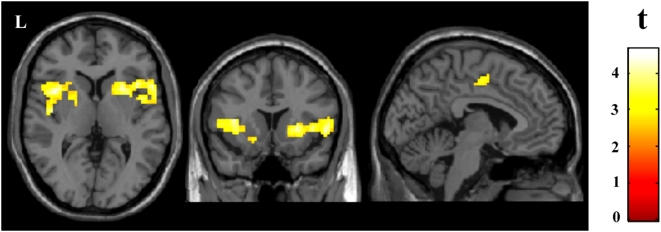
MRIFunctional brain MRI, axial, coronal and sagittal slices: yellow areas of increased pain-related activation in fibromyalgia patients compared with healthy subjects, reflecting central sensitisation.
Source : Pujol et al., PLoS ONE, 2009, figure 4 · CC BY
The core mechanism is central sensitisation, that is, an amplification of nociceptive signalling within the CNS, which shows clinically as:¹,²
- Hyperalgesia : an exaggerated response to a normally painful stimulus.
- Allodynia : pain in response to a non-painful stimulus (clothing, vibration).
- Temporal summation that is increased (\"wind-up\").
- Deficient descending modulation (impaired conditioned pain modulation testing).
These mechanisms rest on several documented neurobiological changes:
- Low-grade glial neuroinflammation : activation of microglial and astrocytic cells releasing pro-inflammatory cytokines (IL-6, TNF-alpha) and chemokines (Ji 2018 Anesthesiology). This neuroinflammation has been demonstrated on PET imaging with a translocator protein (TSPO) tracer.¹⁰
- Neurotransmitter imbalances : reduced serotonin and noradrenaline (which inhibit pain); raised substance P (threefold in the CSF) and glutamate.²
- Overactive HPA axis and dysautonomia: predominant sympathetic tone, loss of heart rate variability.
- Gut dysbiosis : recent 2023-2025 Mendelian randomisation studies suggest a causal link between microbiota changes and symptom severity.¹¹
The natural course is chronic and fluctuating. The prospective Walitt 2011 study of 1555 patients followed for 11 years in the NDB cohort showed that symptom severity remains broadly stable, with only 25 % achieving meaningful improvement and fewer than 10 % complete remission.¹² Poor prognostic factors include: severe symptoms at diagnosis, psychiatric comorbidity, low physical activity, catastrophising and low self-efficacy.¹³
- Fibromyalgia is now classified as nociplastic pain (Fitzcharles 2021 Lancet), reflecting documented central sensitisation.
- Both prevalence is 2 to 4 % (up to 5.4 % with the modified 2010 criteria), with a female-to-male ratio of 2-7:1 depending on the criteria.
- The risk factors combine heritability (~50 %), triggers (infection, trauma, stress) and comorbidities (rheumatoid arthritis 18-24 %, lupus 30 %).
- The mechanisms include hyperalgesia + allodynia + glial neuroinflammation + serotonin/substance P imbalances.
- The course is chronic and fluctuating ; complete remission is rare and calls for active multimodal management.
Chapter 1 bibliography
- Fitzcharles MA, Cohen SP, Clauw DJ, Littlejohn G, Usui C, Hauser W. Nociplastic pain: towards an understanding of prevalent pain conditions. Lancet. 2021;397(10289):2098-2110. PMID 34062144
- Sarzi-Puttini P, Giorgi V, Marotto D, Atzeni F. Fibromyalgia: an update on clinical characteristics, aetiopathogenesis and treatment. Nat Rev Rheumatol. 2020;16(11):645-660. PMID 33024295
- Wolfe F, Clauw DJ, Fitzcharles MA, et al. 2016 Revisions to the 2010/2011 fibromyalgia diagnostic criteria. Semin Arthritis Rheum. 2016;46(3):319-329. PMID 27916278
- Arnold LM, Bennett RM, Crofford LJ, et al. AAPT Diagnostic Criteria for Fibromyalgia. J Pain. 2019;20(6):611-628. PMID 30453109
- Heidari F, Afshari M, Moosazadeh M. Prevalence of fibromyalgia in general population and patients, a systematic review and meta-analysis. Rheumatol Int. 2017;37(9):1527-1539. PMID 28447207.
- Jones GT, Atzeni F, Beasley M, et al. The prevalence of fibromyalgia in the general population: a comparison of the American College of Rheumatology 1990, 2010, and modified 2010 classification criteria. Arthritis Rheumatol. 2015;67(2):568-575. PMID 25323744
- Hauser W, Ablin J, Fitzcharles MA, et al. Fibromyalgia. Nat Rev Dis Primers. 2015;1:15022. PMID 27189527
- Park DJ, Lee SS. New insights into the genetics of fibromyalgia. Korean J Intern Med. 2017;32(6):984-995. PMID 29056037
- Ursini F, Ciaffi J, Mancarella L, et al. Fibromyalgia: a new facet of the post-COVID-19 syndrome spectrum? Results from a web-based survey. RMD Open. 2021;7(3):e001735. PMID 34426540
- Ji RR, Nackley A, Huh Y, Terrando N, Maixner W. Neuroinflammation and Central Sensitization in Chronic and Widespread Pain. Anesthesiology. 2018;129(2):343-366. PMID 29462012
- Minerbi A, Fitzcharles MA. Gut microbiome: pertinence in fibromyalgia. Clin Exp Rheumatol. 2020;38 Suppl 123(1):99-104. PMID 32116215.
- Walitt B, Fitzcharles MA, Hassett AL, Katz RS, Hauser W, Wolfe F. The longitudinal outcome of fibromyalgia: a study of 1555 patients. J Rheumatol. 2011;38(10):2238-2246. PMID 21765102
- Galvez-Sanchez CM, Reyes Del Paso GA. Diagnostic Criteria for Fibromyalgia: Critical Review and Future Perspectives. J Clin Med. 2020;9(4):1219. PMID 32340369
How do you assess and diagnose fibromyalgia with confidence?
Which questions should you ask to understand the patient and their history?
History taking is the cornerstone of the diagnosis. It should explore five key dimensions:¹,²
- Pain description and distribution : mapping, on a body chart, the 19 areas of the Widespread Pain Index (WPI) (shoulder L/R, hip L/R, thigh L/R, lower leg L/R, jaw L/R, upper arm L/R, forearm L/R, chest, upper back, lower back, neck, abdomen). Key question: \"Over the past week, in how many areas have you had pain?\"³
- Severity of associated symptoms : rating fatigue, unrefreshing sleep and cognitive symptoms from 0 to 3 (Symptom Severity Scale - SSS). Added to this is the presence or absence over the past 6 months of headache, lower abdominal pain and depression (possible total 0-12).³
- Timeline and triggers : symptom duration (the criterion requires ≥ 3 months at a similar level), potential trigger (infection, trauma, surgery, stress), fluctuating course.
- Functional impact : effect on work, social life, sleep and daily activities. The Fibromyalgia Impact Questionnaire Revised (FIQR) is the reference tool (0-100, MCID ≈ 14 points).⁴
- Treatment history : drug and non-drug treatments already tried, perceived response, adverse effects.
The question of the patient's beliefs and representations about their pain is crucial: kinesiophobia, catastrophising and an external locus of control predict a poorer response to active interventions.⁵
Which clinical tests should you carry out and which other conditions must be ruled out?
The positive diagnosis rests on the ACR 2016 criteria (Wolfe), which combine two scores:³
| Criterion | Operational definition | Threshold for diagnosis |
|---|---|---|
| WPI | Number of painful areas out of the 19 listed | ≥ 7 AND SSS ≥ 5 OR 4-6 AND SSS ≥ 9 |
| SSS | Severity (0-3 each): fatigue + sleep + cognition + 3 somatic symptoms (0-3) | See above |
| Duration | Symptoms present at a similar level | ≥ 3 months |
| Other diagnoses | No longer rule out fibromyalgia (since 2016) | May coexist |
The AAPT 2019 criteria (Arnold) are a simpler alternative validated by the IASP-American Pain Society:⁴
- Widespread pain affecting ≥ 6 sites out of 9 (head, arm L/R, chest, abdomen, upper back, lower back, leg L/R).
- Unrefreshing sleep OR fatigue (at least moderate).
- Symptoms present for ≥ 3 months.
📊 Diagnostic decision flow for fibromyalgia (ACR 2016)
A decision tree combining WPI, SSS and duration
Adapted from Wolfe F et al. Semin Arthritis Rheum. 2016;46(3):319-329. PMID 27916278.
Physical examination remains useful for excluding organic disease. Look for: inflammatory joint signs (swelling, redness), neurological deficits (power, sensation, reflexes), cardiac murmurs, lymphadenopathy and thyroid signs. Palpation may reveal widespread hyperalgesia (a sign of central sensitisation) but is no longer required for the diagnosis.³
Red flags calling for further investigation
- Frank inflammatory symptoms : morning stiffness > 60 min, visible joint swelling → rheumatologist (RA, SpA, SLE).
- Fatigue + unexplained weight loss + night sweats → oncology work-up / lymphoma.
- Objective muscle weakness → neurological work-up (myositis, neuropathy, multiple sclerosis).
- Multisystem involvement (skin, eye, kidney) → rheumatological and immunological work-up.
- Abrupt onset after the age of 60 → always suspect underlying organic disease before fibromyalgia.
- Endocrine signs (cold intolerance, dry skin) → TSH, free T4.
The minimum laboratory work-up recommended by EULAR for the differential diagnosis includes:⁸
- FBC, ESR, CRP (to exclude systemic inflammation)
- TSH (to exclude hypothyroidism)
- CPK (creatine phosphokinase; excludes myopathy)
- Vitamin D (deficiency is common and may worsen muscular symptoms)
- Ferritin (iron deficiency is common in women)
- Serum calcium, fasting blood glucose
Routine imaging has no place in the positive diagnosis of fibromyalgia. It is reserved for red flags or a specific clinical target.⁷
Main differential diagnoses:
- Rheumatoid arthritis : symmetrical arthritis, rheumatoid factor/anti-CCP, raised ESR/CRP.
- Systemic lupus : SLICC criteria, ANA, anti-DNA, skin and kidney involvement.
- Sjögren's syndrome : sicca syndrome, anti-SSA/SSB, salivary gland biopsy.
- Hypothyroidism : raised TSH, low T4, endocrine signs.
- Polymyalgia rheumatica : age > 50, girdle pain, ESR > 50.
- Axial spondyloarthritis : inflammatory back pain, HLA-B27, sacroiliac MRI.
- Chronic fatigue syndrome / ME-CFS : prolonged post-exertional malaise.
- Vitamin D deficiency and iron deficiency.
- Adverse drug effects (statins, aromatase inhibitors).
- The diagnosis of fibromyalgia is clinical, based on ACR 2016 (WPI + SSS; ≥ 3 months) or AAPT 2019 (pain in ≥ 6/9 sites + fatigue/sleep + ≥ 3 months).
- Since 2016, fibromyalgia may coexist with other conditions (it is no longer a strict diagnosis of exclusion).
- The laboratory tests serve the differential diagnosis: FBC, ESR/CRP, TSH, CK, vitamin D, ferritin.
- Imaging has no place in the positive diagnosis.
- Red flags (inflammation, weight loss, objective weakness) call for prompt referral to rule out serious disease.
Chapter 2 bibliography
- Arnold LM, Bennett RM, Crofford LJ, et al. AAPT Diagnostic Criteria for Fibromyalgia. J Pain. 2019;20(6):611-628. PMID 30453109
- Macfarlane GJ, Kronisch C, Dean LE, et al. EULAR revised recommendations for the management of fibromyalgia. Ann Rheum Dis. 2017;76(2):318-328. PMID 27377815
- Wolfe F, Clauw DJ, Fitzcharles MA, et al. 2016 Revisions to the 2010/2011 fibromyalgia diagnostic criteria. Semin Arthritis Rheum. 2016;46(3):319-329. PMID 27916278
- Bennett RM, Friend R, Jones KD, Ware MM, Vernon SD, Lombardi V. The Revised Fibromyalgia Impact Questionnaire (FIQR): validation and psychometric properties. Arthritis Res Ther. 2009;11(4):R120. PMID 19664287
- Galvez-Sanchez CM, Reyes Del Paso GA. Diagnostic Criteria for Fibromyalgia: Critical Review and Future Perspectives. J Clin Med. 2020;9(4):1219. PMID 32340369
- Winslow BT, Vandal C, Dang L. Fibromyalgia: Diagnosis and Management. Am Fam Physician. 2023;107(2):137-144. PMID 36791450
- Hauser W, Ablin J, Fitzcharles MA, et al. Fibromyalgia. Nat Rev Dis Primers. 2015;1:15022. PMID 27189527
- Hauser W, Perrot S, Sommer C, Shir Y, Fitzcharles MA. Diagnostic confounders of chronic widespread pain: not always fibromyalgia. Pain Rep. 2017;2(3):e598. PMID 29392213
Phenotypes and drug therapy: what do they add alongside active therapies?
How do you sort patients into clinically useful subgroups?
The great heterogeneity of patients with fibromyalgia partly explains why meta-analyses show only moderate clinical effects: an \"overloaded\" patient with extreme catastrophising will not respond like an \"adaptive\" patient with low distress. The effort of phenotyping or profiling aims to personalise interventions.¹
Several cluster analysis studies (Vincent 2014, de Souza 2009, Yim 2017) converge on 3 to 4 recurring subgroups :²,³
| Phenotype | Dominant features | Preferred treatment strategy |
|---|---|---|
| Adaptive (~20-25 %) | Mild to moderate symptoms, low distress, relatively preserved function | Education + self-managed exercise |
| Highly sensitised (~30 %) | Marked hyperalgesia, allodynia, temporal summation, high pain scores | Pain education + very gradual exercise + consider neuromodulation (duloxetine, pregabalin) |
| High psychological distress (~25-30 %) | Catastrophising, depression, anxiety, history of trauma, kinesiophobia | CBT first + ACT/MBSR + graded exercise |
| Severe multifactorial (~15-20 %) | FIQR score > 70, multiple comorbidities, major functional impact | Intensive interdisciplinary management (rheumatology + physiotherapy + psychology + medication) |
The Migliorini 2025 study (Med Sci, level I) in juvenile fibromyalgia suggests a similar stratification in paediatrics, with cognitive behavioural approaches being particularly effective in adolescents with high distress.⁴
The Brazilian SR 2025 review (parts I & II) confirms the clinical usefulness of phenotyping and proposes a decision algorithm based on the FIQR score and the clinical subtype.⁵,⁶
What is the place of medication in fibromyalgia?
The EULAR 2017 recommendations are clear: no drug is a first-line treatment. Medication has the role of an adjunct , making it easier to engage in active therapies (exercise, CBT) when pain, sleep or mood are too badly affected.⁷
Three drugs are approved by the FDA for fibromyalgia in the United States (but not in France or Europe): duloxetine, milnacipran and pregabalin.⁸ None is approved specifically for this indication in Europe.
📊 Level of evidence for the main drug options (Brazilian SR 2025)
Effects on pain, sleep and quality of life
Synthesis: Sarzi-Puttini 2020 Nat Rev Rheumatol; Brazilian SR 2025 parts I-II; Hauser 2019 Cochrane reviews overview.
Prescribing principles:
- Start low, go slow (\"start low, go slow\") because patients with fibromyalgia are sensitive to adverse effects.
- Reassess at 8-12 weeks : if there is no notable benefit, stop rather than stacking drugs.
- Avoid strong opioids entirely (morphine, oxycodone): no demonstrated benefit, risk of dependence and opioid-induced hyperalgesia.⁷,⁸
- Tramadol : a weak option if other treatments have failed, but there is a risk of serotonin syndrome with SNRIs.
- NSAIDs and paracetamol : of little use as monotherapy for fibromyalgia pain (nociplastic, not inflammatory).
- Corticosteroids : no place at all.
- Cannabinoids : emerging evidence (Sarzi-Puttini 2020), notably nabilone for sleep; they remain tightly regulated in France.
The stepped care approach offers a rational escalation:⁹
- Step 1: Education + exercise + self-management (8-12 weeks)
- Step 2: If this fails, add CBT + consider low-dose amitriptyline (10-25 mg at night)
- Step 3: If failure persists and FIQR > 60, consider duloxetine, milnacipran or pregabalin (12-week trial)
- Step 4: Intensive interdisciplinary management in a pain centre
- Fibromyalgia is heterogeneous : phenotyping into 3-4 subgroups (adaptive, sensitised, distressed, severe) allows more personalised care.
- No drug is first-line ; they are adjuncts that make engagement in exercise and CBT possible.
- Three drugs have level 1A evidence: duloxetine, milnacipran, pregabalin (NNT ≈ 8-10).
- Low-dose amitriptyline is useful for sleep, with an excellent NNT (4-5).
- Strong opioids are to be avoided ; tramadol only as a last resort.
- The stepped care approach avoids needless drug escalation and gives priority to active therapies.
Chapter 3 bibliography
- Sarzi-Puttini P, Giorgi V, Marotto D, Atzeni F. Fibromyalgia: an update on clinical characteristics, aetiopathogenesis and treatment. Nat Rev Rheumatol. 2020;16(11):645-660. PMID 33024295
- Vincent A, Hoskin TL, Whipple MO, et al. OMERACT-based fibromyalgia symptom subgroups: an exploratory cluster analysis. Arthritis Res Ther. 2014;16(5):463. PMID 25318839
- Yim YR, Lee KE, Park DJ, et al. Identifying fibromyalgia subgroups using cluster analysis: Relationships with clinical variables. Eur J Pain. 2017;21(2):374-384. PMID 27633925
- Migliorini F, Maffulli N, Memminger MK, et al. Management of Juvenile Fibromyalgia: A Level I Evidence-Based Systematic Review. Med Sci (Basel). 2025;13(3). PMID 41003152.
- Heymann RE, Provenza JR, Paiva ES, et al. Brazilian Society of Rheumatology's fibromyalgia treatment guidelines - part I: monitoring and non-pharmacological management. Adv Rheumatol. 2025;65:18. PMID 41546125
- Heymann RE, et al. Review of fibromyalgia treatment guidelines: part 2 - pharmacological treatment. Adv Rheumatol. 2026. PMID 41572407
- Macfarlane GJ, Kronisch C, Dean LE, et al. EULAR revised recommendations for the management of fibromyalgia. Ann Rheum Dis. 2017;76(2):318-328. PMID 27377815
- Welsch P, Üçeyler N, Klose P, et al. Serotonin and noradrenaline reuptake inhibitors (SNRIs) for fibromyalgia. Cochrane Database Syst Rev. 2018;2(2):CD010292. PMID 29489029.
- Hauser W, Walitt B, Fitzcharles MA, Sommer C. Review of pharmacological therapies in fibromyalgia syndrome. Arthritis Res Ther. 2014;16(1):201. PMID 24433463
Which treatment strategies are the most effective for fibromyalgia?
Where do you start? What is the recommended hierarchy of interventions?
The EULAR 2017 recommendations marked a turning point by placing physical exercise as the only intervention with a strong recommendation for every patient with fibromyalgia.¹ The other interventions are rated \"weak for\" or \"weak against\" depending on the benefit-risk-cost balance.
📊 Hierarchy of interventions by level of evidence (EULAR 2017)
A pyramid of horizontal cards with the strength of recommendation
EULAR 2017 recommendations ranked by strength - horizontal cards avoid the unreadable text of triangular pyramids.
The most effective approach is multimodal. The Hauser 2009 meta-analysis (Arthritis Care Res) of 9 RCTs showed that combining exercise + education + CBT is superior to any single component, with effects lasting a year for pain, fatigue and mood.²
Practical hierarchy:
- Foundation: therapeutic patient education (ETP); explaining the nociplastic mechanisms; therapeutic alliance.
- Central pillar: an individualised, graded exercise programme built on the patient's preferences.
- Psychological support: CBT, ACT, MBSR according to profile and acceptability.
- Adjuncts: hydrotherapy, drug neuromodulation if these fail, occasional passive therapies during a flare.
What is the place of exercise, and is any one approach superior?
Exercise is the intervention validated with the highest level of evidence. Successive Cochrane meta-analyses confirm significant effects on pain (SMD ~ -0.5), function (SMD ~ -0.6) and quality of life.³,⁴
There is no clear evidence that one type of exercise is superior to another; the choice should follow patient preference to secure adherence:⁵
| Modality | Effect on pain | Effect on function | Effect on quality of life | Evidence level |
|---|---|---|---|---|
| Aerobic (walking, cycling, swimming) | SMD -0.46 | SMD -0.69 | SMD -0.76 | 1A Cochrane (Bidonde 2017) |
| Resistance (progressive strength training) | 3.3 cm/10 VAS | FIQ -16.75 pts | + quality of life | 1A Cochrane (Busch 2013) |
| Aquatic | SMD -0.40 | + stiffness | SMD -0.52 | 1B (Bidonde 2014) |
| Tai Chi | SMD -0.88 | FIQ -6.21 pts | + sleep | 1B RCT (Wang 2018 BMJ) |
| Yoga / Pilates | SMD -0.4 to -0.6 | + flexibility | + moderate | 2A (Sosa-Reina 2017) |
| Mixed / combined | SMD -0.55 | SMD -0.65 | + optimal | 1A (Andrade 2022) |
The key principle is \"Start Low, Go Slow\" : start well below the patient's perceived limits and increase one parameter at a time (frequency, duration, intensity).⁶ A pragmatic rule: if pain rises by more than 2 points on the VAS for 48h after a session, reduce the load by 25 %.
A typical beginner programme (adapted from Bidonde 2017 / Busch 2013):
- Phase 1 (weeks 1-4): 20 min gentle walking 3x/week + 15 min general mobility + breathing. No more than 50 % of maximum heart rate.
- Phase 2 (weeks 5-8): add low-load segmental strengthening (50 % 1RM, 8-12 reps, 2 sets, 2x/week).
- Phase 3 (weeks 9-12): gradually build up walking or cycling (to 30-40 min) + progressive strengthening.
- Phase 4 (3+ months): find an enjoyable activity for independent maintenance.
Manual therapies and technologies: how effective are they really?
Passive therapies have a limited place; they are often requested by patients hoping for an external solution, but the evidence of lasting benefit is weak.⁷
- Therapeutic massage : a short-term effect on pain and anxiety (Yuan 2015 meta-analysis, moderate NNT), but the effect is not maintained beyond 6 weeks. Useful as an adjunct to open the way into exercise.⁸
- Mobilisations / manipulations : very weak evidence. Not recommended as core practice, but they may ease associated cervicothoracic tension points.
- Balneotherapy / warm hydrotherapy : short-term benefit on pain and quality of life (Nuesch 2013 Ann Rheum Dis NMA), probably multifactorial (heat, buoyancy, gentle exercise, relaxation).⁹
- TENS, ultrasound, laser, shockwave : limited and heterogeneous evidence. The Salazar 2017 review concludes that there is insufficient evidence to recommend electrical stimulation in routine practice.¹⁰
- Acupuncture : moderate short-term effects (Deare 2013 Cochrane). Less effective than exercise, but it may be a preferred option for some patients.
- rTMS (repetitive transcranial magnetic stimulation) : emerging evidence, mainly over the motor cortex. It remains experimental in clinical practice.
These modalities should be regarded as temporary adjuncts that modulate symptoms in order to make engagement in active strategies easier.¹,⁷
Beyond the physical: how do you educate the patient and address psychological factors?
Pain neurophysiology education (PNE) has become a standard. It aims to deconstruct mistaken beliefs (\"my muscles are damaged\", \"the more it hurts the more serious it is\") and to reconceptualise pain as an experience modulated by the brain rather than a pure signal of tissue damage.¹² The Suso-Marti 2022 meta-analysis (Pain Med) of 8 RCTs shows significant moderate effects on pain (SMD -0.5) and impact (SMD -0.7), with low-quality evidence.¹³
Both Cognitive Behavioural Therapy (CBT) is the most studied psychological approach. The Bernardy 2018 meta-analysis (Eur J Pain, 23 RCTs, 2031 patients) confirms significant but moderate effects on:¹⁴
- Pain (SMD -0.32; 95 % CI -0.49 to -0.15)
- Depressive mood (SMD -0.33)
- Functional capacity (SMD -0.32)
- No significant effect on fatigue or on sleep alone
Both acceptance and commitment therapy (ACT) and mindfulness-based stress reduction (MBSR) are effective alternatives (Veehof 2016) with results comparable to standard CBT, and are sometimes better accepted by patients who resist a \"cognitive\" approach.¹⁵
📊 Mean effects (SMD) of active interventions on pain
A synthesis of recent meta-analyses - negative values = a reduction in pain
Sources: Bidonde 2017 Cochrane; Busch 2013 Cochrane; Wang 2018 BMJ tai chi RCT; Bernardy 2018 Eur J Pain CBT; Suso-Marti 2022 Pain Med PNE; Yuan 2015 manual therapies meta-analysis.
The caveats to bear in mind: even statistically significant effects are moderate in practice (Δ ~ 1-1.5 points/10 VAS), and sometimes below the minimal clinically important difference (MCID). The individual response is highly heterogeneous; some patients are \"super-responders\", others gain no benefit at all. This strengthens the case for phenotyping.⁴,¹⁵
Indications for referral for psychological support
- PCS (Pain Catastrophizing Scale) score > 30 (severe catastrophising)
- PHQ-9 > 15 (moderate to severe depression)
- GAD-7 > 15 (severe anxiety)
- History of untreated psychological trauma (high ACE score)
- Suicidal ideation (screen systematically: rates 2-3x higher in FM)
- Failure to engage in active therapies after 8-12 weeks
- EULAR 2017: exercise = the only strong recommendation. Aerobic and resistance training are equivalent; choose according to preference.
- The multicomponent approach (exercise + education + CBT) is superior to any single component.
- Pain neurophysiology education (PNE) and CBT have moderate but significant effects.
- The passive therapies (massage, TENS, manipulations) are temporary adjuncts; they are not a therapeutic foundation.
- The \"Start Low, Go Slow\" principle avoids pain flares; monitor PCS, PHQ-9, GAD-7.
Chapter 4 bibliography
- Macfarlane GJ, Kronisch C, Dean LE, et al. EULAR revised recommendations for the management of fibromyalgia. Ann Rheum Dis. 2017;76(2):318-328. PMID 27377815
- Hauser W, Bernardy K, Arnold B, Offenbacher M, Schiltenwolf M. Efficacy of multicomponent treatment in fibromyalgia syndrome: a meta-analysis of randomized controlled clinical trials. Arthritis Rheum. 2009;61(2):216-224. PMID 19177530
- Bidonde J, Busch AJ, Schachter CL, et al. Aerobic exercise training for adults with fibromyalgia. Cochrane Database Syst Rev. 2017;6(6):CD012700. PMID 28636204
- Busch AJ, Webber SC, Richards RS, et al. Resistance exercise training for fibromyalgia. Cochrane Database Syst Rev. 2013;(12):CD010884. PMID 24362925
- Sosa-Reina MD, Núñez-Nagy S, Gallego-Izquierdo T, et al. Effectiveness of Therapeutic Exercise in Fibromyalgia Syndrome: A Systematic Review and Meta-Analysis of Randomized Clinical Trials. Biomed Res Int. 2017;2017:2356346. PMID 29291206
- Albuquerque MLL, Monteiro D, Marinho DA, et al. Effects of different protocols of physical exercise on fibromyalgia syndrome treatment: systematic review and meta-analysis of randomized controlled trials. Rheumatol Int. 2022;42(11):1893-1908. PMID 35604435.
- Wang C, Schmid CH, Fielding RA, et al. Effect of tai chi versus aerobic exercise for fibromyalgia: comparative effectiveness randomized controlled trial. BMJ. 2018;360:k851. PMID 29563100
- Yuan SLK, Matsutani LA, Marques AP. Effectiveness of different styles of massage therapy in fibromyalgia: a systematic review and meta-analysis. Man Ther. 2015;20(2):257-264. PMID 25457196
- Nuesch E, Hauser W, Bernardy K, Barth J, Juni P. Comparative efficacy of pharmacological and non-pharmacological interventions in fibromyalgia syndrome: network meta-analysis. Ann Rheum Dis. 2013;72(6):955-962. PMID 22739992
- Salazar AP, Stein C, Marchese RR, et al. Electric Stimulation for Pain Relief in Patients with Fibromyalgia: A Systematic Review and Meta-analysis of Randomized Controlled Trials. Pain Physician. 2017;20(2):15-25. PMID 28158150.
- Deare JC, Zheng Z, Xue CC, et al. Acupuncture for treating fibromyalgia. Cochrane Database Syst Rev. 2013;(5):CD007070. PMID 23728665
- Moseley GL, Butler DS. Fifteen Years of Explaining Pain: The Past, Present, and Future. J Pain. 2015;16(9):807-813. PMID 26051220
- Suso-Marti L, Cuenca-Martínez F, Alba-Quesada P, et al. Effectiveness of Pain Neuroscience Education in Patients with Fibromyalgia: A Systematic Review and Meta-Analysis. Pain Med. 2022;23(11):1837-1850. PMID 35587171
- Bernardy K, Klose P, Welsch P, Hauser W. Efficacy, acceptability and safety of cognitive behavioural therapies in fibromyalgia syndrome - A systematic review and meta-analysis of randomized controlled trials. Eur J Pain. 2018;22(2):242-260. PMID 28984402
- Veehof MM, Trompetter HR, Bohlmeijer ET, Schreurs KMG. Acceptance- and mindfulness-based interventions for the treatment of chronic pain: a meta-analytic review. Cogn Behav Ther. 2016;45(1):5-31. PMID 26818413
How do you secure lasting recovery and prevent flares?
How do you make the patient an active player in their recovery through self-management?
Patient self-care (self-management) is the component that secures long-term benefit. It brings together 4 pillars:¹
- Structured therapeutic education : 4 to 8 sessions covering the pathophysiology, the triggers and coping strategies. Individual or group format; the group format has shown added benefit through social support (Brazilian SR 2025).²
- Pacing (activity regulation) : balancing activity and rest to avoid the \"boom-bust\" cycle (overactivity followed by exhaustion and a pain flare). A practical tool: the \"50 %\" rule - on a good day, do not go beyond 50 % of perceived capacity, so as to keep something in reserve for harder days.
- Sleep hygiene : regular hours, limiting screens for 1h before bed, avoiding caffeine after 2 pm, the 4-7-8 breathing technique. Amitriptyline 10-25 mg for insomnia can make this phase easier.
- Stress management : relaxation techniques, mindfulness meditation, a stress diary identifying personal triggers.
Self-efficacy (the perception of one's own ability to control the illness) is a key mediator of outcomes. The Theadom 2019 meta-analysis (PLOS One) on self-management shows significant effects at 12 months on self-efficacy (SMD +0.38) and pain intensity (SMD -0.32), even though the effect on fatigue remains limited.³
When and how do you plan a safe return to sport and activity?
The return to physical and social activity must be planned methodically to avoid setbacks. The principles:⁴
- Choose an enjoyable activity : walking, gentle cycling, swimming, tai chi, dance, gentle yoga. The aim is lasting adherence, not physiological optimisation.
- Mathematical progression : increase only one parameter at a time (frequency OR duration OR intensity). The 10 % rule: do not increase by more than 10 % per week.
- Activity diary : record the activity, its duration, the perceived intensity and the pain on the day and the day after. This helps identify thresholds.
- Managing flares : do not stop altogether; reduce temporarily by 25-50 % and resume the progression after 3-5 days.
- Progression criterion : do not move up a level until the patient tolerates the current one with no worsening 48h later.
Beyond physical activity, the social and occupational return matters just as much:
- Phased return to work : consider a temporary mi-temps thérapeutique (the French phased return to part-time work on medical grounds); ergonomic adjustments (regular breaks, alternating sitting and standing, suitable lighting).
- Support networks : patient associations (in France: FibromyalgieSOS, Association Francaise de la Fibromyalgie); avoid the social isolation that worsens catastrophising and depression.
- Engaging in meaningful activities : even modest ones strengthen the sense of efficacy and soften the \"chronically ill\" self-image.
📊 A typical 6-month progression back to activity
A \"start low, go slow\" model with flare management
Conceptual diagram - flares are expected; reduce by 25-50 % and resume the progression once things settle.
Progress indicators to track (in addition to the FIQR):
- Daily step count (a graded target: +500/week up to 6,000-8,000)
- PSQI score (sleep quality)
- PCS score (catastrophising) - should fall
- Self-efficacy (Lorig scale)
- Movement tolerance (movement-hold)
- Return to meaningful activities (social, family, work)
- Structured self-management (education + pacing + sleep + stress management) is the key to long-term results.
- Progression follows the 10 %/week rule, on a single parameter at a time.
- The flares are expected ; do not stop, but reduce temporarily by 25-50 %.
- Track PROMs (FIQR, PSQI, PCS) and functional indicators (steps, tolerance) every 4-8 weeks.
- The social and occupational return reinforces the gains; favour phased adjustments.
Chapter 5 bibliography
- Macfarlane GJ, Kronisch C, Dean LE, et al. EULAR revised recommendations for the management of fibromyalgia. Ann Rheum Dis. 2017;76(2):318-328. PMID 27377815
- Heymann RE, Provenza JR, Paiva ES, et al. Brazilian Society of Rheumatology's fibromyalgia treatment guidelines - part I: monitoring and non-pharmacological management. Adv Rheumatol. 2025;65:18. PMID 41546125
- Geraghty AWA, Maund E, Newell D, et al. Self-management for chronic widespread pain including fibromyalgia: A systematic review and meta-analysis. PLoS One. 2021;16(7):e0254642. PMID 34270606.
- Albuquerque MLL, Monteiro D, Marinho DA, et al. Effects of different protocols of physical exercise on fibromyalgia syndrome treatment: systematic review and meta-analysis of randomized controlled trials. Rheumatol Int. 2022;42(11):1893-1908. PMID 35604435.
- Bidonde J, Busch AJ, Schachter CL, et al. Aerobic exercise training for adults with fibromyalgia. Cochrane Database Syst Rev. 2017;6(6):CD012700. PMID 28636204
- Bennett RM, Friend R, Jones KD, et al. The Revised Fibromyalgia Impact Questionnaire (FIQR): validation and psychometric properties. Arthritis Res Ther. 2009;11(4):R120. PMID 19664287
- Vincent A, Whipple MO, Rhudy LM. Fibromyalgia Flares: A Qualitative Analysis. Pain Med. 2016;17(3):463-468. PMID 25586303.
What do real-world case studies teach us about fibromyalgia?
Analysis of a \"classic\" case: from assessment to resolution.
This case illustrates an effective multimodal care pathway. A 45-year-old woman, diagnosed 10 years earlier, initial assessment:
- Pain : 7/10 VAS, widespread distribution (shoulders, back, hips, legs)
- Associated symptoms : disabling fatigue (7/10), unrefreshing sleep, fibro-fog affecting work
- Initial FIQR : 72/100 (severe impact)
- PCS : 38 (severe catastrophising)
- ACR 2016 criteria : WPI 12, SSS 10 → diagnosis confirmed
- Laboratory work-up : normal (FBC, ESR, CRP, TSH, CPK, ferritin)
Interdisciplinary management over 12 weeks:
- Therapeutic education (4 sessions of 90 min) covering: nociplastic pathophysiology, deconstructing mistaken beliefs, the principles of pacing, sleep hygiene.
- Individualised exercise programme : graded walking (from 10 to 30 min, 3x/week) + low-load segmental strengthening (20 % 1RM rising to 50 %) + 1 weekly session of warm-water hydrotherapy.
- Group CBT (12 weekly sessions) targeting catastrophising, kinesiophobia, cognitive restructuring and stress management techniques.
- Drug adjunct : amitriptyline 10 mg at night for insomnia (first 3 weeks), then tapered off.
Results at 12 weeks:
The patient kept up her programme at 6 months (with no supervised sessions) and the gains held steady. This case shows that even after 10 years of symptoms, a structured approach can transform the trajectory.
The diagnostic challenge: when fibromyalgia mimics another condition.
The differential diagnosis is crucial, because FM symptoms overlap with those of many conditions. Two situations deserve particular attention:
Case 1: Post-COVID fibromyalgia. A case series reported by Ursini 2021 (RMD Open) describes patients (n=189, mean age 47, 88 % women) who developed a full picture of FM 3 to 12 months after a moderate COVID-19 infection, with no previous history of pain.¹ The ACR 2016 diagnostic criteria were met in 30 % of participants. The British cohort study (Long COVID Plus, 2024) confirms an HR of 1.7 for a diagnosis of FM within the 16 months following infection. These cases blur the boundary between long COVID and fibromyalgia and suggest shared pathophysiological mechanisms (neuroinflammation, dysautonomia).
Case 2: Overlap with hypermobile Ehlers-Danlos syndrome (hEDS). Several cohort studies (notably Tinkle 2020) report frequent comorbidity: up to 40-80 % of patients with hEDS also meet the FM criteria. The typical presentation: widespread pain and fatigue, but with generalised hypermobility (Beighton score ≥ 5/9), hyperextensible skin and a family history. The risk is of making an isolated diagnosis of FM and missing the hEDS, which changes management (specific strengthening for joint stability, prevention of subluxations). The current nomenclature and the dosing of exercise in this setting are covered in joint hypermobility syndromes.
Differential diagnoses and overlaps to screen for systematically
- Long COVID : if onset follows an infection, screen for cardiorespiratory sequelae (POTS, exertional breathlessness)
- Hypermobile Ehlers-Danlos syndrome : Beighton score, family history, skin, subluxations
- Polymyalgia rheumatica : age > 50, ESR > 50, girdle pain
- Hypothyroidism : TSH as standard at diagnosis
- Severe vitamin D deficiency : 25-OH vitamin D < 12 ng/mL
- Statins / aromatase inhibitors : drug-induced musculoskeletal effects
- Early axial spondyloarthritis : inflammatory back pain, HLA-B27, MRI
- Isolated major depressive disorder : PHQ-9 screening, personal history
A complex case study and syndromic overlaps.
Fibromyalgia is rarely isolated. A Vincent 2013 study of 502 patients at the Mayo Clinic shows that 89 % have at least one other chronic condition, most often:²
- Irritable bowel syndrome (IBS): 30-70 %
- Migraine / tension-type headache: 35-55 %
- Major depressive disorder: 30-40 %
- Generalised anxiety disorder: 25-35 %
- Temporomandibular disorders (TMD): 20-35 %
- Chronic fatigue syndrome (ME-CFS): 20-50 %
- Interstitial cystitis: 5-15 %
- Vulvodynia: 5-15 %
A multidisciplinary approach is essential here. Illustrative case : a 38-year-old woman with severe FM (FIQR 80), associated IBS, a history of early psychological trauma (ACE score 6/10) and untreated PTSD. A purely physical approach (physiotherapy alone) is doomed to fail here; working with a psychiatrist or psychotherapist (EMDR or trauma-focused therapy) is essential to unlock the trajectory.³ After 18 months of integrated care, the FIQR fell to 45, the IBS stabilised and function was partly restored.
Other case studies explore the potential role of fascial dysfunction in some patients (Liptan 2010, Stecco 2018): associated local myofascial pain, palpable restrictions in fascial mobility. Although the level of evidence remains low, targeted fascial manual therapy may be useful in patients with a marked peripheral component, alongside the central approach.⁴ The distinction between the two pictures, and what trigger point palpation is really worth, are set out in the article on myofascial pain syndrome.
Critique and controversy
The persistent absence of a diagnostic biomarker feeds medical scepticism. This lack of visible objective proof still explains the stigma patients face and the average 5 years of diagnostic wandering before the diagnosis is made. Advances in functional imaging (TSPO PET, fMRI), plasma metabolomics and molecular biology nevertheless converge: FM is a measurable pathophysiological reality, simply not one that a routine blood test can yet capture.⁵,⁶
The great heterogeneity of phenotypes fuels the debate: is FM a single disease or a \"nociplastic spectrum\" encompassing several subtypes? The current consensus (Fitzcharles 2021 Lancet) argues for a spectrum, which justifies the effort of phenotyping and the individualisation of treatment.
- The case studies confirm the effectiveness of 12 weeks of multimodal management even after years of symptoms.
- The post-COVID syndrome can mimic or trigger FM (HR ≈ 1.7); screen carefully for cardiorespiratory sequelae.
- The hEDS coexists in 40-80 % of cases depending on the series; check for Beighton hypermobility before settling on FM alone.
- Both FM is rarely isolated : 89 % have comorbidities (IBS, migraine, depression, TMD, ME-CFS).
- Complex cases (PTSD, trauma) call for collaboration with psychology in addition to physiotherapy.
Chapter 6 bibliography
- Ursini F, Ciaffi J, Mancarella L, et al. Fibromyalgia: a new facet of the post-COVID-19 syndrome spectrum? Results from a web-based survey. RMD Open. 2021;7(3):e001735. PMID 34426540
- Vincent A, Lahr BD, Wolfe F, et al. Prevalence of fibromyalgia: a population-based study in Olmsted County, Minnesota, utilizing the Rochester Epidemiology Project. Arthritis Care Res (Hoboken). 2013;65(5):786-792. PMID 23203795.
- Coppens E, Van Wambeke P, Morlion B, et al. Prevalence and impact of childhood adversities and post-traumatic stress disorder in women with fibromyalgia and chronic widespread pain. Eur J Pain. 2017;21(9):1582-1590. PMID 28543929.
- Liptan GL. Fascia: A missing link in our understanding of the pathology of fibromyalgia. J Bodyw Mov Ther. 2010;14(1):3-12. PMID 20006283
- Fitzcharles MA, Cohen SP, Clauw DJ, et al. Nociplastic pain: towards an understanding of prevalent pain conditions. Lancet. 2021;397(10289):2098-2110. PMID 34062144
- Loggia ML, Chonde DB, Akeju O, et al. Evidence for brain glial activation in chronic pain patients. Brain. 2015;138(Pt 3):604-615. PMID 25582579
How do you apply these recommendations concretely in your practice?
When, and to which other health professionals, should you refer?
Interprofessional referral is a fundamental clinical skill. It rests on two kinds of signal: red flags (organic disease) and yellow flags (psychosocial factors).¹
The red flags (Finucane 2020) call for an urgent or specialist medical opinion:²
Red flags in a fibromyalgia context
- Very rapid onset of symptoms after the age of 60
- Frank inflammatory symptoms: morning stiffness > 60 min, swelling, joint redness
- Unexplained weight loss, night sweats, persistent fever
- Objective motor weakness or focal sensory deficits
- Unusual headaches, vomiting, visual disturbance
- Persistent bone pain, especially at night
- Known cancer, recent immunosuppressive treatment
- Complete failure after 8-12 weeks of well-conducted management
The yellow flags of a psychosocial kind (Nicholas 2011) justify working with a psychologist or psychotherapist:³
- Severe catastrophising (PCS > 30)
- Moderate to severe depression (PHQ-9 > 15)
- Severe anxiety (GAD-7 > 15)
- High kinesiophobia (Tampa Scale for Kinesiophobia > 40)
- Untreated history of trauma (high ACE score)
- Suicidal thoughts (screen systematically - rates 2-3x higher in FM)
- Marked social isolation
A useful interprofessional network:
| Professional | Reason for referral | Expected contribution |
|---|---|---|
| General practitioner | Care pathway coordination, prescribing, follow-up | Central care coordinator |
| Rheumatologist | Diagnostic doubt, inflammatory comorbidity, failure of well-conducted management | Differential diagnosis, optimising medication |
| Pain centre | Severe, refractory, multi-comorbid FM | Intensive interdisciplinary management |
| Psychologist / CBT | Yellow flags, catastrophising, depression | CBT, ACT, MBSR |
| Psychiatrist | Severe depression, suicidal ideation, PTSD | Antidepressant treatment, EMDR |
| APA specialist (adapted physical activity) | Independent return to sport | Long-term adapted physical activity |
| Dietitian | High BMI, suspected dysbiosis, IBS | Anti-inflammatory diet, FODMAP |
| Occupational therapist | Ergonomic difficulties at work or at home | Adaptations, pacing, energy conservation |
| Social worker | Sick leave paperwork, disability recognition | Administrative and social support |
How do you measure outcomes and overcome barriers to implementation?
Standardised outcome measurement is essential for steering treatment and demonstrating effectiveness. The PROMs recommended for fibromyalgia:
| Tool | Domain assessed | Range | MCID |
|---|---|---|---|
| FIQR | Overall FM impact (function + symptoms + global) | 0-100 | ~14 points |
| NPRS / VAS | Pain intensity | 0-10 | ~1.5 points |
| PCS | Catastrophising | 0-52 | ~9 points |
| PHQ-9 | Depression | 0-27 | ~5 points |
| GAD-7 | Anxiety | 0-21 | ~4 points |
| PSQI | Sleep quality | 0-21 | ~3 points |
| TSK | Kinesiophobia (Tampa scale) | 17-68 | ~4 points |
| SF-36 / EQ-5D | Generic quality of life | 0-100 | variable |
Recommended frequency: initial assessment + reassessment at 4, 8 and 12 weeks then at 6 and 12 months in follow-up.
Barriers to implementation (da Silva 2015):⁴
- Lack of time : adopt a quick workflow (questionnaires in the waiting room, automatic scoring)
- Lack of skills : continuing education (FIF-PL and DPC, the French funding and continuing professional development schemes for physiotherapists)
- Lack of resources : use free platforms (rheumcalc.com for the FIQR, online scoring)
- Organisational inertia : start small (one PROM per patient, then extend gradually)
- Patient resistance : explain how the scores help personalise follow-up
Effective strategies : audit and feedback, interactive training, integration into the electronic patient record, mentoring by clinical champions.⁵
Physio Learning - Stay informed
This article is part of the \"evidence-based clinical syntheses\" collection on Physio Learning. To go further, see our other syntheses on chronic pain, workplace ergonomics and multidisciplinary approaches.
Chapter 7 bibliography
- Finucane LM, Downie A, Mercer C, et al. International Framework for Red Flags for Potential Serious Spinal Pathologies. J Orthop Sports Phys Ther. 2020;50(7):350-372. PMID 32438853
- Verhagen AP, Downie A, Maher CG, Koes BW. Most red flags for malignancy in low back pain guidelines lack empirical support: a systematic review. Pain. 2017;158(10):1860-1868. PMID 28708761
- Nicholas MK, Linton SJ, Watson PJ, Main CJ. Early identification and management of psychological risk factors (\"yellow flags\") in patients with low back pain: a reappraisal. Phys Ther. 2011;91(5):737-753. PMID 21451099
- da Silva TM, Costa Lda C, Garcia AN, et al. What do physical therapists think about evidence-based practice? A systematic review. Man Ther. 2015;20(3):388-401. PMID 25458142.
- Ivers N, Jamtvedt G, Flottorp S, et al. Audit and feedback: effects on professional practice and healthcare outcomes. Cochrane Database Syst Rev. 2012;(6):CD000259. PMID 22696318
- Bennett RM, Friend R, Jones KD, Ware MM, Vernon SD, Lombardi V. The Revised Fibromyalgia Impact Questionnaire (FIQR): validation and psychometric properties. Arthritis Res Ther. 2009;11(4):R120. PMID 19664287
- Macfarlane GJ, Kronisch C, Dean LE, et al. EULAR revised recommendations for the management of fibromyalgia. Ann Rheum Dis. 2017;76(2):318-328. PMID 27377815
- Heymann RE, et al. Brazilian Society of Rheumatology's fibromyalgia treatment guidelines - part I: monitoring and non-pharmacological management. Adv Rheumatol. 2025;65:18. PMID 41546125