








Physiotherapy · Primary headaches
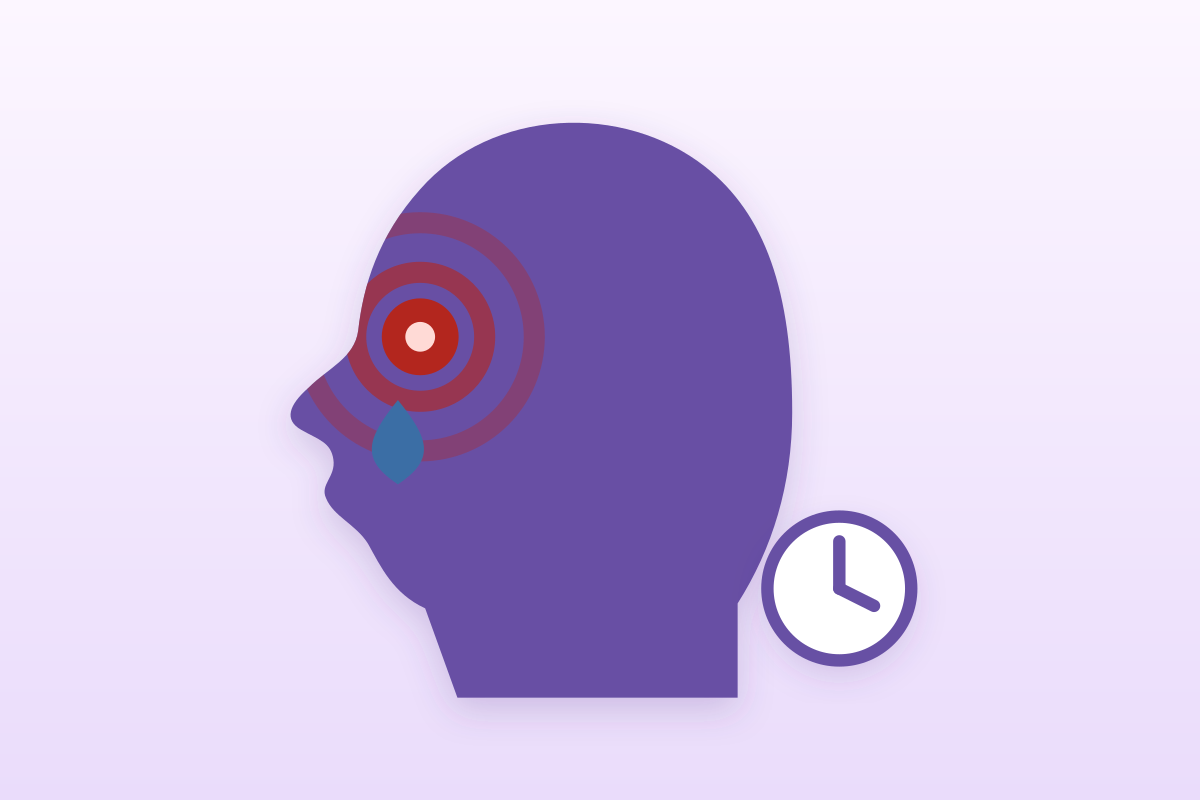
A man of thirty-five presents with pain in the face and the neck. He has already seen a dentist, who did a root canal, and an ENT surgeon, who talked about sinusitis. This article deals with a trigeminal autonomic cephalalgia, that is, a primary neurological disease whose pain sits around the eye, where the site's other “face and skull” pages deal with pain arising from a nerve or from the cervical spine: trigeminal neuralgia, occipital neuralgia, cervicogenic headache and temporomandibular joint syndrome. The physiotherapist is not the front line of treatment, but they are among the professionals these patients meet during the three years that the diagnostic delay lasts on median, and they can shorten it.
Summary written from primary sources verified one by one: every identifier was resolved through the PubMed E-utilities API and every abstract read before being cited. Each figure carries its reference where it is written; the full bibliography, with PMIDs and DOIs, appears at the end of the article. The diagnostic criteria are taken word for word from the official text of the International Classification of Headache Disorders.
Cluster headache in three figures
Rare, poorly known, and diagnosed years late
Sources: Fischera M et al., Cephalalgia 2008 (PMID 18422717); van Vliet JA et al., Journal of Neurology, Neurosurgery and Psychiatry 2003 (PMID 12876249).
Clinical summary
- An attack lasts 15 to 180 minutes, never a few seconds and never two days. Duration is the first sort: below that, think trigeminal neuralgia; above it, migraine. It is criterion B of ICHD-3 heading 3.1 (PMID 29368949).
- The sign that clinches the diagnosis is restlessness. The patient gets up, paces, hits their head, cannot bear to stay still, where the migraine patient seeks darkness and silence. The classification makes it a criterion in its own right, on a par with the cranial autonomic features.
- The autonomic features are ipsilateral: lacrimation, conjunctival injection, nasal congestion, rhinorrhoea, eyelid oedema, forehead sweating, miosis or ptosis. They accompany the pain on the same side, and disappear with it.
- One person in a thousand is affected, with a ratio of four men to one woman, and the gap widens in the chronic forms (PMID 18422717).
- Diagnostic delay is the rule: three years on median, one third of patients having been through a dentist and one third through an ENT surgeon (PMID 12876249). A professional who knows the picture can save years.
- There is a highly effective and under-used acute treatment: high-flow oxygen, which leaves 78 % of patients pain-free within fifteen minutes against 20 % on placebo, in a randomised trial published in JAMA (PMID 19996400).
- Physiotherapy has no treatment to offer for the disease itself. Its value lies elsewhere: recognising it, not treating a cervical spine that is not the source, and referring on to the neurologist.
How is cluster headache recognised?
The criteria run to five lines and are remembered in one reading. The difficulty is not their complexity, it is that we do not look for them, because we do not think of this disease.
Cluster headache belongs to the third chapter of the international classification, that of the trigeminal autonomic cephalalgias, which gathers the headaches combining pain in the territory of the first division of the trigeminal nerve with cranial autonomic signs. It carries ICHD-3 code 3.1, with two forms: 3.1.1 episodic and 3.1.2 chronic (PMID 29368949).
| Criterion | What the classification requires | What that gives you at the interview |
|---|---|---|
| A. Number | At least five attacks fulfilling criteria B to D | A single attack does not allow a conclusion |
| B. Pain | Severe or very severe unilateral orbital, supraorbital or temporal pain, or any combination, lasting 15 to 180 minutes when untreated | The patient points to their eye with one finger. Duration is the fastest sort in this whole chapter |
| C. Accompanying features | At least one ipsilateral autonomic sign (conjunctival injection or lacrimation, nasal congestion or rhinorrhoea, eyelid oedema, forehead and facial sweating, miosis or ptosis), or a sense of restlessness or agitation, or both | Restlessness is enough on its own: a patient with no lacrimation who cannot keep still fulfils the criterion |
| D. Frequency | From one attack every other day to eight attacks a day | Daily periodicity is highly suggestive, especially if the attacks come back at a fixed time |
| E. Exclusion | Not better accounted for by another ICHD-3 diagnosis | This is where the search for a secondary form is played out |
| Forms | The chronic form (3.1.2) is defined by the absence of any remission period. About 10 - 15 % of patients are in that situation | In a large series with good follow-up, one quarter of patients had only a single cluster period in their lifetime |
Criteria and comments taken word for word from the official text of the International Classification of Headache Disorders, 3rd edition (ichd-3.org); publication reference: Cephalalgia 2018 (PMID 29368949).
The classification also states that, during a cluster period, attacks may be provoked by alcohol, histamine or nitroglycerin. It is a question to ask directly: “does a glass of wine set off an attack within the hour?”. In a patient in an active period, the answer is often immediate and unambiguous, and it is worth more than a long interview.
The question that changes everything runs to six words: during an attack, do you stay still? The migraine patient lies down in the dark. The cluster headache patient paces the floor.
Attack duration, the first sorting tool
Three diseases, three timescales that do not overlap
Paroxysmal hemicrania (ICHD-3 3.2) appears here because it is the main possible confusion within the chapter of trigeminal autonomic cephalalgias: shorter, more frequent attacks, and above all a complete response to indometacin, which serves as a diagnostic test.
Key point
- Fifteen to a hundred and eighty minutes, strictly on one side, around the eye: that is the skeleton of the diagnosis.
- Motor restlessness is a criterion in its own right, and it is the easiest to observe.
- An attack triggered by a glass of alcohol during an active period is a strong argument.
- An attack lasting a few seconds is not cluster headache; nor is an attack lasting two days.
Who is affected, and how often?
It is a rare disease, and that fact has a practical consequence: a physiotherapy clinic meets few cases, so the eye never gets trained. Recognition will not come from experience, it will come from the criteria.
The reference meta-analysis pooled all the available population-based studies. It gives a lifetime prevalence of 124 per 100,000 (confidence interval: 101 to 151) and a one-year prevalence of 53 per 100,000 (interval: 26 to 95). The authors sum up their result in one sentence: about one person in a thousand has cluster headache, and that prevalence is remarkably stable from one part of the world to another. The male-to-female ratio is 4.3, and it varies strongly with the form: 15.0 in the chronic form against 3.8 in the episodic form. The ratio between episodic and chronic forms is 6.0 (PMID 18422717).
A recent review puts the incidence between 2.07 and 9.8 per 100,000 person-years and the mean prevalence at 53 per 100,000, with wide variation depending on method (PMID 38524268). In the large Dutch cohort, the mean age at onset was 32 years (standard deviation 14), with 73 % episodic forms, 21 % chronic forms and 6 % of indeterminate periodicity (PMID 12876249).
Two risk factors are worth knowing. Family history first: a dedicated meta-analysis measured the true share of familial forms, often overestimated in hospital series (PMID 32334514). Then smoking: the largest genome-wide association study carried out on this disease, covering 4,777 cases of whom 3,348 were men, identifies eight risk loci and implicates smoking as a causal risk factor (PMID 37486023).
Four epidemiological markers
A young man, an episodic form in three cases out of four
Sources: Fischera M et al., Cephalalgia 2008 (PMID 18422717); van Vliet JA et al., JNNP 2003 (PMID 12876249); comments on ICHD-3 heading 3.1.
The real burden of the disease
The pain of cluster headache is regularly described as one of the most intense that medicine knows. The psychological impact matches it: patients frequently report depressive symptoms, are more likely than the general population to report suicidal ideation and behaviour, and have significantly reduced quality of life (PMID 34668084). A prospective multicentre study compared perceived impairment between chronic forms, episodic forms in and out of an active period, migraine patients and healthy controls (PMID 21123629).
That has a direct consequence for us: a patient who describes this picture and is not under follow-up is not merely poorly treated, they are at risk. Referral is not an administrative formality.
Key point
- One person in a thousand, four men to one woman, onset around the age of 32.
- Three patients in four have an episodic form; 10 to 15 % have no remission at all.
- Smoking is implicated as a causal risk factor by the largest genetic study available.
- The suicide risk is real: referral to a neurologist is urgent, not optional.
Why does the diagnosis take years to be made?
This chapter is the most useful in the article for a physiotherapist, because it describes exactly the place we occupy in these patients' journey: somewhere in the middle of the delay, with the chance to interrupt it.
The Dutch national survey remains the most complete measurement. Of 2,001 respondents, 1,429 met the criteria, and 1,163 completed a detailed questionnaire. The delay between the first attack and diagnosis ran from one week to 48 years, with a median of 3 years. Along the way, 34 % had consulted a dentist and 33 % an ENT surgeon before the diagnosis was established. The factors that lengthened the delay were the presence of photophobia or phonophobia, of nausea, an episodic pattern and an early age at onset. The authors conclude that photophobia, phonophobia and nausea should be recognised as part of the clinical spectrum of the disease, precisely because their presence misleads towards migraine (PMID 12876249).
A Danish cohort of 400 validated patients confirmed and refined the finding. The diagnostic delay falls with each decade since 1950, and onset after 1990 is associated with a clear reduction (odds ratio 0.28). Conversely, three things lengthen it: an attack duration over 180 minutes (odds ratio 1.62), migraine-like features (1.30) and night-time attacks (1.39). Above all, the delay collapses with age at onset: 13.8 years in patients with onset before 20, 5.4 years between 20 and 40, and 2.1 years after 40 (PMID 31291778). In other words: the younger the patient, the longer we take.
The journey before diagnosis
One third goes through the dentist, one third through the ENT surgeon, and the delay lengthens when the picture looks like migraine
The two cohorts are independent and from different countries: their figures do not add up, they corroborate each other.
A 2012 review summed the situation up in a phrase that has not aged: cluster headache is often undiagnosed, or misdiagnosed as migraine or sinusitis (PMID 22650381). A more recent update opens with the same finding: this disease remains underdiagnosed and poorly treated (PMID 38524268).
Key point
- Three years on median, nearly fourteen when the disease starts in adolescence.
- One third of patients go through a dentist, one third through an ENT surgeon: the pain is taken for dental or sinus pain.
- Photophobia, phonophobia and nausea do occur in this disease: their presence does not rule out the diagnosis, it merely delays its recognition.
- Night-time attacks lengthen the delay, when they are in fact a strong diagnostic argument.
What cluster headache is not
The site's corpus already covers four neighbours of this disease. This table gives, for each, the single sign that settles it, and the link to the page that covers it in full.
| Presentation | Duration and rhythm | The sign that settles it | The page on the site |
|---|---|---|---|
| Cluster headache ICHD-3 3.1 | 15 to 180 min, from one every other day to eight a day | restlessness during the attack, and cranial autonomic signs strictly on the same side | This page |
| Migraine ICHD-3 1 | 4 to 72 h, a few attacks a month | The patient keeps still and seeks darkness; routine exertion makes the pain worse | Migraine |
| Trigeminal neuralgia ICHD-3 13.1.1 | Shocks lasting a fraction of a second to 2 min | The cutaneous or mucosal trigger zone , set off by a light touch, and the absence of pain between attacks | Trigeminal neuralgia |
| Occipital neuralgia ICHD-3 13.4 | Paroxysms of seconds to minutes | An occipital territory rather than orbital, tenderness on palpation of the nerve, response to anaesthetic block | Occipital neuralgia |
| Cervicogenic headache ICHD-3 11.2.1 | Continuous or fluctuating, hours or days | The pain is reproduced by cervical movement, and there are no autonomic features | Cervicogenic tension-type headache |
| Temporomandibular dysfunction ICHD-3 11.7 | Dull, daily or almost continuous | Pain reproduced by palpating the masticatory muscles and by jaw movement | Temporomandibular joint syndrome |
| Paroxysmal hemicrania ICHD-3 3.2 | 2 to 30 min, often more than five attacks a day | The complete response to indometacin, which serves as a diagnostic test | Covered here, as the internal differential |
Codes and criteria: ICHD-3, Cephalalgia 2018 (PMID 29368949). The full differential table of facial pain, with the figures and the tests, is in the site's article on trigeminal neuralgia.
The two confusions that cost the most
Migraine. It is the most frequent confusion, and the Danish cohort showed that migraine-like features significantly lengthen the diagnostic delay (PMID 31291778). Three things separate them reliably: duration (under three hours against over four), behaviour during the attack (restlessness against keeping still) and frequency (daily during a cluster period against a few attacks a month). The presence of photophobia or nausea does not rule out the diagnosis, contrary to a widespread belief.
Sinusitis and dental pain. They account for two thirds of the pre-diagnostic journey. The nasal congestion and rhinorrhoea of the attack are taken for the cause of the pain when they are an accompanying sign of it. A case of cluster headache alongside acute maxillary sinusitis has in fact been published, which shows that the two can coexist and blur the trail for a long time (PMID 24133652).
What this page does not cover. The exhaustive differential table of facial pain, giving for each entity its site, its rhythm, its trigger and its discriminating sign, is developed in the article on trigeminal neuralgia, which gives it a whole chapter. We do not duplicate it here: this page starts from cluster headache and looks towards its neighbours, the other starts from the trigeminal nerve.
Why do the attacks follow the clock?
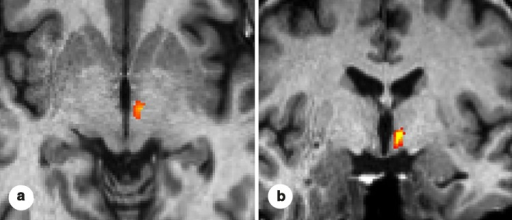
MRIFunctional MRI in axial and coronal planes: activation of the posterior hypothalamus on the side of the pain, the result of a group analysis in patients with episodic cluster headache.
Source : Morelli et al., The journal of headache and pain, 2009, figure 1 · CC BY-NC
This feature is not a curiosity: it is a diagnostic argument, and one of the most reliable, because no other headache behaves that way.
Cluster headache shows a double periodicity. Circadian first: attacks often come back at the same time, frequently at night, waking the patient one to two hours after falling asleep. Circannual next: cluster periods readily come back in the same season. Many international studies have documented this rhythmicity, without our yet fully understanding the effect of sleep, chronotype, season or temperature (PMID 40808422).
The link with the hypothalamus is firmly established. High-resolution structural and functional imaging studies have shown subtle hypothalamic alterations, and recent work looks at the molecular clock and at circadian variations in gene expression (PMID 41709685). A review devoted to genetics and chronobiology stresses that this strong chronobiological influence is a fundamental difference from migraine (PMID 37851671), and another has specifically explored the relationship between sleep and attacks (PMID 36976672).
For the interview, this translates into two questions that pay off handsomely: “do your attacks wake you at night, at roughly the same time?” and “do your cluster periods come back in the same season?”. A yes to both, in a patient whose attack lasts under three hours and comes with lacrimation, makes the diagnosis highly likely.
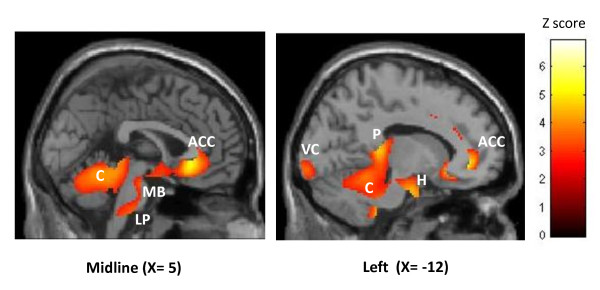
PET scanFDG-PET in sagittal sections: areas of cerebral hypermetabolism, including the hypothalamus, in patients with chronic cluster headache.
Source : Magis et al., BMC neurology, 2011, figure 1 · CC BY
Key point
- Attacks at a fixed time, often at night, and periods returning in the same season: no other headache does that.
- The rhythmicity points to the hypothalamus, and it separates this disease from migraine at the level of mechanisms.
- Paradoxically, night-time attacks lengthen the diagnostic delay when they ought to shorten it.
When should a secondary cause be suspected?
Cluster headache is by definition a primary headache. But structural lesions can reproduce the picture so closely as to be indistinguishable, and some of them are curable or dangerous.
A systematic review gathered 77 published cases of symptomatic cluster headache or secondary cluster-like headache. The causes broke down into vascular (37.7 %), tumoural (32.5 %) and inflammatory (27.2 %)conditions. Mass lesions accounted for 28.6 % of the total, and among those 77.3 % lay in the suprasellar, that is pituitary, region. Cases linked to sinusitis accounted for 19.5 %, and internal carotid artery dissection 14.3 %. The authors identify warning features: a late age at onset and ocular or retro-orbital pain, present in at least one third of cases, and above all an abnormal neurological examination, which they describe as the most significant signal, in particular a cranial nerve palsy. They stress a counter-intuitive point: the response to the usual treatments proves nothing, since a secondary headache can respond just as a primary one does. Brain magnetic resonance imaging is the investigation of choice (PMID 34002138). An earlier review of 63 cases had laid the same groundwork (PMID 24570848).
The causes of secondary forms
Across 77 published cases, three families of causes, and one location that dominates by far
Source: Long RJ, Zhu YS, Wang AP, World Journal of Clinical Cases 2021, systematic review of 77 published cases (PMID 34002138). A review of published cases measures the breakdown of reported causes, not their frequency in a population.
Two causes on this list bear directly on our practice. Internal carotid artery dissection, which accounts for nearly one secondary case in seven, typically comes with unilateral neck or facial pain and can produce a Horner's syndrome, that is a ptosis and a miosis, exactly the signs one would attribute to the autonomic features of cluster headache. The classification in fact gives it its own heading, 6.5.1 Headache or facial or neck pain attributed to cervical carotid or vertebral artery dissection. Any suspicion strictly forbids any manual cervical technique. Cerebral venous thrombosis is also cited by the authors as a cause deserving particular attention: it is developed in our article on migraine, in the chapter on red flags.
- A first episode after the age of 50, or a picture starting late with no previous history.
- An abnormal neurological examination, in particular a cranial nerve palsy: it is the most significant signal in Long's review.
- Predominantly ocular or retro-orbital pain, present in at least one third of secondary cases.
- Ptosis and miosis persisting between attacks: the autonomic features of cluster headache disappear with the pain, an established Horner's suggests a dissection.
- Recent-onset unilateral neck or facial pain, especially after even minor trauma: arterial dissection, no manipulation.
- Improvement on treatment: this is not a reassuring argument, a secondary headache can respond just as a primary one does.
Key point
- A typical picture does not rule out a lesion: magnetic resonance imaging is the investigation of choice as soon as any doubt exists.
- Pituitary lesions dominate by far among the tumoural causes reported.
- A ptosis and a miosis persisting between attacks are not autonomic features: they suggest a carotid dissection.
- The response to treatment says nothing about whether the headache is primary or secondary.
What can oxygen, triptans and preventive treatment do?
This chapter is not ours to prescribe, and it appears here for a precise reason: it is what gives the patient a concrete reason to go and see a neurologist. Telling them a treatment exists and works within fifteen minutes does more for adherence than any general advice.
The attack
High-flow oxygen is one of the most spectacular treatments in neurology, and one of the most under-used. The landmark randomised trial, published in JAMA, included 109 adults each treating four attacks, alternately with pure oxygen at 12 litres a minute for 15 minutes through a face mask, or with high-flow air as placebo. The primary outcome was freedom from pain at 15 minutes: it was reached in 78 % of attacks on oxygen (95 % confidence interval: 71 to 85, across 150 attacks) against 20 % on placebo (interval: 14 to 26, across 148 attacks), a highly significant difference, with no notable adverse events (PMID 19996400).
Subcutaneous sumatriptan is the other first-line acute treatment, along with intranasal sumatriptan or zolmitriptan (PMID 34919214). A prospective study showed that some patients respond to doses below 6 mg, which matters when attack frequency limits the number of injections allowed (PMID 16109122). A network meta-analysis has compared all the acute treatments (PMID 35343597).
Prevention
High-dose verapamil remains the first-line preventive treatment. Its pivotal trial, double-blind against placebo, covered 30 patients (15 per arm) receiving 120 mg three times a day for 14 days: it showed a significant reduction in attack frequency and in acute treatment use, with mild adverse effects (PMID 10746617). Cardiac rhythm monitoring is needed at high doses (PMID 35233134).
Galcanezumab , a monoclonal antibody directed against calcitonin gene-related peptide, was the subject of a randomised trial published in the New England Journal of Medicine in the episodic form. Recruitment was stopped before the planned sample size for want of eligible candidates: 106 patients were included, 49 on galcanezumab 300 mg and 57 on placebo, with a baseline frequency of about 17.8 attacks a week. The mean reduction over weeks 1 to 3 was 8.7 attacks a week against 5.2 on placebo (difference 3.5; 95 % confidence interval: 0.2 to 6.7; p = 0.04), and 71 % of treated patients reached a reduction of at least half by week 3, against 53 % on placebo ( PMID 31291515). The evidence-based guidelines of the American Headache Society remain the reference for the whole field (PMID 27432623), completed by a review of the management of all trigeminal autonomic cephalalgias (PMID 36648786The greater occipital nerve block).
This procedure is worth knowing about, because it involves a region we palpate every day, and because it is sometimes wrongly presented as a physiotherapy technique. It is a
medical injection of corticosteroid and local anaesthetic into the suboccipital region, used as a transitional preventive treatment while the preventive drug takes effect. A meta-analysis pooled 12 studies and 365 patients: the combined proportion of patients pain-free at one month was (95 % confidence interval: 24 to 76), with considerable heterogeneity, and the combined risk ratio of the two randomised trials included reached 50 % in favour of active treatment (interval: 1.35 to 17.55), with no heterogeneity between them ( 4.86 PMID 32781922). A later systematic review and a recent randomised trial have confirmed the value of the procedure (PMID 36948579PMID 39415681, Treatments and level of evidence).
Stacked cards, from the strongest evidence to none at all
Chart: treatments for cluster headache by level of evidence
PMID 19996400); Diener and May 2022 (PMID 34919214); Leone 2000 (PMID 10746617); Goadsby 2019 (PMID 31291515); Ornello 2020 (PMID 32781922). The last card is a conclusion drawn by the editorial team from the absence of trials, not from a negative review.Treatments for cluster headache: route, dose studied and available evidence
| Route and dose studied | What the evidence establishes | High-flow oxygen |
|---|---|---|
| acute Pure oxygen, | 12 L/min through a face mask, 15 minutes , from the start of the attack78 % of patients pain-free at 15 min against 20 % on placebo, randomised crossover trial in 109 adults ( | PMID 19996400Sumatriptan) |
| acute The | subcutaneous route, or sumatriptan and zolmitriptan by the intranasal route | First-line acute treatment alongside oxygen; some patients respond to less than 6 mg (PMID 34919214, PMID 16109122) |
| Verapamil prevention | Oral, 120 mg three times a day in the pivotal trial, higher doses in practice | Significant reduction in attack frequency against placebo (30 patients); cardiac rhythm monitoring required (PMID 10746617, PMID 35233134) |
| Oral corticosteroids transition | Oral prednisolone, as a bridge until the preventive drug takes effect | The classic transitional treatment, while verapamil is established (PMID 34919214) |
| Greater occipital nerve block transition | Medical injection of corticosteroid and local anaesthetic into the suboccipital region | 50 % pain-free at one month (12 studies, 365 patients), risk ratio 4.86 across the two randomised trials (PMID 32781922) |
| Galcanezumab prevention | Subcutaneous, 300 mg at the start of the cluster period then at one month | 8.7 fewer weekly attacks against 5.2 on placebo in the episodic form (PMID 31291515) |
| Physiotherapy | No modality studied in this indication | No randomised trial of exercise or manual therapy. The guidelines mention none (PMID 27432623) |
The doses reported are those of the trials cited, not a prescribing recommendation: these treatments are the doctor's business. This table is here to understand what the patient receives, and to measure what they lose for as long as the diagnosis is not made.
What can physiotherapy actually do, and at what level of evidence?
The honest answer runs to one sentence, and it is better given than dodged: for the disease itself, nothing. What follows explains why that does not make our role negligible.
There is no randomised trial of exercise, manual therapy or cervical rehabilitation in cluster headache. This is not an oversight in the literature: it is consistent with the mechanisms of the disease, which involve the hypothalamus, the trigeminovascular system and the cranial autonomic system (PMID 30120560), and not a musculoskeletal structure. The management reviews, including the most recent, mention no rehabilitation modality among the options (PMID 27432623, PMID 36648786).
The physiotherapist's role therefore lies entirely upstream, and it breaks down into four acts.
1. Recognising it, in a complaint that arrives under another name
These patients present with pain in the face, the jaw, the temporal region or the neck, often referred for “tension” or “temporomandibular dysfunction”. Recalling the figures is enough to measure what is at stake: one third of these patients have seen a dentist and one third an ENT surgeon before having a diagnosis (PMID 12876249). There is no reason why our profession should be an exception on that journey.
2. Not treating a cervical spine that is not the source
This is the most important thing not to do. The pain can radiate to the neck, suboccipital palpation can be tender, and none of that makes it cervical in origin. Treating the neck for six weeks in a patient in an active period means six weeks during which they have neither oxygen nor verapamil, when the first works within fifteen minutes.
3. Ruling out carotid dissection before any manual technique
Internal carotid artery dissection accounted for 14.3 % of the secondary causes reported, and it can produce a ptosis and a miosis that mimic the autonomic features (PMID 34002138). Faced with recent-onset unilateral neck or facial pain, no cervical manipulation is justified. Reports of arterial dissection after cervical manipulation are documented, and the subject is developed in our article on migraine from a French case.
4. Supporting what the disease does to the patient
This is the only ground on which our presence has value in its own right. The psychological impact is major, with frequent depressive symptoms and a suicide risk higher than in the general population; the authors who documented it explicitly call for the gaps in the psychological care of these patients to be filled (PMID 34668084). A professional who sees the patient regularly, who knows the disease, who does not make light of the pain and who knows that the attacks come back in periods occupies a place no one else holds on their journey.
Our value in this disease is not measured in sessions. It is measured in years of delay avoided, and in manipulations not performed.
Key point
- No rehabilitation modality has evidence of efficacy in cluster headache.
- The greater occipital nerve block is a medical injection, not a manual technique.
- The most useful act is diagnostic: recognising the picture and referring to a neurologist.
- The second most useful act is a negative one: not treating a neck that is not the source, and manipulating no recent-onset painful cervical spine.
What do published cases teach us?
The reports that follow have all genuinely been published and referenced. They were chosen because they illustrate the boundaries of the disease, where vigilance has to stay complete.
An orbital myositis that responded to oxygen
A young woman presents with a recent-onset headache, with periorbital pain and autonomic features, and she responds to high-flow oxygen. The picture therefore looks doubly typical: clinically, and by its response to the reference treatment. A vertical diplopia on downgaze and a slight ocular misalignment finally point to an orbital myositis. This is, according to the authors, the first description of a trigeminal autonomic cephalalgia secondary to an orbital myositis responding to oxygen (PMID 31345050). This case illustrates exactly the warning from the systematic review: the response to treatment says nothing about whether the headache is primary or secondary.
Secondary forms on a structural lesion
Two reports by the same author document typical-looking pictures revealing very different causes: a cluster headache associated with acute maxillary sinusitis in a 24-year-old patient with left-sided attacks strictly meeting the criteria (PMID 24133652), and a case of arachnoid cyst in a 43-year-old patient whose left orbital attacks also met every criterion (PMID 23419954). In both cases the personal and family history was unremarkable, and nothing in the clinical description allowed the lesion to be suspected.
Presentations that fall outside the frame
The literature also reports atypical forms that are a reminder of how variable the picture can be: a hemiplegic cluster headache (PMID 30860139) and a form with retinal expression (PMID 32969033). A recent report describes the value of starting verapamil during the phase of symptoms that precedes a cluster period, a phase reported by about one third of patients (PMID 40985119).
What these cases do not prove
A case report does not demonstrate a frequency. These reports do not establish that cluster headaches are often secondary: the great majority are primary. They establish something more limited and more useful: a perfectly typical picture, including in its response to treatment, does not remove the need for imaging when something jars.
How do you apply this in the clinic?
Four acts, none of them technical, and all of them fitting within the time of an assessment.
1. Ask four questions in any facial or orbital pain
How long does an attack last? Always on the same side? During the attack, do you stay still or do you need to move? Does the eye water or the nose run on the same side? Four consistent answers, and the diagnosis is highly likely.
2. Add the two questions about rhythm
Do the attacks wake you at night, at roughly the same time? Do the periods come back in the same season? This double periodicity belongs to this disease alone (PMID 40808422).
3. Refer to a neurologist, with a letter that names things
A useful letter writes down the duration of the attacks, their one-sidedness, the autonomic signs observed, the restlessness, the daily frequency and the periodicity. It avoids concluding, and it names the hypothesis: “a picture suggesting a trigeminal autonomic cephalalgia, for your assessment”. It is that letter which saves months, because it turns a vague complaint into a precise question.
4. Suspend any cervical manual plan in case of doubt
Recent-onset unilateral neck or facial pain, a ptosis or miosis persisting between attacks, an abnormal neurological examination, onset after 50: each of these calls for referral before any technique (PMID 34002138).
Key point
- Six questions are enough: duration, side, behaviour during the attack, autonomic features, night-time rhythm, seasonal rhythm.
- The referral letter names the hypothesis without concluding, and details the six elements.
- Telling the patient that an acute treatment works within fifteen minutes is what decides them to go.
Frequently asked questions
Why is the French name “algie vasculaire” if it is not a disease of the blood vessels?
The French name is a historical legacy, coined when the disease was believed to be vascular in origin. Current understanding involves the hypothalamus, the trigeminovascular system and the cranial autonomic system (PMID 30120560). That is why the international classification places it among the trigeminal autonomic cephalalgias and not among the headaches attributed to a vascular disorder. The name can mislead: it denotes neither a vascular disease nor an indication for routine vascular investigation.
A patient has watering eyes during their migraines. Is that cluster headache?
Not necessarily. The official text of the classification states that a migraine attack may be accompanied by cranial autonomic features. It is duration (4 to 72 hours against 15 to 180 minutes), frequency and above all behaviour during the attack that settle it: the migraine patient keeps still, the cluster headache patient cannot stay in one place (PMID 29368949).
Can physiotherapy space the attacks out?
No data allow that to be claimed, and no randomised trial of rehabilitation exists in this indication. What is demonstrated, on the other hand, is that an acute treatment leaves 78 % of patients pain-free within fifteen minutes (PMID 19996400). Promising an effect of rehabilitation on attack frequency would delay access to that treatment, which makes it far more than an imprecision.
Is the greater occipital nerve block within our remit?
No. It is an injection of corticosteroid and local anaesthetic into the suboccipital region, performed by a doctor, as a transitional preventive treatment. Its efficacy is documented by a meta-analysis of 12 studies and 365 patients (PMID 32781922). Anatomical proximity to a region we palpate daily does not make the procedure a physiotherapy one.
Does every patient need imaging?
That is a medical decision, but the systematic review of secondary forms argues clearly for brain magnetic resonance imaging in any picture where a primary or secondary cause is conceivable, and it notes that neuroimaging retains its value at follow-up as much as at first assessment (PMID 34002138). A late age at onset, predominantly retro-orbital pain or an abnormal neurological examination strengthen the indication.
My patient says alcohol triggers their attacks. Is that an argument?
Yes, and a good one. The classification states that, during a cluster period, attacks may be provoked by alcohol, histamine or nitroglycerin (PMID 29368949). The trigger is typically rapid, within the hour, and it only happens during an active period: outside a period, the same patient can drink without consequence, which is disconcerting and sometimes leads to this argument being wrongly dismissed.
How long does it take for the diagnosis to be made?
Three years on median in the Dutch cohort of 1,163 patients, with extremes running from one week to 48 years (PMID 12876249). The delay is far worse in patients whose disease starts early: 13.8 years before the age of 20, against 2.1 years after 40 (PMID 31291778). That is the reason this article exists.
On the same axis, in our resources
- Migraine: the most frequent confusion, and the page that covers the red flags of headache, cerebral venous thrombosis included.
- Trigeminal neuralgia: the shock-like facial pain, with the full differential table of facial pain.
- Occipital neuralgia: the occipital territory, and the nerve the medical block targets.
- Cervicogenic tension-type headache: the only headache on this list of which the cervical spine really is the source.
- Temporomandibular joint syndrome: the differential that does fall squarely within rehabilitation.
- Bruxism and temporomandibular disorders: the parafunctional side of jaw pain.
Bibliography
Twenty-eight references, each verified individually: identifier resolved through the PubMed E-utilities API and abstract read before citation. The PMID links open the PubMed record, the DOI links the publisher.
- Headache Classification Committee of the International Headache Society (2018). The International Classification of Headache Disorders, 3rd edition. Cephalalgia. PMID 29368949. doi:10.1177/0333102417738202.
- Fischera M, Marziniak M, Gralow I, Evers S (2008). The incidence and prevalence of cluster headache: a meta-analysis of population-based studies. Cephalalgia. PMID 18422717. doi:10.1111/j.1468-2982.2008.01592.x.
- van Vliet JA, Eekers PJ, Haan J, Ferrari MD (2003). Features involved in the diagnostic delay of cluster headache. Journal of Neurology, Neurosurgery and Psychiatry. PMID 12876249. doi:10.1136/jnnp.74.8.1123.
- Frederiksen HH, Lund NL, Barloese MC, Petersen AS, Jensen RH (2020). Diagnostic delay of cluster headache: a cohort study from the Danish Cluster Headache Survey. Cephalalgia. PMID 31291778. doi:10.1177/0333102419863030.
- Tfelt-Hansen PC, Jensen RH (2012). Management of cluster headache. CNS Drugs. PMID 22650381. doi:10.2165/11632850-000000000-00000.
- San-Juan D, Velez-Jimenez K, Hoffmann J, Martínez-Mayorga AP, Melo-Carrillo A, Rodríguez-Leyva I, García S, Collado-Ortiz MÁ, et al. (2024). Cluster headache: an update on clinical features, epidemiology, pathophysiology, diagnosis, and treatment. Frontiers in Pain Research. PMID 38524268. doi:10.3389/fpain.2024.1373528.
- Ljubisavljevic S, Zidverc Trajkovic J (2019). Cluster headache: pathophysiology, diagnosis and treatment. Journal of Neurology. PMID 30120560. doi:10.1007/s00415-018-9007-4.
- O'Connor E, Simpson BS, Houlden H, Vandrovcova J, Matharu M (2020). Prevalence of familial cluster headache: a systematic review and meta-analysis. The Journal of Headache and Pain. PMID 32334514. doi:10.1186/s10194-020-01101-w.
- Winsvold BS, Harder AVE, Ran C, Chalmer MA, Dalmasso MC, Ferkingstad E, Tripathi KP, Bacchelli E, et al. (2023). Cluster headache genomewide association study and meta-analysis identifies eight loci and implicates smoking as causal risk factor. Annals of Neurology. PMID 37486023. doi:10.1002/ana.26743.
- Grinberg AS, Best RD, Min KM, Schindler EAD, Koo BB, Sico JJ, Seng EK (2021). Cluster headache: clinical characteristics and opportunities to enhance quality of life. Current Pain and Headache Reports. PMID 34668084. doi:10.1007/s11916-021-00979-8.
- Jürgens TP, Gaul C, Lindwurm A, Dresler T, Paelecke-Habermann Y, Schmidt-Wilcke T, Lürding R, Henkel K, Leinisch E (2011). Impairment in episodic and chronic cluster headache. Cephalalgia. PMID 21123629. doi:10.1177/0333102410391489.
- Belin AC, Barloese MC (2023). The genetics and chronobiology of cluster headache. Cephalalgia. PMID 37851671. doi:10.1177/03331024231208126.
- Pilati L, Torrente A, Alonge P, Vassallo L, Maccora S, Gagliardo A, Pignolo A, Iacono S, et al. (2023). Sleep and chronobiology as a key to understand cluster headache. Neurology International. PMID 36976672. doi:10.3390/neurolint15010029.
- Burish M, Kim SA, Ran C, Yoo SH, Lee MJ, Belin AC (2025). Reviewing the complex relationship between circadian rhythms and cluster headache. Cephalalgia. PMID 40808422. doi:10.1177/03331024251365858.
- Ran C, Spulber S, Belin AC (2026). Chronobiology and cluster headache: insights into a hypothalamic disorder. Current Opinion in Neurology. PMID 41709685. doi:10.1097/WCO.0000000000001466.
- Long RJ, Zhu YS, Wang AP (2021). Cluster headache due to structural lesions: a systematic review of published cases. World Journal of Clinical Cases. PMID 34002138. doi:10.12998/wjcc.v9.i14.3294.
- Edvardsson B (2014). Symptomatic cluster headache: a review of 63 cases. SpringerPlus. PMID 24570848. doi:10.1186/2193-1801-3-64.
- Edvardsson B (2013). Cluster headache associated with acute maxillary sinusitis. SpringerPlus. PMID 24133652. doi:10.1186/2193-1801-2-509.
- Edvardsson B, Persson S (2013). Cluster headache and arachnoid cyst. SpringerPlus. PMID 23419954. doi:10.1186/2193-1801-2-4.
- Douglas VP, Douglas KAA, Rizzo JF, Chwalisz BK (2020). Case report: orbital myositis triggering oxygen-responsive cluster headache. Cephalalgia. PMID 31345050. doi:10.1177/0333102419865974.
- Dave A, Prakash S (2019). Hemiplegic cluster headache: a case report and review of the literature. Neurology India. PMID 30860139. doi:10.4103/0028-3886.253626.
- Evers S, Wald S (2020). Retinal cluster headache: a case report. Headache. PMID 32969033. doi:10.1111/head.13975.
- Wu Y, Zhang M, Dong Z, Yu S (2025). Case report: prophylactic administration of verapamil for cluster headache during the pre-episode symptoms phase. Headache. PMID 40985119. doi:10.1111/head.15008.
- Cohen AS, Burns B, Goadsby PJ (2009). High-flow oxygen for treatment of cluster headache: a randomized trial. JAMA. PMID 19996400. doi:10.1001/jama.2009.1855.
- Leone M, D'Amico D, Frediani F, Moschiano F, Grazzi L, Attanasio A, Bussone G (2000). Verapamil in the prophylaxis of episodic cluster headache: a double-blind study versus placebo. Neurology. PMID 10746617. doi:10.1212/wnl.54.6.1382.
- Goadsby PJ, Dodick DW, Leone M, Bardos JN, Oakes TM, Millen BA, Zhou C, Dowsett SA, et al. (2019). Trial of galcanezumab in prevention of episodic cluster headache. The New England Journal of Medicine. PMID 31291515. doi:10.1056/NEJMoa1813440.
- Robbins MS, Starling AJ, Pringsheim TM, Becker WJ, Schwedt TJ (2016). Treatment of cluster headache: the American Headache Society evidence-based guidelines. Headache. PMID 27432623. doi:10.1111/head.12866.
- Diener HC, May A (2022). Drug treatment of cluster headache. Drugs. PMID 34919214. doi:10.1007/s40265-021-01658-z.
- Diener HC, Tassorelli C, Dodick DW (2023). Management of trigeminal autonomic cephalalgias including chronic cluster: a review. JAMA Neurology. PMID 36648786. doi:10.1001/jamaneurol.2022.4804.
- Ray JC, Stark RJ, Hutton EJ (2022). Cluster headache in adults. Australian Prescriber. PMID 35233134. doi:10.18773/austprescr.2022.004.
- Gregor N, Schlesiger C, Akova-Oztürk E, Kraemer C, Husstedt IW, Evers S (2005). Treatment of cluster headache attacks with less than 6 mg subcutaneous sumatriptan. Headache. PMID 16109122. doi:10.1111/j.1526-4610.2005.05189.x.
- Medrea I, Christie S, Tepper SJ, Thavorn K, Hutton B (2022). Network meta-analysis of therapies for cluster headache: effects of acute therapies for episodic and chronic cluster. Headache. PMID 35343597. doi:10.1111/head.14283.
- Ornello R, Lambru G, Caponnetto V, Frattale I, Di Felice C, Pistoia F, Sacco S (2020). Efficacy and safety of greater occipital nerve block for the treatment of cluster headache: a systematic review and meta-analysis. Expert Review of Neurotherapeutics. PMID 32781922. doi:10.1080/14737175.2020.1809379.
- Gordon A, Roe T, Villar-Martínez MD, Moreno-Ajona D, Goadsby PJ, Hoffmann J (2023). Effectiveness and safety profile of greater occipital nerve blockade in cluster headache: a systematic review. Journal of Neurology, Neurosurgery and Psychiatry. PMID 36948579. doi:10.1136/jnnp-2023-331066.
- Chowdhury D, Kordcal SR, Nagane R, Duggal A (2024). ANODYNE study: a double-blind randomized trial of greater occipital nerve block of methylprednisolone and lignocaine versus placebo as a transitional preventive treatment for episodic cluster headache. Cephalalgia. PMID 39415681. doi:10.1177/03331024241291597.