

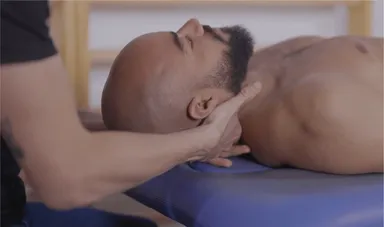
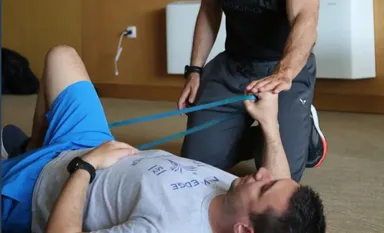
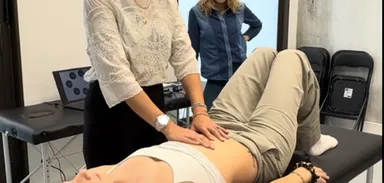



In brief
Thoracic spine pain, or thoracic pain of spinal origin, means pain of the thoracic spine located between T1 and T12; it is called a Cinderella region because it is under-researched compared with the cervical and lumbar spine. Nociception can arise from many structures (facet joints, costovertebral joints, discs, paravertebral muscles), and assessment first requires red flags and cardiopulmonary or visceral emergencies to be ruled out. The therapeutic approach is multimodal: education and reassurance, therapeutic exercise as the central pillar, manual therapy as a short-term adjunct; imaging is not routine in the absence of a red flag. Point prevalence is around 15 % in adults (17 % in women).
Evidence-based clinical synthesis on thoracic spine pain (TSP), the Cinderella region
of the spine (Heneghan 2016), with a particular focus on the mandatory exclusion of cardiopulmonary emergencies and on evidence-based multimodal management.
Clinical synthesis
- The thoracic spine (TSP, pain between T1 and T12) is the
Cinderella region
of the spine: point prevalence ~15 % in adults (Fouquet 2015) but under-represented in research compared with the neck and the low back (Heneghan 2016). - Women more affected than men (17 % vs 9 % in the Pays de la Loire occupational surveillance), adolescents particularly vulnerable (1-year prevalence 38.4 % in school settings, De Vitta 2023) and older people (incidence rising with age).
- Risk factors are multidimensional: musculoskeletal (comorbid neck, low back and shoulder pain), psychosocial (anxiety, depression, stress: yellow flags predictive of chronicity) and lifestyle-related (sedentary behaviour, prolonged work postures, sports involving rotation or overhead loading).
- Pain can arise from many structures: zygapophyseal facet joints, costovertebral and costotransverse joints, intervertebral discs (thoracic herniation rare, 1/1,000,000), paravertebral muscles and ligaments. The rigid biomechanics of the rib cage govern the loads it has to take.
- The course is often episodic or persistent. Poor prognostic factors: long initial duration of symptoms, high intensity, triggering trauma, kinesiophobia, passive coping strategies (Wertli 2014 on LBP, extrapolable).
- Assessment begins mandatorily with the exclusion of red flags according to the international IFOMPT framework (Finucane 2020 JOSPT): history of cancer, unexplained weight loss, fever, immunosuppression, progressive night pain, major trauma.
- 🚨 Thoracic spine pain can mimic a cardiopulmonary emergency (infarction, embolism, dissection). Every work-up must incorporate the 2021 AHA/ACC recommendations (Gulati JACC) before attributing the pain to the spine. Suspect axial spondyloarthritis if morning stiffness > 30 min improves with exercise.
- The physical examination reproduces the familiar pain: inspection (kyphosis, scoliosis), segmental palpation (spinous processes, costovertebral joints, paravertebral muscles), active and passive mobility, neurodynamic tests (thoracic slump).
- Imaging is not routine in the absence of red flags: 73 % of asymptomatic people over 40 have disc abnormalities on thoracic MRI (Wood 1995 JBJS, Brinjikji 2015 AJNR).
- The therapeutic approach is multimodal : education and reassurance > therapeutic exercise (central pillar) > manual therapy (short-term adjunct). No single intervention is superior; patient adherence matters more than the type of exercise (Owen 2020 BJSM NMA).
- Thoracic manual therapy (mobilisations, manipulations) immediately reduces pain and improves mobility in patients with neck pain (Cleland 2005 Man Ther, Gonzalez-Iglesias 2009 JOSPT): this is the regional interdependence argument. Transposing it to thoracic spine pain itself remains an extrapolation, since neither of these two trials included patients with thoracic spine pain.
- Pain neuroscience education (PNE) significantly reduces kinesiophobia and catastrophising (Watson 2019 J Pain MA), but the effect on pain and disability remains modest: to be built into an overall approach.
- The prevention of recurrence rests on empowerment: home exercises, postural variability (the “perfect posture” does not exist, Slade 2019 JOSPT), stress and sleep management.
- The return to sport must be progressive and based on functional criteria (Bern consensus, Ardern 2016 BJSM), not on a rigid calendar. Monitoring at each stage.
- Knowing when to refer is a key skill: a doctor if there is a red flag or no response at 4-6 weeks, a psychologist if there are yellow, blue or black flags. Measure outcomes with validated PROMs (adapted NDI, VAS, PSFS) and factor in the MCID. Overcome the barriers to EBP through guided critical appraisal and access to pre-appraised syntheses.
Contents
- What are the fundamentals to know about thoracic spine pain (thoracic pain of spinal origin)?
- How do you assess and diagnose thoracic spine pain with certainty?
- Can thoracic spine pain conceal an emergency? Cardiopulmonary and visceral differential diagnosis
- What are the most effective treatment strategies for thoracic spine pain?
- How do you ensure lasting recovery and prevent recurrence of thoracic spine pain?
- What do real clinical cases teach us about thoracic spine pain?
- How do you apply these recommendations concretely in your practice?
What are the fundamentals to know about thoracic spine pain (thoracic pain of spinal origin)?
How is this condition defined, who is affected and what are the risk factors?
The thoracic spine pain designation, in the literature TSP or mid-back pain, covers pain or discomfort felt in the thoracic spine region, located between the first thoracic vertebra (T1, at the base of the neck) and the twelfth thoracic vertebra (T12, at the level of the diaphragm).¹ Heneghan and Rushton aptly described this region as theCinderella regionof the spine: it remains largely under-studied compared with the cervical and lumbar spine despite an incidence that is far from negligible.² The prevalence of thoracic spine pain varies with the definitions used, the populations studied and the time window considered. The foundational systematic review by Briggs et al. (2009, BMC Musculoskeletal Disorders, n=33 studies) reports point prevalences of 4 to 72 %, 7-day prevalences of 0.5 to 51.4 %, 1-year prevalences of 3.5 to 34.8 %, and lifetime prevalences of 15.6 to 19.5 %.¹ A large French occupational surveillance study (Fouquet 2015, Pays de la Loire, n=2,681) measured a 7-day prevalence of 9 % in men and 17 % in women in the working population.³ 📈
- Adolescents 🧒 : a recent Italian longitudinal study (De Vitta 2023, n=1,433 secondary-school pupils) measured a 1-year prevalence of 38.4 % and an annual incidence of 10.1 % of new cases, so thoracic spine pain is far from anecdotal in this age group.⁴
- Women : over-represented in every epidemiological study (RR ~1.5-2 vs men).¹˒³
- Older people : prevalence rises with age, notably through osteoporosis and degenerative hyperkyphosis.¹
- Musculoskeletal comorbidities : thoracic spine pain is very strongly associated with neck, low back and shoulder pain (major epidemiological overlap).¹˒²
- Psychosocial factors 🧠 : stress, anxiety, depression and passive coping strategies are involved, particularly in adolescents.⁴ These yellow flags are powerful predictors of chronicity (extrapolated from Wertli 2014 on the lumbar spine).⁵
- Lifestyle and environment : prolonged sedentary behaviour, static working postures, heavy lifting, repetitive sports involving rotation or overhead loads (rowers, golfers, throwers).²
📊 Prevalence of thoracic spine pain by population (multi-study synthesis)
Percentage of the population with thoracic symptoms
Sources: Briggs AM et al. BMC Musculoskelet Disord. 2009;10:77. PMID 19563667. · Fouquet N et al. Occup Med. 2015;65(2):122-125. PMID 25344959. · De Vitta A et al. Healthcare. 2023;11(2):196. PMID 36673564.
What happens in the body and how does thoracic spine pain progress naturally?
The pathophysiology of non-specific thoracic spine pain is inherently multifactorial, which means that nociception can arise from several anatomical structures in the thoracic region. The unique biomechanics of the thoracic spine with its relative stiffness imposed by the rib cage (ribs, sternum), its small segmental range (~5° of flexion/extension per segment) and its large rotational capacity (~6° per segment), directly determine the loads borne by its components.² Potential sources of pain include:- The zygapophyseal joints (facets) of the thoracic spine;
- The costovertebral and costotransverse joints, which connect the 12 pairs of ribs to the vertebral bodies and the transverse processes;
- The thoracic intervertebral discs : symptomatic thoracic disc herniations remain rare (reported incidence 1 case per 1,000,000 per year), but account for up to 3 % of all operated herniations;⁶
- The paravertebral muscles, rhomboids, middle and lower trapezius and their fasciae, which may develop myofascial trigger points or tension from postural imbalances;
- The ligaments intervertebral and the dural sheath.
findingsare common, but correlating image with pain is the exception, not the rule.
- Prolonged duration of symptoms at the first consultation;
- High initial pain intensity;
- Triggering trauma (fall, road traffic accident);
- Kinesiophobia and fear-avoidance beliefs (Wertli 2014);⁵
- Low sense of self-efficacy (Jackson 2014, meta-analysis of 86 samples N=15,616).⁷
Key points
- The thoracic spine pain (TSP) affects ~15 % of adults in point prevalence and up to 38 % of adolescents over 1 year; research into it is less developed than for the neck and the low back (Heneghan 2016 “Cinderella region”).
- It especially affects women, as well as adolescents and older people.
- The psychosocial factors (stress, anxiety, kinesiophobia) are predictors of chronicity as important as physical factors.
- Pain can come from the facets, the costovertebral joints, the discs, the muscles or the ligaments. Symptomatic thoracic disc herniations are rare (~1/1,000,000) but asymptomatic abnormalities are common on MRI.
- The course is often episodic. High initial pain, trauma and fear of movement signal a poor prognosis.
Bibliography, chapter 1
- Briggs AM, Smith AJ, Straker LM, Bragge P. Thoracic spine pain in the general population: prevalence, incidence and associated factors in children, adolescents and adults. A systematic review. BMC Musculoskelet Disord. 2009;10:77. PMID 19563667. doi:10.1186/1471-2474-10-77.
- Heneghan NR, Rushton A. Understanding why the thoracic region is the 'Cinderella' region of the spine. Man Ther. 2016;21:274-276. doi:10.1016/j.math.2015.06.010.
- Fouquet N, Bodin J, Descatha A, Petit A, Ramond A, Ha C, Roquelaure Y. Prevalence of thoracic spine pain in a surveillance network. Occup Med (Lond). 2015;65(2):122-125. PMID 25344959.
- De Vitta A, Noll M, Monfort-Pañego M, Miñana-Signes V, Maciel NM. Thoracic Spine Pain in High School Adolescents: A One-Year Longitudinal Study. Healthcare (Basel). 2023;11(2):196. PMID 36673564.
- Wertli MM, Rasmussen-Barr E, Weiser S, Bachmann LM, Brunner F. The role of fear-avoidance beliefs as a prognostic factor for outcome in patients with nonspecific low back pain: a systematic review. Spine J. 2014;14(5):816-836. PMID 24412032. (cautious extrapolation from LBP)
- Brown CW, Deffer PA Jr, Akmakjian J, Donaldson DH, Brugman JL. The natural history of thoracic disc herniation. Spine (Phila Pa 1976). 1992;17(6 Suppl):S97-S102. PMID 1631725.
- Jackson T, Wang Y, Wang Y, Fan H. Self-efficacy and chronic pain outcomes: a meta-analytic review. J Pain. 2014;15(8):800-814. PMID 24878675.
- Wood KB, Garvey TA, Gundry C, Heithoff KB. Magnetic resonance imaging of the thoracic spine. Evaluation of asymptomatic individuals. J Bone Joint Surg Am. 1995;77(11):1631-1638. PMID 7593072.
How do you assess and diagnose thoracic spine pain with certainty?
Which questions should you ask to understand the patient and their history?
The history is the cornerstone of diagnosis in thoracic spine pain. It must be taken with a structured approach in order to characterise the pain and identify any warning signs. Characterising the pain (PQRST method) :- Provocation / palliation: what triggers, worsens or relieves the pain? Strictly mechanical pain is altered by changes of position and by movements of the trunk.
- Quality: burning (suggests neuropathic), tightness or pressure (suggests cardiac), sharp throbbing (suggests articular), dull (suggests muscular).
- Region and radiation: does the pain stay local (interscapular), radiate as a half-girdle (suggests radiculopathy) or spread towards the viscera?
- Severity: current VAS 0-10, worst and average over 7 days.
- Time: since when? course (constant, intermittent, progressive)? frequency and duration of the episodes?
🚩 Red flags specific to the thoracic spine (IFOMPT framework, Finucane 2020)
- Personal history of cancer + new, nocturnal and progressive back pain → suspected spinal metastasis
- Unexplained weight loss (> 4.5 kg in 3 months), fever, night sweats, severe fatigue → work-up for malignancy or infection
- Strictly nocturnal pain non-mechanical, not relieved by rest or by changes of position
- Recent major trauma (road traffic accident, fall from a height) → suspected vertebral fracture
- Minor trauma in an osteoporotic patient (woman > 70 years, long-term corticosteroid therapy) → insufficiency fracture
- Progressive neurological deficit (lower-limb weakness, sphincter disturbance, half-girdle paraesthesia, Lhermitte's sign) → spinal cord compression
- Intravenous drug use, immunosuppression → suspected spondylodiscitis or epidural abscess
- Chest pain with breathlessness, palpitations, radiation to the left arm or the jaw → cardiac emergency (see chapter 3)
- Morning stiffness > 30 min improved by exercise, in a young person (< 45 years) → suspected axial spondyloarthritis
⚠️ No isolated red flag is conclusive on its own: it is the cluster of clinical arguments that drives referral. In case of doubt → prompt medical referral before any manual therapy.
- Is the pain influenced by deep breathing, coughing or sneezing? → possible costovertebral, pleural or intercostal involvement
- Are there any digestive symptoms (reflux, heartburn, post-prandial pain, dyspepsia)? → gastro-oesophageal differential diagnosis
- Are there any cardiac symptoms (tightness on exertion, palpitations, exertional breathlessness, syncope)? → cardiology referral essential before physiotherapy
Which clinical tests should be performed and which other conditions must be ruled out?
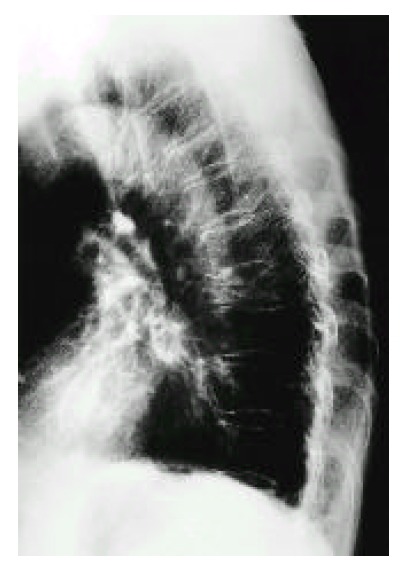
X-rayLateral X-ray of the thoracic spine: accentuated kyphosis with wedge compression fractures of two vertebrae and diffuse osteopenia, a classic spinal cause of thoracic back pain.
Source : Min et al., The Korean Journal of Internal Medicine, 1999, figure 2 · CC BY-NC
- Inspection : analysis of static posture (thoracic kyphosis, scoliosis, scapular asymmetry) and of dynamic posture (coordinated scapulo-humero-thoracic movement).
- Segmental palpation : methodical palpation of the spinous processes (pain reproduced), the costovertebral joints (1 cm lateral to the spinous processes), the paravertebral muscles, the middle and lower trapezius and the rhomboids, looking for the familiar pain of the patient.
- Mobility assessment : measurement of active and passive range in flexion, extension, side bending and thoracic rotation. Rotation is the predominant range of the thoracic segment (~30-35° unilaterally). Segmental posteroanterior mobilisations may reproduce local or referred pain.
- Neurodynamic tests : the thoracic slump test assesses the mechanosensitivity of the neural structures (meninges, thoracic roots). A positive test reproduces the symptoms and is modulated by movement at a distance (cervical flexion/extension).
- Assessment of thoracic mobility as regional interdependence : a deficit of thoracic extension can contribute to neck pain or to subacromial impingement (Heneghan 2019 Trans Sports Med).¹²
📊 Stratification of clinical reasoning in thoracic spine pain
Decision algorithm: history → red flags → physical examination → referral
Sources: Finucane LM et al. J Orthop Sports Phys Ther. 2020;50(7):350-372. PMID 32438853. · Adapted for thoracic spine pain from the international IFOMPT framework for serious spinal pathologies.
- Cardiac conditions : acute coronary syndrome, unstable angina, pericarditis, aortic dissection
- Pulmonary conditions : pulmonary embolism, pneumonia, pleurisy, pneumothorax
- Gastrointestinal conditions : gastro-oesophageal reflux, ulcer, pancreatitis, cholecystitis
- Inflammatory conditions : axial spondyloarthritis (Sieper & Poddubnyy 2017 Lancet)¹³
Should patients with thoracic spine pain be classified, and for what benefit?
Clinical classification of patients into homogeneous subgroups is an increasingly recommended strategy for personalising treatment rather than applying a single approach. For thoracic spine pain, unlike low back pain (where several validated systems exist: STarT Back, Treatment-Based Classification), no TSP-specific classification system has been formally validated to date, an important caveat highlighted by recent practice surveys.¹⁴ A pragmatic approach nevertheless consists in ranking the reasoning by the dominant functional hypothesis:- Thoracic spine pain with a predominant mobility deficit 🔄 : segmental restriction on palpation and on mobility testing, acute localised pain → expected short-term benefit from manual therapy (mobilisations, manipulations), followed by mobility exercises; the immediate effect of the two trials cited was measured in patients with neck pain and not with thoracic spine pain, and is transposed here (Cleland 2005, Gonzalez-Iglesias 2009).¹⁵˒¹⁶
- Thoracic spine pain with a motor control disorder 💪 : pain linked to poor control of the trunk and shoulder girdle stabilisers (middle and lower trapezius, serratus, rhomboids) → targeted strengthening and stabilisation exercises (Cools 2007 scapular protocol).¹⁷
- Thoracic spine pain with a neural component ⚡ : neuropathic features (burning, half-girdle tingling), positive neurodynamic test → neural mobilisation and central desensitisation.
Key points
- Assessment of thoracic spine pain always begins by ruling out red flags under the IFOMPT framework (Finucane 2020).
- The clinical examination must be systematic and aim to reproduce the familiar pain of the patient (palpation, mobility, neurodynamics).
- The classification by functional hypothesis (mobility deficit / motor control / neural component) remains pragmatic and has not been formally validated for TSP, so weigh it with clinical reasoning.
- Imaging is not routine : 73 % of asymptomatic people over 40 have thoracic disc abnormalities on MRI. Reserve it for red flags and for non-response at 4-6 weeks.
Bibliography, chapter 2
- Briggs AM, Smith AJ, Straker LM, Bragge P. Thoracic spine pain general population SR. BMC Musculoskelet Disord. 2009;10:77. PMID 19563667.
- Heneghan NR, Rushton A. Understanding why the thoracic region is the 'Cinderella' region of the spine. Man Ther. 2016;21:274-276. doi:10.1016/j.math.2015.06.010.
- Fouquet N et al. Prevalence of thoracic spine pain in a surveillance network. Occup Med. 2015;65(2):122-125. PMID 25344959.
- De Vitta A, Noll M, Monfort-Pañego M, et al. Thoracic Spine Pain in High School Adolescents: A One-Year Longitudinal Study. Healthcare (Basel). 2023;11(2):196. PMID 36673564.
- Wertli MM et al. Fear-avoidance beliefs as prognostic factor LBP SR. Spine J. 2014;14(5):816-836. PMID 24412032.
- Verhagen AP, Downie A, Maher CG, Koes BW. Most red flags for malignancy in low back pain guidelines lack empirical support: a systematic review. Pain. 2017;158(10):1860-1868. PMID 28708761.
- Jackson T et al. Self-efficacy and chronic pain outcomes: meta-analytic review. J Pain. 2014;15(8):800-814. PMID 24878675.
- Wood KB et al. MRI of the thoracic spine: evaluation of asymptomatic individuals. J Bone Joint Surg Am. 1995;77(11):1631-1638. PMID 7593072.
- Gulati M, Levy PD, Mukherjee D, et al. 2021 AHA/ACC/ASE/CHEST/SAEM/SCCT/SCMR Guideline for the Evaluation and Diagnosis of Chest Pain. J Am Coll Cardiol. 2021;78(22):e187-e285. doi:10.1161/CIR.0000000000001029.
- Finucane LM, Downie A, Mercer C, et al. International Framework for Red Flags for Potential Serious Spinal Pathologies. J Orthop Sports Phys Ther. 2020;50(7):350-372. PMID 32438853. doi:10.2519/jospt.2020.9971.
- Linton SJ, Nicholas M, MacDonald S. Development of a short form of the Örebro Musculoskeletal Pain Screening Questionnaire. Spine (Phila Pa 1976). 2011;36(22):1891-1895. PMID 21192286.
- Heneghan NR, Webb K, Mahoney T, Rushton A. Thoracic spine mobility, an essential link in upper limb kinetic chains in athletes: a systematic review. Transl Sports Med. 2019;2:215-227. doi:10.1002/tsm2.109.
- Sieper J, Poddubnyy D. Axial spondyloarthritis. Lancet. 2017;390(10089):73-84. doi:10.1016/S0140-6736(16)31591-4.
- Risetti M, Gambugini R, Testa M, Battista S. Management of non-specific thoracic spine pain: a cross-sectional study among physiotherapists. PLoS One. 2023;18(5):e0285981. PMID 37202740.
- Cleland JA, Childs JD, McRae M, Palmer JA, Stowell T. Immediate effects of thoracic manipulation in patients with neck pain: a randomized clinical trial. Man Ther. 2005;10(2):127-135. PMID 15922233.
- González-Iglesias J, Fernández-de-las-Peñas C, Cleland JA, Gutiérrez-Vega Mdel R. Thoracic spine manipulation for the management of patients with neck pain: a randomized clinical trial. J Orthop Sports Phys Ther. 2009;39(1):20-27. PMID 19209478.
- Cools AM, Dewitte V, Lanszweert F, et al. Rehabilitation of scapular muscle balance: which exercises to prescribe? Am J Sports Med. 2007;35(10):1744-1751. PMID 17606671.
- Brinjikji W, Luetmer PH, Comstock B, et al. Systematic literature review of imaging features of spinal degeneration in asymptomatic populations. AJNR Am J Neuroradiol. 2015;36(4):811-816. doi:10.3174/ajnr.A4173.
Can thoracic spine pain conceal an emergency? Cardiopulmonary and visceral differential diagnosis
How do you rule out a cardiopulmonary emergency (myocardial infarction, embolism, dissection)?
🚨 Chest pain in an adult calls first and foremost for cardiopulmonary emergencies to be considered, in line with the international 2021 AHA/ACC/ASE/CHEST/SAEM/SCCT/SCMR recommendations for the evaluation and diagnosis of chest pain (Gulati et al., JACC).⁹ This major guideline, endorsed by 7 learned societies, ranks the assessment by pre-test probability and then by urgency (ACS, PE, aortic dissection).🚨 Cardiac warning signs (Gulati 2021 AHA/ACC, class I)
- Constricting, crushing, band-like chest pain, lasting > 20 min
- Radiation to the left arm, the jaw, the upper back or both arms
- Triggered by physical or emotional exertion and relieved by rest or by glyceryl trinitrate
- Associated symptoms: breathlessness, profuse sweating, nausea, syncope, palpitations
- Cardiovascular risk factors : hypertension, diabetes, dyslipidaemia, smoking, family history of early coronary disease, male > 45 years, female > 55 years
- Sudden, tearing chest pain radiating into the back + blood pressure asymmetry or unequal pulses → suspected aortic dissection (life-threatening emergency)
- Breathlessness + tachycardia + pleuritic pain + a risk factor (post-operative, bed rest, combined oral contraceptive, cancer) → suspected pulmonary embolism
⚠️ Any doubt → referral to the emergency department with ECG and troponin assay. No spinal manipulation should be performed until a cardiac cause has been reasonably ruled out.
- Pain reproduced by segmental palpation of the costovertebral joints or of the paravertebral muscles
- Pain altered by changes of position (notably relieved lying down, worsened by prolonged sitting)
- Pain reproduced by active thoracic rotation or by posteroanterior mobilisation
- Worsened by deep inspiration or by coughing only if the nature is costal, with no breathlessness and no other systemic sign
📊 Prior probability of the causes of chest pain in primary care
Pooled data from general practice cohort studies (conservative estimates)
Sources: synthesis of primary care cohort studies (Bösner et al. CMAJ 2010;182:1295; Klinkman et al. J Fam Pract 1994;38:345). Note: these orders of magnitude vary with the setting (emergency department vs community practice).
Thoracic disc herniation, axial spondyloarthritis, Scheuermann: what should you remember?
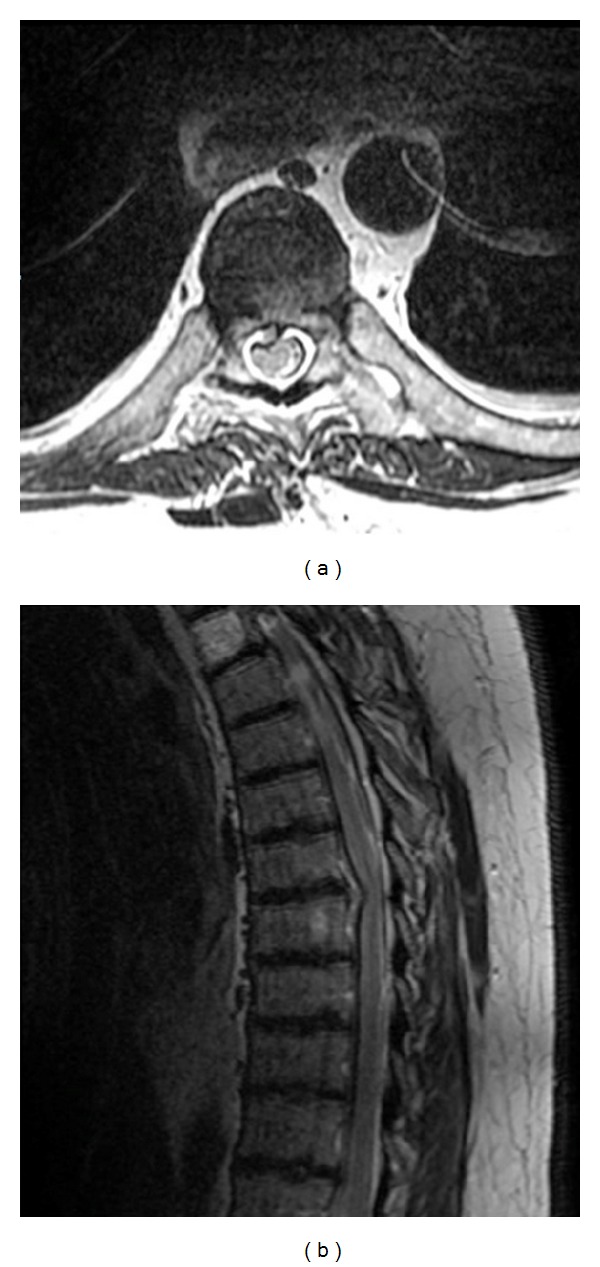
MRIAxial and sagittal MRI of the thoracic spine: right paramedian disc herniation at T7-T8 with spinal cord compression.
Source : Shirzadi et al., Case Reports in Orthopedics, 2013, figure 1 · CC BY
- Rare but real : reported incidence about 1 case / 1,000,000 / year, that is ≤ 3 % of all operated spinal disc herniations.⁶˒¹⁹
- Classic onset between 30 and 60 years, with a predominance for the low segments (T11-T12) and the thoracolumbar junction.
- Deceptive presentation : band-like chest pain (“girdle”), upper abdominal pain that can mimic gastrointestinal disease, more rarely myelopathy (lower-limb weakness, sphincter disturbance).¹⁹
- MRI is the reference investigation. Management is generally conservative; surgery is indicated only for progressive myelopathy or for conservative failure > 6-12 weeks with disabling symptoms.²⁰
- Sieper & Poddubnyy (Lancet 2017) point out that axial spondyloarthritis classically begins in young adults (3rd decade), with heritability > 90 % and a strong HLA-B27 association.¹³
- Suggestive criteria : chronic spinal pain > 3 months, starting before 45 years, with morning stiffness > 30 min improved by exercise and not by rest, night-time waking in the second half of the night, and a dramatic response to NSAIDs.
- Rheumatology referral is essential for an ASAS work-up (ASAS handbook, Sieper 2009, Ann Rheum Dis).²¹
- Anterior vertebral wedging of more than 5° over at least 3 contiguous vertebrae, usually thoracic.²²
- Structural thoracic hyperkyphosis (often > 40-45°), sometimes painful in adolescence and then in adulthood under the mechanical loads placed on the adjacent segments.
- Management is conservative for the majority (observation, NSAIDs, postural physiotherapy, extensor strengthening); surgery is reserved for severe kyphosis (> 70-75°) with disabling pain or cardiopulmonary repercussions.²²
- Gastrointestinal conditions : gastro-oesophageal reflux (retrosternal, post-prandial), peptic ulcer, biliary disease (radiating to the right shoulder), pancreatitis (band-like across the back)
- Pulmonary conditions : pulmonary embolism, pneumothorax, pneumonia, pleurisy
- Infectious conditions : shingles (half-girdle pain preceding the rash by 3-5 days), spondylodiscitis
- Neoplasia : vertebral metastases (breast, lung, prostate, kidney, thyroid, the 5 osteophilic cancers), multiple myeloma, intramedullary tumour
Key points
- Any atypical thoracic spine pain warrants ruling out cardiopulmonary emergencies first under the 2021 AHA/ACC guidelines (Gulati JACC): ECG, troponin, imaging at the slightest doubt.
- The thoracic disc herniation is rare (~1/1,000,000) but can mimic abdominal pain or present as a myelopathy.
- The axial spondyloarthritis must be suspected in any young patient (< 45 years) with prolonged morning stiffness improved by exercise.
- The Scheuermann disease is a structural cause of thoracic spine pain in adolescents and young adults, with hyperkyphosis > 40°.
- The direct-access physiotherapist must refer when in doubt, not to diagnose every visceral condition.
Bibliography, chapter 3
- Gulati M, Levy PD, Mukherjee D, et al. 2021 AHA/ACC/ASE/CHEST/SAEM/SCCT/SCMR Guideline for the Evaluation and Diagnosis of Chest Pain. J Am Coll Cardiol. 2021;78(22):e187-e285. doi:10.1161/CIR.0000000000001029.
- Finucane LM et al. International Framework for Red Flags for Potential Serious Spinal Pathologies. JOSPT. 2020;50(7):350-372. PMID 32438853.
- Verhagen AP, Downie A, Maher CG, Koes BW. Most red flags for malignancy in low back pain guidelines lack empirical support: a systematic review. Pain. 2017;158(10):1860-1868. PMID 28708761.
- Sieper J, Poddubnyy D. Axial spondyloarthritis. Lancet. 2017;390(10089):73-84. doi:10.1016/S0140-6736(16)31591-4.
- Sieper J, Rudwaleit M, Baraliakos X, et al. The Assessment of SpondyloArthritis international Society (ASAS) handbook: a guide to assess spondyloarthritis. Ann Rheum Dis. 2009;68 Suppl 2:ii1-ii44. PMID 19433414.
- Sardar ZM, Ames RJ, Lenke L. Scheuermann's Kyphosis: Diagnosis, Management, and Selecting Fusion Levels. J Am Acad Orthop Surg. 2019;27(10):e462-e472. PMID 30407981.
- Brown CW, Deffer PA Jr, Akmakjian J, et al. The natural history of thoracic disc herniation. Spine (Phila Pa 1976). 1992;17(6 Suppl):S97-S102. PMID 1631725.
- Maeda Y, Hayashi K, Hara M, Aoyama T. Symptomatic Thoracic Disc Herniation in a 30-Year-Old Woman. Cureus. 2024;16(1):e52890. PMC 10898611.
- Wood KB, Garvey TA, Gundry C, Heithoff KB. MRI of the thoracic spine: asymptomatic individuals. JBJS Am. 1995;77(11):1631-1638. PMID 7593072.
- Brinjikji W et al. Imaging features of spinal degeneration in asymptomatic populations SR. AJNR. 2015;36(4):811-816. doi:10.3174/ajnr.A4173.
- Sundar VV, Gomathi KP. Presentation of Coronary Artery Disease in a Chiropractic Clinic: A Report of 2 Cases. J Chiropr Med. 2016;15(2):131-137. PMC 4812041.
- Heneghan NR, Webb K, Mahoney T, Rushton A. Thoracic mobility, an essential link in upper limb kinetic chains in athletes SR. Transl Sports Med. 2019;2:215-227. doi:10.1002/tsm2.109.
What are the most effective treatment strategies for thoracic spine pain?
Where do you start? What is the recommended hierarchy of interventions?
The initial approach should be structured and progressive, starting with the least invasive interventions and those that give the patient most control. 🧐 The cornerstone of modern treatment is a multimodal approach that combines several therapeutic elements from the very start of care.²³ The recommended hierarchy is as follows:- Education and reassurance 📖 : a crucial first step. Explain the generally benign nature of mechanical thoracic spine pain, dismantle mistaken beliefs (“slipped vertebra”, “worn out”, “unstable”), and promote an early, safe return to activity. PNE can be built in from this stage (Louw 2011, Watson 2019).²⁴˒²⁵
- Therapeutic exercise 💪 : the patient's active engagement is fundamental. Exercises aimed at improving the mobility, strength and motor control of the thoracic spine are a first-line intervention, by extrapolation from the recommendations on the lumbar (Hayden 2005 Cochrane) and cervical spine.²⁶
- Manual therapy ✋ : used as an adjunct to reduce pain in the short term, improve mobility and make taking part in exercise easier.¹⁵˒¹⁶ Manipulations and mobilisations must not be a long-term passive strategy but a catalyst for activity.
- Passive modalities (heat, TENS, electrotherapy): may be used for very short-term symptomatic relief, but are not a basis for treatment.
| Modality | Short-term effect | Long-term effect | Level of evidence (GRADE) |
|---|---|---|---|
| Patient education + reassurance | Moderate | Moderate | Moderate |
| Therapeutic exercise (general, supervised) | Moderate | Moderate | Moderate |
| Thoracic manual therapy (mobilisations, manipulations) | Good | Low | Moderate (short term) |
| Pain Neuroscience Education (PNE) | Moderate (kinesiophobia ↓↓) | Moderate | Moderate |
| Combined (multimodal: education + exercise + MT) | Good | Moderate | Moderate (synthesis) |
| Passive modalities (TENS, heat) | Low | Very low | Low |
| Manipulations vs mobilisations (any superiority?) | Equivalent | Equivalent | Moderate (no superiority) |
📊 Level of evidence by therapeutic modality (TSP)
GRADE-weighted qualitative rating, evidence-based synthesis (short-term effects)
Sources: evidence-based synthesis after Heneghan 2016 (Cinderella region), Hayden 2005 Cochrane (LBP extrapolation), Owen 2020 BJSM NMA, Watson 2019 J Pain (PNE), Cleland 2005 Man Ther (thoracic MT), Bialosky 2009 Man Ther (MT mechanisms).
What is the place of exercise, and is there a superior approach?
Exercise is a non-negotiable pillar of the treatment of thoracic spine pain. 💪 Since TSP-specific data are limited, extrapolation from the robust spinal reviews (Hayden 2005 Cochrane CD000335 on non-specific LBP; Owen 2020 BJSM NMA on exercise for LBP) is the best current basis.²⁶˒²⁷ What do the strongest data say?- The network meta-analysis by Owen et al. (2020 BJSM, n=89 RCTs on chronic non-specific LBP) showed that Pilates, motor control exercise, strengthening and aerobic exercise are the most effective modalities, on low quality of evidence (an important caveat).²⁷
- No approach is intrinsically superior to the others in head-to-head comparisons. The most important factor is adherence of the patient to the programme.²⁷˒²⁸
- The most effective programmes are personalised, supervised at the outset, progressive and include variety (mobility, strength, endurance, aerobic work).
- Thoracic mobility : seated rotations on a stool, extension over a foam roller, “open book” opening
- Scapular strengthening : Y-T-W, horizontal rowing, prone trap raises (Cools 2007 AJSM)¹⁷
- Strengthening of the thoracic spinal erectors and trunk stability
- Whole-body aerobic activity (walking, swimming, cycling) for systemic benefits (Geneen 2017 Cochrane overview)²⁸
Manual therapies and technologies: how effective are they really?
Manual therapies have a good level of evidence for short-term effects, particularly in the context of regional interdependence (beneficial effects on the neck and the shoulder). Several good-quality RCTs (Cleland 2005 Man Ther, Gonzalez-Iglesias 2009 JOSPT) showed that a thoracic manipulation immediately reduces pain and improves mobility in patients with mechanical neck pain.¹⁵˒¹⁶ The meta-analysis by Masaracchio et al. (2019 PLoS One) on 14 RCTs confirms these effects for the management of mechanical neck pain.²⁹ Proposed mechanisms (Bialosky 2009 Manual Therapy) : a multifactorial model combining peripheral biomechanical effects, neurophysiological effects (spinal and supraspinal modulation of pain), and contextual effects (placebo, expectation, therapeutic alliance). No single mechanism fully explains the effects observed.³⁰Beyond the physical: how do you educate the patient and address psychological factors?
The biopsychosocial approach is indispensable, particularly when thoracic spine pain tends to become persistent. 🧠 Therapeutic education aims to change the patient's understanding, to reduce the perceived threat and to increase their sense of self-efficacy. Pain Neuroscience Education (PNE) : Louw et al. (2011 Arch Phys Med Rehabil, SR) initially showed beneficial effects of PNE on pain, disability and anxiety in chronic MSK conditions.²⁴ The more recent meta-analysis by Watson et al. (2019 J Pain, n=12 RCTs) refines the picture: PNE significantly reduces kinesiophobia and catastrophising, but its direct effects on pain and disability remain modest and of small clinical magnitude.²⁵ PNE must therefore be built into an overall approach rather than used as monotherapy. Identifying yellow flags :- Kinesiophobia (pain-related fear of movement) → avoidance, progressive deconditioning
- Catastrophising (“this pain is going to get worse”, “I am going to become disabled”)
- Mistaken beliefs about the nature of the pain (“worn-out spine”, “slipped disc”)
- Anxiety and depressive symptoms amplify the perception of pain
- Low sense of self-efficacy (Jackson 2014 MA) predicts poor outcomes⁷
Key points
- The most effective approach to thoracic spine pain is multimodal, combining education, exercise and manual therapy.
- Therapeutic exercise is central and non-negotiable. The type of exercise matters less than the regularity and adherence of the patient.
- The manual therapy is an excellent tool for gaining mobility and reducing pain in the short term, creating a “window of opportunity” for active treatment.
- The education and the identification of psychosocial factors (fear, anxiety, beliefs) are crucial for preventing chronicity.
- PNE reduces kinesiophobia but not pain dramatically when used on its own: build it into an overall approach.
Bibliography, chapter 4
- Briggs AM et al. Thoracic spine pain general population SR. BMC Musculoskelet Disord. 2009;10:77. PMID 19563667.
- Louw A, Diener I, Butler DS, Puentedura EJ. The effect of neuroscience education on pain, disability, anxiety, and stress in chronic musculoskeletal pain. Arch Phys Med Rehabil. 2011;92(12):2041-2056. doi:10.1016/j.apmr.2011.07.198.
- Watson JA, Ryan CG, Cooper L, et al. Pain Neuroscience Education for Adults With Chronic Musculoskeletal Pain: A Mixed-Methods Systematic Review and Meta-Analysis. J Pain. 2019;20(10):1140.e1-1140.e22. doi:10.1016/j.jpain.2019.02.011.
- Hayden JA, van Tulder MW, Malmivaara A, Koes BW. Exercise therapy for treatment of non-specific low back pain. Cochrane Database Syst Rev. 2005;(3):CD000335. doi:10.1002/14651858.CD000335.pub2. (cautious extrapolation to TSP)
- Owen PJ, Miller CT, Mundell NL, et al. Which specific modes of exercise training are most effective for treating low back pain? Network meta-analysis. Br J Sports Med. 2020;54(21):1279-1287. doi:10.1136/bjsports-2019-100886. (low quality of evidence)
- Geneen LJ, Moore RA, Clarke C, Martin D, Colvin LA, Smith BH. Physical activity and exercise for chronic pain in adults: an overview of Cochrane Reviews. Cochrane Database Syst Rev. 2017;4(4):CD011279. PMID 28436583.
- Cleland JA, Childs JD, McRae M, Palmer JA, Stowell T. Immediate effects of thoracic manipulation in patients with neck pain: a randomized clinical trial. Man Ther. 2005;10(2):127-135. PMID 15922233.
- González-Iglesias J, Fernández-de-las-Peñas C, Cleland JA, Gutiérrez-Vega Mdel R. Thoracic spine manipulation for the management of patients with neck pain: a randomized clinical trial. J Orthop Sports Phys Ther. 2009;39(1):20-27. PMID 19209478.
- Masaracchio M, Kirker K, States R, et al. Thoracic spine manipulation for the management of mechanical neck pain: A systematic review and meta-analysis. PLoS One. 2019;14(2):e0211877. PMID 30759118.
- Bialosky JE, Bishop MD, Price DD, Robinson ME, George SZ. The mechanisms of manual therapy in the treatment of musculoskeletal pain: a comprehensive model. Man Ther. 2009;14(5):531-538. PMID 19027342.
- Cools AM, Dewitte V, Lanszweert F, et al. Rehabilitation of scapular muscle balance: which exercises to prescribe? Am J Sports Med. 2007;35(10):1744-1751. PMID 17606671.
- Kamper SJ, Apeldoorn AT, Chiarotto A, et al. Multidisciplinary biopsychosocial rehabilitation for chronic low back pain: Cochrane systematic review and meta-analysis. BMJ. 2015;350:h444. PMID 25694111. (transferable biopsychosocial principles)
- Linton SJ, Nicholas M, MacDonald S. Development of a short form of the Örebro Musculoskeletal Pain Screening Questionnaire. Spine (Phila Pa 1976). 2011;36(22):1891-1895. PMID 21192286.
- Risetti M et al. Management of non-specific TSP cross-sectional study. PLoS One. 2023;18(5):e0285981. PMID 37202740.
How do you ensure lasting recovery and prevent recurrence of thoracic spine pain?
How do you make the patient an active participant in their recovery through self-management?
Self-management (self-care) is a collaborative approach aimed at giving the patient the knowledge, the skills and the confidence needed to manage their condition day to day.²⁸ For thoracic spine pain, several levers are available: 1. Pain neuroscience education (PNE) 🧠 Explain to the patient, in language they can follow, that pain does not automatically mean serious tissue damage, that it is an experience modulated by many factors (sleep, stress, beliefs, context), and that movement is safe and beneficial. The meta-analysis by Watson et al. (2019 J Pain) shows that PNE significantly reduces kinesiophobia and catastrophising, which encourages engagement in active rehabilitation.²⁵˒²⁴ 2. Regular practice of specific and general exercises 💪- Thoracic mobility : seated rotations on a stool, “open book” opening, extension over a foam roller, rib cage mobility
- Postural strengthening : spinal erectors, middle and lower trapezius, rhomboids, serratus anterior (Cools 2007 AJSM)¹⁷
- Whole-body physical activity : walking, swimming, cycling, yoga, for systemic benefits (Geneen 2017 Cochrane overview)²⁸
- The adherence matters more than the type of exercise (Owen 2020 BJSM NMA): choosing an activity the patient will enjoy matters more than the theoretically “right” exercise
- The postural variability : changing position every 20-30 min
- The avoidance of prolonged holding of static positions
- Building in active micro-breaks at work (rotations, brief stretches)
- Ergonomic adjustments that are reasonable and undogmatic
When and how should a safe return to sport and activities be planned?
The return to sport (Return-to-Sport, RTS) after an episode of thoracic spine pain must be a process that is structured and based on functional criteria rather than on a rigid calendar.³⁴ A premature or poorly managed return is a major risk factor for recurrence. The Bern 2016 consensus on return to sport (Ardern et al., BJSM, 17 international experts) proposes a stepwise approach with shared decision-making between patient, therapist and coach, to be applied pragmatically to thoracic spine pain:³⁴📊 Progressive phases of return to sporting activity in thoracic spine pain
Approach by functional criteria (Ardern 2016 BJSM, adapted for TSP)
Source: Ardern CL et al. 2016 Consensus statement on return to sport from the First World Congress in Sports Physical Therapy, Bern. Br J Sports Med. 2016;50(14):853-864. PMID 27226389. Adapted for thoracic spine pain.
- No pain, or VAS < 3/10 during and after exercise
- Symmetrical thoracic mobility (left rotation = right rotation)
- Functional scapular strength and endurance
- The patient's subjective confidence in movement (self-efficacy)
- Ability to perform the technical movement without compensation
Critique and controversy: the grey areas of thoracic spine pain
🔍 Despite the apparent clarity of the recommendations, several challenges remain: First, the thoracic spine remains the “Cinderella region” (Heneghan 2016 Manual Therapy) with very few high-quality specific studies.² Most management strategies are extrapolated from the lumbar and cervical recommendations, with no direct evidence for TSP. This caveat must be kept in mind at all times. Second, the debate on the specificity of exercise continues. While some approaches advocate exercises tightly targeted on motor control, recent systematic reviews suggest that more general programmes could be just as effective, provided the patient adheres to them.²⁶˒²⁷ What matters would therefore be less the precise nature of the exercise than the regularity and enjoyment of the practice. Third, the concrete application of the biopsychosocial model remains a challenge in clinical practice.³³ Identifying and effectively treating psychological factors demands specific skills (motivational interviewing, elements of CBT) that not every practitioner has. The risk is to settle for a biomechanical approach while ignoring whole swathes of the pain experience.Key points
- ✅ Lasting prevention rests on patient empowerment through therapeutic education and self-management.
- 🧠 PNE reduces kinesiophobia and encourages active engagement: build it into the overall approach.
- 💪 A programme combining mobility + strengthening + whole-body physical activity is the most effective long-term strategy. adherence matters more than the type of exercise.
- 🏃♀️ The return to sport must be progressive and based on functional criteria, not on a calendar.
- ⚠️ Most strategies are extrapolated from lumbar and cervical research: TSP-specific research is needed.
Bibliography, chapter 5
- Geneen LJ et al. Physical activity and exercise for chronic pain in adults: overview of Cochrane Reviews. Cochrane Database Syst Rev. 2017;4(4):CD011279. PMID 28436583.
- Watson JA et al. Pain Neuroscience Education for Adults With Chronic Musculoskeletal Pain: Mixed-Methods SR + MA. J Pain. 2019;20(10):1140.e1-1140.e22. doi:10.1016/j.jpain.2019.02.011.
- Louw A, Diener I, Butler DS, Puentedura EJ. The effect of neuroscience education on pain, disability, anxiety, and stress in chronic musculoskeletal pain. Arch Phys Med Rehabil. 2011;92(12):2041-2056. doi:10.1016/j.apmr.2011.07.198.
- Jackson T, Wang Y, Wang Y, Fan H. Self-efficacy and chronic pain outcomes: a meta-analytic review. J Pain. 2014;15(8):800-814. PMID 24878675.
- Hayden JA et al. Exercise therapy for non-specific LBP. Cochrane Database Syst Rev. 2005;(3):CD000335. doi:10.1002/14651858.CD000335.pub2.
- Owen PJ et al. Which specific modes of exercise training are most effective for treating low back pain? NMA. Br J Sports Med. 2020;54(21):1279-1287. doi:10.1136/bjsports-2019-100886.
- Slade D, Korakakis V, O'Sullivan P, Nolan D, O'Sullivan K. "Sit Up Straight": Time to Re-evaluate. J Orthop Sports Phys Ther. 2019;49(8):562-564. PMID 31366294.
- Kamper SJ et al. Multidisciplinary biopsychosocial rehabilitation for chronic LBP: Cochrane SR + MA. BMJ. 2015;350:h444. PMID 25694111.
- Ardern CL, Glasgow P, Schneiders A, et al. 2016 Consensus statement on return to sport from the First World Congress in Sports Physical Therapy, Bern. Br J Sports Med. 2016;50(14):853-864. PMID 27226389.
- Cools AM et al. Rehabilitation of scapular muscle balance: which exercises to prescribe? Am J Sports Med. 2007;35(10):1744-1751. PMID 17606671.
- Heneghan NR, Rushton A. Understanding why the thoracic region is the 'Cinderella' region of the spine. Man Ther. 2016;21:274-276. doi:10.1016/j.math.2015.06.010.
What do real clinical cases teach us about thoracic spine pain?
The classic
case of mechanical thoracic spine pain: from assessment to resolution
The typical case of non-specific thoracic spine pain presents in a patient with no sign of seriousness (red flags negative). A common presentation:
Patient profile : adult 30-50 years, acute or subacute presentation of interscapular or paravertebral pain, made worse by prolonged postures (screen work, driving) and by certain trunk rotation movements. No red flag. No major trauma.
Examination :
- Inspection: normal posture or slight flexible kyphosis
- Palpation: tenderness reproduced on palpation of the costotransverse joints or the thoracic facets, and sometimes of muscular points (middle trapezius, rhomboids)
- Mobility: moderate restriction of thoracic extension and/or rotation, sometimes asymmetrical
- Segmental posteroanterior mobilisations: reproduction of the familiar pain
- Neurodynamic tests: negative
classiccase of mechanical thoracic spine pain responds very well to a precise clinical examination and to management combining manual therapy and targeted exercise. Most non-specific thoracic spine pain fits this profile.
When thoracic spine pain mimics a heart attack or visceral pain (real PMC cases)
🚨 The major diagnostic challenge of thoracic spine pain is its ability to mimic serious conditions. The literature documents situations where the initial diagnosis was wrong, or conversely where a patient initially labelled with “thoracic spine pain” in fact had cardiac disease. Verified case: coronary artery disease in a chiropractic consultation 🫀 Sundar and Gomathi (2016, Journal of Chiropractic Medicine, PMC 4812041) report two authentic cases of patients who attended a manual therapy practice for back or chest pain and in whom a diagnosis of coronary artery disease was finally made after cardiology work-up:³⁵- The first patient (48 years, man) presented with anterior chest and back pain worsened by physical exertion. The musculoskeletal examination found pain reproducible on thoracic palpation, but the atypical picture prompted cardiology referral → final diagnosis: coronary disease requiring revascularisation.
- The second patient (61 years, man) presented with acute chest pain with radiation. Clinical assessment immediately ruled out a musculoskeletal origin → myocardial infarction diagnosed in the emergency department.
- The musculoskeletal examination is never enough to exclude a cardiac cause in a patient with atypical chest pain.
- The direct-access physiotherapist must apply the 2021 AHA/ACC guidelines (Gulati JACC) rigorously for triage.⁹
- Cardiology referral must never be delayed when warning signs are present (exertion, radiation, breathlessness, cardiovascular risk factors).
Complex case: thoracic disc herniation in a young woman
Verified case: T11-T12 disc herniation in a young woman 💿 Maeda et al. (2024, Cureus, PMC 10898611) report the case of a 30-year-old woman who had had atypical low back and thoracic pain for several weeks, with girdle paraesthesia around the lower abdomen and slight lower-limb weakness appearing later.²⁰ Clinical presentation : half-girdle thoracolumbar pain, band-like paraesthesia around the abdomen, progressive lower-limb weakness. Neurological examination showed slight patellar and Achilles hyperreflexia, with an equivocal Babinski sign, findings compatible with early thoracic myelopathy. Diagnostic pathway : thoracic MRI confirmed a large T11-T12 disc herniation with significant spinal cord compression. The initial diagnosis had been delayed because of the atypical presentation (abdominal pain and weakness rather than isolated back pain). Management : given the presence of progressive objective neurological signs, a surgical decompression was indicated and carried out successfully. The post-operative course was favourable, with progressive neurological recovery. What this case teaches :- Symptomatic thoracic disc herniation, although rare (~1/1,000,000/year), exists and can present deceptively (abdominal pain, half-girdle paraesthesia).
- Any progressive neurological deficit in a patient with thoracic spine pain warrants immediate referral for imaging (MRI) and a specialist opinion.
- The physiotherapist must keep this diagnosis in mind, especially in young people with an evolving neurological deficit.
Critique and controversy: the value of clinical cases
⚠️ Analysing clinical cases, instructive though it is, carries major inherent limitations:- The level of evidence is very low (CEBM level 5, GRADE very low quality), with no comparison, no control group and no established causality.
- There is an obvious publication bias : cases with a rare presentation or a spectacular result are over-represented; typical cases and failures are never published.
- The “T4 syndrome” (Mellick 2006, contested) is a typical example of a clinical entity with no validated diagnostic criteria whose very existence is debated. The scoping review by Lin et al. (2017, JMPT) concludes that quality evidence is absent and calls for caution before retaining this diagnosis.³⁶
- Spectacular resolutions after a single manipulation raise questions about contextual effects (placebo, expectation, central neurophysiological modulation) that go well beyond a simple biomechanical effect.³⁰
Key points
- ✔️ The
classic
case of mechanical thoracic spine pain responds well to a precise clinical examination and to multimodal management (manual therapy + exercise) in 4 to 8 sessions. - 🚨 Thoracic spine pain is a great
mimic
: it can mimic cardiac emergencies or visceral pain (real documented cases, PMC 4812041). A structured clinical examination is essential before any management. - 💿 The symptomatic thoracic disc herniation exists (PMC 10898611); any progressive neurological deficit warrants immediate referral for MRI.
- ⚠️ Clinical cases are the lowest level of scientific evidence; interpret them critically. Contested entities such as T4 syndrome lack validation (Lin 2017 scoping review).
Bibliography, chapter 6
- Heneghan NR, Rushton A. Understanding why the thoracic region is the 'Cinderella' region of the spine. Man Ther. 2016;21:274-276. doi:10.1016/j.math.2015.06.010.
- Briggs AM et al. Thoracic spine pain general population SR. BMC Musculoskelet Disord. 2009;10:77. PMID 19563667.
- Cleland JA, Childs JD, McRae M, Palmer JA, Stowell T. Immediate effects of thoracic manipulation in patients with neck pain: a randomized clinical trial. Man Ther. 2005;10(2):127-135. PMID 15922233.
- González-Iglesias J, Fernández-de-las-Peñas C, Cleland JA, Gutiérrez-Vega Mdel R. Thoracic spine manipulation for the management of patients with neck pain: a randomized clinical trial. J Orthop Sports Phys Ther. 2009;39(1):20-27. PMID 19209478.
- Sundar VV, Gomathi KP. Presentation of Coronary Artery Disease in a Chiropractic Clinic: A Report of 2 Cases. J Chiropr Med. 2016;15(2):131-137. PMC 4812041.
- Maeda Y et al. Symptomatic Thoracic Disc Herniation in a 30-Year-Old Woman. Cureus. 2024;16(1):e52890. PMC 10898611.
- Gulati M et al. 2021 AHA/ACC/ASE/CHEST/SAEM/SCCT/SCMR Guideline for the Evaluation and Diagnosis of Chest Pain. J Am Coll Cardiol. 2021;78(22):e187-e285. doi:10.1161/CIR.0000000000001029.
- Bialosky JE et al. The mechanisms of manual therapy in the treatment of musculoskeletal pain: comprehensive model. Man Ther. 2009;14(5):531-538. PMID 19027342.
- Lin J, Halaki M, Rajan P, Leaver A. T4 Syndrome: A Scoping Review of the Literature. J Manipulative Physiol Ther. 2017;40(2):118-125. doi:10.1016/j.jmpt.2016.11.002.
- Brown CW, Deffer PA Jr, Akmakjian J, et al. The natural history of thoracic disc herniation. Spine (Phila Pa 1976). 1992;17(6 Suppl):S97-S102. PMID 1631725.
- Nissen T, Wynn R. The clinical case report: a review of its merits and limitations. BMC Res Notes. 2014;7:264. PMID 24758689.
How do you apply these recommendations concretely in your practice?
When and to which other healthcare professionals should you refer?
One of the fundamental roles of the direct-access physiotherapist is to triage patients and identify those whose condition is beyond their scope of practice or shows signs of serious pathology.¹⁰ Referral is not an admission of failure but a demonstration of professional rigour. The situations that warrant referral fall into several categories:- Red flags 🚩 : this is the most urgent reason for referral. The international IFOMPT framework (Finucane 2020 JOSPT) is a reminder that no isolated red flag is conclusive: it is the cluster of clinical arguments that drives referral.¹⁰ The presence of one or more red flags (cancer, major trauma, fever, weight loss, neurological deficit) must trigger an immediate medical referral.
- Diagnostic uncertainty or non-response to treatment 🤔 : if, after a well-conducted assessment and treatment plan, the patient does not respond within a reasonable time (4-6 weeks), reassessment is needed. A request for imaging or a specialist opinion (rheumatologist, neurologist, surgeon) may be justified.
- Yellow, blue and black flags (psychosocial factors) 🧠 : catastrophic beliefs, fear of movement, anxiety or depression, an unfavourable working context, a precarious social or financial context. When these factors are predominant or complex, collaboration with or referral to a psychologist, general practitioner, occupational therapist or social worker is strongly recommended (Kamper 2015 BMJ Cochrane).³³
- Needs beyond the scope of practice : specific comorbidities (cardiac, metabolic, oncological) requiring specialist expertise.
How do you measure outcomes and overcome the barriers to implementation?
Measuring what matters to the patient 📊 Outcome measurement is not limited to mobility or strength. A modern approach focuses on patient-reported outcome measures (PROMs) that are validated and suited to the context. For thoracic spine pain, several tools are useful:- Pain VAS 0-10: universal reference for current, worst and average pain
- Neck Disability Index (NDI) adapted, or Functional Rating Index for spinal function
- Patient-Specific Functional Scale (PSFS) : lets the patient name 3-5 activities that matter to them and rate how difficult each one is
- Tampa Scale of Kinesiophobia (TSK-11) : to measure fear of movement
- Pain Catastrophizing Scale (PCS) : for catastrophising
- Örebro short form (OMPSQ-10, Linton 2011): screening for the risk of chronicity, threshold 50/100³¹
- Lack of time (the barrier most often cited by clinicians)
- Lack of skills for searching and appraising the literature
- Insufficient organisational support (access to databases, continuing education)
- A professional culture that does not value EBP
📊 Pyramid of levels of evidence (CEBM 5 levels, horizontal cards)
Hierarchy of the value of scientific evidence in medicine
Source: Oxford Centre for Evidence-Based Medicine (CEBM) Levels of Evidence 2011. Available online on the CEBM website. Laid out as horizontal cards, more readable than a triangular pyramid.
- Develop practical skills : train in efficient literature searching and in critical appraisal through continuing education or journal clubs
- Use pre-appraised resources : draw on clinical practice guidelines (CPGs), Cochrane systematic reviews and pre-appraised databases (PEDro, JOSPT) to obtain reliable information quickly
- Build in outcome measurement : routine use of PROMs creates a feedback loop that drives change in practice
- Promote a supportive culture : encourage mentoring, allocate time for training, value quality initiatives
Critique and controversy: beyond the recipe
Rigorous application of the recommendations is the pillar of modern practice. But a critical eye remains necessary to avoid a dehumanised or dogmatic practice. The paradox of red flags : while identifying them is non-negotiable for safety, an excessive focus without solid clinical reasoning can lead to an increase in unjustified imaging examinations, with its train of costs and “imaging victims” (structural abnormalities of no clinical relevance).¹⁸˒³⁷ True competence is not ticking a list but integrating the signs into an overall clinical picture. The tyranny of PROMs? PROMs are valuable tools but must not replace dialogue with the patient. A score can improve while the patient's main goal (“being able to pick up my child”) is not met, and the reverse is also true. The MCID is a statistical average: the perception of an “important” change remains deeply individual. The implementation gap: a systemic problem : blaming clinicians alone for the research-practice gap is reductive. Reimbursement systems that reward the volume of procedures rather than quality, time pressure and a lack of infrastructure are powerful systemic barriers. Real implementation of EBP therefore requires a transformation of organisational and economic models, not only of individual practices.Key points
- Referral is crucial: red flags → immediate medical referral, yellow flags → psychological or multidisciplinary collaboration.
- The interprofessional collaboration is essential, especially for complex cases (doctor, rheumatologist, cardiologist, psychologist).
- Measure outcomes with validated PROMs (VAS, PSFS, TSK-11, adapted NDI, Örebro) and interpret them against the MCID.
- The case reports are teaching tools (CEBM level 4-5), not proof of effectiveness.
- The barriers to EBP (time, training, support) are real, so using pre-appraised syntheses (Cochrane, PEDro, CPGs) is a winning strategy.
Bibliography, chapter 7
- Finucane LM, Downie A, Mercer C, et al. International Framework for Red Flags for Potential Serious Spinal Pathologies. J Orthop Sports Phys Ther. 2020;50(7):350-372. PMID 32438853.
- Verhagen AP, Downie A, Maher CG, Koes BW. Most red flags for malignancy in low back pain guidelines lack empirical support: a systematic review. Pain. 2017;158(10):1860-1868. PMID 28708761.
- Wertli MM, Rasmussen-Barr E, Weiser S, Bachmann LM, Brunner F. The role of fear-avoidance beliefs as a prognostic factor for outcome in patients with nonspecific low back pain: a systematic review. Spine J. 2014;14(5):816-836. PMID 24412032.
- Kamper SJ et al. Multidisciplinary biopsychosocial rehabilitation for chronic low back pain: Cochrane systematic review and meta-analysis. BMJ. 2015;350:h444. PMID 25694111.
- Linton SJ, Nicholas M, MacDonald S. Development of a short form of the Örebro Musculoskeletal Pain Screening Questionnaire. Spine (Phila Pa 1976). 2011;36(22):1891-1895. PMID 21192286.
- Watson JA et al. Pain Neuroscience Education for Adults With Chronic Musculoskeletal Pain: Mixed-Methods SR + MA. J Pain. 2019;20(10):1140.e1-1140.e22. doi:10.1016/j.jpain.2019.02.011.
- Geneen LJ et al. Physical activity and exercise for chronic pain in adults: overview Cochrane. Cochrane Database Syst Rev. 2017;4(4):CD011279. PMID 28436583.
- Jackson T et al. Self-efficacy and chronic pain outcomes: meta-analytic review. J Pain. 2014;15(8):800-814. PMID 24878675.
- Brinjikji W et al. Imaging features of spinal degeneration in asymptomatic populations. AJNR Am J Neuroradiol. 2015;36(4):811-816. doi:10.3174/ajnr.A4173.
- Owen PJ et al. Specific modes of exercise training for LBP NMA. Br J Sports Med. 2020;54(21):1279-1287. doi:10.1136/bjsports-2019-100886.
- Heneghan NR, Rushton A. Understanding why the thoracic region is the 'Cinderella' region of the spine. Man Ther. 2016;21:274-276. doi:10.1016/j.math.2015.06.010.
- Risetti M et al. Management of non-specific TSP: cross-sectional study among physiotherapists. PLoS One. 2023;18(5):e0285981. PMID 37202740.
And after this read?
This article is part of a collection of evidence-based clinical syntheses. A question, a comment, a correction to suggest? Contact us directly via the WhatsApp button at the bottom right of the screen. To dig deeper, see the TMJ, neck pain and low back pain articles in the same collection.