




In brief
Postoperative rehabilitation of the anterior cruciate ligament (ACL) accompanies surgical reconstruction of this knee ligament rupture, which is common during pivoting or non-contact landing movements. After grafting, the tendon undergoes a « ligamentisation » lasting 6 to 48 months, mechanically at its most fragile between weeks 6 and 12. Management rests on criteria rather than a calendar: full extension as the priority, strengthening in open and closed kinetic chain, adjuncts (NMES, BFR) and psychological preparation. Return to sport combines a delay of at least 9 months, functional criteria and mental readiness; returning before 9 months multiplies the risk of a further rupture by 7.
A clinical review based on the most recent meta-analyses and international consensus statements: Aspetar 2023, Panther Symposium 2021, Piussi 2024, Paterno 2022, Gopinatth 2025, Li 2025, van Melick 2025.
Clinical summary
- ACL rupture is common in pivoting sports. The risk is 1.5 to 1.7 times higher in women on average (Montalvo 2019 meta-analysis, IRR 1.7; CI 1.4-2.2), not 2 to 8 times as is often quoted; up to 2-3 times in women's pivoting sports.¹
- After surgery, the graft undergoes « ligamentisation » over 6 to 48 months (Claes 2011). It is mechanically at its most fragile between weeks 6 and 12 (the revascularisation phase).²
- Returning to sport before 9 months after surgery multiplies by 7 the risk of a further rupture (HR 7.0; CI 1.6-31.5: Beischer 2020).³
- Postoperative assessment is multidimensional : Lachman, isokinetic strength (LSI >90%), a battery of hop tests (LSI >90%) and psychological readiness through the ACL-RSI (>65). Aspetar 2023 recommendations.⁴
- Meeting every criterion AND respecting the >9 month delay reduces the risk of recurrence by 84% in the Delaware-Oslo cohort (Grindem 2016).⁵
- An LSI >90% on its own is not enough : 28.6% of patients who meet every criterion re-injure themselves anyway (Paterno 2022, NS p=0.23).⁶
- Only 55% of athletes return to their pre-injury competitive level; 65% to an equivalent level; 81% to some activity (Ardern 2014, n=7,556).⁷
- The 2024-2025 meta-analyses confirm the effectiveness of BFR (Gopinatth 2025) and of NMES (Li 2025) for quadriceps strength gains after ACL reconstruction.⁸
- The Pamboris 2024 meta-analysis confirms the superiority of combining open and closed kinetic chain for isokinetic strength, with no added risk of laxity if the open chain is progressive.⁹
- And Kinesiophobia and a low ACL-RSI score predict failure to return to sport and second injury (McPherson 2019).¹⁰
- Persistent loss of extension should raise the alarm for cyclops syndrome (localised arthrofibrosis). The prevalence of arthrofibrosis is 2-9% depending on the definition (not « 35% »).¹¹
- A safe return to sport combines 3 pillars all of them necessary : a biological delay of ≥9 months, objective functional criteria, psychological readiness. No pillar alone is enough.
Contents
- What are the fundamentals to know about post-ACL rehabilitation?
- How can progress after ACL reconstruction be assessed with certainty?
- Which treatment strategies are the most effective?
- How do you plan a safe, lasting return to sport?
- What do the published clinical cases teach us?
- How can these recommendations be applied in practice?
What are the fundamentals to know about post-ACL rehabilitation?
How is this injury defined, who is affected and what are the risk factors?
Rupture of the anterior cruciate ligament (ACL) is one of the most common and most disabling knee ligament injuries, particularly in young, active people.¹ It most often occurs without direct contact, during deceleration, changes of direction or a poorly controlled landing.² The sports most at risk are football, basketball, handball and alpine skiing.
The meta-analysis by Montalvo et al. 2019 (8 prospective studies, BJSM)¹ establishes that the risk of ACL rupture in women is on average 1.7 times higher than in men in the same sports (IRR 1.7; 95% CI 1.4-2.2). The relative risk can reach 2 to 3 in women's pivoting sports (basketball, football, handball).
The risk factors are multifactorial and fall into two categories:
- Intrinsic :
- Anatomical : narrow intercondylar notch, increased posterior tibial slope, wider Q angle.
- Hormonal : oestrogen fluctuations that may modulate ligament laxity (weak evidence).
- Neuromuscular : quadriceps/hamstring dominance, dynamic knee valgus on landing, deficient trunk control, modifiable factors through preventive training.¹²
- Extrinsic : type of footwear, playing surface, weather conditions.
In young athletes (<25 years) returning to pivoting or contact sports, the Wiggins 2016 meta-analysis documents a cumulative incidence of 23% second ACL injury (same side or opposite side).¹³ The Piussi 2024 meta-analysis (21 recent studies) updates that figure to a pooled incidence of 16.9% (CI 12.8-21.6%).¹⁴
What happens in the body and how does the graft evolve?
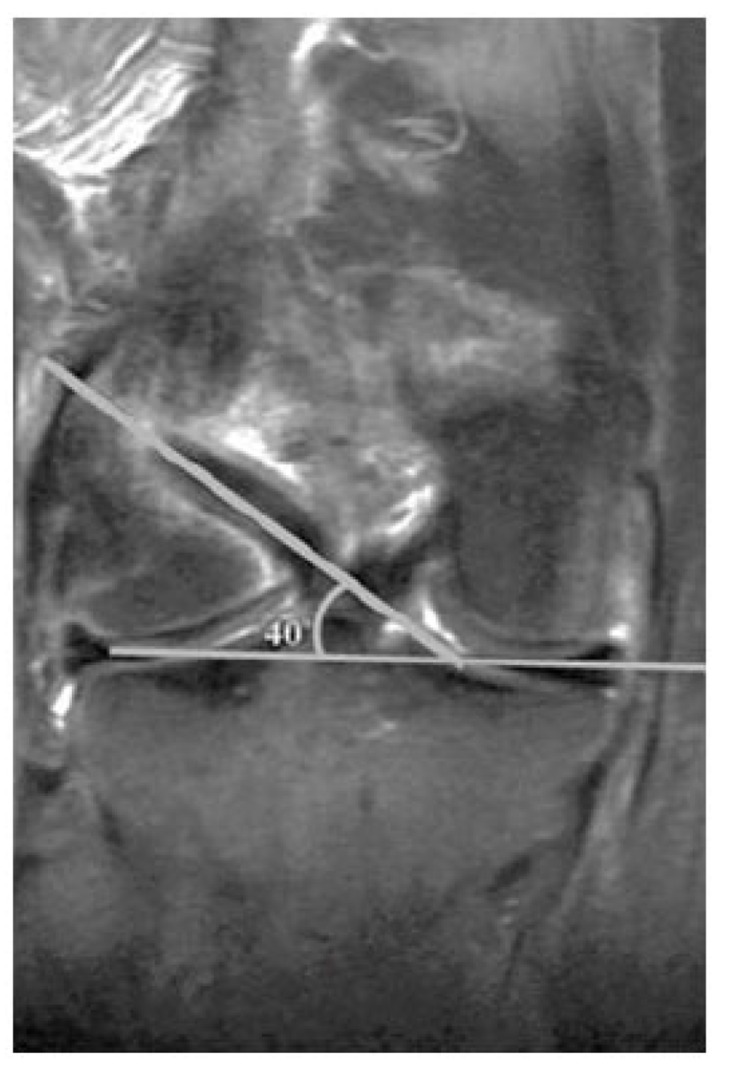
MRIFrontal knee MRI after ACL reconstruction: measurement of the graft orientation angle in the femoral tunnel, at 40 degrees.
Source : Sukur et al., The Open Orthopaedics Journal, 2016, figure 1 · CC BY-NC
After reconstruction, the graft (autograft, patellar tendon or hamstrings, or allograft) does not immediately become a functional ligament. It undergoes a long biological process called « ligamentisation ».
The landmark histological work of Claes et al. 2011 (AJSM, systematic review)² showed that the graft never entirely reproduces the histological and biomechanical properties of the native ACL. The process runs in three phases:
The three biological phases of ligamentisation
Time course of the graft's mechanical strength (synthesised model)
Figure 1: Biomechanical evolution of the graft during ligamentisation. The point of maximum fragility falls between weeks 6 and 12. Adapted from Claes et al. 2011 (PMID 21515806).
- Avascular necrosis (0-4 weeks) : massive cell loss in the graft, which becomes an unvascularised collagen scaffold.
- Revascularisation (4-12 weeks) : invasion by fibroblasts and neovascularisation. Point of maximum mechanical weakness.
- Remodelling (3 months to 4 years) : progressive maturation of the collagen. The structure never regains its native organisation. Biomechanical maturation continues until 24-48 months (and beyond in some patients).
Beyond this local biology, the rupture and the surgery induce lasting neurocognitive disturbances . The loss of ligament mechanoreceptors leads to deafferentation and central reorganisation of motor control, documented on functional imaging.¹⁵ As a result, the following are commonly seen after surgery:
- Marked atrophy and persistent quadriceps weakness, partly through arthrogenic muscle inhibition.¹⁶
- Some biomechanical asymmetries persisting to 9-12 months after surgery and beyond (King 2018).
- A degree of kinesiophobia that can hinder progress and return to sport (Trigsted 2018).¹⁰
- The risk in women is 1.5-1.7× on average, not 2-8× as is sometimes quoted.
- The graft is mechanically at its most fragile between weeks 6 and 12 (revascularisation).
- Biological maturation continues until 24-48 months, which justifies a minimum delay of 9 months before returning to sport.
- Rehabilitation must simultaneously target local healing, quadriceps strength and central neuromuscular reprogramming.
Bibliography: Chapter 1
- Montalvo AM, Schneider DK, Yut L, et al. "What's my risk of sustaining an ACL injury while playing sports?" A systematic review with meta-analysis. Br J Sports Med. 2019;53(16):1003-1012. PMID 29514822.
- Claes S, Verdonk P, Forsyth R, Bellemans J. The "ligamentization" process in anterior cruciate ligament reconstruction: what happens to the human graft? A systematic review of the literature. Am J Sports Med. 2011;39(11):2476-2483. PMID 21515806.
- Beischer S, Gustavsson L, Senorski EH, et al. Young athletes who return to sport before 9 months after ACL reconstruction have a rate of new injury 7 times that of those who delay return. J Orthop Sports Phys Ther. 2020;50(2):83-90. PMID 32005095.
- Kotsifaki R, Korakakis V, King E, et al. Aspetar clinical practice guideline on rehabilitation after ACL reconstruction. Br J Sports Med. 2023;57(9):500-514. PMID 37024286.
- Grindem H, Snyder-Mackler L, Moksnes H, Engebretsen L, Risberg MA. Simple decision rules can reduce reinjury risk by 84% after ACL reconstruction: the Delaware-Oslo ACL cohort study. Br J Sports Med. 2016;50(13):804-808. PMID 27162233.
- Paterno MV, Rauh MJ, Thomas S, Hewett TE, Schmitt LC. Return-to-Sport Criteria After ACL Reconstruction Fail to Identify the Risk of Second ACL Injury. J Athl Train. 2022;57(9-10):937-945. PMID 36638338.
- Ardern CL, Taylor NF, Feller JA, Webster KE. Fifty-five per cent return to competitive sport following ACL reconstruction surgery: an updated systematic review and meta-analysis. Br J Sports Med. 2014;48(21):1543-1552. PMID 25157180.
- Gopinatth V, Garcia JR, Reid IK, Knapik DM, Verma NN. Blood Flow Restriction Training After ACL Reconstruction: A Systematic Review and Meta-analysis. Arthroscopy. 2025;41(4):1048-1060. PMID 38889851.
- Pamboris GM, Pavlou K, Paraskevopoulos E, Mohagheghi AA. Effects of open vs closed kinetic chain exercises on knee laxity, function and strength after ACL reconstruction. Front Sports Act Living. 2024;6:1416690. PMID 38887689.
- McPherson AL, Feller JA, Hewett TE, Webster KE. Psychological Readiness to Return to Sport Is Associated With Second ACL Injuries. Am J Sports Med. 2019;47(4):857-862. PMID 30753794.
- Ekhtiari S, Horner NS, de Sa D, et al. Arthrofibrosis after ACL reconstruction: a systematic review. Knee Surg Sports Traumatol Arthrosc. 2017;25(12):3929-3937. PMID 28260199.
- Di Stasi SL, Myer GD, Hewett TE. Neuromuscular training to target deficits associated with second anterior cruciate ligament injury. J Orthop Sports Phys Ther. 2013;43(11):777-792. PMID 24175599.
- Wiggins AJ, Grandhi RK, Schneider DK, Stanfield D, Webster KE, Myer GD. Risk of Secondary Injury in Younger Athletes After Anterior Cruciate Ligament Reconstruction: A Systematic Review and Meta-Analysis. Am J Sports Med. 2016;44(7):1861-1876. PMID 26772611.
- Piussi R, Simonson R, Zsidai B, et al. Better Safe Than Sorry? Time to Return to Sports After ACL Reconstruction as a Risk Factor for a Second ACL Injury. J Orthop Sports Phys Ther. 2024;54(3):161-175. PMID 38032099.
- Gokeler A, Neuhaus D, Benjaminse A, Grooms DR, Baumeister J. Principles of Motor Learning to Support Neuroplasticity After ACL Injury. Sports Med. 2019;49(6):853-865. PMID 30719683.
- Kim KM, Croy T, Hertel J, Saliba S. Effects of NMES after ACL reconstruction on quadriceps strength: a systematic review. J Orthop Sports Phys Ther. 2010;40(7):383-391. PMID 20592480.
How can progress after ACL reconstruction be assessed with certainty?
Assessment after ACL reconstruction must go well beyond the postoperative calendar. The modern approach, supported by the Aspetar 2023 consensus¹ and the Delaware-Oslo cohort,² is multidimensional and based on objective criteria combined with listening to the patient.
What questions should be asked to understand the patient?
The history puts the objective test results in context and identifies the barriers to successful rehabilitation.
- Goals and target level : pivoting sport? Competition? Recreational? The level of risk determines how strict the validation criteria should be.
- Pain, swelling, effusions, locking : a recurrent effusion or locking should raise suspicion of an additional intra-articular problem.
- Psychological dimension : kinesiophobia is a major predictor of successful RTS.³ Use the ACL-RSI (Anterior Cruciate Ligament-Return to Sport after Injury)⁴ scale systematically: a score <65/100 predicts an increased risk of second injury; the <76.7 threshold has 90% sensitivity for risk in those aged ≤20.³
- Adherence to the programme and the difficulties encountered: a patient who drops out is a patient at risk.
Which clinical tests should be carried out and which differential diagnoses must be ruled out?
Ligament stability : the Lachman test remains the most sensitive clinical test for assessing the integrity of the ACL graft (Sn 81%, Sp 85% without anaesthesia; Sn 91% under anaesthesia, van Eck 2013 meta-analysis).⁵ The pivot shift is highly specific but hard to perform on an awake, apprehensive patient.
Muscle strength : isokinetic dynamometry is the reference standard. The consensus target is a Limb Symmetry Index (LSI) >90% for the quadriceps and the hamstrings.
Functional tests : a battery of hop tests, single hop for distance, triple hop, crossover hop, 6-metre timed hop. An LSI >90% is required for each.
Limits of the functional tests : Webster & Hewett (2019, SR/MA)⁷ concluded that there is no solid evidence that the current batteries significantly reduce the risk of re-rupture. Davies et al. 2020 judged the hop tests « equivocal » in predictive value.⁸
- Secondary meniscal tear : joint locking, joint-line pain, recurrent effusion.
- Cyclops syndrome (localised arthrofibrosis) : loss of terminal extension that does not recover despite rehabilitation. This is the major warning sign: diagnosed on MRI, treated surgically (arthroscopic release) if conservative care fails.⁹
- Chondral lesion : deep pain, disproportionate incapacity, clicking.
- Residual instability / graft failure : positive Lachman, a sense of giving way → contact the surgeon again.
- Suspected infection (rare): fever, discharge, disproportionate pain.
Should patients be stratified, and for what benefit?
Yes. Early stratification makes it possible to target interventions at the at-risk profiles rather than applying a « one size fits all » protocol. The landmark study Toole et al. 2017 (JOSPT, n=156 young athletes) showed that only 13.9% of young people met all the combined criteria at the time they were cleared for RTS: 27.8% for quadriceps strength alone, 53% for the hop tests alone.¹⁰
Why an LSI >90% on its own is not enough
Rate of meeting the RTS criteria in young athletes (Toole 2017, n=156)
Figure 2: More than 85% of young athletes cleared to return do not meet all the evidence-based criteria.
Early stratification on the ACL-RSI score at 3 and 6 months, the quadriceps strength deficit at 3 months and movement quality (2D analysis of dynamic valgus in a drop jump) makes it possible to steer treatment towards the patient's real deficits.¹¹
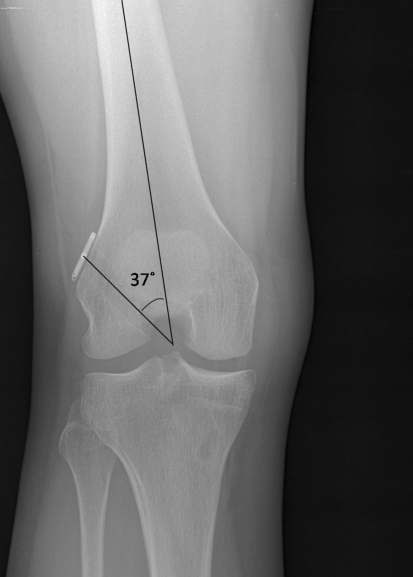
X-rayAnteroposterior knee radiograph after single-bundle ACL reconstruction: femoral tunnel with interference screw and measurement of the tunnel angle.
Source : van Eck et al., Knee Surgery, Sports Traumatology, Arthroscopy, 2011, figure 1 · CC BY-NC
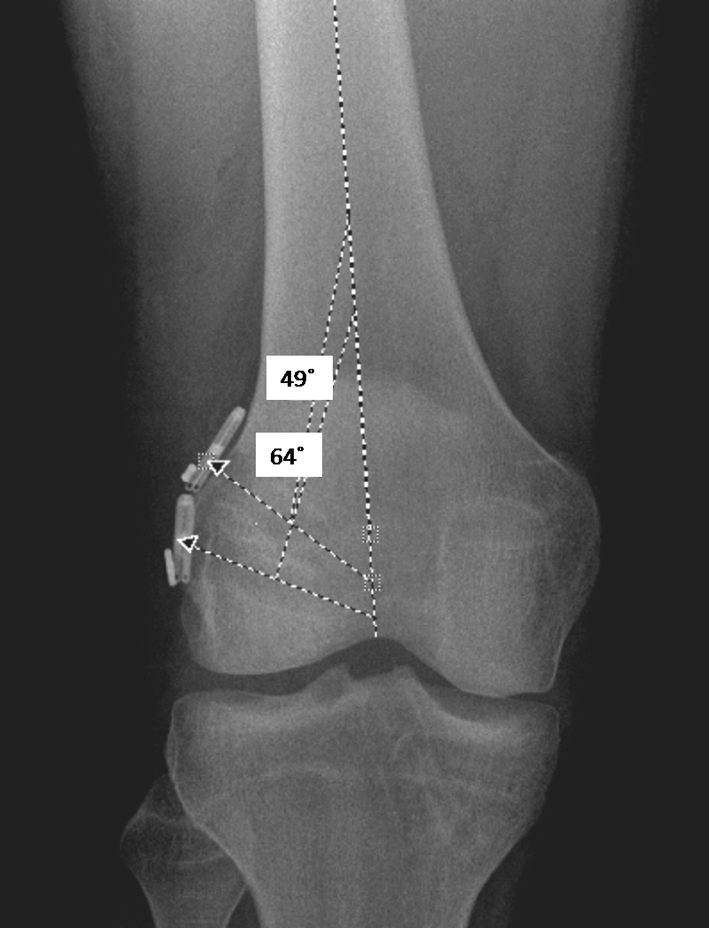
X-rayAnteroposterior knee radiograph after double-bundle ACL reconstruction: two femoral tunnels with interference screws and measurement of the tunnel angles.
Source : van Eck et al., Knee Surgery, Sports Traumatology, Arthroscopy, 2011, figure 1 · CC BY-NC
- Assessment is multidimensional : Lachman + isokinetic strength (LSI>90%) + hop tests (LSI>90%) + ACL-RSI (>65).
- The LSI can overestimate function if both limbs have lost strength (Wellsandt 2017).
- A loss of extension that does not recover = a red flag (cyclops lesion, to be confirmed on MRI).
- Stratify early to target the real deficits of each patient.
Bibliography: Chapter 2
- Kotsifaki R, Korakakis V, King E, et al. Aspetar clinical practice guideline on rehabilitation after ACL reconstruction. Br J Sports Med. 2023;57(9):500-514. PMID 37024286.
- Grindem H, Snyder-Mackler L, Moksnes H, Engebretsen L, Risberg MA. Simple decision rules can reduce reinjury risk by 84% after ACL reconstruction. Br J Sports Med. 2016;50(13):804-808. PMID 27162233.
- McPherson AL, Feller JA, Hewett TE, Webster KE. Psychological Readiness to Return to Sport Is Associated With Second ACL Injuries. Am J Sports Med. 2019;47(4):857-862. PMID 30753794.
- Webster KE, Feller JA, Lambros C. Development and preliminary validation of a scale to measure the psychological impact of returning to sport following ACL reconstruction surgery. Phys Ther Sport. 2008;9(1):9-15. PMID 19083699.
- van Eck CF, van den Bekerom MP, Fu FH, Poolman RW, Kerkhoffs GM. Methods to diagnose acute anterior cruciate ligament rupture: a meta-analysis of physical examinations with and without anaesthesia. Knee Surg Sports Traumatol Arthrosc. 2013;21(8):1895-1903. PMID 23085822.
- Wellsandt E, Failla MJ, Snyder-Mackler L. Limb Symmetry Indexes Can Overestimate Knee Function After ACL Injury. J Orthop Sports Phys Ther. 2017;47(5):334-338. PMID 28355978.
- Webster KE, Hewett TE. What is the Evidence for and Validity of Return-to-Sport Testing after ACL Reconstruction Surgery? A Systematic Review and Meta-Analysis. Sports Med. 2019;49(6):917-929. PMID 30905035.
- Davies WT, Myer GD, Read PJ. Is It Time We Better Understood the Tests We are Using for Return to Sport Decision Making Following ACL Reconstruction? A Critical Review of the Hop Tests. Sports Med. 2020;50(3):485-495. PMID 31745732.
- Singh C, Vellasamy SD, Fiolin J, Rhatomy S. Cyclops syndrome 1-year post arthroscopic ACL reconstruction: A case report. Int J Surg Case Rep. 2021;88:106554. PMID 34741861.
- Toole AR, Ithurburn MP, Rauh MJ, et al. Young Athletes Cleared for Sports Participation After ACL Reconstruction. J Orthop Sports Phys Ther. 2017;47(11):825-833. PMID 28990491.
- Dingenen B, Gokeler A. Optimization of the Return-to-Sport Paradigm After ACL Reconstruction: A Critical Step Back to Move Forward. Sports Med. 2017;47(8):1487-1500. PMID 28078610.
Which treatment strategies are the most effective?
The recommendations of the Aspetar 2023 guideline,¹ of the Panther Symposium 2021 consensus² and of the van Melick 2025 editorial³ converge: rehabilitation must be criteria-based (and not driven by the calendar alone) and combine several complementary modalities.
Where do you start? What hierarchy of interventions?
The immediate postoperative phase lays the foundations of success. The priorities are regaining range, controlling swelling and neuromuscular activation.
- Regaining full extension : this is the absolute priority of the first 2 weeks. A deficit of ≥5° is associated with gait disturbance, persistent quadriceps weakness and an increased risk of patellofemoral and tibiofemoral osteoarthritis.⁴
- Early weight-bearing with aids as tolerated: safe and beneficial for function (Aspetar 2023).¹
- Early neuromuscular activation of the quadriceps (isometrics, sets) to counter arthrogenic inhibition.⁵
- Cryotherapy + compression in the first few days to manage swelling and pain.
What is the place of exercise, and the optimal combination?
Therapeutic exercise is the cornerstone of rehabilitation. The historical debate about open versus closed chain is settled today.
The meta-analysis by Pamboris et al. 2024 (Front Sports Act Living)⁶ confirms:
- The open kinetic chain (OKC), leg extension within a protected range of 90°→40°, is superior for isokinetic quadriceps strength gains (MD +28.1 Nm at 12 weeks).
- The closed kinetic chain (CKC) is better for early pain.
- No difference in joint laxity where the open chain is introduced progressively (from week 4-6 onwards).
The reference approach is therefore the combination of OKC + CKC, with progression in range and in load.
Manual therapies, NMES, BFR: how effective are they really?
Several adjunct modalities can speed up strength gains, particularly in the early phase.
| Modality | Expected effect | Level of evidence | Source |
|---|---|---|---|
| Quadriceps NMES (phase 0-6 wk) | Counters arthrogenic inhibition; SMD 0.53-0.59 on strength; short- and long-term gain | GRADE High | Li 2025 |
| BFR (Blood Flow Restriction) | Quadriceps hypertrophy + strength with loads of 20-30% 1RM; IKDC MD +5.9; Lysholm MD +6.75 | GRADE Moderate | Gopinatth 2025 |
| OKC + CKC combined | Superior to either alone; no added laxity risk if the open chain is progressive | GRADE High | Pamboris 2024 |
| Neuromuscular training | Improves kinematics and confidence; reduces the risk of second injury | GRADE High | Di Stasi 2013 |
| Prehabilitation | Reaches or exceeds the PASS thresholds and the RTS criteria; gains maintained to 10 years | GRADE Moderate | Zakharia 2025 |
| Manual therapies | Symptomatic effect on pain and mobility; no long-term change | GRADE Weak | — |
How do you educate the patient and address the psychological dimension?
Physical recovery alone is not enough. Psychological factors weigh as heavily as strength.
The meta-analysis by Ardern et al. 2014 (BJSM, n=7,556 patients)⁷ shows that despite good physical recovery:
The gap between 81% and 55% is mainly psychological. The levers available:
- Therapeutic education : the stages of healing, the logic behind the exercises, managing expectations.
- SMART goals (Specific, Measurable, Achievable, Realistic, Time-bound).
- ACL-RSI assessment at regular intervals (3, 6, 9 months).
- Graded exposure to anxiety-provoking sporting situations.
- Referral to a sport psychologist where kinesiophobia persists (ACL-RSI score <65 at 6 months).
- Immediate postoperative priority: full extension.
- Rebuilding strength: OKC + CKC in combination (Pamboris 2024).
- Evidence-based adjunct modalities: NMES in the early phase, BFR in the intermediate phase.
- Psychological factors weigh as heavily as strength: assess the ACL-RSI at 3, 6 and 9 months.
Bibliography: Chapter 3
- Kotsifaki R, Korakakis V, King E, et al. Aspetar clinical practice guideline on rehabilitation after ACL reconstruction. Br J Sports Med. 2023;57(9):500-514. PMID 37024286.
- Meredith SJ, Rauer T, Chmielewski TL, et al. Return to sport after ACL injury: Panther Symposium ACL Injury RTS Consensus Group. J ISAKOS. 2021;6(3):138-146. PMID 34006577.
- van Melick N, Hamrin Senorski E, Krolikowska A, Prill R. ACL reconstruction rehabilitation: Decades of change. Knee Surg Sports Traumatol Arthrosc. 2025;33(4):1178-1182. PMID 39925169.
- Sanders TL, Pareek A, Hewett TE, et al. Long-term rate of revision ACL reconstruction: a population-based study. Am J Sports Med. 2017;45(7):1558-1564. PMID 28298067.
- Kim KM, Croy T, Hertel J, Saliba S. Effects of NMES after ACL reconstruction on quadriceps strength. J Orthop Sports Phys Ther. 2010;40(7):383-391. PMID 20592480.
- Pamboris GM, Pavlou K, Paraskevopoulos E, Mohagheghi AA. Effects of open vs closed kinetic chain exercises on knee laxity, function and strength after ACL reconstruction. Front Sports Act Living. 2024;6:1416690. PMID 38887689.
- Ardern CL, Taylor NF, Feller JA, Webster KE. Fifty-five per cent return to competitive sport following ACL reconstruction surgery. Br J Sports Med. 2014;48(21):1543-1552. PMID 25157180.
- Gopinatth V, Garcia JR, Reid IK, Knapik DM, Verma NN. Blood Flow Restriction Training After ACL Reconstruction. Arthroscopy. 2025;41(4):1048-1060. PMID 38889851.
- Li Z, Jin L, Chen Z, et al. Effects of NMES on Quadriceps Strength After ACL Reconstruction. Orthop J Sports Med. 2025;13(1):23259671241275071. PMID 39811154.
- Zakharia A, Zhang K, Al-Katanani F, et al. Outcomes of preoperative rehabilitation for ACL reconstruction. Knee Surg Sports Traumatol Arthrosc. 2025. PMID 40276858.
- Di Stasi SL, Myer GD, Hewett TE. Neuromuscular training to target deficits associated with second anterior cruciate ligament injury. J Orthop Sports Phys Ther. 2013;43(11):777-792. PMID 24175599.
- van Melick N, van Cingel REH, Brooijmans F, et al. Evidence-based clinical practice update: practice guidelines for ACL rehabilitation. Br J Sports Med. 2016;50(24):1506-1515. PMID 27539507.
How do you plan a safe, lasting return to sport?
Return to sport (RTS) is a process, not an event. It combines three pillars, all of them necessary : a minimum biological delay, a battery of functional criteria, and psychological readiness. No pillar is enough on its own.
How do you make the patient an active participant in their recovery?
Self-management rests on three pillars:
- Therapeutic education : understanding the injury, the stages of healing, the logic behind the exercises.
- Setting SMART goals and patient/therapist collaboration.
- Psychological support and strengthening self-efficacy through progressive successes.¹
When and how should a safe return to sport be planned?
The RTS decision combines three cumulative :
The three pillars of return to sport after ACL reconstruction
A combination needed for a safe decision
Figure 3: Return to sport is a tripod. Meeting a single criterion is not enough.
1. A minimum biological delay of 9 months. The Beischer 2020 cohort² and the Piussi 2024 meta-analysis³ converge: returning before 9 months multiplies the risk of a further rupture by 7 (HR 7.0; CI 1.6-31.5). The pooled incidence of second ACL rupture in the recent literature is 16.9% (CI 12.8-21.6%).
2. Objective functional criteria. The landmark study Kyritsis et al. 2016 (BJSM, n=158)⁴ established 6 criteria, failure of which multiplies the risk of re-rupture by 4 (HR 4.1; CI 1.9-9.2):
- Isokinetic quadriceps and hamstrings at 60°/s, 180°/s, 300°/s: LSI >90%
- Running T-test (agility)
- Single hop test: LSI >90%
- Triple crossover hop: LSI >90%
3. Psychological readiness. The ACL-RSI scale⁵ makes it possible to quantify the patient's confidence and their fear of re-injury. Main thresholds:
- Score <56 at 4 months: predicts non-return to sport at 12 months
- Score <65 at 6 months: predicts a low probability of RTS to pivoting or contact sport
- Score <76.7 in those aged ≤20: 90% sensitivity for the risk of second injury⁶
- Self-management combines education, SMART goals and psychological support.
- RTS must be criteria-based, not driven by the calendar alone.
- Minimum delay: 9 months after surgery (Beischer 2020, Piussi 2024).
- Criteria: LSI >90% for strength AND hop tests (Kyritsis 2016).
- Psychology: ACL-RSI >65 (McPherson 2019).
- All 3 pillars together = -84% re-injury (Grindem 2016).
Bibliography: Chapter 4
- Liew BXW, Feller JA, Webster KE. Understanding the psychological mechanisms of return to sports readiness after ACL reconstruction. PLoS One. 2022;17(3):e0266029. PMID 35325002.
- Beischer S, Gustavsson L, Senorski EH, et al. Young athletes who return to sport before 9 months after ACL reconstruction have a rate of new injury 7 times that of those who delay return. J Orthop Sports Phys Ther. 2020;50(2):83-90. PMID 32005095.
- Piussi R, Simonson R, Zsidai B, et al. Better Safe Than Sorry? Time to Return to Sports After ACL Reconstruction as a Risk Factor for a Second ACL Injury. J Orthop Sports Phys Ther. 2024;54(3):161-175. PMID 38032099.
- Kyritsis P, Bahr R, Landreau P, Miladi R, Witvrouw E. Likelihood of ACL graft rupture: not meeting six clinical discharge criteria before return to sport is associated with a four times greater risk of rupture. Br J Sports Med. 2016;50(15):946-951. PMID 27215935.
- Webster KE, Feller JA, Lambros C. Development and preliminary validation of a scale to measure the psychological impact of returning to sport following ACL reconstruction surgery. Phys Ther Sport. 2008;9(1):9-15. PMID 19083699.
- McPherson AL, Feller JA, Hewett TE, Webster KE. Psychological Readiness to Return to Sport Is Associated With Second ACL Injuries. Am J Sports Med. 2019;47(4):857-862. PMID 30753794.
- Paterno MV, Rauh MJ, Thomas S, Hewett TE, Schmitt LC. Return-to-Sport Criteria After ACL Reconstruction Fail to Identify the Risk of Second ACL Injury. J Athl Train. 2022;57(9-10):937-945. PMID 36638338.
- Grindem H, Snyder-Mackler L, Moksnes H, Engebretsen L, Risberg MA. Simple decision rules can reduce reinjury risk by 84% after ACL reconstruction. Br J Sports Med. 2016;50(13):804-808. PMID 27162233.
- Simonson R, Piussi R, Hogberg J, et al. Effect of Quadriceps and Hamstring Strength Relative to Body Weight on Risk of a Second ACL Injury. Orthop J Sports Med. 2023;11(4):23259671231157386. PMID 37152619.
- Whittaker JL, Culvenor AG, Juhl CB, et al. OPTIKNEE 2022: consensus recommendations to optimise knee health after traumatic knee injury to prevent osteoarthritis. Br J Sports Med. 2022;56(24):1393-1405. PMID 36379676.
What do the published clinical cases teach us?
The case reports published on PubMed/PMC illustrate how the evidence-based principles translate into concrete situations.
Case 1: A professional footballer after 3 ipsilateral reconstructions (Noronha 2020)
A 32-year-old professional footballer who had sustained three successive ACL ruptures on the same side (hamstring graft, then patellar tendon, then Achilles tendon allograft).¹ The patient progressively resumed full training at 8 months and competition at the highest level at 9 months after the 3rd operation. At 36 months of follow-up: no pain, no instability, professional level maintained.
Clinical lesson: even after repeated failures, a structured protocol + a suitable graft + objective criteria allow a return to the top level. Clinical resilience does exist.
Case 2: Cyclops syndrome diagnosed late (Singh 2021)
A 26-year-old patient with persistent loss of extension 1 year after reconstruction.² The clinical picture suggests cyclops syndrome; MRI confirms an anterior intercondylar fibrous nodule mechanically blocking extension. Conservative rehabilitation (intensive joint mobilisation, stretching) having failed, the patient undergoes arthroscopic release with excision. Full recovery of extension at 3 months after the second-look procedure.
Clinical lesson: a loss of extension that does not recover is a red flag: refer promptly to the surgeon. The « patient who plateaus » deserves a follow-up MRI.
Case 3: Multi-ligament reconstruction ACL + PCL + meniscal roots (Adi 2025)
A 19-year-old patient with a complete ACL + PCL rupture and tears of the posterior roots of both menisci.³ Simultaneous reconstruction (peroneus longus for the PCL, hamstrings for the ACL) + arthroscopic repair of the roots. At 9 months after surgery: ROM 0-140°, bi-ligamentous stability restored, no significant difference in thigh circumference compared with the uninjured side.
Clinical lesson: multi-ligament cases are biomechanically demanding (grafts under opposing constraints). The protective phases are longer and weight-bearing more cautious. Return to sport is rarely before 12-15 months.
Other notable examples:
- Joreitz 2020 (IJSPT, case series n=19): a 5-phase criterion-based protocol, 84% return to pre-injury level at 2 years, a single re-injury among 19 who completed: proof of feasibility.⁴
- Meierbachtol 2020 (OJSM, n=33 patients aged 14-30): a 5-week group RTS programme with graded exposure therapy: fear of pivoting is the most common; every fear decreases significantly after the programme; the ACL-RSI proves more discriminating than the TSK-11.⁵
- A criterion-based protocol is clinically feasible (Joreitz 2020).
- And Persistent loss of extension = a red flag (cyclops lesion, Singh 2021).
- Multi-ligament cases require strong individualisation (Adi 2025).
- And Kinesiophobia can be treated by graded exposure (Meierbachtol 2020).
Bibliography: Chapter 5
- Noronha JC, Oliveira JP, Brito J. Same-knee, third revision ACL reconstruction in a professional soccer player using Achilles tendon allograft. Int J Surg Case Rep. 2020;68:267-271. PMID 32109765.
- Singh C, Vellasamy SD, Fiolin J, Rhatomy S. Cyclops syndrome 1-year post arthroscopic ACL reconstruction: A case report. Int J Surg Case Rep. 2021;88:106554. PMID 34741861.
- Adi MM, Mohamed AMY, Abdulgadir M, et al. Combined ACL, PCL and bilateral meniscal posterior root tears: a case report. Int J Surg Case Rep. 2025;127:111150. PMID 40106956.
- Joreitz R, Lynch A, Popchak A, Irrgang J. Criterion-based rehabilitation program with return to sport testing following ACL reconstruction: a case series. Int J Sports Phys Ther. 2020;15(6):1151-1173. PMID 33344032.
- Meierbachtol A, Obermeier M, Yungtum W, et al. Injury-related fears during the return-to-sport phase of ACL reconstruction rehabilitation. Orthop J Sports Med. 2020;8(3):2325967120909385. PMID 32258182.
- Mitchell A, Waite O, Holding C, Greig M. Return to play following injury in a professional soccer player: a case study using a multidisciplinary 9-phase rehab framework. Int J Sports Phys Ther. 2023;18(2):497-507. PMID 37020432.
How can these recommendations be applied in practice?
Clinical application rests on two skills that are often under-invested in: knowing when to refer and knowing how to measure your own results.
When, and to which professionals, should you refer?
- Unexplained weight loss, persistent fever, night sweats (suspected malignancy/infection)
- Non-mechanical night pain
- Recent trauma with visible deformity (occult fracture)
- History of cancer + new bone pain
- Suspected infection on a previous reconstruction: fever + discharge + disproportionate pain
Yellow flags (psychosocial): referral to a psychologist / CBT: persistent kinesiophobia, catastrophising, mistaken beliefs about pain, depressive symptoms.¹
Interprofessional collaboration : sports physician, orthopaedic surgeon, podiatrist (foot posture), nutritionist (body composition), sport psychologist. Multidisciplinary biopsychosocial management improves outcomes in chronic conditions.²
How do you measure outcomes and overcome the barriers to implementation?
Systematic use of PROMs (Patient-Reported Outcome Measures) is recommended.³ For the ACL:
- KOOS (Knee Injury and Osteoarthritis Outcome Score): function and quality of life
- IKDC (International Knee Documentation Committee): overall subjective score
- ACL-RSI: psychological readiness
- Tegner and Marx: level of sporting activity
- PSFS (Patient-Specific Functional Scale): personalised goals
The documented barriers to implementation (Scurlock-Evans 2014, SR in allied health)⁴:
- Lack of time in the consultation → integrated digital PROM tools
- Difficulty reading the literature → continuing education, podcasts (BJSM, JOSPT), CATs (critically appraised topics)
- Beliefs and habits → audit + feedback, peer mentoring
- A funding system that pays for volume, not quality: a structural fix
- Identifying red and yellow flags is an essential triage skill.
- Use KOOS, IKDC, ACL-RSI, Tegner systematically to track progress.
- Criterion-based RTS is actually applied by only a minority of clinicians.
- The recommendations are the same whether they are applied or not: the challenge is organisational, not scientific.
Bibliography: Chapter 6
- Cook CE, George SZ, Reiman MP. Red flag screening for low back pain: nothing to see here, move along: a narrative review. Br J Sports Med. 2018;52(8):493-496. PMID 28923844.
- Kamper SJ, Apeldoorn AT, Chiarotto A, et al. Multidisciplinary biopsychosocial rehabilitation for chronic low back pain: Cochrane systematic review and meta-analysis. BMJ. 2015;350:h444. PMID 25694111.
- Greenhalgh T, Howick J, Maskrey N. Evidence based medicine: a movement in crisis? BMJ. 2014;348:g3725. PMID 24927763.
- Scurlock-Evans L, Upton P, Upton D. Evidence-Based Practice in physiotherapy: a systematic review of barriers, enablers and interventions. Physiotherapy. 2014;100(3):208-219. PMID 24780633.
- Forsdyke D, Smith A, Jones M, Gledhill A. Psychosocial factors associated with outcomes of sports injury rehabilitation in competitive athletes: a mixed studies systematic review. Br J Sports Med. 2016;50(9):537-544. PMID 26887414.
And after this article?
This article is part of a collection of evidence-based clinical syntheses. A question, a comment, a correction to suggest? Contact us directly through the WhatsApp button at the bottom right of the screen.