





On-siteDPCFIFPL

Neurological rehabilitation
Neurological disorders in musculoskeletal practice: screen, assess and treat
Miguel Galan
Go further
An urge to move the legs in the evening: the five criteria of restless legs syndrome, the differential of painful legs, and the physiotherapist's role.
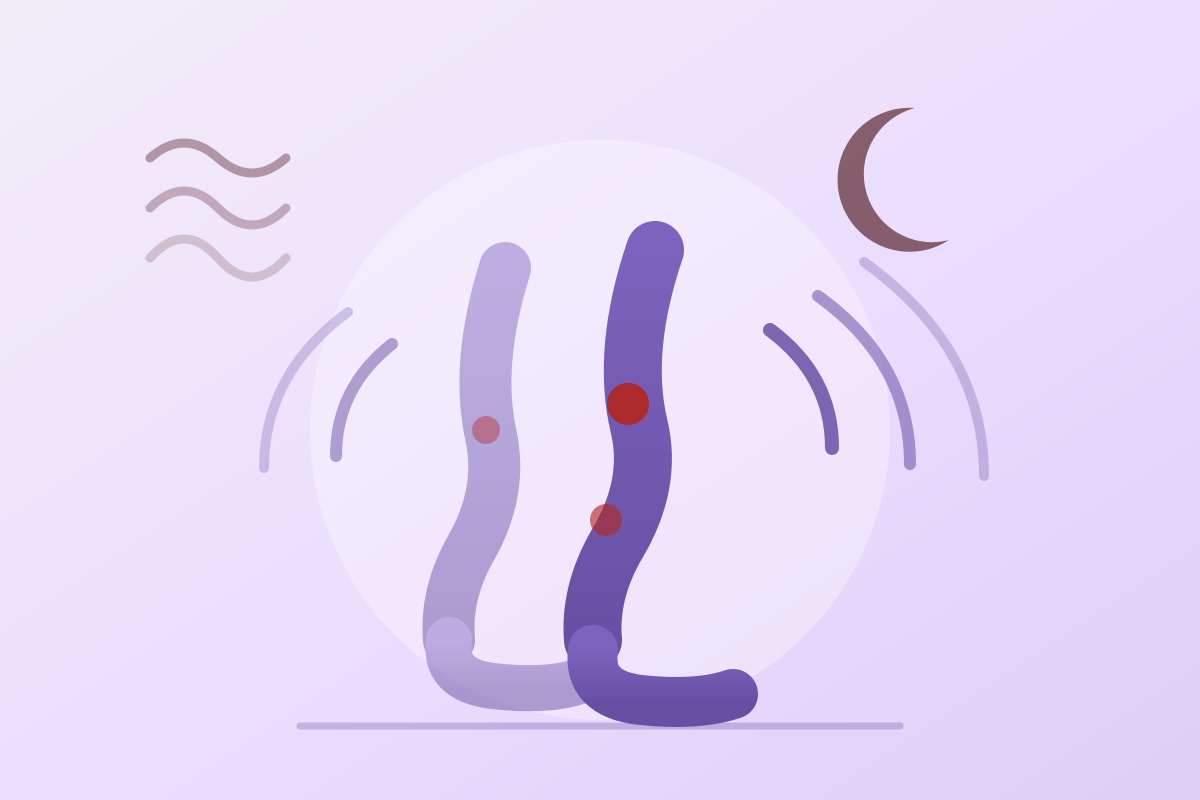
An urge to move the legs in the evening, relieved by movement, suggests an under-diagnosed syndrome: 81 % mention it, only 6.2 % are diagnosed.
23.9%of patients with iron deficiency anaemia have the syndrome
What follows covers each of these points in detail, with sources. It is there if you need it.
This topic is taught in a course: Neurological disorders in musculoskeletal practice: screen, assess and treat, on-site with Miguel Galan.
1 / 12
11 article chapters · 49 min in total
Understanding◔ 5 min
This syndrome is invisible on examination: the symptoms occur in the evening, far from the consultation.
Diagnosing◔ 5 min
The four historical criteria describe the disease well, but catch false positives.
Differentiating◔ 10 min
Five entities mimic this syndrome in the evening; you need to ask the right questions to tell them apart.
Ferritin◔ 5 min
Brain iron deficiency is central to the accepted pathophysiology of this syndrome.
Sleep◔ 2 min
Sleep, not the legs, is what drives the patient to seek care.
Physio's role◔ 7 min
The evidence on physiotherapy is favourable, but remains fragile.
Treatments◔ 3 min
The medications that were first line for twenty years were abandoned in 2025.
Special populations◔ 3 min
Three populations change the picture: pregnancy, children and neurological or renal diseases.
Case reports◔ 3 min
These two published cases each illustrate a different mechanism of under-diagnosis.
In practice◔ 3 min
This syndrome is not actively screened for: it is noticed in passing, during a consultation for something else.
FAQ◔ 3 min
The diagnosis remains entirely clinical, based on the five criteria, with no blood test necessary.
Train on this
Neurological rehabilitation
Miguel Galan
Next comes practice: the course that teaches this topic, with Miguel Galan.
Our courses on this topic may be covered by DPC or FIFPL, the French continuing-education funding schemes, depending on your profession and situation.
Your patients already describe it to you. They say “cramps”, “restlessness”, “poor circulation”, “pins and needles that keep me awake”. Restless legs syndrome affects about 3 % of adults to a degree that warrants treatment, and its diagnosis is entirely clinical: four questions, plus a fifth that does all the work.
A synthesis based on the 2014 IRLSSG criteria, the JAMA review of February 2026, the 2025 guideline of the American Academy of Sleep Medicine, the systematic review of non-drug interventions by Harrison et al. and the REST general population study. Every figure carries its source where it is written.
Three figures that sum the problem up
A common condition, almost never named, and whose criteria are not enough on their own.
Sources: prevalence and diagnosis rate, REST general population study, 15,391 questionnaires (Allen et al., Arch Intern Med 20053); specificity of the four criteria, family case-control study, 1,232 subjects (Hening et al., Sleep Med 20092).
What to take away
The physiotherapist's role, stated without ambiguity
The physiotherapist prescribes neither blood tests nor treatment. Their contribution is elsewhere, and it is decisive: recognising a picture the patient describes without naming it, separating it from mechanical or vascular painful legs in the evening, and referring for a medical consultation while naming what is suspected. A patient who arrives at their doctor with “I think I have restless legs syndrome, my physio told me to mention it” does not have the same pathway as one who says “my legs hurt in the evening”. The REST figures give the measure of that gap: 81 % of the patients affected had mentioned it to their doctor, 6.2 % had received the diagnosis3.
“Restless legs syndrome is poorly recognised by doctors and is consequently often misdiagnosed and poorly managed.”
Manconi et al., Nature Reviews Disease Primers, 20218
Because it has no word in patients' vocabulary, because its prevalence changes threefold depending on the question asked, and because the complaint that brings people to the clinic is almost never the one that carries the diagnosis.
A patient never says “I have an urge to move my legs, brought on by rest and relieved by movement, with worsening in the evening”. They say they have cramps. Restlessness. Pins and needles. That it takes them in the evening in front of the television, that they have to get up, that their partner complains because they fidget. They often say they sleep badly, and they rarely connect the one to the other.
This condition has the further peculiarity of being invisible at the moment you examine it. The patient consults in the morning or the afternoon; the symptoms occur in the evening and at night. The clinical examination is normal, and it should be. There is no test, no manoeuvre, no imaging that makes the diagnosis. The 2026 JAMA review is explicit on this point: restless legs syndrome is diagnosed from the history, and polysomnography is not recommended for the diagnosis5.
This is the least well understood point of this condition, and it is not a methodological detail: it governs the way every published figure is read.
The REST study surveyed 16,202 adults and used 15,391 complete questionnaires. It measured three different things in the same subjects3 :
The same population, three prevalences
What you count changes the result threefold. None of these values is wrong; they do not answer the same question.
Sources: Allen et al., Arch Intern Med 2005 (REST study)3 for the first three bars; Broström et al., J Sleep Res 2023, meta-analysis of 97 studies and 483,079 participants from 33 countries, corrected pooled prevalence 3.0 % (95 % CI 1.4–3.8)4.
Remember the clinical reading of this graph: when an article announces “10 % of the population”, it is applying a broad definition; when it announces “2 to 3 %”, it is counting the patients who need treatment. Both are true. A physiotherapist with a caseload of 300 people statistically meets about twenty with symptoms, and about eight in whom the distress would warrant management.
The REST study did not stop at prevalence. It asked the 416 people meeting the criteria for clinically significant distress whether they had mentioned it to a doctor, and what they had been told.
Where the diagnosis is lost
The problem is not that patients keep quiet. It is that they speak and the picture is not recognised.
Source: Allen et al., Arch Intern Med 2005;165(11):1286-92, REST general population study3. The 6.2 % figure is that of the 21 diagnosed relative to the 337 who had mentioned it.
It is those 316 patients that make this article of interest to a physiotherapy practice. They consult. They describe. They leave with no name for what they have, and often with a prescription for sessions for “heavy legs” or “circulatory problems”.
Four secondary landmarks
Sources: sex ratio and prevalence after 65, cardiovascular and depressive comorbidity, Winkelman and Wipper, JAMA 2026;335(8):703-7145 ; sex distribution from the meta-analysis, Broström et al., J Sleep Res 20234.
Certain settings concentrate the condition to the point where thinking of it becomes routine. The 2026 JAMA review gives the ranking5, and several of these settings are ones the physiotherapist follows over the long term.
In which settings to think of it routinely
Prevalence of restless legs syndrome in each population, compared with the general population.
Source: Winkelman and Wipper, JAMA 2026;335(8):703-7145. Other risk factors reported in the same review: family history, northern European ancestry, female sex.
Three of these settings deserve underlining for a physiotherapy practice. Multiple sclerosis comes top with 27.5 %. Peripheral neuropathy, diabetic in particular, at 21.5 %, and it is precisely the condition with which the syndrome is most often confused. Parkinson's disease at 20 %, where the picture is complicated by dopaminergic treatment itself.
Key points
The four historical criteria describe the disease perfectly. Their fault is not that they miss patients: it is that they catch some who do not have it. The fifth criterion exists for that, and its exact wording matters.
The reference criteria are those of the International Restless Legs Syndrome Study Group (IRLSSG), revised in 2014 and published in Sleep Medicine1. They are still those in force in 2026: the international classification of sleep disorders in its third revised edition (ICSD-3-TR, 2023) takes them up, and the 2026 JAMA review describes them identically5.
The 2014 revision introduced four changes, only one of which alters the diagnostic approach day to day1 :
| Criterion | Statement | What you ask the patient |
|---|---|---|
| 1. The urge | An urge to move the legs, usually but not always accompanied by uncomfortable and unpleasant sensations in the legs, or felt to be caused by them. | “Do you sometimes get an irresistible urge to move your legs? Do you absolutely have to shift them?” |
| 2. Rest | The urge to move and the unpleasant sensations begin or worsen during periods of rest or inactivity, such as lying or sitting. | “Does it happen when you are sitting or lying down, at rest? At the cinema, in the car, in the evening in the armchair?” |
| 3. Movement | The urge to move and the unpleasant sensations are partly or totally relieved by movement, walking or stretching, at least as long as the movement lasts. | “If you get up and walk, does it get better? And does it come back when you sit down again?” |
| 4. The evening | The urge to move and the unpleasant sensations are more marked in the evening or at night than during the day, or occur only in the evening or at night. | “Is it worse in the evening? For the same stillness, is it the same in the morning?” |
| 5. The differential added in 2014 |
These features are not accounted for solely by the symptoms of another condition or of a behavioural problem. | This is not a question for the patient: it is the clinician's work. It is the subject of the next chapter. |
The fourth criterion is the one people forget to check
Evening worsening is the criterion most often taken for granted, and that is a methodological error. The useful question is not “is it worse in the evening?”, almost all leg pain is, from fatigue and from attention being free. The useful question is: for the same stillness, is it different in the morning? A patient asked to compare an hour sitting at 10 in the morning with an hour sitting at 9 in the evening answers without hesitation when the syndrome is there. In patients whose symptoms are very severe and present day and night, that rhythm may be masked: the criterion then rests on the history of how the trouble began.
The demonstration came from a family case-control study conducted by the Johns Hopkins team. Of 1,255 relatives contacted, 1,232 could be classified by an expert in the syndrome by means of a validated telephone interview, richer than the four criteria alone: open questions on the quality of the sensations, the relieving strategies, the nature of the triggering situations2.
What the four criteria let through
Among the subjects whom the expert established did not have the syndrome, one in six nevertheless ticked all four boxes.
Source: Hening et al., Sleep Med 2009;10(9):976-812. The authors conclude that the conditions liable to mimic the syndrome “may be more common in the population than the syndrome itself”.
“A definitive diagnosis of restless legs syndrome therefore requires excluding these other conditions, which may be more common in the population than the syndrome itself.”
Hening et al., Sleep Medicine, 20092
Red flags, what should take you out of the frame
Key points
This is the chapter that makes this article useful in practice. Five entities sound alike in the history and are separated on simple points: provided you know which, and ask the right questions rather than listening to the spontaneous complaint.
A leg that hurts in the evening is a commonplace reason for consulting. The patient says “cramps” whatever the mechanism, because that is the word available. Five main entities compete for this ground, and the World Health Organization formally separates them: restless legs syndrome carries the code 7A80 in ICD-11, and sleep related leg cramps a separate code, 7A8226.
The study by Hening et al. did not merely count false positives: it compared point by point the answers of true patients with those of subjects who ticked the four criteria without having the disease. That table is, to our knowledge, the only published quantification of these discriminators2.
| Patient's answer | Confirmed syndrome | Mimics | Gap |
|---|---|---|---|
| The sleep disturbance is due to the legs | 100/345: 29 % | 6/119: 5 % | *** |
| A simple change of position is enough to relieve it | 17/142: 12 % | 36/64: 56 % | *** |
| The symptoms last more than 10 minutes | 98/119: 83 % | 12/42: 29 % | *** |
| A particular posture is responsible | 16/140: 11 % | 27/56: 48 % | *** |
| Sleep disturbance, all causes | 299/345: 87 % | 69/119: 58 % | *** |
| The patient can tolerate resisting the urge to move | 6/63: 10 % | 6/14: 43 % | ** |
| Painful sensation | 82/366: 23 % | 34/73: 47 % | ** |
| Urge felt to be irresistible | 163/215: 76 % | 34/82: 42 % | * |
| Rapid relief on moving | 182/207: 88 % | 64/70: 91 % | n.s. |
| Chronic course | 160/400: 60 % | 60/118: 51 % | n.s. |
Two practical lessons come out of this table, and they are counter-intuitive.
Relief by movement discriminates nothing. 88 % of true patients and 91 % of false ones say they are quickly relieved by moving: the difference is not significant. Yet it is the criterion everyone remembers as the disease's signature. It is necessary for the diagnosis, it is not discriminating.
What does discriminate is how the relief is obtained and how long the symptom lasts. In a mimic, a change of position is enough half the time and the symptom does not come back; the patient then stays settled. In a true patient, they have to get up, walk, and it starts again as soon as they sit down. That is what the two sharpest lines of the table express: more movement is needed to obtain relief, and the symptom lasts longer2.
Pain is rather an argument against. 47 % of mimics describe pain, against 23 % of true patients. A patient who insists on the word “pain” rather than on the words “urge to move” should prompt a search for something else, which does not rule out the painful forms, which do exist.
| Entity | What rest does | What movement does | The detail that decides |
|---|---|---|---|
| Restless legs syndrome ICD-11 7A80 |
Triggers or worsens it. Appears after a few minutes of stillness. | Relieves it as long as it lasts. Comes back as soon as stillness returns. | More of a need to move than a pain. The patient attributes their insomnia to their legs (29 % against 5 %)2. |
| Nocturnal cramps ICD-11 7A82 |
Occurs at rest, but abruptly and in paroxysms, not gradually. | Passive stretching of the muscle relieves it. Free movement does nothing. | Visible and palpable contraction, intense pain, lasting a few seconds to a few minutes, then residual soreness. No urge to move between attacks. |
| Peripheral neuropathy | Symptoms constant, often worse in the evening but present at daytime rest too. | Little or no effect. The patient does not get up to obtain relief. | Abnormal neurological examination : hypoaesthesia, absent ankle reflexes, stocking distribution. Burning, numbness. |
| Drug-induced akathisia | Independent of position. The urge to move is diffuse, not confined to the legs. | Relieves it, but the restlessness is global : the patient paces, rocks, cannot stay seated. | No daily rhythm and above all a temporal link with an antipsychotic or an antiemetic. The patient describes themselves as “restless inside”, not troubled in the legs. |
| Chronic venous insufficiency | Prolonged standing or sitting makes it worse, not lying at rest. | Walking improves it, through the muscle pump: like the syndrome. | Relief on elevating the legs, which is rest and not movement. Heaviness, evening oedema, varicose veins, worsening in heat. |
| Peripheral artery disease | Relieves it. It is the exact opposite of the syndrome. | Triggers it. Calf pain on walking, settling in under 10 minutes of stopping14. | Ankle-brachial index below 0.90 : sensitivity 57 to 79 %, specificity 83 to 99 % for a stenosis of at least 50 %14. Absent distal pulses. |
The question that separates them fastest
If you were to ask only one: “When it takes you, do you have pain, or do you have an urge to move?”
A patient with peripheral artery disease answers that they have pain, and on walking. A venous patient answers that their legs are heavy and that they raise them. A patient with cramps mimes a contraction with their hand. A neuropathic patient talks about burning that never leaves them. A patient with restless legs syndrome hesitates, searches for words, and ends up saying something like “it is not really painful, it is that I cannot stay still”. That hesitation is a sign.
These two entities deserve to be dealt with together because they mislead in opposite directions, and because the site does not yet devote a page of its own to them: their clinical side is covered in peripheral neuropathy for the diabetic foot, and in chronic exertional compartment syndrome for the triage of exertional calf pain.
Venous insufficiency is the most dangerous false friend, because it shares with the syndrome its evening timing and its relief by walking. Two elements unmask it. First the position: it is prolonged standing or sitting, with the legs down, that makes it worse, whereas the syndrome is brought on by lying at rest. Then and above all, elevating the legs relieves venous insufficiency, and elevating means increasing rest, which ought to make restless legs syndrome worse. That dissociation is decisive and it is tested in the chair, in fifteen seconds.
Associated signs to look for: pitting evening oedema, varicose veins, haemosiderin staining, worsening in heat and at the end of the day. The review by Youn and Lee recalls that this condition is “frequently overlooked” through underestimation of its extent and unfamiliarity with its presentations15.
Peripheral artery disease is the simplest trap to rule out and the most serious to miss. Its description is the point-by-point opposite of that of the syndrome: the pain arises on exertion and settles at rest. Polonsky and McDermott give the operational definition: calf pain on exertion, which does not begin at rest, and which settles in under ten minutes of stopping14.
The trap of silent peripheral artery disease
The same review adds a nuance every physiotherapist should know: 70 to 90 % of people whose ankle-brachial index is below 0.90 report no exertional symptoms at all, or symptoms that do not resemble classic claudication14. In other words, the absence of typical claudication does not rule out peripheral artery disease. In a patient over 65 who smokes, has diabetes or coronary disease, and describes unpleasant legs in the evening, the possibility of associated arterial disease should be raised with the doctor, not as the cause of the evening symptoms, but because it changes the overall cardiovascular risk and the conduct of exercise rehabilitation.
Drug-induced akathisia shares with the syndrome an urge to move relieved by movement. Three elements separate them in practice.
This distinction has a direct consequence. In a patient on an antipsychotic, a suggestive picture may be both at once : the antidopaminergic drug worsens a pre-existing syndrome while also being able to induce akathisia. It is not for the physiotherapist to decide, but it is for them to report the chronology if they have spotted it.
A special case: the child and growing pains
In children, the overlap is not anecdotal: some of the pictures labelled “growing pains” are in fact restless legs syndrome, a question raised as early as 2002 and still current252423. The paediatric criteria were in fact merged with the adult ones in 20141. This aspect is covered in detail in our article on growth-related conditions of the lower limb in children and adolescents, which reports in particular the twin study showing that the prevalence of growing pains falls by a third as soon as the absence of motor restlessness is required.
Decision tree for unpleasant legs in the evening
Designed for the physiotherapist's reasoning: it leads to a referral, never to a prescription.
Sources: criteria, IRLSSG 20141 ; false positive rate of step 2, Hening 20092 ; definition of claudication, Polonsky and McDermott 202114 ; iron work-up, AASM 2025 good practice statement7.
Key points
Because it is the only common, accessible and correctable secondary cause, and because the thresholds that trigger supplementation are not those applied to the rest of the population.
Iron deficiency is central to the accepted pathophysiology. The reference review in Nature Reviews Disease Primers places brain iron deficiency among the main mechanisms under study, alongside dysfunction of the dopaminergic and nociceptive systems and alterations of the adenosinergic and glutamatergic pathways8. Not all of these hypotheses are established; the link with iron, for its part, has demonstrated therapeutic consequences.
The figure to remember: 23.9 % of patients with iron deficiency anaemia have restless legs syndrome5. One patient in four. On adult iron deficiency taken in itself (its causes, its work-up, its treatments), a recent review takes stock20.
This is the most important point of this chapter, and the one most often missed. An iron work-up may be read as “normal” by the laboratory reference values while still warranting supplementation in a patient who has this syndrome. The AASM 2025 good practice statement is explicit: “these iron supplementation recommendations are different from those for the general population”7.
The iron thresholds that govern management
In adults with clinically significant restless legs syndrome.
Source: good practice statement, Winkelman et al., J Clin Sleep Med 2025;21(1):137-152, American Academy of Sleep Medicine guideline7. The thresholds of the international IRLSSG group agree: oral iron possibly effective for a ferritin of 75 µg/L or below6.
One point about sampling conditions, often neglected and yet decisive: the AASM asks that the test be done in the morning, avoiding any supplement and any iron-containing food in the preceding 24 hours7. A patient already taking iron who is tested without that precaution will return an uninterpretable result.
The evidence is solid for the intravenous route and more modest for the oral route. The international IRLSSG group retained 31 publications out of 299 examined, including four class I studies in adults : one for intravenous iron sucrose and three for ferric carboxymaltose6. Ferric carboxymaltose at 1,000 mg is effective in moderate to severe forms for a ferritin below 300 µg/L, and can be used first line in adults. Oral iron, at 65 mg of elemental iron, is judged possibly effective for a ferritin of 75 µg/L or below: the shade of vocabulary reflects a lower level of evidence6.
The 2025 AASM guideline takes up that hierarchy: intravenous ferric carboxymaltose carries a strong recommendation, while oral ferrous sulfate, low molecular weight iron dextran and ferumoxytol receive conditional recommendations7.
One thing the physio can say, and one they must not
What is right: “What you describe sounds like restless legs syndrome. There is a simple blood test, ferritin, which is part of the usual work-up of this disorder, and whose interpretation thresholds are particular in this case. Mention it to your doctor.”
What is not: advising an over-the-counter iron supplement. Iron supplementation without documented deficiency is not harmless, the test must come before taking it or it becomes uninterpretable, and the route and dose are a medical decision. A physiotherapist who suggests “take some iron” disorganises the very process they wanted to set off.
Iron is not the only one. The 2026 JAMA review and the international group's report list the settings in which a syndrome appears or worsens519 : end-stage renal disease, pregnancy, peripheral neuropathy, inflammatory diseases. The spondyloarthritis case presented later illustrates a composite mechanism: the inflammatory anaemia of rheumatic diseases and the iron deficiency that accompanies it may contribute to the appearance of the syndrome17.
To this must be added the iatrogenic causes, which are the easiest to correct. The AASM places correction of aggravating factors second in its good practice statement: alcohol, caffeine, antihistamines, serotonergic and antidopaminergic drugs, and untreated sleep apnoea7. The JAMA review names in particular the centrally acting H1 antihistamines such as diphenhydramine5: present in over-the-counter sleeping aids, which patients take precisely because they sleep badly.
The vicious circle of the over-the-counter sleeping aid
A patient sleeps badly because of their legs. They buy an antihistamine-based sleeping aid. That class of drug makes restless legs syndrome worse57. They sleep worse, increase the dose, and their sleep deteriorates further. This scenario is common and it is reversible: it is one of the rare situations in which a physiotherapist's question, “what do you take to sleep?”, can change a trajectory.
Key points
Because it is what drives people to consult, because it is what degrades quality of life, and because the way the patient connects their insomnia with their legs is the best diagnostic discriminator available.
Restless legs syndrome is classified by the World Health Organization among the sleep-related movement disorders, in the chapter on sleep-wake disorders26. That classification is not administrative: it says where the damage lies.
The mechanics are simple. The symptoms peak in the evening and at night, precisely when the patient settles down to sleep. The urge to move prevents falling asleep; if they wake, it prevents falling back asleep. The 2026 JAMA review puts it thus: the symptoms “may lead to difficulty falling asleep, staying asleep, or returning to sleep”5.
In the mimics study, two lines concern sleep and they do not say the same thing2.
It is the clearest discriminator in the table. It is not enough to ask “do you sleep well?”, almost everyone answers no. The question that counts is: “What stops you sleeping?”, asked openly, without prompting the answer. The patient who spontaneously answers “my legs, I have to move them” has just supplied the most discriminating element of the interview.
What the partner brings to the diagnosis
Patients often also have periodic limb movements during sleep or during wakeful rest8: an entity that ICD-11 in fact codes separately, as 7A8126. The patient does not know about them: they are asleep. The partner, on the other hand, describes them very well: “he kicks all night”, “I cannot sleep in the same bed any more”. That information, obtained with one question, does not make the diagnosis on its own, but it is rarely offered spontaneously.
The REST study measured the quality of life of the patients affected using the SF-36 questionnaire. The scores were significantly below population norms and lay at the level of those of patients with other chronic diseases3. The 2026 JAMA review adds measured psychiatric comorbidity: depression in 30.4 % of patients, and suicidal ideation or self-harm with an incidence of 0.35 cases per 1,000 person-years5.
That last figure deserves to be read correctly: it is a low incidence in absolute terms, but a measured one, reported in a reference review. It is a reminder that a condition that deprives people of sleep for years is not a benign nuisance.
Key points
Data exist, they are favourable, and they are fragile. To present them otherwise would be dishonest, and the systematic review that gathers them says so itself.
The reference is a systematic review of randomised controlled trials of non-drug interventions, conducted by the physiotherapy department of Monash University and published in Disability and Rehabilitation9. Its method and its limits must be stated before its results: 442 articles examined, eleven trials retained. Eleven trials for the whole non-drug field.
“Few studies were identified and the quality of the evidence was not high.”
Harrison, Keating and Morgan, Disability and Rehabilitation, 20199
The authors add a warning one does not often read from the pen of physiotherapists, and which does them credit: “Non-drug interventions in restless legs syndrome may produce placebo effects, and rehabilitation professionals should control for that possibility in their future investigations”9.
The review distinguishes two outcomes, and a modality can be effective on one without being so on the other9.
The first randomised controlled trial of an exercise programme dates from 2006. Its results are favourable and its sample size calls for caution: 41 patients randomised, 28 who actually started, and 23 who finished: eleven in the exercise group, twelve in the control group. The programme lasted twelve weeks, with three weekly sessions combining aerobic work and lower limb strengthening. The improvement was significant on the international group's severity scale (p = 0.001)10.
A second trial, run by the same Australian physiotherapy team as the systematic review, tested stretching and lower limb fatiguing exercises designed to provoke therapeutic tremors, against discussion groups. Sample size: eighteen participants, nine against nine, over six weeks11.
In haemodialysis patients, the data are more plentiful. A meta-analysis brought together fifteen randomised controlled trials and concludes to a favourable effect of physical training on the syndrome (p < 0.001), on depression and on fatigue. An important caveat: this is a dialysis population, in whom the syndrome is secondary: those results do not transfer mechanically to the primary syndrome12.
Methodologically it is the most solid trial that rehabilitation has on this subject: prospective, randomised, double-blind, against a sham device. Thirty-five subjects wore a pneumatic compression device, active or sham, for at least one hour a day before the usual time symptoms appeared, for one month13.
In the active group, the severity score fell from 14.1 ± 3.9 to 8.4 ± 3.4 (p = 0.006) and the Johns Hopkins scale from 2.2 ± 0.5 to 1.2 ± 0.7 (p = 0.01), with greater improvement than the sham group across all the variables measured, including daytime sleepiness and fatigue. The most telling result: complete relief in a third of the subjects in the active group, and in none of the sham group13.
One non-drug modality has entered the guidelines
The 2025 AASM guideline contains a line of direct interest to rehabilitation: bilateral high-frequency peroneal nerve stimulation carries a conditional recommendation, with moderate certainty of evidence7. That is the highest level of certainty reached by a non-drug intervention in that text: higher than that of several drugs it contains. It is a medical device and not a physiotherapy procedure, but its presence says something: the non-drug route is not a consolation prize, it is an active field of research.
What the modalities available in practice are worth
Levels of certainty following GRADE logic, in stacked cards.
Sources: Harrison et al., Disabil Rehabil 2019 (eleven trials)9 ; Lettieri and Eliasson, Chest 200913 ; Aukerman et al. 200610 ; Song et al. 201812 ; AASM 2025 guideline7. The levels are those the cited sources support, sample sizes and replication included.
Peroneal nerve stimulation. AASM conditional recommendation with moderate certainty7. A medical device, outside the direct scope of the clinic, but worth knowing about in order to inform a patient refractory to treatment.
Pneumatic compression. One double-blind trial against a sham device, 35 subjects, complete relief in a third of the active group against none on sham13. Retained as effective on severity by the systematic review9. A single sample, not replicated.
Aerobic exercise and lower limb strengthening. One trial of 23 subjects who finished, twelve weeks, three weekly sessions, p = 0.00110 ; fifteen concordant trials but in a dialysis population12. It is the most accessible modality in the clinic and the one with the best benefit-to-risk ratio.
Yoga. Improves some sleep outcomes with no demonstrated improvement in syndrome severity9. To be offered for sleep, not as a treatment for the syndrome.
Acupuncture, infrared, positional release. Superior to control in isolated trials within the systematic review, without replication and with a risk of bias that the authors flag explicitly9.
Vibrating pads, cryotherapy, transcranial direct current stimulation. Ineffective on syndrome severity9. The first two improve some sleep outcomes, which is not the same thing and must not be presented as such.
Lifestyle advice. Reducing caffeine and alcohol, regular bedtimes, reviewing over-the-counter sleeping aids. These measures appear in the AASM good practice statement as expert consensus7 ; they rest on no controlled trial specific to the syndrome. Useful, inexpensive, to be presented for what they are.
What must not be promised
None of the modalities above cures this syndrome, and none removes the need for an iron work-up or a medical opinion. A patient told that “rehabilitation will sort this out” will be disappointed, and above all: they will delay the one step that can durably change the course, namely the search for iron deficiency and, where appropriate, drug treatment. The right wording is this: regular exercise brings a modest, measured benefit, and it does not replace the work-up.
The available data do not allow an optimal protocol to be defined, no comparative trial of exercise regimens exists, and the authors of the dialysis meta-analysis call for precisely those trials12. The only programme tested against control in the primary syndrome is Aukerman's, whose parameters can be taken up since they are the only ones to have been evaluated10 :
Two clinical points of attention, which come from common sense and not from trials. First, intense exercise in the evening is reported by many patients as making things worse ; in the absence of data, it is reasonable to place sessions during the day and to listen to the patient on this point. Second, exercise also serves sleep and mood, two dimensions impaired here: the dialysis meta-analysis in fact finds an effect on depression and fatigue at least as clear as on the syndrome itself12.
Key points
A major reversal has taken place: the drugs that had been first line for twenty years no longer are. The physiotherapist does not prescribe, but they follow treated patients, and they are well placed to spot the complication that prompted that reversal.
The American Academy of Sleep Medicine guideline published in January 2025 is the reference text7. It rests on a systematic review and an assessment of the evidence using GRADE methodology. On the European side, the German sleep and neurological societies published their own guidelines in 2024, in abbreviated form18.
| Treatment | Recommendation | What to know about it |
|---|---|---|
| Gabapentin enacarbil | Strong, for moderate certainty | The gabapentinoids are the first drug line. In the trials, about 70 % of treated patients report a marked or very marked improvement, against about 40 % on placebo (p < 0.001)5. |
| Gabapentin | Strong, for moderate certainty | |
| Pregabalin | Strong, for moderate certainty | |
| Intravenous ferric carboxymaltose | Strong, for moderate certainty | Subject to the iron status defined by the good practice statement. See the chapter on ferritin. |
| Oral ferrous sulfate | Conditional, for | Same proviso. Moderate certainty. |
| Peroneal nerve stimulation | Conditional, for moderate certainty | The only non-drug modality recommended in this text. |
| Extended-release opioids | Conditional, for | Refractory forms or those with augmentation. The JAMA review mentions low-dose methadone, 5 to 10 mg a day5. |
| Levodopa | Conditional, AGAINST standard use | Explicit reservation about long-term adverse effects, augmentation in particular. |
| Dopamine agonists ropinirole, pramipexole, rotigotine | Conditional, AGAINST standard use | The 2025 reversal. They were first line. Reason: the risk of augmentation. |
| Cabergoline | Strong, AGAINST | Strong recommendation against, moderate certainty. |
| Bupropion, carbamazepine, clonazepam, valerian, valproic acid | Conditional, against | Cited so that they are not offered by analogy. |
It is the reason for the reversal, and it is a phenomenon whose description makes it recognisable in the clinic.
Augmentation is an iatrogenic worsening of the syndrome induced by the dopaminergic treatment itself. Its annual incidence is 7 - 10 % on these drugs5. The Nature Reviews Disease Primers review already described it in 2021 as a serious worsening occurring with prolonged use, even though dopaminergic treatment is “initially very effective”8. The phenomenon is now the subject of work entirely devoted to it, including an observational study of a Spanish cohort22.
What should alert you in a patient treated for months or years:
The reflex to have
A patient who tells you “before, it only took me in the evening, now it starts in the afternoon” and who has been taking pramipexole, ropinirole or rotigotine for a long time may be describing augmentation. It is not for the physiotherapist to change anything: abruptly stopping a dopamine agonist risks severe rebound. It is, on the other hand, exactly the sort of information that must go back to the prescribing doctor, because the patient often interprets this course as “my disease getting worse” and not as an effect of the treatment.
Key points
Three populations change the reading of the picture: the pregnant woman, the child, and the patient already followed for a neurological or renal disease. In each, the syndrome is commoner and its management differs.
This is the situation in which the prevalence rises fastest and in which it is most often put down to something else. The 2026 JAMA review gives 22 % in the third trimester5, that is nearly one woman in four in late pregnancy. More recent work has measured the prevalence during pregnancy and postpartum21.
Three elements explain that concentration: iron requirements rise and iron deficiency is common, hormonal changes intervene, and the mechanical discomfort of late pregnancy blurs the interpretation. A pregnant woman who says she sleeps badly because of her legs is very often heard through the lens of cramps and circulation, when the question of the syndrome arises.
Caution about treatment during pregnancy
The AASM devotes a point of its good practice statement to this situation: the syndrome is common during pregnancy, and prescribers must take account of the pregnancy-specific safety profile of each treatment considered7. In other words, nothing in the treatment table transfers without discussion. The physiotherapist's role stays strictly the same: recognise, distinguish, refer, and advise nothing on the drug front, including over the counter.
The paediatric criteria were merged with the adult ones in 20141, which simplifies the approach but does not settle the main difficulty: a child describes their sensations poorly, and those around them spontaneously translate it into “growing pains”.
The question of whether some of the children labelled with “growing pains” in fact have restless legs syndrome has been raised in the literature since 200225, taken up in a review in 201524, and again in 202523. It is not settled, but it is established enough to change how you listen: faced with a child with painful legs in the evening, looking for the urge to move and for relief by movement costs two questions.
On the iron side, the paediatric threshold differs: supplementation is started for a ferritin below 50 ng/mL, by the oral or intravenous route7. The evidence of efficacy in children remains insufficient to conclude, for the oral as for the intravenous route6.
The detail of this paediatric differential is covered in our article on growth-related conditions of the lower limb in children and adolescents.
Prevalence of 24 %5. It is the population in which the exercise data are the fullest: fifteen randomised controlled trials in a meta-analysis concluding to a favourable effect on the syndrome, on depression and on fatigue12. A physiotherapist working in a dialysis unit therefore has, for that particular population, a fuller evidence base than for the primary syndrome.
The AASM guideline contains specific lines: gabapentin, intravenous iron sucrose for a ferritin below 200 ng/mL with a transferrin saturation under 20 %, and vitamin C, all as conditional recommendations7. Note that the ferritin threshold there differs from that of the general population of affected patients.
Here, multiple sclerosis comes top of all the settings recorded, with 27.5 %5. Then Parkinson's disease follows at 20 %, in a particular configuration: the patient is already receiving dopaminergic treatment, which makes any worsening delicate to interpret, is it the course of the disease, an associated restless legs syndrome, or augmentation? That question is for the neurologist, but the chronology reported by the physiotherapist who sees the patient every week often sheds more light on it than a six-monthly consultation.
Lastly, peripheral neuropathy, at 21.5 %, poses the opposite problem: these two entities appear in each other's differential and frequently coexist. A neuropathic patient can have both, and an abnormal neurological examination does not rule out an added syndrome. That is the fifth criterion in all its difficulty: it requires that the symptoms not be solely accounted for by the other condition1.
Two published observations, chosen because each illustrates a different mechanism of underdiagnosis. These are genuine cases reported in the indexed literature, with their identifiers.
A syndrome revealing severe iron deficiency anaemia, in a patient who complained of nothing else
Gul A, Khan Z. Cureus 2025;17(1):e78159: PMID 40027033, PMCID PMC1187077516
A 35-year-old Aboriginal Australian man attends for a routine health check: the periodic examination provided every nine months for Aboriginal and Torres Strait Islander people. He has not come about his legs. When asked, he mentions restless legs at night.
The point that makes this case so interesting: he denies any other symptom, fatigue and weakness in particular. Nothing in his spontaneous complaint points to anaemia. The blood tests nevertheless reveal severe iron deficiency anaemia, together with dyslipidaemia.
After iron treatment was started, his restless legs symptoms improved markedly. The authors conclude on the importance of looking for secondary causes, iron deficiency anaemia first of all, and recall that leg pain, restless legs in particular, is one of the commonest presenting complaints in general practice in Australia.
What this case teaches in the clinic. The absence of fatigue does not rule out iron deficiency. A young, active patient with no general complaint can be deeply deficient and express it only through their legs. A physiotherapist who hears a typical description and suggests mentioning it to the doctor along with the iron work-up does exactly what this case shows to be useful.
Restless legs syndrome as the presenting form of spondyloarthritis
Yılmaz E. Reumatismo 2023;75(4): PMID 38115781. Department of physical medicine and rehabilitation, Bezmialem Vakıf University, Istanbul17
The author reports the association of spondyloarthritis and restless legs syndrome, under a title that is a direct question: “Can restless legs be a sign of something else?”
The article recalls that the secondary forms of the syndrome are associated with iron deficiency, renal failure, pregnancy, diabetes, peripheral neuropathy, and several rheumatological conditions including rheumatoid arthritis and Sjögren's syndrome. A few clinical studies have reported an increased frequency of the syndrome in patients with spondyloarthritis.
The reported case ran a favourable course on conservative treatment, supplemented with naproxen. The author proposes a mechanism: the inflammatory anaemia of rheumatic diseases, and the iron deficiency that accompanies it, may contribute to the appearance of the syndrome.
What this case teaches in the clinic. The fact that the observation comes from a physical medicine and rehabilitation department is not incidental: that is where these patients arrive. Faced with restless legs in a patient who also has inflammatory spinal pain (waking in the second half of the night, prolonged morning stiffness, improvement with exercise), both leads hold. See our article on ankylosing spondylitis.
Why these two cases and not invented vignettes
A clinical case that is too clean (“42-year-old woman, restless legs for six months, ferritin of 18, complete resolution in three weeks”) is the most reliable signal of a fabricated observation. The two cases above are published, indexed, and verifiable by their identifier. They are in fact less clean than an invented vignette: in the first, the improvement is “marked” and not “complete”; in the second, the respective parts played by spondyloarthritis, inflammatory anaemia and naproxen are not disentangled. That is how real patients present.
Three moments: spotting it during an assessment done for something else, the interview that confirms or rules out, and the handover that decides what comes next.
This syndrome is not screened for: it is noticed. The patients affected come for low back pain, knee osteoarthritis, post-operative rehabilitation. The sentence that should catch your ear is always from the same family: “in the evening, I have to move my legs”, “I get restlessness”, “I sleep badly, it works away in my legs”, “my wife says I fidget all night”.
Two questions are enough to decide whether to go further:
| What you ask | Compatible answer | Answer that should raise doubt |
|---|---|---|
| Urge to move the legs? | Yes, irresistible, hard to describe | The patient talks about pain straight away |
| What brings it on? | Sitting or lying still | Walking; a particular posture |
| What relieves it? | Getting up, walking, and it comes back on sitting down again | A simple change of position, once and for all; elevating the legs; stopping walking |
| At equal stillness, morning / evening difference? | Clearly worse in the evening and at night | The same all day |
| How long does it last? | More than ten minutes | A few seconds; a brief, visible contraction |
| What stops you sleeping? | “My legs”, spontaneously | Something else, or no sleep disturbance |
| What are you taking, including without a prescription? | Nothing from the list opposite | Antihistamine sleeping aid, antipsychotic, antiemetic, serotonergic antidepressant7 |
This is the act with the most value, and it costs only a few lines. A letter or message to the family doctor containing:
Recall the order of magnitude that justifies this care: in the REST study, 81 % of the patients affected had mentioned their symptoms to a general practitioner and 6.2 % had received the diagnosis3. The difference does not lie in the doctor's competence: it lies in the way the information reaches them. “His legs hurt in the evening” and “he meets the five criteria for restless legs syndrome, with insomnia attributed to the legs, mimics ruled out” do not trigger the same consultation.
Also read on the site
Key points
Yes. They are two names for the same entity. “Willis-Ekbom disease” honours Thomas Willis, who gave a description of it in the 17th century, and Karl-Axel Ekbom, who characterised it in the 20th. The 2014 international criteria in fact use the double name in their title1. The World Health Organization retains “restless legs syndrome” as the official label of code 7A8026.
No for the diagnosis, yes for management. The diagnosis is entirely clinical and rests on the five criteria1 ; polysomnography is not recommended for making it5. Once the diagnosis is raised, however, the iron work-up is part of the standard assessment: the AASM asks that ferritin and transferrin saturation be measured regularly in every patient with a clinically significant syndrome7.
Yes, and it is common: 21.5 % of patients with peripheral neuropathy also have this syndrome5. The fifth criterion does not require the absence of any other condition, but that the symptoms not be accounted for solely by it1. In practice, a neuropathic patient who also describes an urge to move appearing at rest in the evening, relieved by walking and recurring on becoming still again, probably has both.
There is no controlled trial specific to stretching in this indication. The systematic review of non-drug interventions does not identify it as a separately evaluated modality9. They are risk-free and many patients do them spontaneously because movement relieves, which is criterion 3, not a therapeutic effect. Offering them is reasonable; presenting them as a treatment is not.
It is not established. Magnesium appears neither among the recommended treatments nor among those explicitly advised against in the 2025 AASM guideline7: there is simply not enough evidence to decide. What is established, on the other hand, is the role of iron, with precise thresholds. Directing a patient towards a ferritin test is well founded; advising them to take magnesium is not.
Two possible explanations, and they call for opposite responses. It may be the natural course of the disease. It may also be augmentation, an iatrogenic worsening induced by the dopaminergic treatment itself, whose annual incidence is 7 to 10 %5. The sign that points to it: the symptoms start earlier in the day than before the treatment, sometimes spread to the arms, and each dose increase relieves only briefly. That information must go back to the prescriber, without ever changing or stopping the treatment, since abrupt withdrawal risks severe rebound.
The primary syndrome is a chronic condition, classified by the 2014 criteria as chronic-persistent or intermittent1. The secondary forms, for their part, can regress when their cause is corrected: that is exactly what the iron deficiency anaemia case shows, where iron supplementation markedly improved the symptoms16. That is one more reason for the iron work-up not to be put off.
They can recognise it, document it and refer it; the medical diagnosis belongs to the doctor. That distinction is not a form of words: it is useful to the patient. A physiotherapist who writes “the five criteria are met, with insomnia attributed to the legs, and I have ruled out cramps, venous insufficiency and claudication” hands over usable clinical work. The REST figures show that it is precisely at that step that the diagnosis is lost3.
Behind this article
An author who explains, a reviewer who checks.
How we write and check our content

Physiotherapist · co-founder of Physio Learning
Marked for life by his first four-hour lecture without a single image, he took a master’s in instructional design so that it would never happen to anyone again. He hunts down publication bias and unreadable slides with the same intransigence.

Head of scientific content
Physiotherapist specialising in neuro-musculoskeletal practice and holder of a master’s in public health. He checks the methodological rigour of every article: primary sources, levels of evidence, no exceptions.
